
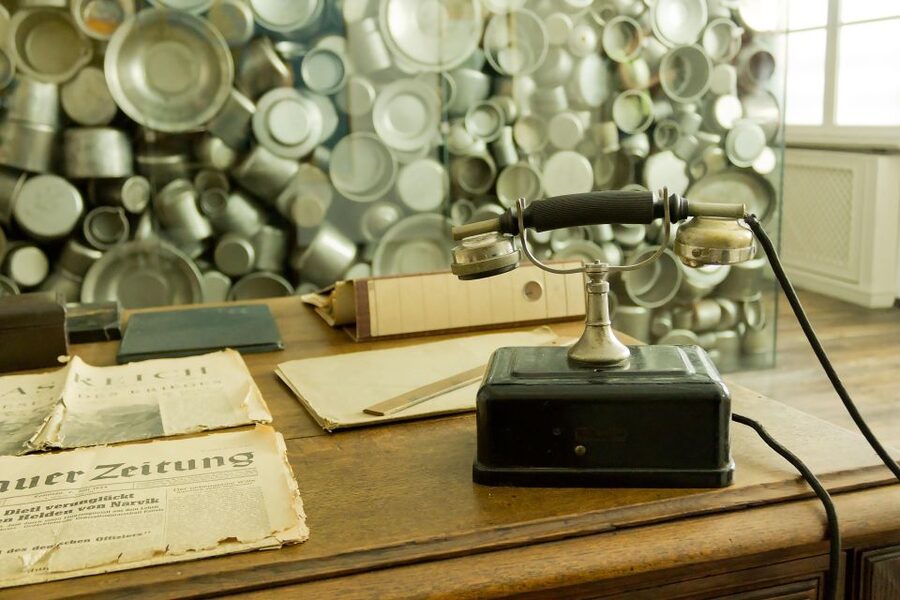
Reviewed · SCHINDLER'S FACTORY TOURS
Krakow: Schindler’s Factory & Ghetto Guided Tour
The most important thing to understand is that Schindler’s Factory is not a factory tour. It is a carefully staged museum about Kraków under Nazi occupation, with Schindler’s story woven into the much larger story of Jewish persecution, Polish life, deportation, and survival. The walking portion then takes you into the former ghetto, where the history feels less enclosed and more tied to actual streets and buildings.
I like the pairing of museum context and real locations, and I like having a guide to make sense of an information-heavy exhibition. Guides such as Alexandra, Phil, Joanna, Alice, Eva, and Alicja have been praised for clear explanations and strong command of the subject. The main drawback is pace: a group of around 20 can feel crowded in narrow rooms, and you may not have time to read every panel or study every object.
Key points to know before booking
- Schindler’s Factory is now a museum, with no original factory machinery on display.
- The exhibition covers all of wartime Kraków, not just Oskar Schindler and his Jewish workers.
- Ghetto Heroes Square and its Chair Memorial provide one of the tour’s most powerful outdoor moments.
- A short break separates the museum visit from the ghetto walk, useful for a toilet stop or hot drink.
- Headsets or a closed-loop microphone system may be used, helping you hear the guide in crowded rooms and on busy streets.
- The tour runs in one selected language, and you should arrive 10 minutes early because latecomers cannot join.
Why the museum is more than Schindler’s story
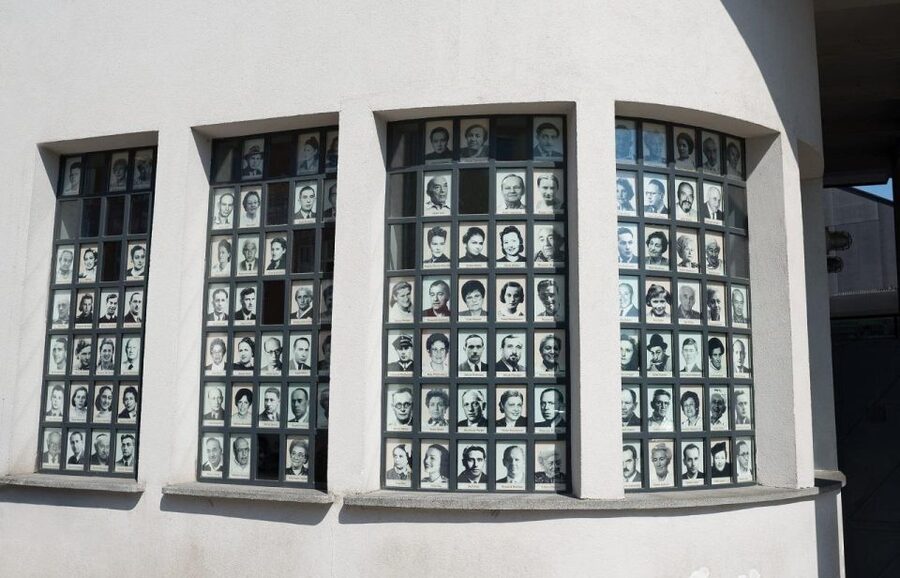
The museum occupies the former enamel factory associated with Oskar Schindler, the German industrialist who employed more than 1,000 Jewish workers and helped protect them from deportation and death. That story matters, but it is only one thread in the visit.
The exhibition, titled Kraków under Nazi Occupation 1939 to 1945, sets Schindler’s actions against the broader collapse of everyday life. You learn how Nazi rule changed the city, restricted Jewish residents, controlled the Polish population, and destroyed Kraków’s Jewish community.
That wider focus is one of the tour’s greatest strengths. If you arrive expecting a full museum about Schindler alone, you may be surprised. If you want to understand the setting in which he acted, the exhibition gives you far more useful context.
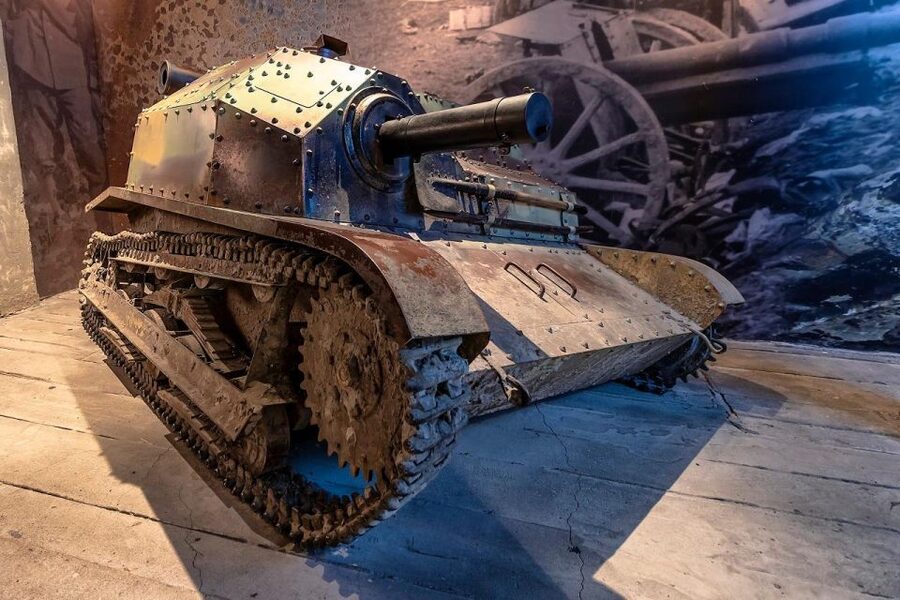
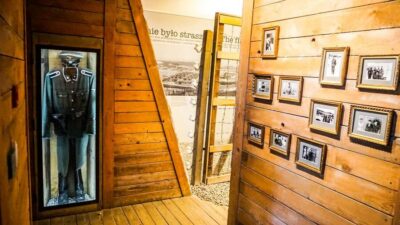
You move through rooms filled with photographs, documents, objects, uniforms, toys, flags, and reconstructed settings. The design uses narrow corridors, dim rooms, and confined spaces. This is not a casual stroll through display cases. The museum wants you to feel pressure and uncertainty, though the same design can make it harder to pause and read everything.
A guide is especially useful here. The exhibition contains a great deal of material, and it is easy to lose the main thread while reading every label. A good guide gives you the basic chronology, explains why certain objects matter, and links individual stories to the larger events.
Guides named in the feedback include Alexandra, Phil, Joanna, Alice, Eva, Helena, Magdalena, and Alicja. You cannot choose a particular guide, but the repeated praise points to the value of strong storytelling on this tour. Phil, in particular, was praised for presenting World War II and Kraków’s Jewish experience with accuracy, feeling, and an approachable manner. Alexandra was noted for handling a large group and explaining difficult material clearly.
More Schindler's Factory tours from Kraków:
- Krakow: Oskar Schindler’s Factory Entry Ticket & Guided Tour
★ 4.2 · 3,793 reviews - Krakow: Schindler’s Factory Tour with Entrance Ticket
★ 4.5 · 3,182 reviews - Krakow: Schindler’s Factory Skip-the-Line Ticket
★ 4.4 · 3,105 reviews
What you see inside the former enamel factory
The building itself gives the visit its first layer of meaning. You are standing in the place linked to Schindler’s wartime production, but you should not expect belts, machinery, or a preserved working floor. Today, it is a museum building without original factory equipment.
That distinction is worth making before you book. Some people arrive expecting an industrial museum and feel let down when they discover that the machinery is gone. The strength here lies in the exhibition design and historical material, not in the physical remains of factory production.
The museum follows the experience of Kraków during occupation. You may see evidence of military control, propaganda, forced separation, family suffering, and the steady tightening of Nazi policy. The exhibition also places Polish residents within the story, showing that the occupation controlled and harmed the city as a whole, even though Jewish residents faced systematic persecution and annihilation.
The displays can be emotionally difficult. Stories of children, deportations, and the destruction of families are presented in a setting designed to create unease. I would not treat this as a light sightseeing stop between cafés. Give yourself room afterward to process what you have seen.
The guide’s role is not just to point at objects. The strongest guides explain connections. They may help you understand how a photograph fits into the timeline, why an ordinary object carries so much weight, or how Schindler’s factory fits into the machinery of persecution.
The trade-off is time. The museum portion often takes close to two hours, yet the exhibition contains enough material to occupy you much longer. Several people found the pace a little quick and wished they had more time to read signs, take photographs, or look closely at each room.
If you prefer to inspect every label at your own speed, a self-guided museum visit may suit you better. If you want the main story explained without getting buried in text, this guided format is a good choice.
From the factory to the former Jewish ghetto
The tour usually includes a short pause between the museum and the walking section. This matters more than it sounds. You can use the break for the toilet, a hot drink, or simply a few quiet minutes after the indoor exhibition.
The outdoor portion takes you through Podgórze, the area where Kraków’s Jewish ghetto was established during the occupation. The shift from museum rooms to ordinary streets changes the experience. You are no longer looking only at photographs and objects. You are walking through a district connected to forced confinement, deportations, and the lives of people who once lived there.
The first major stop is the remains of the ghetto walls. These fragments are easy to underestimate. A wall may look modest beside modern buildings, yet it makes the idea of forced separation physical. The ghetto was not just a policy described in a textbook. It had a boundary, checkpoints, and a daily impact on anyone trapped inside.
Your guide explains the function of the walls and places them within the story of the ghetto. This is where the earlier museum material begins to connect with the city around you.
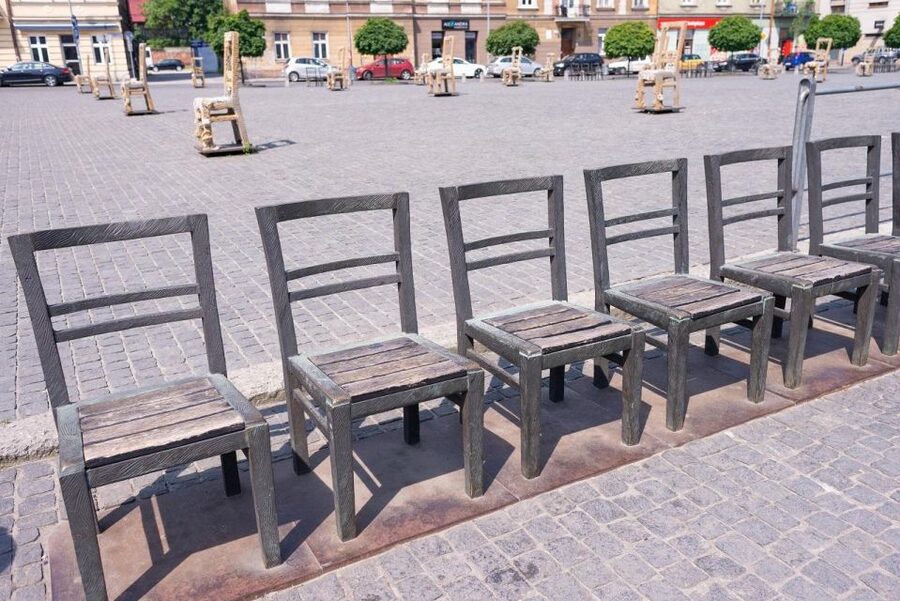
The route continues to Ghetto Heroes Square, the central outdoor site on the walk. Deportations to extermination camps took place here. Today, the square is marked by the Chair Memorial, a group of oversized chairs placed across the space. Each chair represents a life lost.
The memorial is simple, but its meaning is hard to miss. Chairs suggest homes, families, and people waiting. In this setting, the empty seats turn an open public square into a place of remembrance. You do not need a long explanation to understand the basic idea, but the guide adds the historical weight behind it.
Across the square is the Under the Eagle Pharmacy. During the occupation, pharmacist Tadeusz Pankiewicz and his staff helped people in the ghetto. The pharmacy provided medicine and assistance, and it became a place where help and human contact could continue under brutal conditions.
This stop adds an important note to the tour. The story is not only about victims and perpetrators. It also includes people who took risks to help others. The pharmacy gives you a specific place connected to courage, practical aid, and small acts of resistance.
Why a guide changes the museum visit
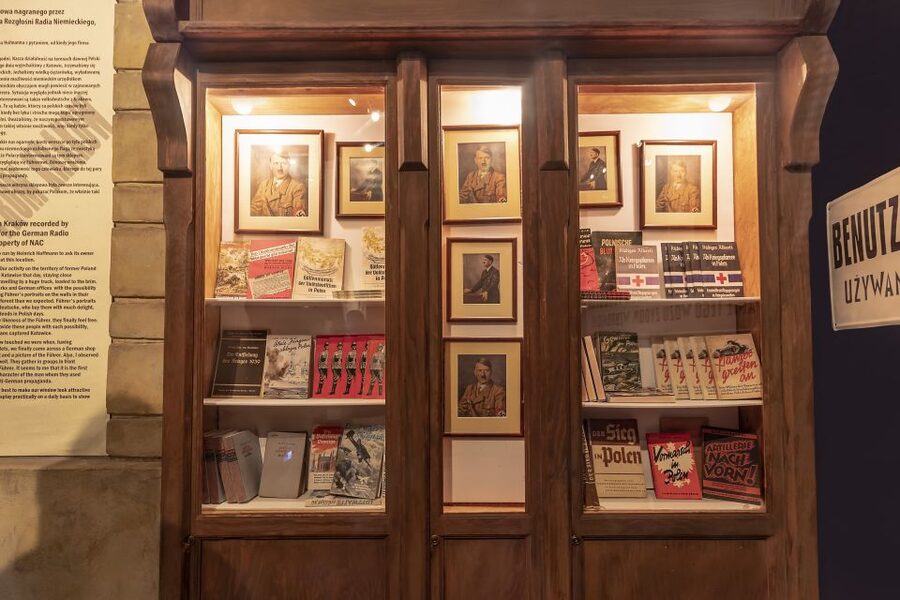
This is a subject where a guide can make a real difference. The museum offers a large amount of material, but the emotional force does not always come from the object alone. It often comes from knowing who used it, what happened before the photograph was taken, or how one event affected the next.
The strongest guides on this tour are described as clear, warm, and willing to answer questions. That matters because the subject can become confusing. Kraków’s occupation, the ghetto, deportations, Schindler’s workers, and the wider war are not separate stories. They overlap.
A microphone or headset system is another practical plus. One guide used a closed-loop system so the group could hear without straining. That is useful in narrow rooms, busy streets, and larger groups.
Still, a group tour has limits. One guide must keep perhaps 15 to 20 people moving through rooms that are not always spacious. A larger group may gather near a display, blocking your view or making it hard to hear without the headset.
The best approach is to listen closely when the guide explains the main point, then use any free moment to look at objects yourself. Do not assume you can read every panel. You cannot control the museum’s crowd flow, and the guide must keep to the scheduled route.
Other Jewish-heritage walks around Kraków:
- Krakow: Jewish Quarter and Former Ghetto Tour
★ 4.9 · 1,441 reviews - Krakow: Bike Tour of Old Town, Jewish Quarter and the Ghetto
★ 4.9 · 1,155 reviews - Krakow: Kazimierz Jewish Quarter Walking Tour
★ 4.8 · 571 reviews - Krakow: Kazimierz, Schindler’s Factory & Ghetto Guided Tour
★ 4.8 · 460 reviews
Timing, weather, and the practical side
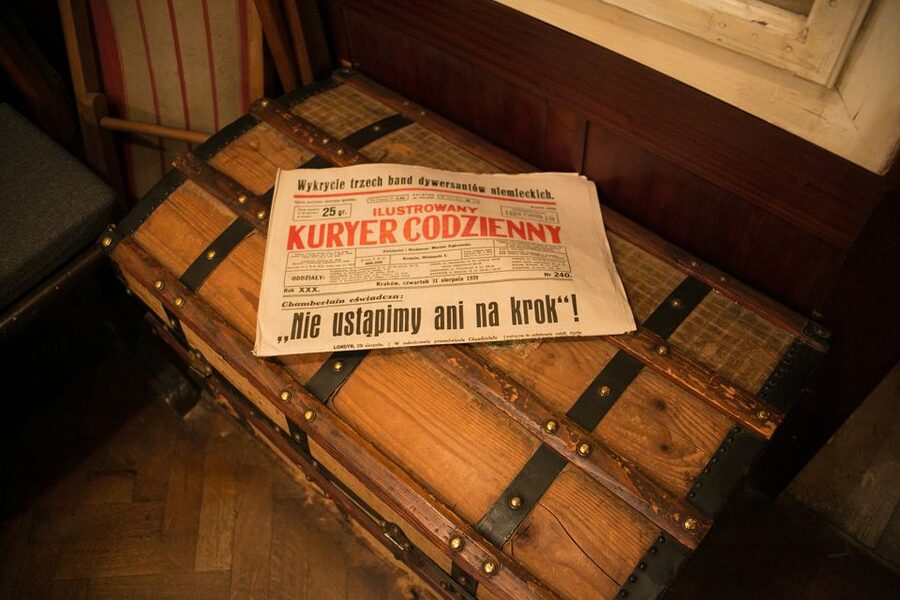
The full experience lasts three hours. A typical rhythm is about two hours inside the museum, a short break, and then the ghetto walk. That is enough time to gain a clear understanding of the subject, but it is not enough for a slow, exhaustive museum visit.
The outdoor section is on foot, so wear comfortable shoes. The tour operates in rain or shine, and weather can affect how much you enjoy the walk. In colder months, bring layers. One useful tip is to check the forecast before choosing a morning, afternoon, or evening start.
An evening tour has a different feel, but darkness can make it harder to see the surrounding buildings and streets. If you want to examine the area itself, daylight is the better choice. If the museum is your main priority, the time of day matters less indoors.
Meet your guide in front of the main entrance to Schindler’s Factory, on the right-hand side. Look for an excursions.city sign. Arrive 10 minutes early. Once the group leaves, late arrivals cannot join and the ticket cannot be refunded.
The tour is offered in English, Italian, French, Spanish, and German. Groups operate in one language only, so select carefully when booking. From January 1, 2026, exact start times may shift because of museum scheduling, and the names of all participants must be supplied for personalized tickets. Entry may be refused without those names.
Hotel pickup, food, and drinks are not included. You make your own way to the meeting point and should plan a drink or meal separately.
Is $57 a fair price?
At $57 per person, this is not the cheapest way to see the museum. You are paying for more than admission, though. The price includes skip-the-line entry, a live guide, and the ghetto walking tour.
The value depends on how you like to visit museums. If you read quickly, enjoy finding your own route, and want plenty of time with each display, buying admission separately may suit you better. If you want someone to organize the story and connect the museum with the ghetto, the combined tour earns its price.
The ghetto walk is important to the value. You are not paying for a museum lecture alone. You get a second setting, several major sites, and explanations of the Ghetto Walls, Heroes Square, the Chair Memorial, and Under the Eagle Pharmacy.
I would also count the time saved at the ticket line, especially during busy periods. That does not make the tour a bargain for every budget, but it makes the cost easier to justify for a first visit or a short stay.
Who should book this three-hour experience?
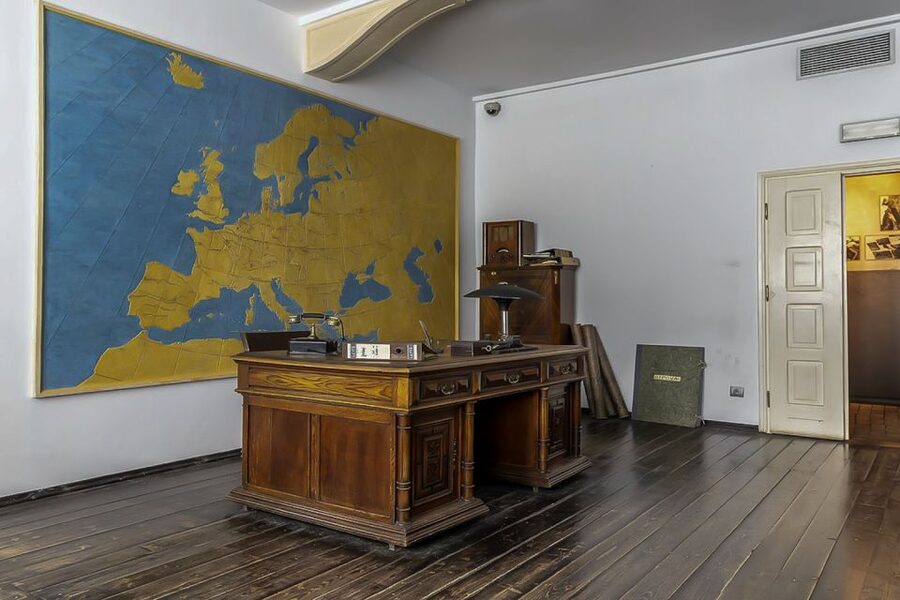
This tour suits you if you want a serious introduction to wartime Kraków and prefer a clear route through difficult material. It is also a good match for anyone who knows Schindler mainly from the film and wants to understand the real historical setting.
It works well for a short Kraków visit because it combines two major sites in one booking. You get the museum and the former ghetto without having to plan the route or research every stop yourself.
You may want a different approach if you dislike guided pacing, need long periods to read, or want to photograph every room. The exhibition can easily take more than the allotted time, and the outdoor walk may feel tiring after so much indoor information.
This is also not a cheerful family attraction. The subject is persecution, deportation, and mass death. Older children and teenagers studying World War II may find it valuable, but adults should judge their own group’s readiness for the material.
My verdict on Schindler’s Factory and the Ghetto walk
I would book this tour if I had three hours and wanted an informed first look at Kraków’s wartime past. The combination is carefully chosen: the museum explains the occupation, while the ghetto walk gives that story a physical setting.
The main caution is simple: do not expect factory machinery or a slow private visit. Expect an emotionally heavy museum, a brisk but useful route, and a guide who does much of the work of sorting the facts.
At $57, the tour offers solid value if you want skip-the-line admission, live interpretation, and the ghetto sites in one outing. Choose daylight if seeing the streets matters to you, dress for the weather, arrive early, and leave extra time later for a quieter meal or walk. This is a sobering experience, but it gives you a stronger understanding of Kraków than a quick visit to the museum alone.
FAQ
How long does the Schindler’s Factory and Ghetto tour last?
The tour lasts three hours. It includes time in Schindler’s Factory, a short break, and a walking tour of Kraków’s former Jewish ghetto.
Is Schindler’s Factory still operating as a factory?
No. The building is now a museum and does not contain the original factory machinery.
What does the museum exhibition cover?
The exhibition is titled Kraków under Nazi Occupation 1939 to 1945. It covers the wartime experiences of Jewish and non-Jewish residents, as well as Oskar Schindler and the workers his factory helped protect.
What places are included in the ghetto walk?
The route includes the remains of the Ghetto Walls, Ghetto Heroes Square, the Chair Memorial, and the Under the Eagle Pharmacy.
Which languages are available?
The tour is offered in English, Italian, French, Spanish, and German. Each group operates in one selected language.
What happens if I arrive late?
You must arrive 10 minutes before the start. Once the group has left, latecomers cannot join and the ticket cannot be refunded.
Just added in Kraków
- From Krakow: Guided Tour of Zalipie★ 4.6 · 30 reviews
- From Krakow: Zalipie Village Day-Tour★ 4.9 · 74 reviews
- Krakow: Zalipie Village Tour★ 4.6 · 8 reviews
- ZALIPIE – painted village, unique PRIVATE tour from Krakow★ 5.0 · 20 reviews
- Electric Scooter Tour: Old Town Tour – 2-Hours of Magic!★ 4.7 · 77 reviews
- Czestochowa the Black Madonna Day Tour from Krakow★ 4.5 · 64 reviews
- Dunajec River Gorge and Zakopane: Full-Day Trip from Krakow★ 4.6 · 57 reviews
- Zator: Energylandia Amusement Park Entry Ticket★ 4.6 · 58 reviews
Schindler's Factory Tours, compared.
Oskar Schindler’s Factory Entry Ticket & Guided Tour
Read the review →
Schindler’s Factory Tour with Entrance Ticket
Read the review →
Schindler’s Factory in Krakow: Guided Tour & Skip the Line Ticket
Read the review →
Schindler’s Factory Ticket with Guided Tour Option
Read the review →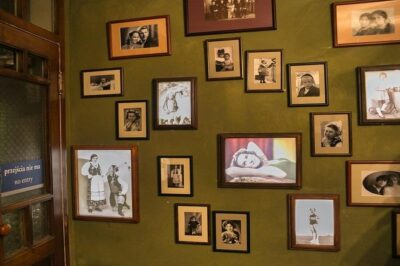
Krakow Schindler’s Factory Guided Tour with Admission Ticket
Read the review →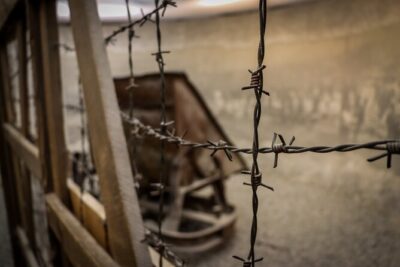
Krakow Schindler’s Factory Museum Guided Tour in English
Read the review →
Kazimierz, Schindler’s Factory & Ghetto Guided Tour
Read the review →Browse the lists this tour appears in