
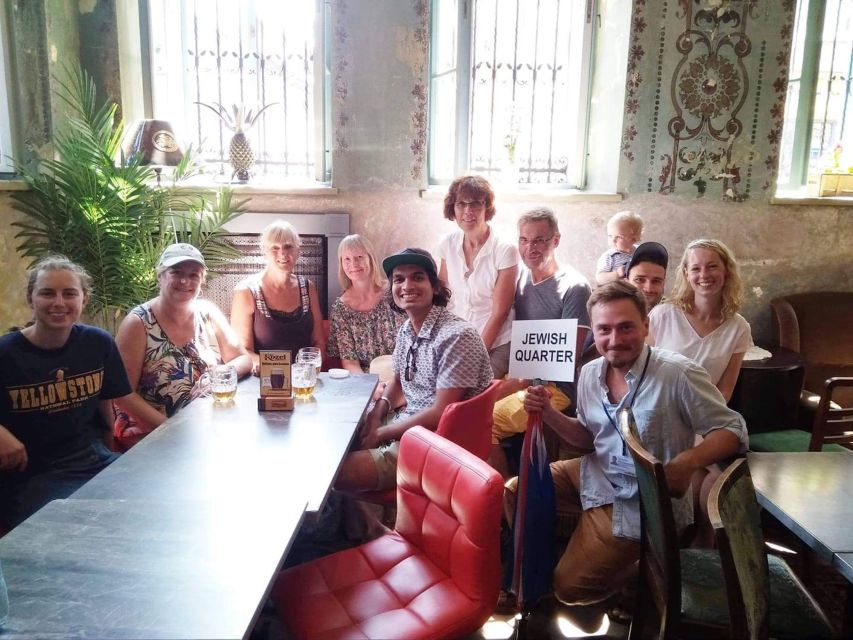
Reviewed · JEWISH QUARTER & GHETTO TOURS
Krakow: Jewish Quarter and Former Ghetto Tour
Krakow’s Jewish Quarter is easy to stroll through and easy to misunderstand. This 2.5-hour walking tour connects synagogues, narrow streets, the Jewish cemetery, and the former ghetto so you can see how Jewish life developed, flourished, and was destroyed. It also adds Schindler’s List filming locations, but the Holocaust history is treated as the main subject, not as a movie sightseeing game.
I like the way the tour links everyday culture with major events, and I like the guides’ strong storytelling. Bart, Magda, Matt, Slavek, Emily, and Chris are repeatedly praised for clear explanations, good pacing, humor, and a respectful tone. The drawback is simple: there is a lot to absorb while walking, and one person found the information rushed. Wear good shoes and dress for the weather.
Key points before you book
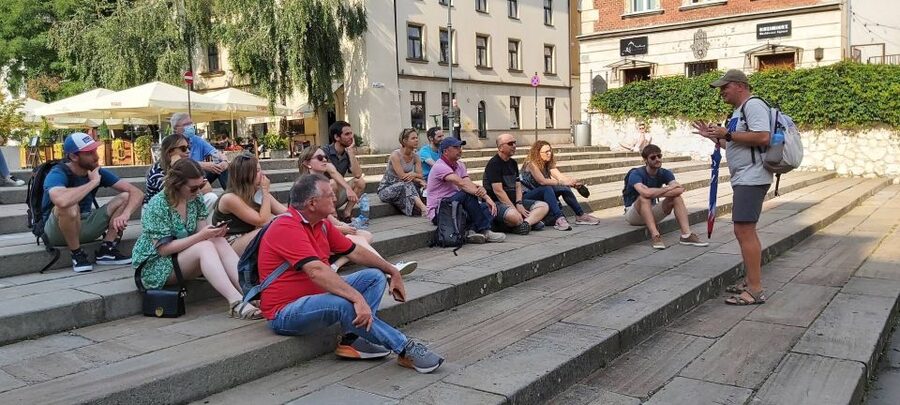
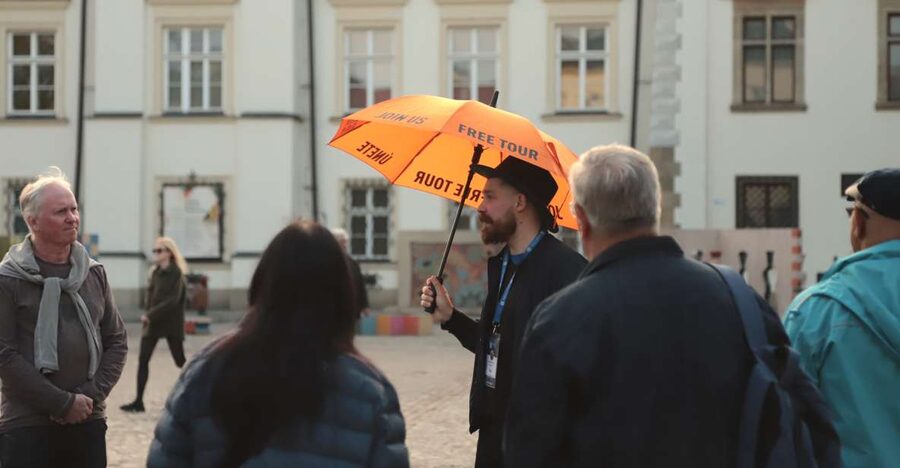
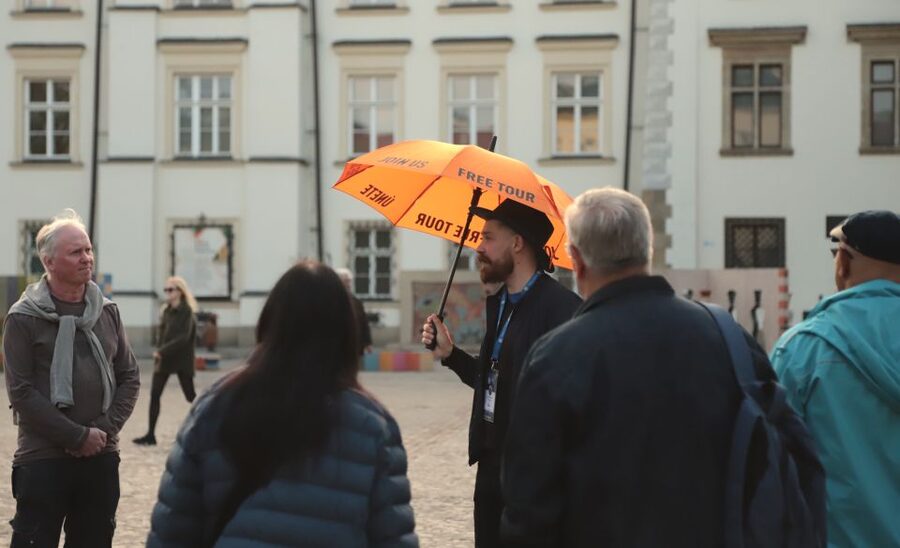
- The Old Synagogue is the starting point: Meet at ul. Szeroka 24, in front of the synagogue, beside the guide with an orange umbrella.
- The history reaches beyond World War II: You learn about Jewish traditions, Ashkenazim and Sephardim, and figures including Helena Rubinstein, Roman Polanski, Ludwick Zamenhof, and Maximilian Faktorowicz.
- The route includes the former ghetto: Heroes of Ghetto Square and the Holocaust memorial give the tour its most serious and moving moments.
- Schindler’s List is part of the story, not the whole story: You visit filming spots while also learning about the real people and places behind the film.
- Strong guide-led experience: The English-speaking guides are praised for passion, clear voices, thoughtful answers, and an ability to handle difficult material.
- Good value at $19: For 150 minutes with a local guide, this is a modest price, especially if you want context that is hard to get by walking alone.
Why Kazimierz needs more than a casual stroll
Kazimierz was founded as a separate city on an island close to Krakow. It was intended to rival its larger neighbor, but its lasting importance came from the Jewish community that settled there during the Middle Ages.
Jews who faced persecution in parts of Western Europe found a home in Poland, and Kazimierz became a center of Jewish life and trade. That story matters because the quarter you see today is not simply an old district with attractive streets. Its synagogues, courtyards, cemetery, and small lanes point to a community that shaped Krakow for centuries.
You can walk through Kazimierz on your own and notice handsome buildings, restaurant signs, and synagogue façades. What you will miss is the meaning behind the layout. A guide explains which buildings served religious, educational, or community purposes, and how Jewish life changed over time.
This is why I would take the tour early in a Krakow visit. It gives you a working map of the district. Later, you can return to places that caught your attention, this time with a better sense of what you are seeing.
Other Jewish-heritage walks around Kraków:
- Krakow: Schindler’s Factory & Ghetto Guided Tour
★ 4.7 · 1,694 reviews - Krakow: Bike Tour of Old Town, Jewish Quarter and the Ghetto
★ 4.9 · 1,155 reviews - Krakow: Kazimierz Jewish Quarter Walking Tour
★ 4.8 · 571 reviews
Starting at the Old Synagogue on Szeroka Street
The meeting point is in front of the Old Synagogue at ul. Szeroka 24. Look for the guide with an orange umbrella. That detail is useful because Szeroka Street can be busy, and several walking groups may gather in the same area.
The Old Synagogue is one of the tour’s key anchors. It is presented as the oldest synagogue in Poland and the second oldest synagogue in Europe. Even if you do not enter the building, its location helps explain how central religion and community life were to Kazimierz.
The tour introduces the difference between Ashkenazim and Sephardim, two major Jewish cultural and religious traditions. This is a useful foundation, especially if Jewish history is new to you. Instead of treating Jewish culture as one single block, the guide gives you terms that make later explanations easier to follow.
The guide also brings in people whose lives connect Poland with the wider world. You may hear about Helena Rubinstein, Roman Polanski, Ludwick Zamenhof, and Maximilian Faktorowicz. These names show the range of Jewish achievement in Poland, from cosmetics and film to language and business.
Synagogues, streets, and the life that came before 1939
The most effective part of the walk is the shift from buildings to people. The streets of Kazimierz can look quiet now, but they once carried the daily sounds of a large Jewish community.
Your guide points out places that are easy to pass without a second glance. One person who had already walked around the district alone found the tour changed the meaning of the area. That is a fair expectation: the value here comes less from dramatic monuments than from the stories attached to ordinary-looking corners.
The route covers Jewish traditions and the way of life that existed before the catastrophe of World War II. A good guide needs to hold two ideas at once: Kazimierz was a place of work, family, faith, and culture, and it later became part of one of Europe’s worst crimes.
The guides are praised for handling that change in tone well. Emily is described as a strong storyteller, while Magda is praised for stopping to answer questions and keeping the group involved. Bart is often singled out for a clear voice, dry humor, and broad knowledge of Krakow’s past. Those qualities matter on a walking tour because you need to hear the explanation while standing outdoors among other groups and city noise.
The Jewish cemetery and the weight of place
The Jewish cemetery adds a quieter and more personal side to the tour. Synagogues show communal life, while a cemetery brings the focus to individual families and generations.
Expect a respectful visit rather than a long stop filled with theatrical presentation. The cemetery helps you understand that the Jewish presence in Krakow was not a short chapter. It was built over centuries, with names, graves, customs, and family connections rooted in the city.
This is also a point where the walk can feel emotionally heavy. The subject is not handled as light sightseeing, and you should be ready for discussion of persecution, loss, and the destruction of Jewish life during World War II.
The tour lasts 150 minutes, so the guide cannot give every site unlimited time. One participant found the amount of information difficult to absorb because the group was nearly always walking. I would treat the tour as an introduction and note down the places you want to revisit later.
Same base, a different kind of day:
- From Krakow: Auschwitz-Birkenau Guided Tour & Hotel Pickup
★ 4.5 · 33,358 reviews - From Krakow: Auschwitz-Birkenau Guided Tour & Hotel Pickup
★ 4.5 · 29,340 reviews - Krakow: Auschwitz Guided Tour with Optional Hotel Pickup
★ 4.5 · 15,280 reviews - Krakow–Zakopane: Cable Car, Chocholow Baths, Cheese & Vodka
★ 5.0 · 10,720 reviews
Crossing into the former ghetto
The former ghetto section changes the mood. Kazimierz was the center of Jewish life before the war, while the ghetto represents forced separation, persecution, and the machinery of Nazi occupation.
The route includes the Holocaust memorial and Heroes of Ghetto Square. These are among the most important stops because they make the history physical and visible. Rather than hearing only dates and policies, you stand in a real urban setting connected to deportation and death.
The guide explains what happened to Krakow’s Jewish population before and during World War II, while also keeping the focus on individual lives and the wider culture that existed before the destruction. That balance is important. A tour about Jewish Krakow should not reduce the community to the Holocaust alone.
This is the part of the experience where the guide’s tone matters most. Magda, Emily, Chris, Bart, and the other guides are praised for being serious without becoming cold, and personal without turning the subject into entertainment. You can ask questions, but you should expect thoughtful answers rather than quick sound bites.
Schindler’s List locations, with the real story in view
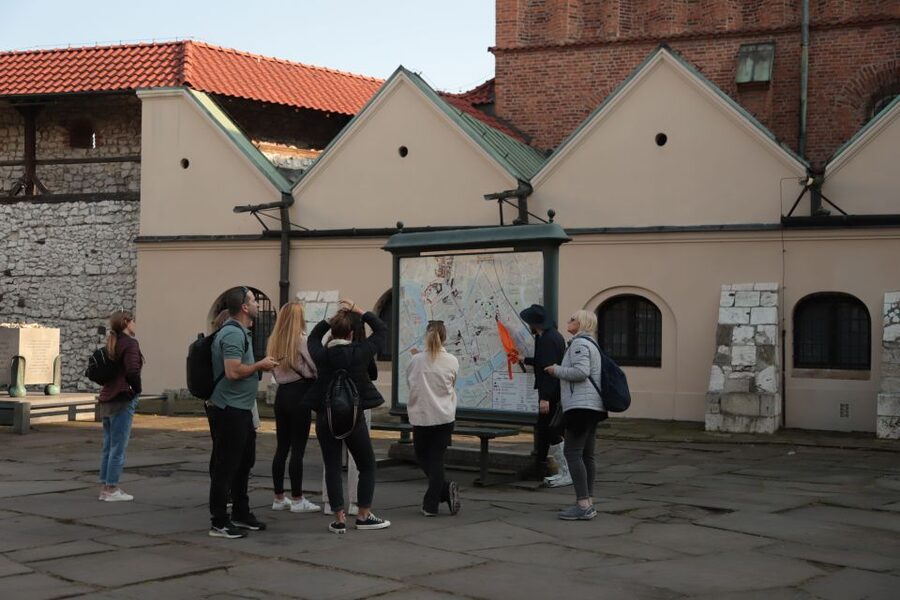
The tour includes places used in Schindler’s List. This gives film fans a familiar entry point, but the real value is the comparison between cinema and history.
You are not simply checking off movie locations. The guide places those spots within the story of Krakow’s Jewish community and the former ghetto. That makes the film connection more useful, even if you have never watched the movie.
The Schindler stops can also create a practical problem. One person became separated from the group while taking photographs and then followed the wrong walking party. Keep the guide in sight, especially when the group pauses near a busy attraction. A bright umbrella helps at the meeting point, but it may not always be enough once several groups are moving around.
If you want to visit Schindler’s Factory Museum, do not assume this walking tour includes admission. The experience includes outdoor stops and filming locations, not food, drinks, or a museum ticket.
The guides make the difference
The provider is Kraków Explorers, and the guide is the main variable in a tour like this. The strongest praise goes to guides who can explain difficult history in plain language, keep the group together, and answer questions without losing the route.
Bart is often described as passionate, engaging, easy to hear, and strong on both city history and archaeology. Magda is praised for warmth, patience, and a welcoming manner. Matt receives praise for bringing the subject to life, while Slavek is described as friendly and clear. Emily is noted for storytelling, and Chris for a thoughtful and personal approach.
You may not receive a particular guide, so book this for the structure and subject rather than for one named person. Still, the repeated strength of the guiding team is reassuring. A 4.9 rating from 1,441 reviews also suggests a consistently well-received experience, though the tour is not perfect for every learning style.
If you prefer a slow, quiet museum visit with time to read every plaque, this may feel brisk. If you learn best by listening, asking questions, and moving through real places, it should suit you well.
Price, pace, and practical comfort
At $19 per person, the tour offers solid value. You receive 150 minutes with an English-speaking local guide, and the route covers several areas that would be difficult to connect on your own. The price is especially fair if this is your first visit to Krakow and you want an organized introduction.
You are paying for interpretation, not entry tickets or refreshments. Food and drinks are not included, so plan a café stop before or after the walk. The route is outdoors and involves a fair amount of walking, with pauses at sights. Comfortable shoes are essential.
Winter conditions deserve attention. A February participant specifically advised wrapping up warm, and that is sensible for any cold-weather departure. The subject is serious, but the weather can be its own challenge. Wear layers, bring water, and keep your hands free if you need to take notes or photographs.
The tour is wheelchair accessible, and the experience is offered in English. Alcohol, drugs, and party groups are not allowed. This is a history-focused walk, not a pub crawl or a rowdy group activity.
You can cancel up to 24 hours before the start for a full refund, and you can reserve now and pay later. Those terms help if your Krakow plans are still shifting, but the main decision is fit: do you want a guided history walk, or would you rather explore at your own pace?
Who should take this walk?
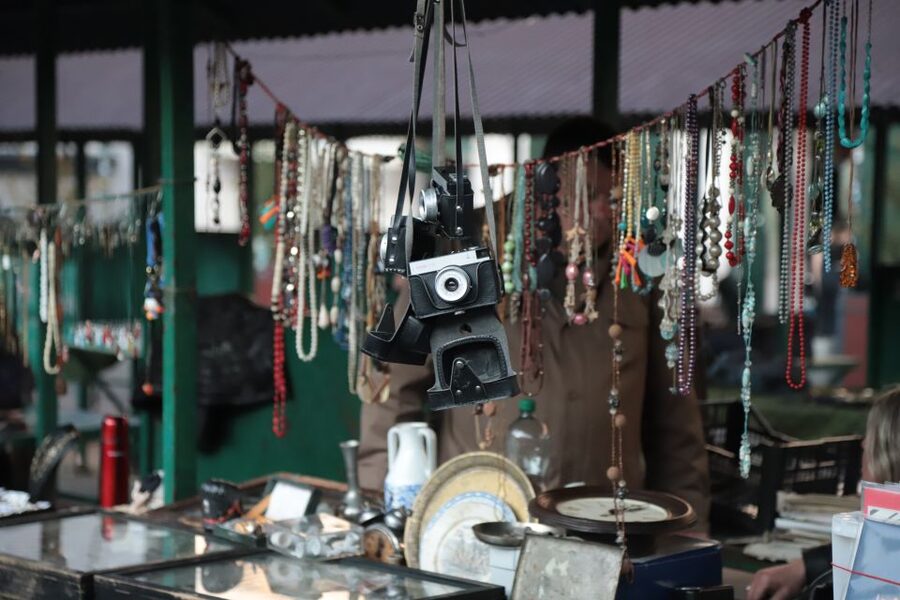
I would recommend it to first-time visitors who want a clear introduction to Kazimierz and the former ghetto. It also suits film fans, history students, and anyone who feels that walking through a district alone leaves too many unanswered questions.
Families with older children may find it useful, but the Holocaust material is upsetting and should be approached with care. It is not designed as a playful family attraction.
You should also take it if you want to learn about Jewish life before World War II, not only the years of Nazi persecution. The references to traditions, community figures, synagogues, and the cemetery give the tour a wider frame.
I would hesitate only if you dislike group walks, need long periods to process information, or want substantial indoor time. The tour is active, outdoors, and sometimes information-heavy. You may want to return to Kazimierz afterward and revisit the places that made the strongest impression.
Should you book the Jewish Quarter and Former Ghetto Tour?
Book it if you want the meaning behind Krakow’s Jewish Quarter, not just a collection of attractive streets and movie locations. For $19, the combination of Kazimierz, the Old Synagogue, the Jewish cemetery, Heroes of Ghetto Square, Holocaust memorials, and Schindler’s List locations is strong value.
Go in prepared for difficult material and steady walking. Stay close to the guide at photo stops, dress for the season, and leave yourself time afterward to think. If you want a respectful, guide-led introduction to Jewish Krakow and the former ghetto, this is a worthwhile choice.
FAQ
How long does the tour last?
The walking tour lasts 150 minutes, or 2.5 hours. One booking may run a little longer depending on the guide and the group.
Where does the tour begin?
The meeting point is in front of the Old Synagogue at ul. Szeroka 24. Look for the guide with an orange umbrella.
What language is the tour in?
The live tour guide speaks English.
What places are included?
The experience includes the Old Synagogue area, Jewish streets and heritage sites, the Jewish cemetery, a Holocaust memorial, Heroes of Ghetto Square, the former ghetto, and Schindler’s List filming locations.
Are food and drinks included?
No. Food and drinks are not included in the tour price.
Is the tour wheelchair accessible?
Yes, the activity is listed as wheelchair accessible.
How much does the tour cost?
The listed price is $19 per person.
Can I cancel the booking?
Yes. You can cancel up to 24 hours in advance for a full refund. You can also reserve now and pay later.
Just added in Kraków
- From Krakow: Guided Tour of Zalipie★ 4.6 · 30 reviews
- From Krakow: Zalipie Village Day-Tour★ 4.9 · 74 reviews
- Krakow: Zalipie Village Tour★ 4.6 · 8 reviews
- ZALIPIE – painted village, unique PRIVATE tour from Krakow★ 5.0 · 20 reviews
- Dunajec River Gorge from Krakow★ 4.0 · 33 reviews
- Polish Folk Show and Dinner From Krakow★ 4.5 · 80 reviews
- From Kraków: Slovakia Treetop Walk Bachledka and Zakopane★ 5.0 · 73 reviews
- From Krakow: The Black Madonna of Czestochowa & John Paul II Family Home★ 5.0 · 28 reviews
Jewish Quarter & Ghetto Tours, compared.
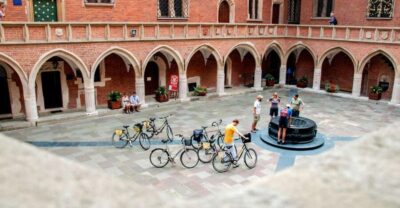
Bike Tour of Old Town, Jewish Quarter and the Ghetto
Read the review →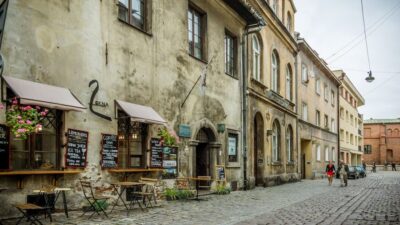
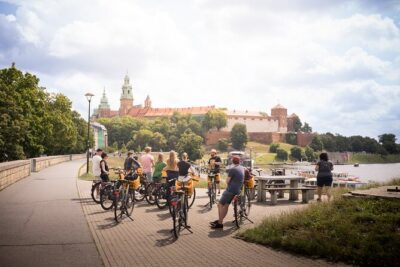
Full Bike Tour – the Old Town, Jewish Qtr & the Ghetto NEW BIKES
Read the review →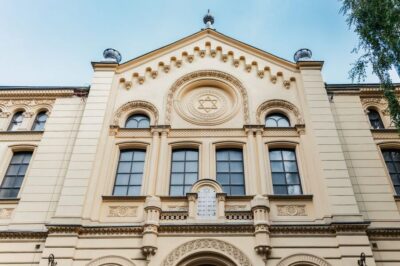
Warsaw Ghetto Private Walking Tour with Hotel Pickup
Read the review →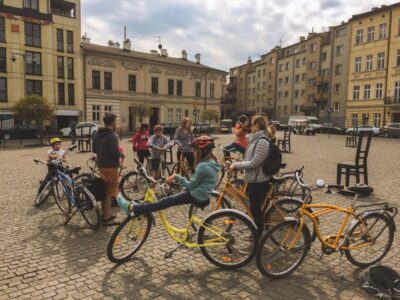
Bike Tour of the Old Town, Kazimierz, and the Ghetto
Read the review →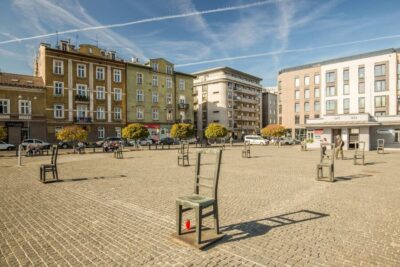
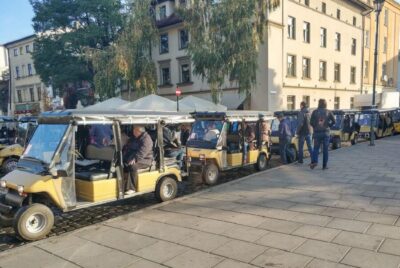
Jewish Quarter and Ghetto Electric Golf Cart Tour
Read the review →Browse the lists this tour appears in