
Reviewed · WWII MEMORIAL & CAMP TOURS
Krakow: Plaszow Concentration Camp Guided Walking Tour
Plaszow is not a preserved camp with barracks and gates waiting for you. It is an open, difficult place where mass graves, memorials, cemetery traces, and a few surviving buildings must be read with care. This guided walk helps you understand what happened here and why the ordinary-looking ground around Kraków carries such weight.
I like the route from Ghetto Heroes Square to Plaszow, because it links deportation with imprisonment rather than treating the camp as an isolated stop. I also like the guide-led use of old photographs, which gives you a way to picture buildings and camp sections that no longer survive. The main drawback is that Plaszow can feel visually sparse, and the two-hour walk requires moderate fitness and comfortable shoes.
Key points to know
- The tour begins at Ghetto Heroes Square, once the Kraków ghetto’s main control and departure point.
- Plaszow is a place of fragments, including the Grey House, cemetery traces, the roll-call square, and memorials.
- Historic photographs help fill in what was destroyed, making the guided explanation especially important.
- Oskar Schindler’s connection is central, including the permits and transfers that protected more than 1,000 Jewish prisoners.
- The walk is serious and physically active, with uneven outdoor ground and substantial walking.
- The English-language group can include up to 25 people, at a price of $30.04 per person.
Why Plaszow feels different from other memorial sites
If you expect a complete museum or a row of original barracks, adjust your expectations before you go. Plaszow was largely destroyed, and much of what you see today is open ground, surviving traces, memorials, and places identified by a guide.
That absence is part of the experience. I find it forces you to listen closely and use your imagination responsibly. You are not simply walking through intact rooms. You are trying to understand a camp system from the few physical clues left behind.
The camp began in October 1942 on the grounds of two Jewish cemeteries. It first held Jews from the liquidated Kraków ghetto as forced laborers. From July 1943, it also contained a penal-labor section for Poles. In January 1944, the site was redesignated a concentration camp, and later it served as a transit camp for Hungarian Jews being sent onward to Auschwitz.
More than 35,000 people were imprisoned at Plaszow during its existence. Around 6,000 were murdered. Executions took place at several locations, and mass graves and memorials now mark parts of the area.
These facts are grim, but they matter. A walk here should not reduce Plaszow to a film location or a footnote to Auschwitz. The guide’s job is to show you how the camp operated, who was held there, and what happened at the places beneath your feet.
More walking tours in Kraków:
- Old Town Krakow & Wawel Castle Walking Tour
★ 5.0 · 1,508 reviews - Creepy Krakow: 2-Hour City Walking Tour
★ 4.7 · 1,131 reviews - Krakow: The Old Town Walking Tour
★ 4.8 · 794 reviews
Ghetto Heroes Square connects the story to Kraków
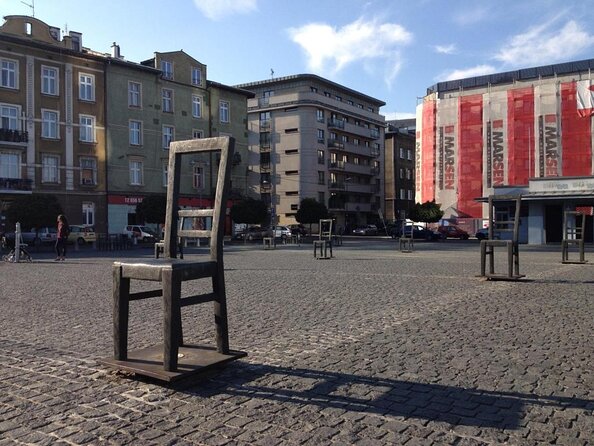
The tour begins at Apteka pod Orłem, at Plac Bohaterów Getta 18. The square is now called Ghetto Heroes Square, but during the Nazi occupation it was known as Plac Zgody.
This was the logistical center of the Kraków ghetto. Control, registration, and deportation all passed through here. People were gathered and sent away from this point, making it a fitting place to begin before following the story toward Plaszow.
The square’s memorial is made up of empty chairs. The design recalls the furniture and belongings left behind when Jewish residents were expelled from their homes. The tour information specifically focuses on the square’s role in control and transport, so expect historical explanation rather than a long stop for independent sightseeing.
I like this opening because it gives you a clear sequence: first the ghetto, then the camp. Without that connection, Plaszow can seem detached from the city around it. Here, you begin with the forced movement of people and then follow the next stage of imprisonment and labor.
The stop lasts about 15 minutes, with no separate admission charge. Arrive at least 10 minutes early. The group leaves on time, and late arrivals cannot join or receive a refund.
The route to Plaszow is part of the lesson
The experience is described as a walking tour, but the route from the square to Plaszow involves getting across Kraków. One account of the experience describes taking a tram from Heroes Square to Plaszow, so listen carefully to the guide’s instructions about the transfer on your chosen departure.
That movement matters. You are not being dropped at a remote memorial and given a short talk. You are following the geography between the former ghetto and the camp. The transition helps show how deportation, forced labor, and transport were linked in the city.
The exact pace will depend on the group, but the full experience lasts about two hours. The outdoor route and the amount of walking make comfortable shoes a smart choice. A moderate level of physical fitness is requested, so this is not the right pick if you need a very short, fully seated visit.
Reading the surviving remains inside Plaszow
The main Plaszow visit takes about an hour, followed by roughly 45 minutes focused on additional sites and the camp’s wider story. You will not see every original structure. Instead, your guide pieces the camp together from what survives and from historic photographs.
Key places include the Grey House, the ruins of the pre-burial hall, remnants of the Jewish cemeteries, and the roll-call square. You may also walk along routes where fragments of gravestones were once used to pave roads.
That detail is especially disturbing because it shows how the camp’s physical organization was built over a desecrated Jewish cemetery. The stones were not simply lost or moved by accident. Their presence in roads became part of the site’s story.
The guide also explains how Plaszow was divided into living, hospital, administrative, and industrial sections. This is where the tour earns its price. A lone walk through open ground might leave you unsure where anything was or how the camp functioned. A clear explanation turns scattered traces into an understandable plan.
Photographs are a valuable part of the visit. Since so many structures are gone, historic images help you compare the present site with the camp as it once looked. The guide may show you where buildings stood and how the routes were arranged, giving you a stronger sense of scale and purpose.
Other wartime memorials reachable from Kraków:
- Krakow: Plaszow Concentration Camp Walking Tour
★ 4.8 · 39 reviews - Krakow: Schindler’s Factory & Ghetto & Plaszow Camp Guided Tour
★ 4.5 · 28 reviews - Guided Tour in Kraków-Płaszów Former Concentration Camp
★ 5.0 · 19 reviews - Krakow World War II Private Tour
★ 5.0 · 16 reviews
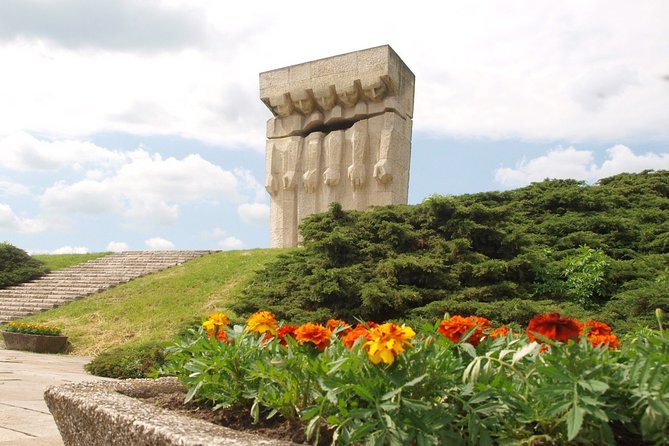
Memorials and the Monument of Torn-Out Hearts
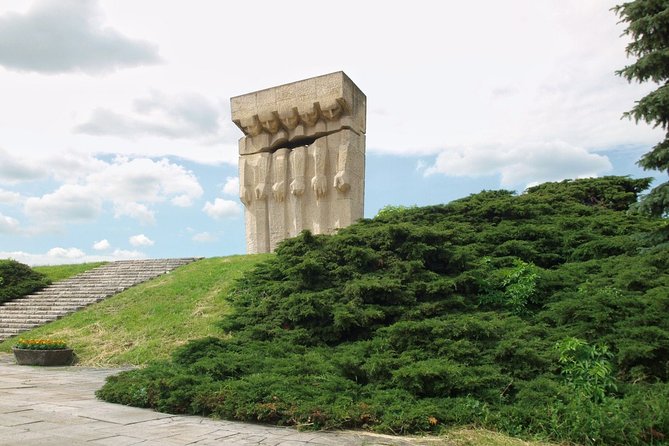
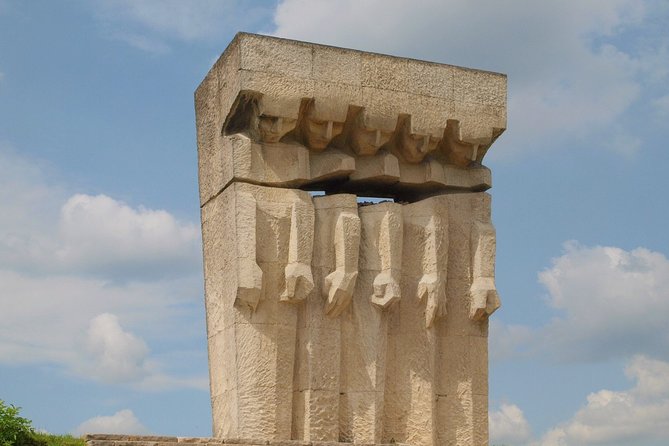
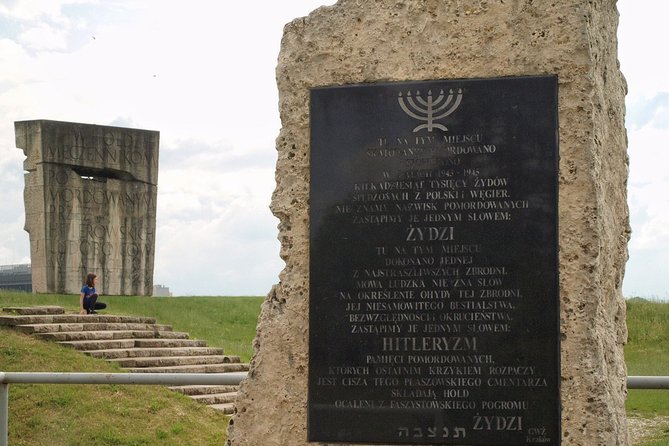
Several memorials mark the violence carried out at Plaszow. The Monument of Torn-Out Hearts is one of the major places where the group pauses.
This is not a quick photo stop. You will have time to consider what the memorial represents and how it relates to the people imprisoned and murdered here. The guide also identifies locations connected with executions and mass graves.
The setting can be hard to process because it is not enclosed or heavily staged. The site’s openness may make it feel quiet and removed from the city, yet the tour keeps bringing you back to the fact that thousands of people suffered here.
I would allow yourself some silence during this part. The guide will answer questions, but you do not need to fill every moment with them. The tone is educational and serious, and the strongest parts of the walk come when the facts are allowed to settle.
Oskar Schindler’s role, beyond the film
Plaszow is closely tied to Oskar Schindler, whose story became widely known through Schindler’s List. The film connection can help you place the site, but the tour gives you more than a movie-location checklist.
Schindler operated an enamelware enterprise and sought work permits for Jewish prisoners registered through Plaszow. Those permits helped shield selected workers from further transports. Later, he arranged their transfer to his wartime factory in Brunnlitz, saving more than 1,000 lives.
Your guide explains this story as part of the camp’s wider system. That is important. Schindler’s actions did not take place apart from Plaszow. They depended on the camp’s registration, labor, and transport structure.
The walk also helps separate the historical site from the film version. One guide may show you photographs and explain how the film followed real events, while also pointing out what has changed or disappeared. If you have watched the film, you will likely recognize some names and situations, but you should expect a history lesson rather than a set tour of filming locations.
The guides make the difference
Because Plaszow has so few intact structures, the guide matters more here than on a site where signs and buildings tell the story by themselves. A strong guide must explain the camp clearly, point out small physical clues, and handle the subject with care.
Guides associated with this experience include Bartholomew, Barbara, and Phil. Bartholomew is described as informative and well prepared. Barbara’s route included photographs, answers to questions, and a steady explanation from Heroes Square to the camp. Phil took time to show the main sites and explain what happened at each one.
You should expect an expert-led walk with room for questions. The group operates in one language only, and English is the language offered here. The maximum group size is 25 people, so this is not a private tour, but it is still small enough for a guide to address the group directly.
A larger group can be less intimate at memorials, particularly if everyone gathers around a photograph or narrow path. The benefit is the lower cost and the chance to hear questions that may add useful context.
Is $30.04 a fair price?
At $30.04 per person, this is a reasonable price for a two-hour guided experience, especially because the value comes from interpretation rather than admission to a large museum. The stop entries are listed as free, so you are mainly paying for the guide, organization, and route between the square and Plaszow.
I would not compare this with a simple self-guided walk. You can reach the area on your own, but the surviving evidence is easy to miss or misunderstand. The Grey House, cemetery traces, roll-call square, road fragments, memorials, and camp sections do not explain themselves.
The price is most worthwhile if you want historical structure. You receive the chronology of the ghetto, forced labor, the concentration camp period, executions, transit to Auschwitz, and Schindler’s connection in one focused visit.
It is less useful if you only want to see recognizable film sites or take a quick look around. The experience is serious and information-heavy. You should book it because you want to understand Plaszow, not because you expect a polished attraction.
What to bring and how to prepare
Wear comfortable shoes. The walk covers outdoor ground, and the physical requirement is listed as moderate. You may find the site easier to manage with practical clothing suited to walking rather than an outfit chosen for a short city stop.
Give yourself extra time to reach the meeting point at Apteka pod Orłem. The tour asks you to arrive 10 minutes early, and latecomers cannot join after the group leaves.
Prepare emotionally, too. The tour covers murder, forced labor, deportation, desecrated cemeteries, and mass graves. The subject is not softened by a large museum setting. That directness is valuable, but it can be heavy.
The group is in English and uses one language only. If you need a different language, select it at booking, since the group does not combine multiple languages.
Who should book this Plaszow walk?
I recommend it to you if you want a focused introduction to Kraków’s wartime history and prefer an expert to explain a difficult site as you walk through it. It also suits anyone interested in Oskar Schindler who wants the historical setting behind the film.
This tour is a good match for visitors who value context, photographs, memorials, and careful explanation more than intact architecture. The route is particularly useful if you are unsure how the former ghetto and Plaszow fit together.
I would choose something else if you have limited mobility, dislike outdoor walking, or want a museum-style visit with many preserved rooms. The camp’s remains are partial, and the experience asks you to concentrate.
Should you book the Plaszow guided tour?
Book it if you want to understand what happened at Plaszow and how the site connects to Ghetto Heroes Square and Oskar Schindler. The strongest reasons are the route between the two places, the use of historic images, and the guide’s explanation of remains that would otherwise be easy to overlook.
Skip it if you are looking for a light sightseeing stop or a complete preserved camp. Plaszow is quiet, sparse, and emotionally demanding. For the right visitor, that is precisely why a careful two-hour guide-led walk is worth $30.04.
FAQ
How much does the Plaszow Concentration Camp tour cost?
The listed price is $30.04 per person.
How long does the tour last?
The experience lasts approximately two hours.
Where does the tour begin?
It begins at Apteka pod Orłem, Plac Bohaterów Getta 18, Kraków.
Where does the tour end?
It ends at the bus stop at 57 Kamieńskiego Street, Kraków.
What language is offered?
The tour is offered in English. Group tours operate in one language only, so select your preferred language when booking.
How early should I arrive?
Arrive 10 minutes before the scheduled start time. Late arrivals cannot join once the group has departed.
How large is the group?
The tour has a maximum of 25 people.
Is the tour physically demanding?
A moderate level of physical fitness is requested. The experience involves substantial walking, so comfortable shoes are advised.
Is admission to Plaszow included as a separate ticket?
The listed admission charge for the Plaszow stops is free. The tour price covers the guided experience.
Can I cancel for a full refund?
Yes. You can cancel at least 24 hours before the local start time for a full refund. Cancellations or changes made less than 24 hours before the start are not refunded or accepted.
Just added in Kraków
- Wawel Castle, Old Town with St. Mary’s Church Guided Tour★ 5.0 · 3 reviews
- Wawel Castle, Old Town with St. Mary’s Church Guided Tour★ 5.0 · 5 reviews
- Wawel Castle, Cathedral, Old Town and St. Mary’s Basilica★ 4.8 · 13 reviews
- Wawel Castle, Cathedral, & Rynek Underground Tour with Lunch★ 4.5 · 10 reviews
- Wawel Castle & Cathedral Skip the Line Small Group Tour★ 5.0 · 3 reviews
- Wawel Castle and Cathedral Guided Tour★ 4.6 · 44 reviews
- Wawel Castle, Cathedral, Rynek Underground Tour with Lunch★ 5.0 · 3 reviews
- Wawel Castle and Cathedral Guided Tour★ 5.0 · 8 reviews
WWII Memorial & Camp Tours, compared.
Warsaw for WWII Buffs – private tour with hotel pickup
Read the review →
Treblinka Death Camp 6 Hour Private Tour from Warsaw
Read the review →
Stutthof Concentration Camp English Tour with Gdansk Hotel pickup
Read the review →
Majdanek Concentration Camp & Lublin Full Day Private Tour from Warsaw
Read the review →Browse the lists this tour appears in