
Reviewed · WWII MEMORIAL & CAMP TOURS
Guided Tour in Kraków-Płaszów Former Concentration Camp
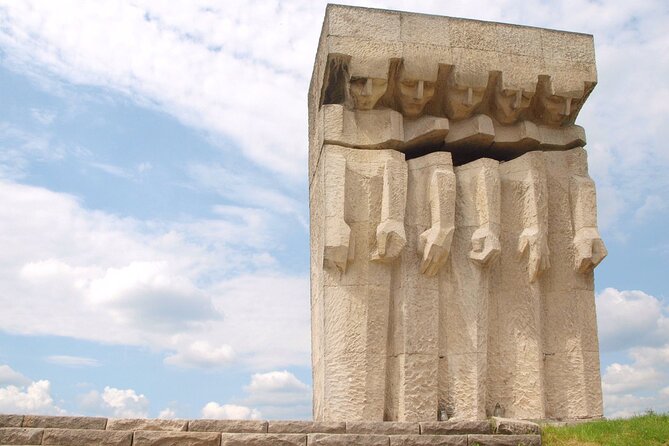
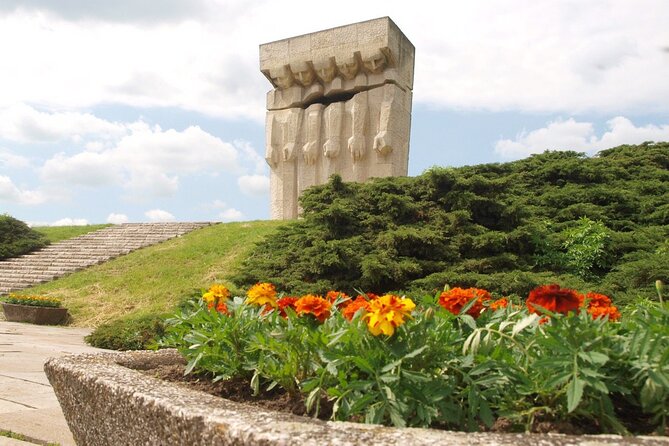
Kraków’s former Płaszów concentration camp sits in plain sight, yet many visitors pass through the city without realizing it is there. This two-hour walk connects the camp with Ghetto Heroes Square and a surviving piece of the ghetto wall, giving you a clearer picture of Kraków during the Holocaust.
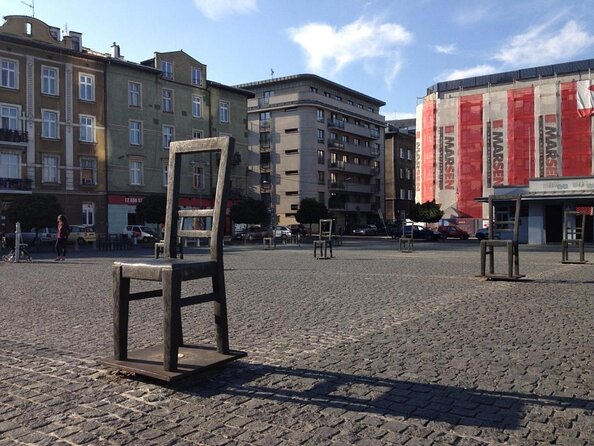
I like the route’s strong sense of place, especially the 70 metal chairs in the square and the quiet, open grounds of Płaszów. I also like the personal help available from guides such as Olga, who has assisted with tram tickets as well as the history.
The main drawback is the condition of the former camp grounds. The area is uneven and largely undeveloped, so this is a serious historical walk rather than a polished museum visit. Wear practical shoes and be ready for difficult subject matter.
Key points to know before you book
- The tour links three important sites: Ghetto Heroes Square, the former Płaszów concentration camp, and a 12-metre fragment of the original ghetto wall.
- The route lasts about two hours: The camp visit itself is listed at about one hour, with time also spent at the square and wall.
- The setting is stark and undeveloped: Płaszów is an open, uneven area with little visible infrastructure to explain what happened there.
- The group can include up to 25 people: That is small enough for a guided walk, though a very small group may offer more chance to ask questions.
- The tour is in English: It uses a mobile ticket and starts near Apteka pod Orłem in Podgórze.
- The price is $30.01 per person: For a two-hour guided history walk, the value depends largely on how much context and discussion you want.
Why Płaszów matters in Kraków
Many people use Kraków as a base for Auschwitz, but the city has its own former concentration camp on the other side of the river. Płaszów is in Podgórze, near Wielicka Street, the Bonarka shopping center, and Krakus Mound.
That location can be hard to grasp. You are not heading into a remote memorial complex. The former camp occupies open ground in an active part of the city, surrounded by ordinary roads, homes, shops, and daily traffic. The contrast makes the visit especially sobering.
The site has remained largely undeveloped. Until recently, there was little to tell you that this was once the German Nazi camp known as Konzentrationslager Plaszow bei Krakau. A guide is therefore useful here. Without one, you may see a broad patch of grass and rough ground without understanding its place in Kraków’s wartime story.
I find that this is the central reason to take the tour. The guide supplies the missing framework. You are not simply looking at a monument. You are learning how the camp fitted into the city and how the destruction of Kraków’s Jewish community unfolded through places that still exist today.
Other wartime memorials reachable from Kraków:
- Krakow: Plaszow Concentration Camp Walking Tour
★ 4.8 · 39 reviews - Krakow: Schindler’s Factory & Ghetto & Plaszow Camp Guided Tour
★ 4.5 · 28 reviews - Krakow World War II Private Tour
★ 5.0 · 16 reviews
Starting at Ghetto Heroes Square
The walk begins at Apteka pod Orłem, at Plac Bohaterów Getta 18. This places you directly beside Ghetto Heroes Square, formerly known as Plac Zgody.
The square has had several lives. During the postwar period, it was neglected and used at different times as a public toilet and a parking area. In 2005, it was renovated in a way that sparked debate, but its present design is now one of Kraków’s most recognizable memorials.
Seventy large metal chairs are arranged across the square. They represent departure and absence. The idea is simple, but the effect is strong. The chairs occupy the space without filling it, creating a memorial that feels less like a traditional monument and more like a reminder of people who are no longer there.
Your guide will explain the square’s history before the group moves on. This is a useful opening because it places the later visit to Płaszów within the wider story of the Kraków Ghetto. You begin in a public urban space, then follow the historical path toward the former camp.
The square is also a practical meeting point. It is near public transportation, and the starting address is specific enough to make finding the group easier. If you arrive early, the chairs give you time to look around and consider the meaning of the place before the walking tour begins.
Walking through the former Płaszów camp
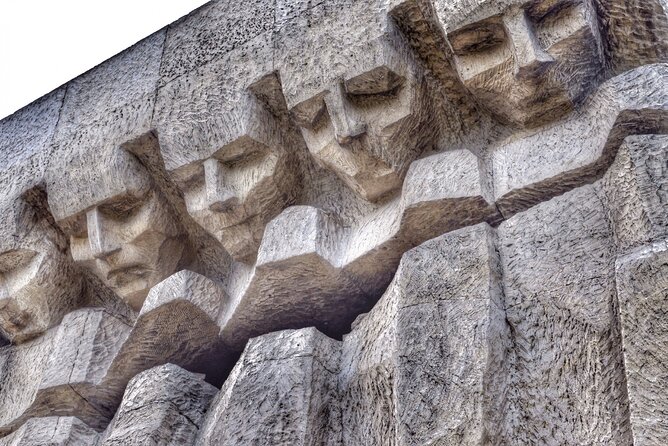
The main part of the tour is the guided visit to Płaszów. The camp area is described as vast, open, and uneven. That physical condition matters. You should not expect a museum with a clear entrance, indoor galleries, or a neatly marked sequence of rooms.
Instead, the guide leads you through a place where the evidence is often less obvious. The area’s quiet appearance can be misleading. It may look like an ordinary open space, but the guide explains what the ground represents and how the camp related to Kraków.
The visit is listed as lasting about one hour. That gives the guide enough time to explain the site without turning the entire experience into a rushed stop. The full activity lasts about two hours, allowing time for the square, the camp, and the wall fragment.
I would treat the walking conditions as part of the experience, not a minor detail. Uneven ground can slow the group and may be uncomfortable for anyone who has trouble walking. The tour does not promise a fully accessible route, although the information says most people can participate. Practical shoes are a sensible choice.
The lack of development has two sides. It can make the site feel quiet and exposed, allowing you to think without the distractions of a large museum. At the same time, it means the guide carries much of the interpretive work. If you prefer displays, artifacts, and extensive signage, this visit may feel spare.
For me, that sparseness is also why an English-speaking guide adds real value. A well-prepared guide can point out what you would otherwise miss and explain the connection between the city, the ghetto, and the camp. The tour description specifically promises context for the tragic events, rather than a simple walk around the grounds.
The surviving ghetto wall fragment
After the camp visit, the route passes by one of Kraków’s clearest physical reminders of the ghetto: a 12-metre fragment of the original wall.
A commemorative plaque was added in 1983 in Hebrew and Polish. Its message recalls the people who lived, suffered, and died under German persecution, and the final journey from the ghetto to the death camps.
The wall is not a large attraction, and you should not expect a long stop. Its value comes from its authenticity and its direct connection to the ghetto. The chairs at Ghetto Heroes Square create a symbolic memorial. This wall is a surviving part of the actual structure that confined the community.
Placed near the end of the route, it gives the tour a physical closing point. You have seen the square where people were forced to leave, learned about the camp outside the center, and then encountered a remaining section of the wall itself.
The listed end point is near Henryka Kamieńskiego 57, at the bus stop at 57 Kamienskiego Street. That is useful to know because the tour does not return you to the starting point. You should plan your onward route from the end rather than assuming you will finish back at Apteka pod Orłem.
A few more things to do in Kraków worth a look
- From Krakow: Auschwitz-Birkenau Guided Tour & Hotel Pickup
★ 4.5 · 33,358 reviews - From Krakow: Auschwitz-Birkenau Guided Tour & Hotel Pickup
★ 4.5 · 29,340 reviews - Krakow: Auschwitz Guided Tour with Optional Hotel Pickup
★ 4.5 · 15,280 reviews - Krakow: Auschwitz-Birkenau Guided Tour with Pickup & Lunch
★ 4.5 · 9,800 reviews
What the guide adds to the visit
This experience depends heavily on the guide. Płaszów is not presented as a self-explanatory memorial site, so the quality of the explanation matters more here than it would at a large museum.
Olga is one guide named in the feedback. She is described as well prepared, kind, and helpful with practical matters, including tram tickets. That small detail is worth noting. A guide who can help you handle local transport can make the rest of your day easier, especially if you are not familiar with Kraków’s ticket system.
The group may be smaller than the maximum of 25. A very small group can make the walk feel more focused and gives you more room to ask questions. A full group will still be limited compared with a large city tour, but you may have less direct time with the guide.
The experience is offered in English. If you want a tour that explains the historical setting rather than simply points out locations, this format makes sense. The subject is serious, and a clear explanation helps prevent the sites from becoming disconnected images.
The guide also has to strike the right tone. Płaszów is not a place for casual entertainment or quick photo stops. The strongest part of the experience is the careful explanation of what happened and why these places matter. You should choose it if you want a thoughtful historical walk, not a light sightseeing outing.
Is $30.01 a fair price?
At $30.01 per person, the tour is not the cheapest way to see the area. You can walk through public spaces independently, and the wall fragment and Ghetto Heroes Square do not require a separate admission ticket.
The price pays for interpretation, organization, and the connection between sites. That connection is important. Seeing the chairs, the camp grounds, and the wall separately would give you pieces of the story. A guide joins those pieces and explains Kraków’s wartime history in a way that is difficult to reproduce from a quick walk alone.
The value is strongest if you are unfamiliar with Kraków or want more than a few photographs. It is also useful if you are considering a visit to Auschwitz and want to understand what happened closer to the city itself.
The value is weaker if you already know the history well, prefer to read at your own pace, or want a site with extensive preserved structures. Płaszów has very little visible development, so the tour’s worth depends on the guide’s explanation rather than the number of physical exhibits.
The tour is often booked well ahead of time, with an average booking time of 29 days in advance. That does not mean you must reserve a month ahead, but it suggests you should not leave it until the last moment if the timing matters to your plans.
Who will appreciate this walk
I would recommend this tour to adults and older students with a serious interest in Kraków’s wartime history. It suits people who want to connect the city’s main Jewish historical sites rather than visit only one memorial.
It is also a good choice if you want a short activity. Two hours is long enough to give the subject weight, but short enough to fit into a day of sightseeing. You can combine it with other Podgórze sights if you plan your route carefully.
The walk may be less suitable for anyone looking for a relaxed city stroll. The topic is tragic, and the uneven former camp grounds may be tiring. You should also think about mobility needs before booking, since the area is not described as a fully paved or museum-style route.
A small group can make the experience personal, while the 25-person maximum keeps it from becoming a huge procession. Still, group size can vary, so do not assume you will receive a private tour.
Booking and cancellation details
The tour uses a mobile ticket, is offered in English, and provides confirmation at the time of booking. It begins at Apteka pod Orłem, Plac Bohaterów Getta 18, and ends near the bus stop at Henryka Kamieńskiego 57.
The activity offers free cancellation if you cancel at least 24 hours before the start time. Cancellations or changes made less than 24 hours before the tour are not accepted for a refund, and the cut-off follows local time.
Because the tour ends at a different point from where it begins, check your route before setting out. If you need transport help, a guide such as Olga may be able to assist with tram tickets, but you should still allow time to reach the meeting point.
Should you book the Płaszów tour?
Book it if you want the historical context that turns three separate Kraków locations into one clear story. The 70 chairs at Ghetto Heroes Square, the open grounds of Płaszów, and the surviving ghetto wall each carry meaning, but the guide helps you understand how they fit together.
Skip it if you want a polished museum visit, preserved buildings, or a gentle sightseeing walk. The site is uneven, open, and emotionally difficult. At $30.01, the tour is worthwhile for its explanation and route, not for a large collection of physical exhibits.
For most visitors interested in Kraków’s Holocaust history, I think the tour makes a strong two-hour addition to the city. Go with practical shoes, enough time to think, and realistic expectations about what remains at Płaszów.
FAQ
How long is the guided Płaszów tour?
The experience lasts approximately two hours. The visit to the former Płaszów concentration camp itself is listed as lasting about one hour, with additional time spent at Ghetto Heroes Square and the ghetto wall fragment.
Where does the tour begin?
The meeting point is Apteka pod Orłem at Plac Bohaterów Getta 18, 33-332 Kraków, Poland.
Where does the tour finish?
The tour ends at Henryka Kamieńskiego 57, near the bus stop at 57 Kamienskiego Street.
Is the tour offered in English?
Yes. The experience is offered in English.
How large can the group be?
The activity has a maximum group size of 25 people.
What sites are included?
The route includes Ghetto Heroes Square, the former Płaszów concentration camp, and a 12-metre fragment of the original Kraków Ghetto wall.
Can I cancel for a full refund?
Yes, if you cancel at least 24 hours before the experience starts. Cancellations or changes made less than 24 hours before the start time are not eligible for a refund.
Just added in Kraków
- Wawel Castle, Old Town with St. Mary’s Church Guided Tour★ 5.0 · 3 reviews
- Wawel Castle, Old Town with St. Mary’s Church Guided Tour★ 5.0 · 5 reviews
- Wawel Castle, Cathedral, & Rynek Underground Tour with Lunch★ 4.5 · 10 reviews
- Wawel Castle & Cathedral Skip the Line Small Group Tour★ 5.0 · 3 reviews
- Wawel Castle, Cathedral, Old Town and St. Mary’s Basilica★ 4.8 · 13 reviews
- Wawel Castle and Cathedral Guided Tour★ 4.6 · 44 reviews
- Wawel Castle, Cathedral, Rynek Underground Tour with Lunch★ 5.0 · 3 reviews
- Wawel Castle and Cathedral Guided Tour★ 5.0 · 8 reviews
WWII Memorial & Camp Tours, compared.
Warsaw for WWII Buffs – private tour with hotel pickup
Read the review →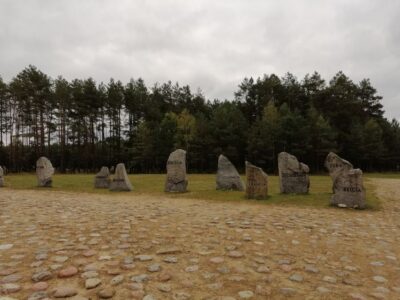
Treblinka Death Camp 6 Hour Private Tour from Warsaw
Read the review →
Stutthof Concentration Camp English Tour with Gdansk Hotel pickup
Read the review →
Majdanek Concentration Camp & Lublin Full Day Private Tour from Warsaw
Read the review →Browse the lists this tour appears in