
Reviewed · SCHINDLER'S FACTORY TOURS
Jewish Quarter Kazimierz and Schindler’s Factory Guided Tour
Krakow’s Jewish story comes into focus on foot, from the synagogues and cemetery of Kazimierz to the wartime streets connected with the Jewish ghetto. The tour then moves to Schindler’s Factory Museum, where Krakow under Nazi occupation is presented through photographs, objects, reconstructed streets, and personal stories.
I like the clear two-part structure: Kazimierz gives you centuries of context, while the museum shows how occupation changed daily life. I also like the licensed English-speaking guides, who have included Margaret, Helena, Joanna, Dominika, Janna, Barbara, and others praised for clear explanations and personal stories.
The main caution is the name. You do not tour a working factory filled with original enamelware equipment. The museum occupies the former administrative building, and the experience focuses more on Krakow and the Nazi occupation than on Oskar Schindler himself.
Key points to know before booking
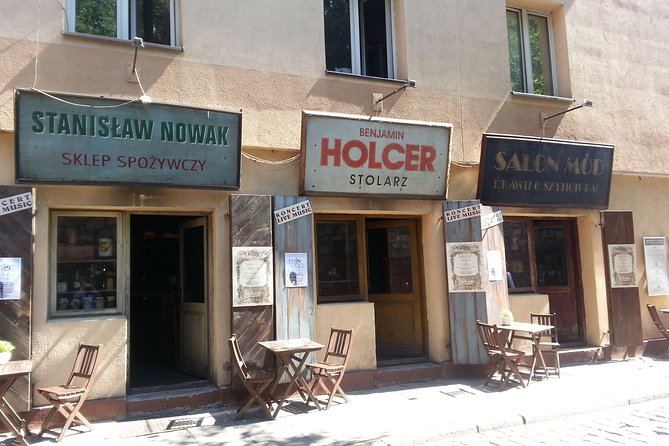
- Kazimierz begins on Szeroka Street, the old Jewish quarter’s historic center, with synagogues, townhouses, and sites tied to centuries of Jewish life.
- You pass the Old Synagogue, Remuh Synagogue and Cemetery, Kupa Synagogue, and Tempel Synagogue, though entrance to the synagogues is not part of the stated tour.
- The guide explains the difference between Kazimierz and the wartime ghetto in Podgórze, a useful distinction often blurred by film publicity.
- Schindler’s Factory Museum is a WWII museum, not a tour of the original production floor or machinery.
- Fast-track admission is included, valuable when museum lines are long, but the guided visit can feel rushed if you want to study every display.
- The tour is conducted in English and capped at 25 people, with the walking section sometimes smaller than the museum group.
Kazimierz begins with Krakow’s Jewish story
Meet at Szeroka 24, in the heart of Kazimierz. This is a good starting point because the street brings several layers of Krakow together in one view: old townhouses, Jewish religious buildings, restaurants, memorials, and the remains of a district that once supported a large Jewish community.
Your guide first sets the scene before World War II. The point is not simply to identify old buildings. You learn how Jewish residents shaped Krakow’s culture and economy, how religious life worked, and how Jewish and Christian communities developed side by side.
That background matters. Without it, the later story of Nazi persecution can feel like a string of dates and tragedies. With it, the places in Kazimierz become evidence of an established community, not just scenery from a war film.
The walk lasts about 90 minutes. It is an easy-paced city walk, though you will spend most of that time on your feet and outdoors. Comfortable shoes are sensible, and you should check the weather before setting out. The tour runs in rain or heat, so clothing can make a real difference.
More Schindler's Factory tours from Kraków:
- Krakow: Oskar Schindler’s Factory Entry Ticket & Guided Tour
★ 4.2 · 3,793 reviews - Krakow: Schindler’s Factory Tour with Entrance Ticket
★ 4.5 · 3,182 reviews - Krakow: Schindler’s Factory Skip-the-Line Ticket
★ 4.4 · 3,105 reviews
Four important Jewish sites on Szeroka Street
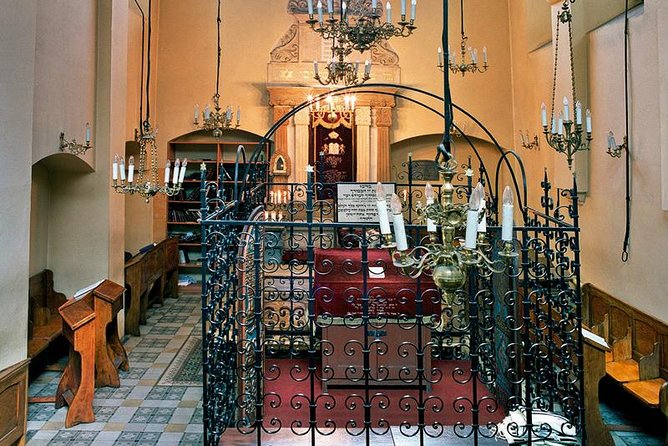
The Old Synagogue is one of the major stops. It is the oldest preserved synagogue in Poland and now operates as a museum of Jewish history. Even from outside, it helps explain the importance of Szeroka Street, but remember that the tour includes the walking route rather than a separate synagogue visit.
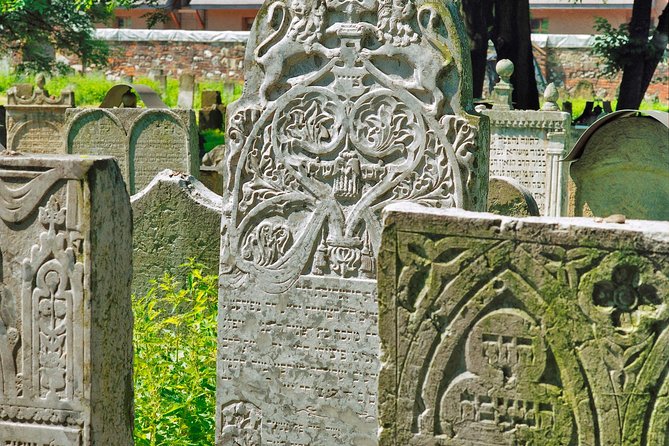
Next comes the Remuh Synagogue and Cemetery, among Poland’s most important Jewish religious sites. The location connects the present district with Rabbi Moses Isserles, known as Remuh, who taught in Krakow in the 16th century. This is one of the tour’s strongest historical links because it reaches far beyond the WWII period.
You also pass Kupa Synagogue, which once served poorer residents, and Tempel Synagogue, now used for cultural activity. Each site adds a different detail: worship, social class, scholarship, and the continuing effort to keep Jewish life visible in Krakow.
The guide may use photographs to show how Kazimierz looked in earlier periods. That visual comparison can help you read the buildings more carefully. What appears to be a fashionable district today has a much heavier past, and the contrast is part of the experience.
Kazimierz, Podgórze, and the film connection
One useful part of the tour is the explanation of location. Kazimierz was the historic Jewish district, but the Jewish ghetto created by the Nazis was across the river in Podgórze. Steven Spielberg filmed parts of Schindler’s List in Kazimierz because its streets and buildings could suggest wartime Krakow.
That choice created a memorable film setting, but it also caused some confusion. The tour helps separate the real geography from the movie version. You see locations associated with the film and learn where Spielberg made creative decisions rather than simply reproducing the exact historical setting.
This section works best if you have seen Schindler’s List, but you do not need to have watched it. The film references add interest, while the guide keeps the focus on the people and places rather than turning the walk into a movie-location hunt.
The route may also include wartime sights connected with the ghetto, including part of the remaining wall and buildings linked to that period. The supplied timing lists Kazimierz as the main 90-minute walk, but some tours have included additional ghetto-related context. Since site schedules can change, consider the stated itinerary a guide rather than a minute-by-minute promise.
The walk has real strengths, and a few limits
The best guides make the walk personal without losing control of the facts. Helena, Margaret, Janna, Barbara, Joanna, Dominika, and other named guides have been praised for clear English, strong local knowledge, patience with questions, and an ability to explain painful events with care.
Some guides have also shared family connections to wartime rescue efforts or personal memories of life in Poland. That kind of perspective can give the history a human scale. It is not guaranteed that you will receive a particular guide, but the experience depends heavily on who leads your group.
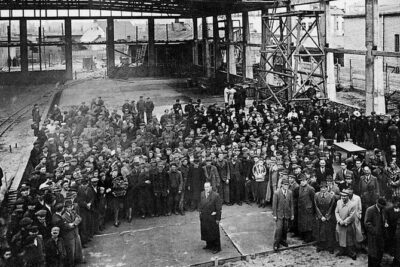
The route is generally described as comfortable and easy-paced. Still, this is a serious subject, not a light sightseeing stroll. You will hear about forced displacement, deportation, the destruction of Jewish life, and the treatment of Krakow’s Jewish population during Nazi occupation.
A guide may repeat key facts, which is useful when the subject is dense or when children are in the group. If you prefer a highly informal walk, the delivery may occasionally feel structured or mechanical. That is a fair trade for a route that covers a lot of history in a short time.
Other Jewish-heritage walks around Kraków:
- Krakow: Schindler’s Factory & Ghetto Guided Tour
★ 4.7 · 1,694 reviews - Krakow: Jewish Quarter and Former Ghetto Tour
★ 4.9 · 1,441 reviews - Krakow: Bike Tour of Old Town, Jewish Quarter and the Ghetto
★ 4.9 · 1,155 reviews - Krakow: Kazimierz Jewish Quarter Walking Tour
★ 4.8 · 571 reviews
Entering Schindler’s former administrative building
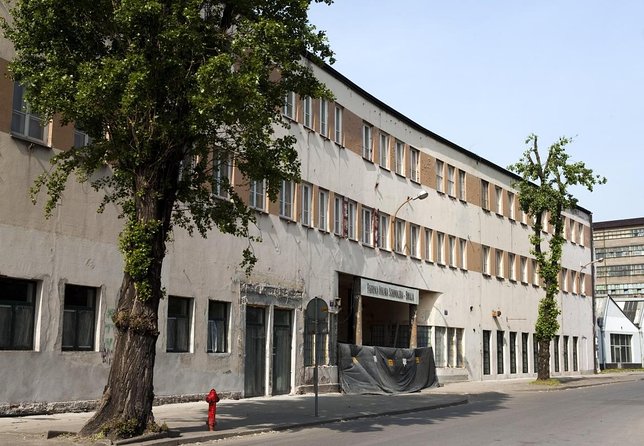
From Kazimierz, the tour continues to Lipowa 4, where the Schindler’s Factory Museum is located. The museum occupies the former administrative building connected with Oskar Schindler’s enamelware operation.
This is the point where expectations matter most. You are not touring the original factory floor, and the building no longer contains the original production equipment. The neighboring factory site is not the focus of this visit. Instead, you enter a museum built around the exhibition Krakow under Nazi Occupation 1939 to 1945.
Schindler’s role remains part of the story. He employed Jewish workers and used his position and resources to protect more than a thousand people from deportation. The people he helped are often called Schindlerjuden, and the museum places their survival within the wider events taking place in Krakow.
But the museum is not solely a Schindler biography. Much of the exhibition concerns the city, its residents, the Nazi invasion, the Jewish ghetto, forced labor, deportation, and liberation. If you want an entire visit devoted to Schindler’s personal life and business, this tour may not match your expectations.
What the museum displays
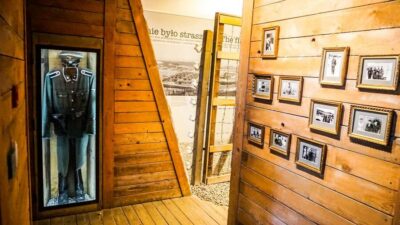
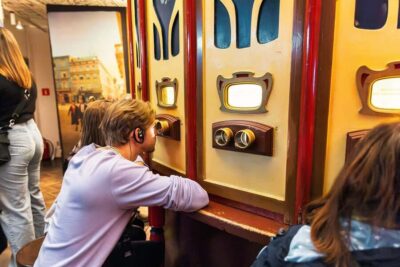
The exhibition uses photographs, documents, personal objects, reconstructed streets, and an immersive layout. Narrow passageways are part of the design, intended to reflect the pressure and uncertainty of Krakow during the occupation.
You move through a carefully arranged account of daily life under Nazi rule. The museum’s strength is scale. It shows that the story was not only about one rescuer, but also about families, workers, officials, resistance, fear, and impossible choices.
The Nazi material can be disturbing. Regalia and propaganda are presented as historical evidence, but their presence is unnerving. You should expect an emotionally heavy visit and allow yourself time afterward before moving on to another major sight.
The stated museum portion lasts about 90 minutes. That is enough for a guided introduction and the main sequence, but it is not enough for a slow look at every object and panel. Some people prefer the guide because the displays are dense and the context helps them understand what they are seeing. Others would rather explore alone and spend several hours with the exhibition.
This is the tour’s central compromise: guidance gives you structure and saves time, while independent exploration gives you more time to read and reflect.
Group size, timing, and the value of fast-track entry
The maximum group size is 25, as set by museum guidelines. The Kazimierz section may be quite small, while additional people can join for the museum portion. That change can make the second half feel less intimate, especially in narrow passageways.
Fast-track admission is included. This can be worthwhile because the museum is popular and waiting in line would cut into a short Krakow visit. The admission is also useful if you would feel uncertain about tackling the exhibition without an introduction.
Arrive at least 10 minutes early at Szeroka 24. Once the group has entered, late arrivals cannot be accommodated, and the ticket is not refundable. Museum scheduling can affect the final start time, so do not plan a tight connection immediately afterward.
All group tours use one language. Select English when booking, and provide the full names of everyone in your party because the museum issues personalized tickets.
Is $71.20 a fair price?
At $71.20 per person, this is not the cheapest way to walk through Kazimierz. You can see the streets and several exteriors independently for little or no cost. The price pays for the guide, the historical explanation, museum admission, and faster entry.
I think the value is strongest for a first visit to Krakow, especially if you have only a few days and want the two sites connected in one booking. The guide saves you from treating Kazimierz as a collection of attractive old buildings and gives you a framework for the museum.
The value is weaker if you already know Krakow’s Jewish history or want to spend half a day inside the museum. In that case, the 90-minute guided visit may feel too fast, and you may prefer to arrange a longer independent museum visit.
The tour receives a 4.7 rating from 78 reviews, with 92 percent recommending it. Those figures fit the main pattern: the guides are the strongest part, while the chief reservation concerns the museum’s focus and limited time.
Who should book this tour?
I would choose this tour if you want a clear introduction to Kazimierz, need help sorting film locations from real wartime geography, and value a guide who can connect the museum displays to Krakow’s wider story.
It is also a good fit for families and first-time visitors. The route is structured, the walking pace is generally manageable, and repeated explanations can help younger listeners follow a difficult subject.
I would hesitate if your main goal is to see original factory machinery or explore Schindler’s personal story in detail. The museum is about Krakow under occupation first, and Schindler’s factory second.
Final call: book it for context, not machinery
Book this tour if you want the human and historical context that turns Kazimierz and Schindler’s Factory Museum into more than separate sights. The combination is efficient, thoughtful, and often moving, with guides who can make a difficult subject easier to understand.
Skip it if you want a long, quiet museum visit or a true factory tour. For most first-time visitors, though, the fast-track entry and well-planned route make $71.20 reasonable, provided you arrive expecting a WWII museum rather than a preserved enamelware plant.
FAQ
How long does the tour last?
The tour lasts approximately 3 hours and 30 minutes, with about 90 minutes in Kazimierz and about 90 minutes at Schindler’s Factory Museum. Times can change because of museum or site scheduling.
Where does the tour start?
The tour starts at Szeroka 24 in Krakow’s Kazimierz district.
Where does the tour end?
The tour ends at Lipowa 4, the address of Schindler’s Factory Museum.
Is the tour conducted in English?
Yes. The listed tour is offered in English, and each group tour is conducted in a single language.
Is admission to Schindler’s Factory Museum included?
Yes. Fast-track admission to the museum is included.
Do I visit the original factory production floor?
No. The museum is in the former administrative building and no longer contains the original production equipment. The tour focuses on the WWII exhibition about Krakow under Nazi occupation.
How large can the group be?
The maximum group size is 25 people. The Kazimierz portion may have fewer people, while the museum section can be larger.
Are the synagogues included inside the ticket?
The walking tour passes the Old Synagogue, Remuh Synagogue and Cemetery, Kupa Synagogue, and Tempel Synagogue. The stated inclusions do not list separate admission inside the synagogues.
Can I cancel for a refund?
You can cancel at least 24 hours before the start time for a full refund. Cancellations or changes made less than 24 hours before the tour are not accepted or refunded.
Just added in Kraków
- Wawel Castle, Old Town with St. Mary’s Church Guided Tour★ 5.0 · 5 reviews
- Wawel Castle, Old Town with St. Mary’s Church Guided Tour★ 5.0 · 3 reviews
- Wawel Castle, Cathedral, Old Town and St. Mary’s Basilica★ 4.8 · 13 reviews
- Wawel Castle, Cathedral, & Rynek Underground Tour with Lunch★ 4.5 · 10 reviews
- Wawel Castle & Cathedral Skip the Line Small Group Tour★ 5.0 · 3 reviews
- Wawel Castle and Cathedral Guided Tour★ 4.6 · 44 reviews
- Wawel Castle, Cathedral, Rynek Underground Tour with Lunch★ 5.0 · 3 reviews
- Wawel Castle and Cathedral Guided Tour★ 5.0 · 8 reviews
Schindler's Factory Tours, compared.
Oskar Schindler’s Factory Entry Ticket & Guided Tour
Read the review →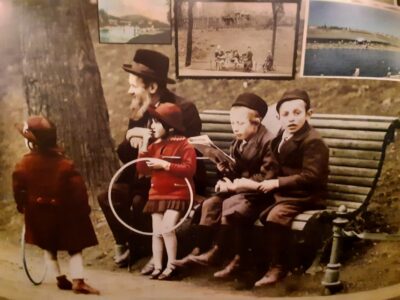
Schindler’s Factory Tour with Entrance Ticket
Read the review →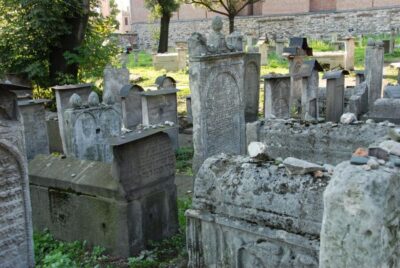
Schindler’s Factory in Krakow: Guided Tour & Skip the Line Ticket
Read the review →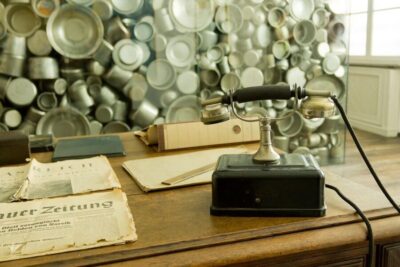
Schindler’s Factory Ticket with Guided Tour Option
Read the review →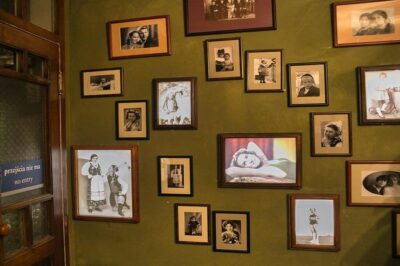
Krakow Schindler’s Factory Guided Tour with Admission Ticket
Read the review →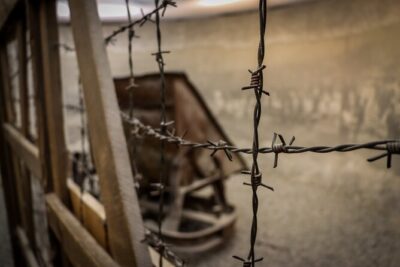
Krakow Schindler’s Factory Museum Guided Tour in English
Read the review →Browse the lists this tour appears in