
Reviewed · RETRO & ELECTRIC CAR TOURS
Private Warsaw City Tour by Retro Minibus with Hotel Pickup
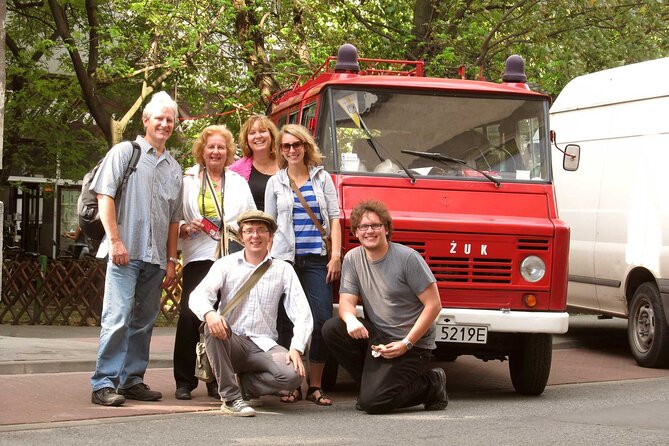
Warsaw’s past comes at you from several directions on this private tour, and the ride itself is part of the story. You travel in a classic Żuk, a boxy Polish minibus from the communist era, while your guide links rebuilt Old Town, surviving prewar streets, wartime ruins, and the city’s postwar years. You can shape the route around what interests you most.
I like the hotel pickup and drop-off, which saves time in a spread-out city, and I like the freedom to focus on one subject instead of racing through every sight. Guides such as Artur and Marek Sidorenko have been praised for clear English and strong local insight. The main catch is that the Żuk is used mostly between stops, so this is also a walking tour. Some vehicles have no air conditioning or seat belts, though heating is provided in winter.
Key points at a glance
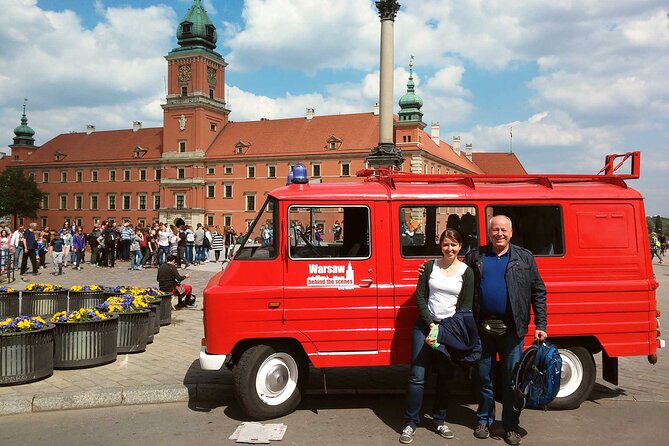
- A real communist-era Żuk: The wooden floor, modest fuel economy, and old-fashioned design make the vehicle part of Warsaw’s story.
- A route built around your interests: Choose broad city highlights, WWII, the Jewish Ghetto, Communist Warsaw, royal parks, or Praga.
- Private touring for up to eight people: Your group travels alone, with a guide who can adjust the pace and focus.
- Hotel pickup and drop-off included: You avoid arranging city transport at the start and end of the three-hour outing.
- Walking matters: The minibus connects areas, but each stop includes time on foot, so wear comfortable shoes.
- Strong guide-led experience: Artur and Marek Sidorenko are among the guides named in particularly warm feedback.
Why the old Żuk matters in Warsaw
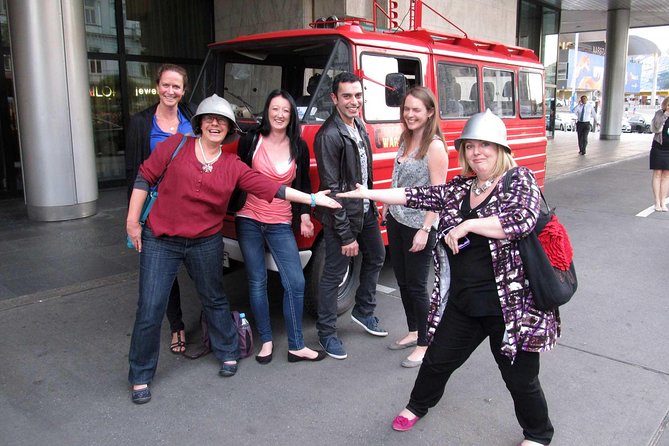
The retro minibus is not just a colorful taxi. The Żuk was produced in communist Poland and feels like a moving piece of everyday history. Its wooden floor and basic construction suit a tour built around Warsaw’s difficult twentieth century.
That makes the vehicle especially fitting for the Communist Warsaw option. Your guide can connect the minibus to the years after World War II, when Warsaw was rebuilt under a Soviet-backed system, then move toward the economic struggles of the 1960s and 1970s and the first free elections in 1989.
The ride is short between most sights. Do not picture three hours spent sitting in the van while a guide points through the windows. The minibus gets you across the Vistula and between districts, then you get out to walk, look closely, and listen.
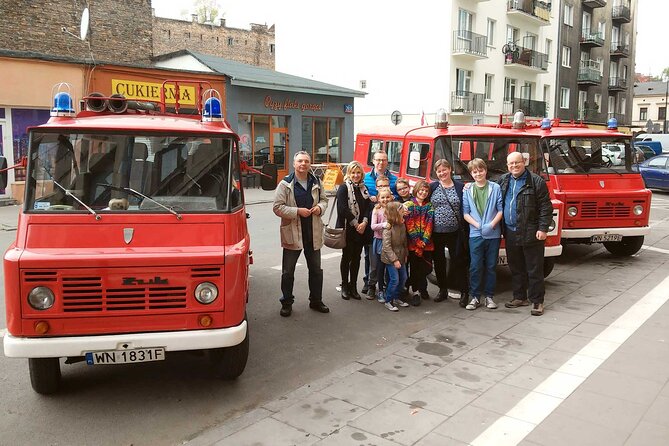
Each vehicle holds up to eight people, and the operator has five minibuses. Since this is a private activity, only your own party takes part. That matters for families, couples, and small groups who want to stop for questions or adjust the plan without slowing down a larger party.
Other sightseeing runs by little car around Warsaw:
- Private Tour: Warsaw City Sightseeing by Retro Fiat
★ 5.0 · 562 reviews - Discover the Dark Side of Warsaw in Praga District by Retro Bus
★ 5.0 · 327 reviews - Warsaw: 2.5-Hour Dark Side – Praga District by a Retro Bus
★ 4.5 · 248 reviews
Build your three-hour Warsaw route
The tour offers several suggested themes rather than one fixed path. In practical terms, you will need to choose. The listed stop times add up to more than three hours, so treat them as possible building blocks, not a promise that you will visit every district in one outing.
If this is your first time in Warsaw, I would put Old Town and the Royal Route high on the list, then add either Praga or Łazienki if time allows. If you have already seen the central sights, choose the Jewish Ghetto, Communist Warsaw, or the WWII route for a more focused look at the city.
Tell the operator what you want when arranging pickup. The guide can then shape the outing around your interests rather than follow a fixed checklist.
Old Town, rebuilt but full of clues
Old Town is the natural starting point for a first look at Warsaw. Castle Square introduces the city’s royal past, including the long connection between Poland and Sweden and the old trade routes that helped shape the capital.
From there, the walking route can lead past the Gothic Cathedral, through narrow side streets lined with tenement houses, and toward a riverside viewing point. The Market Square provides a pleasant pause, with colorful buildings, restaurants, and the familiar Warsaw mermaid at its center.
The key thing to understand is that Warsaw Old Town is reconstructed. It looks historic, but much of it was rebuilt after wartime destruction. A good guide helps you notice the difference between old urban patterns and newer fabric, rather than treating the district as a simple collection of pretty façades.
Allow time for stairs, uneven paving, and pauses. A barrel-organ player may add an old-fashioned soundtrack, but that encounter is not guaranteed. The Old Town portion is free to enter, and the value comes from the stories and orientation rather than admission to a single monument.
The Royal Route from Krakowskie Przedmieście to Nowy Świat
The Royal Route gives you a grander view of Warsaw. Krakowskie Przedmieście runs south from the Old Town and Royal Castle, lined with palaces, churches, manor houses, and important civic buildings.
Your guide can point out the Presidential Palace, Warsaw University, and the Staszic Palace, home to the Polish Academy of Sciences. The route continues along Nowy Świat, ending near the famous palm tree.
This is a useful stretch for understanding Warsaw as a capital rather than only a wartime memorial. It connects royal power, religion, education, government, and modern city life within a walkable central corridor.
The drawback is time. A three-hour private tour can give you a good introduction, but it cannot provide a full visit inside every church, palace, or institution. Choose this route when you want orientation and architecture, not a series of lengthy indoor admissions.
A few more things to do in Warsaw worth a look
- Warsaw: Warsaw Ghetto Private Walking Tour with Hotel Pickup
★ 4.9 · 369 reviews - Private Tour: Warsaw’s Jewish Heritage by Retro Fiat
★ 5.0 · 208 reviews - Private Historical Tour of Warsaw by a Retro Fiat with Pickup
★ 5.0 · 190 reviews - Warsaw for WWII Buffs – private tour with hotel pickup
★ 5.0 · 166 reviews
Praga Północ, the city that escaped total destruction
Crossing the Vistula changes the feel of the tour. From the minibus, you may see open riverside views before entering Praga, a district known for surviving much of the wartime destruction that erased large sections of central Warsaw.
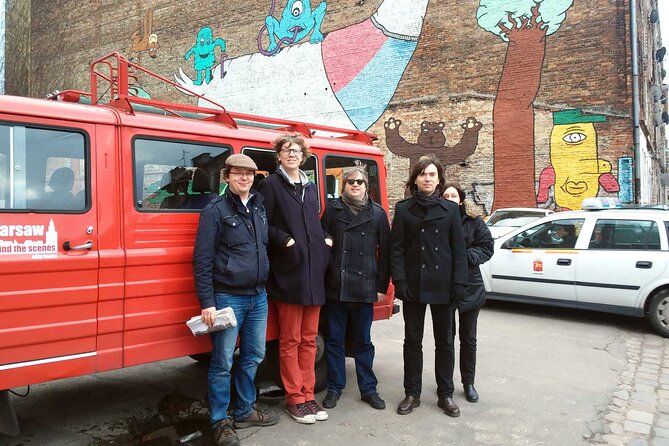
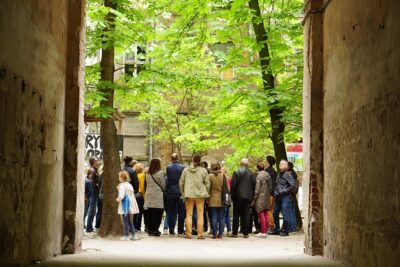
Praga’s older streets include Belle Époque buildings, worn façades, and small courtyards. The district was once neglected and is now associated with art and independent local life, yet it has not been reshaped entirely for tourism.
This is one of the best choices if you want to see a less polished side of Warsaw. You may find peeling walls, uneven sidewalks, and courtyards that feel more residential than scenic. That is precisely the point. The guide can explain how the district fits into the city’s past and present without reducing it to a photo stop.
Praga works well for repeat visitors and anyone who prefers daily urban texture to a string of grand monuments. Give it at least some walking time, since the character is in the side streets, not only in the view from the bus.
Łazienki Royal Gardens and the city’s calmer side
Łazienki Royal Gardens offer a break from Warsaw’s heavy wartime subjects. The park began in the seventeenth century as a bathing park for nobleman Stanisław Herakliusz Lubomirski. In the eighteenth century, Poland’s last monarch, Stanislaus II Augustus, developed it into a setting of palaces, villas, classical buildings, and monuments.
The park became public in 1918 and now serves as a place for music, art, and culture. Peacocks and squirrels add a lighter note, especially if you have spent the morning discussing occupation and destruction.
The gardens are best for travelers who want open space and royal architecture in the same stop. Keep in mind that the park takes time to walk. A short visit gives you a taste, while a longer stop lets you appreciate the grounds properly. If your main goal is WWII or Jewish history, Łazienki may be better saved for another outing.
Muranów and the Warsaw Jewish Ghetto
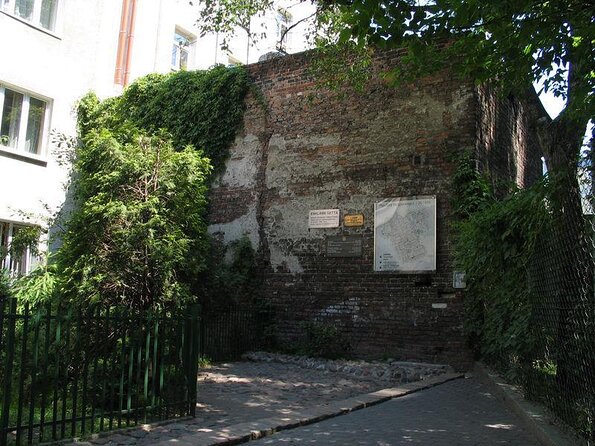
The Muranów district requires a slower, more thoughtful approach. At first glance, it can look like an ordinary neighborhood of squared apartment blocks. Beneath that surface is the site of the Jewish Ghetto, created by the German Nazis in 1940.
Your guide can help you read the area through what remains and what has disappeared. The 1943 uprising began when the last part of the Jewish community faced deportation to an extermination camp. The resistance lasted three weeks, and the district was then destroyed.
This portion of the tour is valuable because the evidence is not always obvious. You are not simply walking through a preserved historic quarter. You are trying to understand a neighborhood that was largely erased, with the modern city built over and around the traces.
Expect a serious tone. This is not a casual sightseeing stop, and it deserves attention rather than a quick photograph. If you want the guide to spend time on the uprising, deportations, and the physical changes to Muranów, say so before the tour begins.
Communist Warsaw beyond the Palace of Culture
The Communist Warsaw program looks at the years after the war, when the city was rebuilt and daily life was shaped by a centrally controlled economy. The Palace of Culture and Science is a major visual reference point, but the subject is larger than one imposing building.
The guide can connect postwar reconstruction with the rough decades of the 1960s and 1970s, then move toward the first free elections on June 4, 1989. You can also hear about how people managed shortages and ordinary life under the system.
This route suits anyone interested in twentieth-century Europe, architecture, politics, or family history. It can also correct a common misunderstanding: Warsaw’s story did not end when the war ended. The destruction, rebuilding, and decades under communism shaped the city you see today.
Admission to the Palace of Culture and Science is not included. The rest of the experience is mainly about seeing places from outside and listening to the guide. Ask in advance if you want a particular focus, such as architecture, personal life under communism, or the path to 1989.
A focused WWII route for serious history
The WWII program is the most intense option. It can cover the 1939 invasion, Nazi occupation, the Warsaw Ghetto Uprising, the 1944 Warsaw Uprising, and the Soviet advance and so-called liberation in 1945.
The route may include the Warsaw Uprising Monument, traces of street fighting, pieces of the former Ghetto wall, Umschlagplatz, wartime rubble sites, and surviving marks such as bullet holes. Archival photographs are used with the guide’s stories, helping you compare the city today with what stood there during the war.
This choice is not for a light overview. The subject includes tyranny, resistance, mass murder, destruction, and the political changes that followed. I would choose it if you have a strong interest in WWII or want to understand why modern Warsaw has so many memorial spaces.
The three-hour format gives you a serious introduction, not a complete study of the occupation. Still, the private setting is useful here. You can ask direct questions, pause at a memorial, and tell the guide which part of the story matters most to you.
What the private format is worth
The listed price is $167.76 per person. That is a considerable cost for a three-hour city tour, especially for one or two people. The value improves for a group of several people because the minibus holds up to eight and group discounts are offered.
You are paying for more than transport. The fee includes hotel pickup and drop-off, a local guide, live commentary, a private vehicle, and the ability to choose your subject. You also avoid spending time finding taxis or public transport between districts.
For a couple seeking the lowest-cost introduction to Warsaw, a shared walking tour may be better value. For a family or group of friends, the private rate can make more sense, especially when everyone wants the same route and a flexible pace.
The guide is the deciding factor. Artur has been praised for combining the major sights with explanations of how Poland works. Marek Sidorenko has been singled out for polished English and an engaging route in a small vintage vehicle. Another guide arranged a small vodka tasting for a group on a cold December day, but treat that as a personal touch that may happen, not a scheduled part of the tour.
Comfort, walking, and practical details
Wear comfortable shoes. The minibus connects the districts, but you will walk at Old Town, the Royal Route, Praga, Łazienki, Muranów, or the WWII sites.
The classic vehicles do not have air conditioning, and some do not have seat belts. Historic vehicles are permitted to operate that way under Polish law. All have heating for winter, but summer comfort can depend on the weather and the particular minibus assigned.
The tour is offered in English. Pickup details are confirmed by the operator, and pickup and drop-off at your hotel are included. Service animals are allowed, and the activity is near public transportation.
Instant booking is available for adults and children over 150 centimeters, about 4 feet 9 inches. Polish law requires a booster seat for shorter children, so contact the operator before booking to check availability. Most people can participate, but remember that this is not a seated sightseeing ride from start to finish.
Free cancellation is available up to 24 hours before the start time. Changes or cancellations inside that window are not accepted for a refund.
Who should book this Warsaw tour?
I would choose this tour for a small group that wants a private introduction without spending time organizing taxis, maps, and separate guides. It is also a strong choice if your party has a clear interest in WWII, the Jewish Ghetto, communist history, or Praga.
First-time visitors can use Old Town and the Royal Route to get their bearings, then return later for museums or longer walks. Repeat visitors should skip the broad overview and ask for a specific theme.
I would think twice if you want a fully air-conditioned vehicle, minimal walking, or long indoor visits. The Żuk is memorable, but it is old and basic. The tour works best when you see it as a guide-led city walk with historic transport, not as a three-hour drive past Warsaw’s sights.
FAQ
How long is the private Warsaw minibus tour?
The tour lasts approximately three hours.
How many people can ride in one minibus?
Each minibus accommodates up to eight passengers.
Is hotel pickup and drop-off included?
Yes. Hotel pickup and drop-off are included, and the operator contacts you to confirm the pickup details.
Can I choose the places and subjects I want to see?
Yes. The tour is private, and you can design the itinerary with the guide. Suggested themes include Old Town, the Royal Route, Praga Północ, Łazienki Royal Gardens, the Warsaw Jewish Ghetto, Communist Warsaw, and WWII.
Is the tour conducted in English?
Yes. English is offered, with live commentary from a local guide.
Are the vintage minibuses air-conditioned?
No. The classic minibuses are not equipped with air conditioning. Some also do not have seat belts, though they are equipped with heating for winter.
Can children join the tour?
Adults and children over 150 centimeters can book instantly online. Children under 150 centimeters require a mandatory booster seat under Polish law, so contact the operator in advance to check availability.
Should you book it?
Book this tour if you want Warsaw explained through its streets, districts, and difficult past, with a route shaped around your own interests. The combination of a private guide, hotel transport, and the unusual Żuk makes it especially useful for a small group with limited time.
Choose your theme before pickup. Old Town and the Royal Route suit first-time orientation. Praga offers older everyday streets, while Łazienki provides a calmer park setting. Muranów, Communist Warsaw, and the WWII route require more emotional attention but offer a sharper understanding of what shaped modern Warsaw.
The price is easiest to justify for four to eight people. For a solo visitor or couple, compare it with a shared tour. If you accept the walking, basic vehicle, and serious subject matter, this is a personal and memorable way to begin understanding Warsaw.
Just added in Warsaw
- Warsaw Zoo Skip-the-Line Entry Ticket with Private Transport★ 4.8 · 3 reviews
- Warsaw Private Wilanow Palace & Garden Tour★ 4.6 · 30 reviews
- Warsaw: Vodka Tour★ 4.4 · 18 reviews
- Warsaw Wolf’s Lair with St. Lipka and Mamerki Private Guided★ 4.2 · 3 reviews
- Warsaw: Private Vodka Tasting Night with Snacks and Pickup★ 5.0 · 7 reviews
- Warsaw Uprising and WWII Old Town Walking Tour with Museum★ 4.7 · 15 reviews
- Warsaw Old Town UNESCO HERITAGE walking tour in English★ 4.5 · 23 reviews
- Warsaw: Skip-the-Line Royal Castle Guided Tour★ 4.9 · 79 reviews
Retro & Electric Car Tours, compared.
Private Tour: Warsaw City Sightseeing by Retro Fiat
Read the review →
Discover the Dark Side of Warsaw in Praga District by Retro Bus
Read the review →
2.5-Hour Dark Side – Praga District by a Retro Bus
Read the review →
Private Tour: Warsaw’s Jewish Heritage by Retro Fiat
Read the review →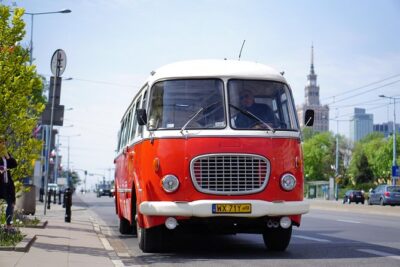
Browse the lists this tour appears in