
Reviewed · OLD TOWN TOURS
Warsaw: Old Town Highlights Private Walking Tour
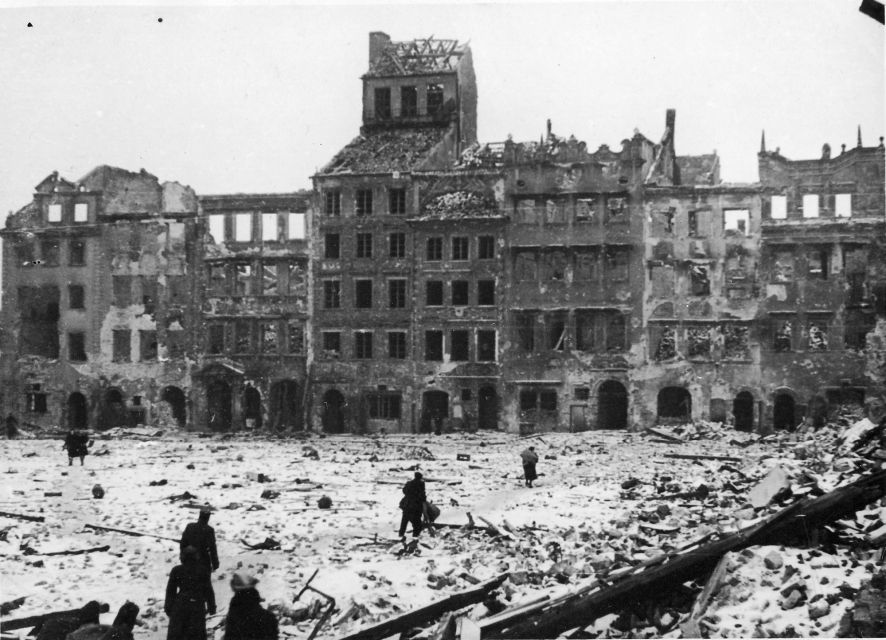
Warsaw’s Old Town looks old, but its story is startlingly modern. Much of what you see was rebuilt after wartime destruction, making this private walk a useful way to understand both Poland’s royal past and its painful 20th-century history. You start at the Warsaw Uprising Monument, then follow a guide through the Barbican, Market Square, cathedral, and Castle Square.
I like the private format, since you can ask about Polish politics, royal legends, or daily life without being lost in a large crowd. I also like the choice of lengths: two hours gives you the core sights, while six hours adds the Royal Castle, New World, and Palace of Culture views.
The main consideration is pace. The six-hour version covers a lot of ground, and even the shorter routes involve cobbles, church visits, and steady walking. Pickup is limited to Old Town, and church interiors can be restricted during Mass or special events.
Key points at a glance
- Start with the Warsaw Uprising Monument: A serious, meaningful opening that places the Old Town in the context of the 1944 resistance.
- Hear the Mermaid of Warsaw legend: Market Square combines colorful rebuilt houses with one of the city’s best-known symbols.
- Enter St John’s Archcathedral: The Brick Gothic church connects Warsaw’s royal, religious, and political stories.
- Choose your depth: The two-hour route covers Old Town, while three, four, and six-hour options keep adding major sights.
- See Warsaw from 114 meters: The six-hour tour reaches the Palace of Culture and Science terrace for a wide city view.
- Benefit from a private guide: English, German, Polish, Spanish, French, Italian, and Russian are available.
Why this walking tour helps you read Warsaw
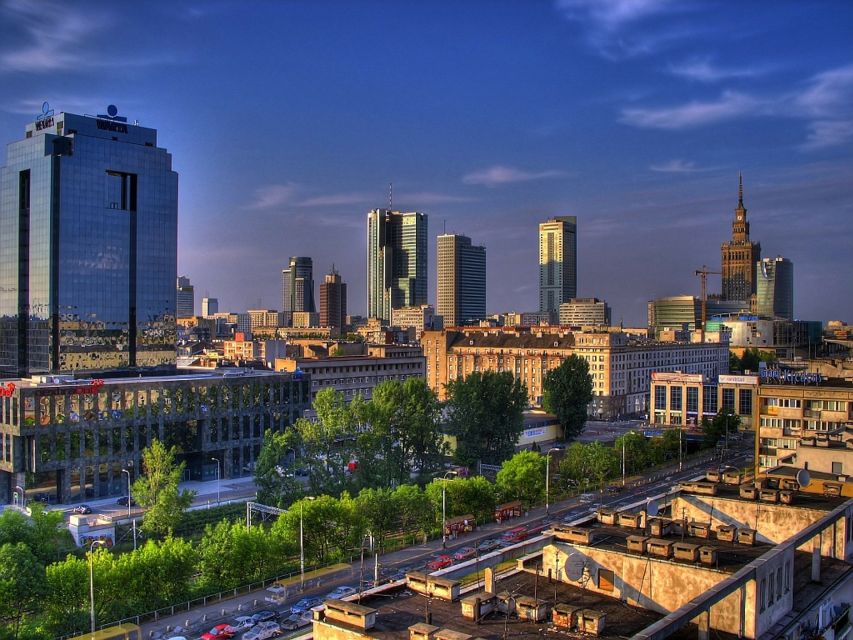
Warsaw can seem confusing at first. The Old Town has medieval-looking walls and royal buildings, yet the city also has broad modern streets, postwar apartment blocks, and the enormous Palace of Culture and Science. A guide gives those pieces a timeline.
That timeline begins with Poland’s kings and churches, moves through the Warsaw Uprising of 1944, and reaches communist Poland and today’s capital. I find that especially useful here because the city’s appearance can hide how much was lost and rebuilt.
This is not simply a procession of photo stops. The opening at the Warsaw Uprising Monument gives the route emotional weight. From there, you walk toward the historic center, where legends and royal ceremonies take over. On the longer versions, the route keeps going into areas that show how Warsaw moved beyond its old walls.
The private setup suits you if you want to stop for questions or adjust the emphasis. You might ask for more detail on the monarchy, the Nazi destruction of Warsaw, communist architecture, or local customs. The available languages also make this a practical option for couples, families, and small groups who do not want to follow an English-only tour.
More old town tours in Warsaw:
- Warsaw: Chopin Concert in the Old Town
★ 4.8 · 2,287 reviews - Warsaw: Old Town Highlights Walking Tour in English
★ 4.7 · 1,516 reviews - Warsaw: Old Town Guided Walking Tour
★ 4.9 · 599 reviews
From the 1944 monument to the Barbican
The meeting point is beside the anchor monument in front of the main entrance to the Field Cathedral of the Polish Army, at Długa 13/15, opposite the Warsaw Uprising Monument. If your accommodation is within 1.5 kilometers of that point, pickup can be arranged in Old Town. Otherwise, you meet the guide there.
Beginning at the uprising monument is a smart choice. It commemorates the anti-Nazi resistance fighters who fought during the summer of 1944. Your guide can use the monument to explain why Warsaw’s destruction is central to understanding the city you see today.
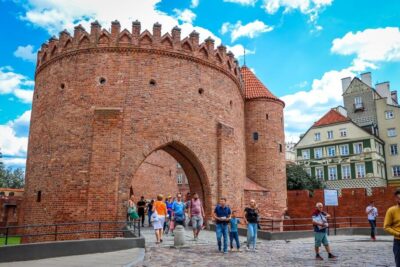
You then walk toward the Barbican, a defensive gateway that marks the entrance into the inner city walls. It is one of those places where the route becomes visually clear: you pass from a major historical avenue into narrower streets and the Old Town area.
The walk is outdoors, so wear practical shoes. The distance is not extreme on the two-hour version, but the route includes historic streets and cobbled surfaces. Since the tour is private, you can ask the guide to keep the pace comfortable, though the time limit still matters.
Old Town Market Square and the Mermaid
The Old Town Market Square is the most immediately charming part of the route. Colorful tenement houses frame the square, and the Mermaid of Warsaw statue provides the focal point. The buildings look historic, but the larger lesson is that Warsaw’s Old Town was reconstructed after wartime destruction.
That reconstruction raises an important question: is this a real old town? The answer is more interesting than a simple yes or no. The buildings, street plan, and architectural forms preserve the historic character, while the rebuilding reflects the determination to restore Warsaw after the war. Your guide can help you notice the difference between age and historical continuity.
The Mermaid gives the stop a lighter touch. You hear the legend behind this figure and learn why she became a symbol of Warsaw. I like this part because it moves beyond dates and battles. A city is also made from stories people repeat, symbols they recognize, and traditions that survive.
The square can be lively, especially during popular sightseeing hours. A private guide helps you focus on the details rather than simply crossing the square for a photograph. You will have time to look at the facades, hear the local story, and continue through the narrow lanes.
St John’s Archcathedral and Poland’s royal past
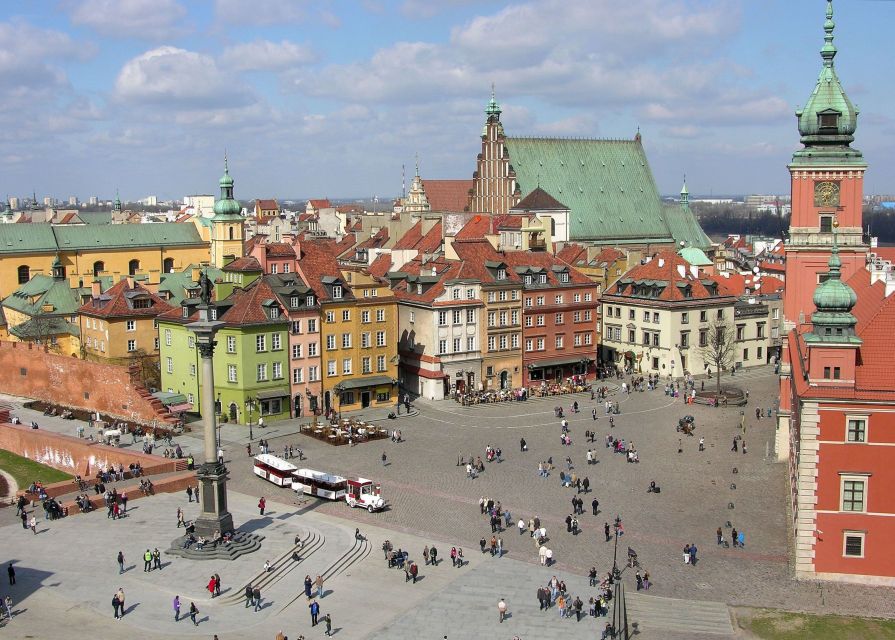
The next major stop is St John’s Archcathedral, a UNESCO-listed Brick Gothic church. The included access covers the free parts of the cathedral on every tour option.
Inside, the guide connects the church with Queen Anna Jagiellonka, King Stanisław August Poniatowski, and King Sigismund III. Those names can blur together if you only read a caption, but the church gives the history a physical setting. You are standing in a place tied to Poland’s rulers and national life.
The interior is not presented only as a work of art. It also helps explain the relationship between religion, monarchy, and public life in Poland. You can ask questions as you go, which is useful if you want more than a quick architectural description.
Keep in mind that church access can be restricted during Masses and special events. That applies to St John’s Archcathedral and St Anne’s Church. If a ceremony is taking place, the route or amount of time inside may change.
More walking tours in Warsaw:
- Half-Day Polish Food Walking Tour with Guide and Dinner
★ 4.5 · 381 reviews - Warsaw: Warsaw Ghetto Private Walking Tour with Hotel Pickup
★ 4.9 · 369 reviews - Old Town Warsaw Walking Tour
★ 4.5 · 333 reviews - Warsaw: Jewish History Guided Walking Tour in English
★ 4.7 · 324 reviews
Castle Square, Sigismund’s Column, and royal Warsaw
Castle Square shifts the focus from church to crown. Here, you learn about the Polish monarchs who lived at the Royal Castle and see Sigismund’s Column, one of Warsaw’s best-known landmarks.
This is a strong stop for orientation. The square links the Old Town with the Royal Route, and the column provides a clear reference point for understanding the city’s royal center. Your guide can explain why the castle mattered and how royal power shaped this part of Warsaw.
The two-hour tour finishes its main route around this area. That shorter option works well if you want a compact introduction before spending the rest of your day on your own. You see the key Old Town sights, hear local legends and historical facts, and avoid committing half a day to a single activity.
For a first visit, I would choose the two-hour option if you mainly want the historic core. It gives you a useful framework, then leaves time for museums, food, or independent wandering. You should choose longer versions if you want major interiors and the modern city included.
The three-hour extension to St Anne’s Church

The three-hour version continues along the historic Royal Route. It adds the Little Insurgent Monument, Braniecki Palace, and St Anne’s Church.
The Little Insurgent Monument commemorates young participants in the Warsaw Uprising. Its presence adds another reminder that the city’s wartime story involved ordinary people and very young fighters, not only generals and politicians.
Braniecki Palace brings a grand residence into the walk before St Anne’s Church. The church is one of Warsaw’s oldest buildings, and its Neoclassical exterior gives way to a much more decorative interior.
Inside, look for the High-Baroque decoration and wall frescoes. Around the altar, a painting of the Holy Family is surrounded by panels showing Chinese scenery, buildings, exotic birds, and floral branches. This reflects the period’s fashion for Chinese-inspired decoration in secular interiors.
That detail makes St Anne’s worth the extra hour. It is not just another church stop. The interior shows how European tastes changed and how distant cultures entered Polish decoration through design and fashion.
Free access to St Anne’s is included on the three, four, and six-hour versions. As with the cathedral, Masses and special events can limit visits. The three-hour route is a good middle choice if you want more architecture and the Royal Route but do not need a full museum visit.
The Royal Castle with skip-the-line entry
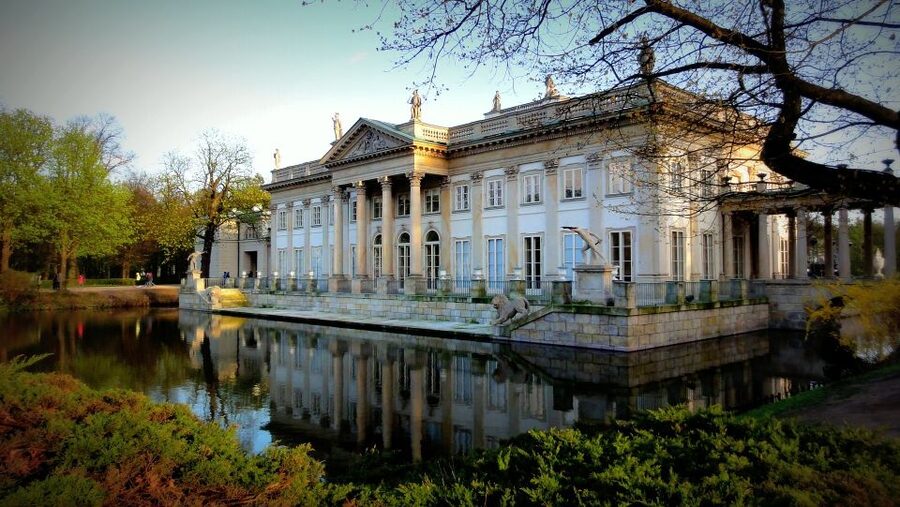
The four-hour option adds the Royal Castle with skip-the-line tickets. This changes the character of the outing. You are no longer seeing the royal center only from outside. You enter the rooms and collections tied to Polish rulers and national events.
The castle’s history includes the signing of the Polish Constitution and its destruction by the Nazis after the failed Warsaw Uprising. Those two facts show the building’s symbolic importance. It was a seat of government and monarchy, then a target in the effort to erase Warsaw.
Inside, the route includes the Great Apartment, King’s Apartment, Throne Room, and Lanckoronski Collection. The collection includes paintings by Rembrandt and canvases by Canaletto, along with sculpture and decorative art.
The four-hour choice suits you if the Royal Castle is a priority. Skip-the-line admission matters most when crowds are heavy, since it saves you from spending part of your paid tour waiting outside. You still need time for the rooms, so do not think of the ticket as a quick add-on.
There is one seasonal detail to know. In November, special events at the castle may mean the Lanckoronski Gallery is excluded. The rest of the castle route may still be included, but you should check the current plan if that collection is a deciding factor.
The six-hour route and Warsaw’s changing skyline
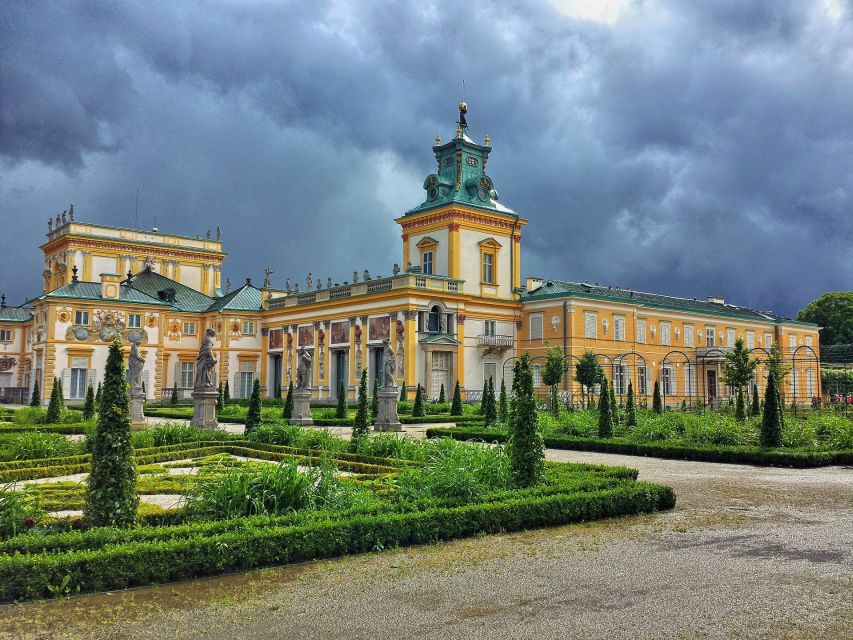
The six-hour version is the fullest choice. It continues from the Old Town through the modern New World district, an area with museums, theaters, and modern apartment buildings. This extension helps you see that Warsaw is not only a reconstructed historic center.
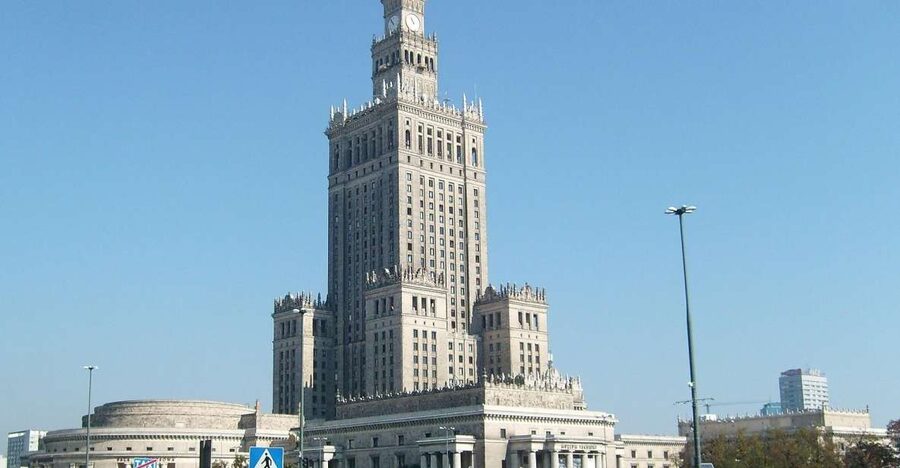
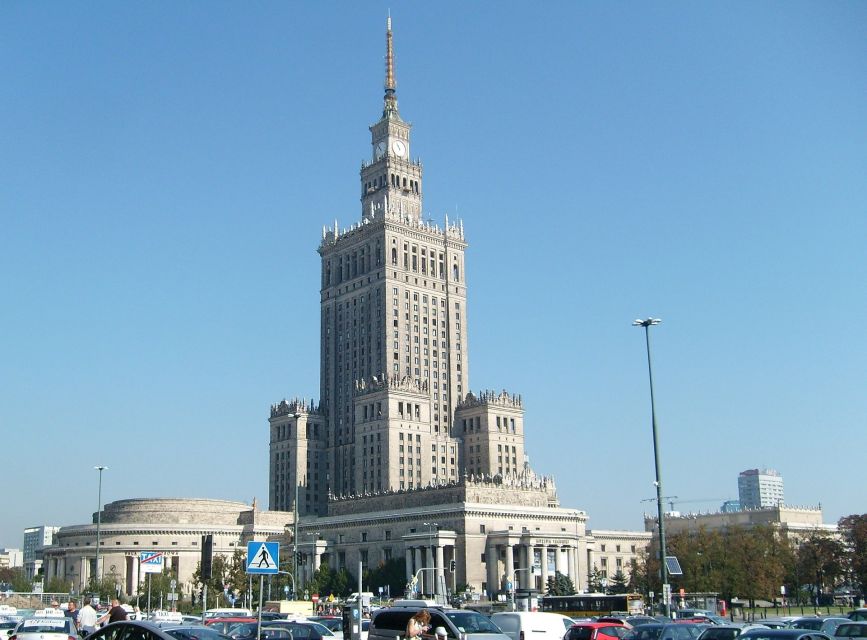
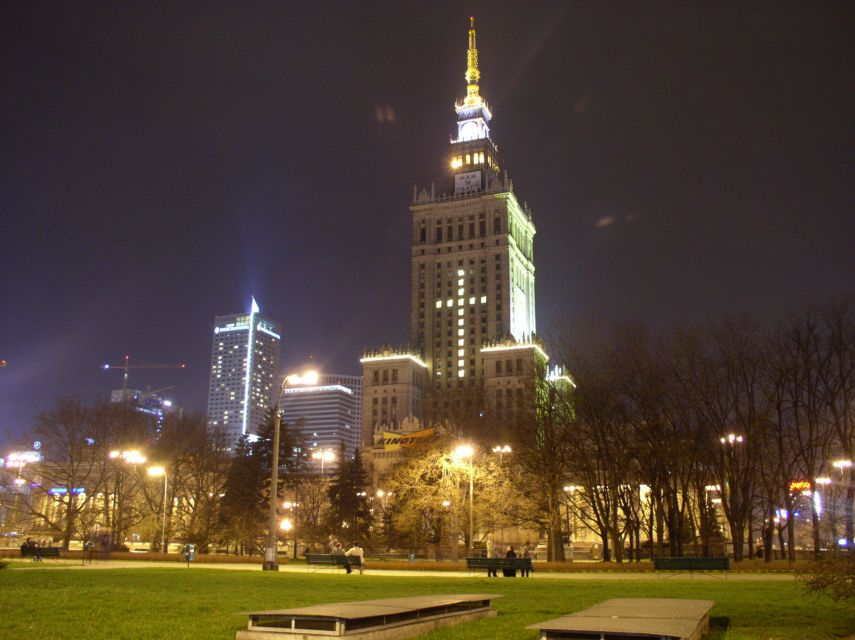
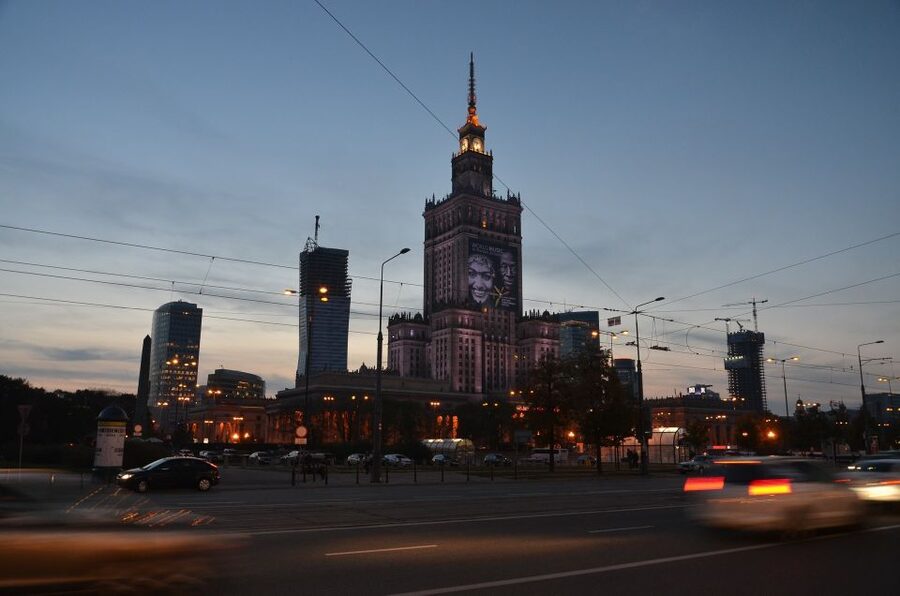
The main addition is the Palace of Culture and Science, usually known as PKiN. Built as a 1950s Soviet landmark, it remains one of the city’s most recognizable buildings. It also gives the guide a way to explain communist Poland, a period that can feel abstract until you see its architecture and scale.
Skip-the-line admission takes you to the 30th-floor terrace, 114 meters above the ground. From there, you look across Warsaw’s skyline and see the contrast between the Old Town, modern buildings, and the broad urban spread beyond them.
The view is the strongest reason to choose six hours. It gives you a physical map of the city after spending the day hearing how it changed. Your guide can point out attractions and suggest restaurants and pubs for the rest of your stay.
The drawback is commitment. Six hours of walking and sightseeing is a substantial block of your day. It may feel like too much if you prefer short visits or already have a full schedule. For a first visit with limited time in Warsaw, though, this version offers the most complete introduction.
What the guides add to the experience
A private tour is only as useful as the person leading it. The available guides speak English, German, Polish, Spanish, French, Italian, and Russian, so you can book in the language that lets you ask questions easily.
French-speaking guide André received specific praise for his engaging explanations and for giving the group plenty of time. Another French-language review highlighted a guide’s grasp of Poland’s political, economic, and social life. That is important here, since Warsaw’s story cannot be reduced to royal buildings and church interiors.
I would use the guide actively. Ask how the uprising shaped the rebuilt Old Town. Ask why the Palace of Culture remains a complicated symbol. Ask about the Mermaid legend and the royal figures connected to St John’s Archcathedral. The private format gives you a better chance to turn the walk into a conversation.
The tour has a rating of 4.7 from 68 reviews, with especially strong praise for the guides’ explanations and the interesting places included. That does not guarantee a perfect match for every person, but it supports the idea that the human element is the main value here.
Is $107 per person a fair price?
At $107 per person, this is not the cheapest way to see Warsaw’s Old Town. The value depends heavily on the option you select and the number of people in your private group.
For two hours, you are paying for a private guide and a focused route through the city’s main historic sights. That can be worthwhile if you want context, personal questions, and a clear introduction rather than a self-guided walk.
The four-hour version offers better value if you want the Royal Castle. Skip-the-line admission is included, and the longer format lets you connect the castle rooms with the exterior landmarks you saw earlier.
The six-hour version includes both the Royal Castle and PKiN entry, plus a longer route and more guide time. It is the strongest choice for someone who wants a broad first look at Warsaw and does not mind giving up most of a day.
A private tour becomes more cost-effective when shared among several people. Solo visitors should compare the price with their interest in personal guiding. If you mainly want photographs and a quick walk, the cost may feel high. If you want history explained in plain language and the freedom to ask questions, the price is easier to justify.
You can cancel up to 24 hours before the tour for a full refund, and reserve now while paying later. Those terms help if your Warsaw plans are still shifting.
Who should book this Warsaw walk?
I would recommend it to first-time visitors who want a strong framework for the city. It also suits families and small groups who prefer a private pace, as well as anyone interested in Polish royal history, the Warsaw Uprising, or communist-era architecture.
The two-hour route fits a short city break or a day when you have several other plans. Choose three hours for more churches and the Royal Route. Choose four hours if the Royal Castle matters. Choose six hours if you want the Old Town, castle, New World, and PKiN in one guided experience.
I would hesitate only if you dislike structured sightseeing or want to explore entirely at your own pace. The route covers a lot, and the six-hour version can be tiring. Church access may also change during services, and the November castle itinerary can exclude the Lanckoronski Gallery.
For most first visits, I think the four-hour option is the sweet spot. You get the Old Town, St Anne’s, the Royal Route, and the Royal Castle without making the entire day about one tour. Pick six hours if the skyline view and communist-era story are just as important to you as the medieval-looking center.
FAQ
Where does the tour meet?
Meet your guide beside the anchor monument in front of the main entrance to the Field Cathedral of the Polish Army, opposite the Warsaw Uprising Monument, at Długa 13/15, 00-238 Warsaw.
Is hotel pickup available?
Pickup is available only in Warsaw Old Town, within 1.5 kilometers of the meeting point. If you provide your accommodation address when booking and it fits that area, the guide can meet you there. Otherwise, use the stated meeting point.
Which sights are included on the two-hour tour?
The two-hour route includes the Warsaw Uprising Monument, Warsaw Barbican, Old Town Market Square, the Mermaid of Warsaw, St John’s Archcathedral, Castle Square, and Sigismund’s Column.
When is the Royal Castle included?
The Royal Castle is included on the four-hour and six-hour options. Skip-the-line tickets are provided for those versions.
Does every option include the Palace of Culture and Science?
No. The Palace of Culture and Science, including skip-the-line entry and access to the 30th-floor terrace, is included only on the six-hour option.
What languages are available?
The tour is available in English, German, Polish, Spanish, French, Italian, and Russian. It is offered as a private group experience.
Just added in Warsaw
- Warsaw Zoo Skip-the-Line Entry Ticket with Private Transport★ 4.8 · 3 reviews
- Warsaw Private Wilanow Palace & Garden Tour★ 4.6 · 30 reviews
- Warsaw: Vodka Tour★ 4.4 · 18 reviews
- Warsaw Wolf’s Lair with St. Lipka and Mamerki Private Guided★ 4.2 · 3 reviews
- Warsaw Uprising and WWII Old Town Walking Tour with Museum★ 4.7 · 15 reviews
- Warsaw Old Town UNESCO HERITAGE walking tour in English★ 4.5 · 23 reviews
- Warsaw: Private Vodka Tasting Night with Snacks and Pickup★ 5.0 · 7 reviews
- Warsaw: Skip-the-Line Royal Castle Guided Tour★ 4.9 · 79 reviews
Old Town Tours, compared.

Bike Tour of Old Town, Jewish Quarter and the Ghetto
Read the review →


Sightseeing EcoCruise around the Old Town of Gdansk
Read the review →
Browse the lists this tour appears in