
Reviewed · WWII MEMORIAL & CAMP TOURS
World War 2 in Warsaw walking tour in English
Warsaw’s World War II story is not confined to a museum. It is written into streets, squares, memorials, and the gaps where whole parts of the city once stood. This 150-minute walking tour connects the Nazi occupation, the 1943 Jewish Ghetto Uprising, and the 1944 Warsaw Uprising in a way that gives the city’s present streets a painful past.
I especially like the use of old photographs and family stories, which help you see the vanished city rather than only hear dates and military facts. I also like the local guides, including Magda, Gosia, Andrew, Albert, Piotr, and Iga, who explain the subject in clear English and handle difficult questions with care. The main drawback is physical: you are outside and on your feet for two and a half hours. Cold weather can cut the walk short, and one older participant found the pace brisk.
Key points at a glance
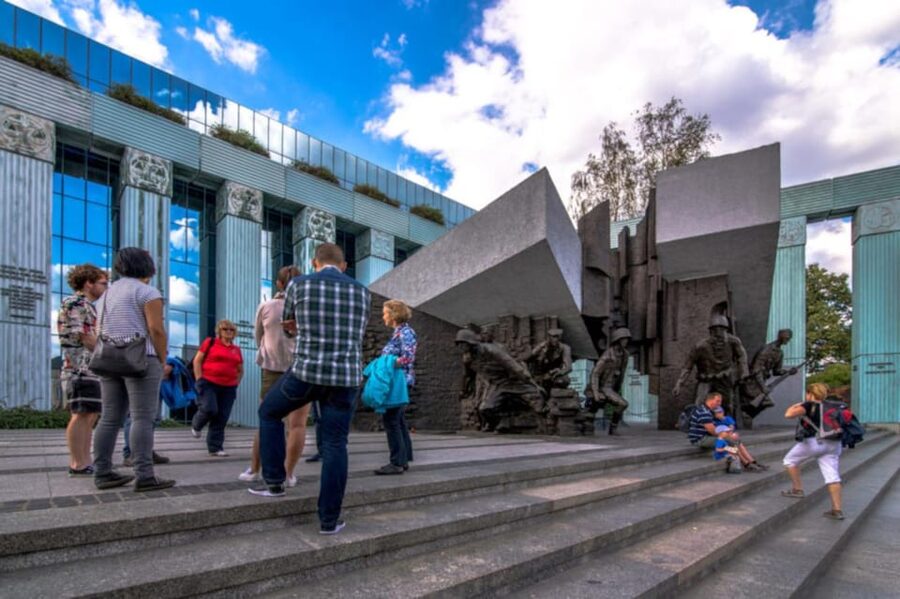
- Warsaw’s two uprisings: Learn how the 1943 Jewish Ghetto Uprising and the 1944 Warsaw Uprising differed, and why both matter.
- A city seen through old photographs: Guides use images of Warsaw before, during, and after the war to show how much disappeared.
- Personal family memories: Local Polish guides add family stories that connect major events with ordinary civilian life.
- Former Nazi and Jewish Ghetto sites: The route visits places tied to occupation, executions, resistance, and the destruction of the city.
- Small-group English walk: The format allows questions, though traffic and street noise can occasionally make voices hard to hear.
- $20 for 150 minutes: That is a good price for a serious, guide-led introduction to Warsaw’s wartime story.
Why this walk matters in Warsaw

Warsaw suffered on a scale that can be hard to grasp from a standard city tour. The city endured bombing, German occupation, SS control, mass executions, resistance, and the destruction that followed the 1944 uprising.
This tour gives you a basic timeline while keeping the focus on people. You hear about civilians trying to live under occupation, the Jewish population trapped in the ghetto, Polish resistance fighters, and the political forces that shaped Poland’s borders and future.
That human focus is important. You do not need to arrive as a military-history specialist. The guide explains the setting and events in plain English, then builds the story stop by stop. If you already know the broad outline of the war, the old images and family memories add detail that a date-filled lecture often misses.
The subject is heavy, but the walk is not presented as a grim recital from start to finish. Guides such as Piotr and Julia’s guide, mentioned by name in participant feedback, were praised for keeping a warm atmosphere without making light of the suffering. That balance is hard to achieve. A little humor can help a group stay focused, as long as the guide keeps the victims and events at the center.
More walking tours in Warsaw:
- Warsaw: Old Town Highlights Walking Tour in English
★ 4.7 · 1,516 reviews - Warsaw: Old Town Guided Walking Tour
★ 4.9 · 599 reviews - Half-Day Polish Food Walking Tour with Guide and Dinner
★ 4.5 · 381 reviews
Starting beneath the orange umbrella
The meeting point is easy to identify if you know what to look for. Find the guide holding an orange umbrella, close to the 20-meter-high column topped by a statue.
The umbrella detail matters because central Warsaw can be busy and open spaces can make a group hard to spot. One participant specifically clarified that the umbrella is orange, not yellow, so do not rely on a vague memory of the meeting instructions.
The guide is a professional local guide from Warsaw. The company emphasizes guides who were born and raised in the city, and the names appearing in recent tours include Magda, Gosia, Iga, Piotr, Andrew, Peter, Arek, and Albert. Your guide will vary, but the common thread is a personal connection to Warsaw and Poland.
The group format is shared with other visitors rather than private. That keeps the price at $20, but it also means the guide must balance different ages, interests, and walking speeds. Ask questions when there is a natural pause. If you are older or simply prefer a slow stroll, tell the guide early rather than trying to keep up silently.
Former Nazi German District and Hitler Square
The early part of the walk sets out the occupation’s political and military framework. You visit places connected with the former Nazi German District and the former Adolf Hitler Square.
These locations help explain how public space was controlled and renamed under German rule. The point is not just to identify a square on a map. It is to show how an occupying power used buildings, ceremonies, official names, and visible authority to reshape daily life.
A good guide will connect these large symbols with the smaller pressures of occupation. The tour description refers to life under the eye of the SS, and that phrase captures the atmosphere the walk tries to explain: surveillance, fear, and the loss of normal civic life.
This part may appeal most to you if you want political context before reaching the more emotional sites. It can also be the most information-heavy section, so listen for the broad outline rather than trying to memorize every name. The photographs help here, especially when the current city looks more orderly and modern than the wartime scenes being described.
The former Jewish Ghetto
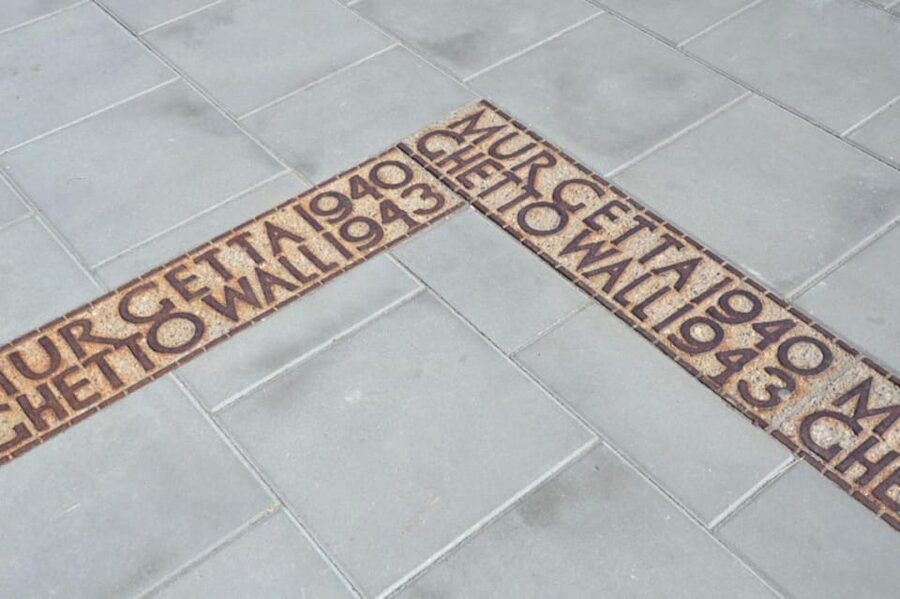
The former Jewish Ghetto is one of the central parts of the route. Here the focus shifts from occupation in general to the persecution and destruction of Warsaw’s Jewish population.
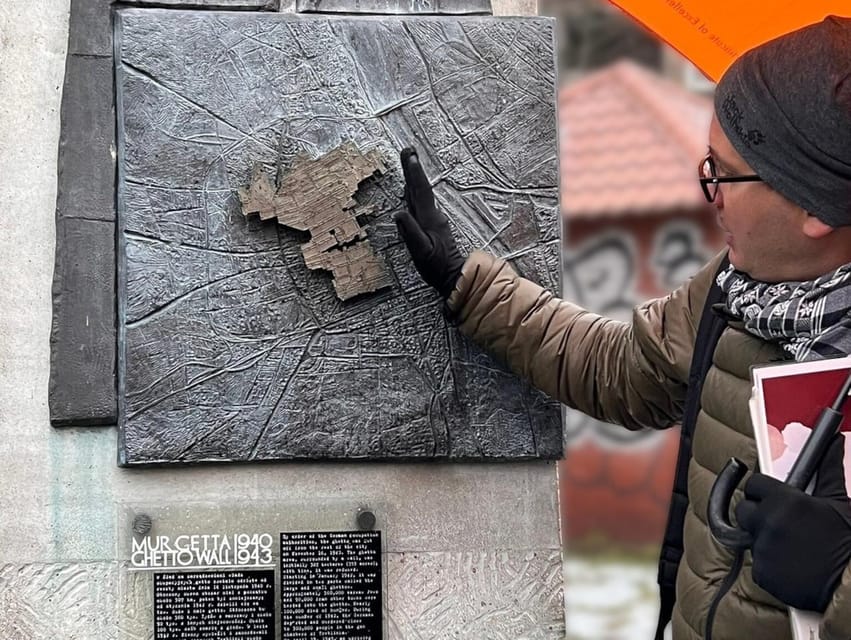
The 1943 Jewish Ghetto Uprising is presented as an act of resistance under impossible conditions. The guide also explains how civilians lived, what the ghetto meant in practice, and how the area was changed by German policy and violence.
This is where the before-and-after photographs are especially useful. A current street can look ordinary until you see an image of the same area before the war, or a photograph showing what remained after the destruction. The contrast gives you a clearer sense of the city that was lost.
Expect this section to be emotional. One family with a 10-year-old found the subject powerful enough to prompt serious thought, while another participant described being moved to tears. That does not mean the tour is unsuitable for families, but parents should understand that the material is direct and serious.
The guide’s tone matters greatly here. The strongest accounts describe careful explanations, attention to different groups caught in the war, and a refusal to simplify the story into a single heroic narrative. You hear about suffering, resistance, and survival without losing sight of the civilians at the center.
Other wartime memorials reachable from Warsaw:
- Warsaw for WWII Buffs – private tour with hotel pickup
★ 5.0 · 166 reviews - Wolf’s Lair & Treblinka Tour in 1 day from Warsaw
★ 5.0 · 37 reviews - Gdansk: Guided Round-Trip Cruise to Westerplatte
★ 4.3 · 865 reviews - Gdansk: Stutthof Concentration Camp Regular Tour
★ 4.7 · 361 reviews
Execution sites and the cost of occupation
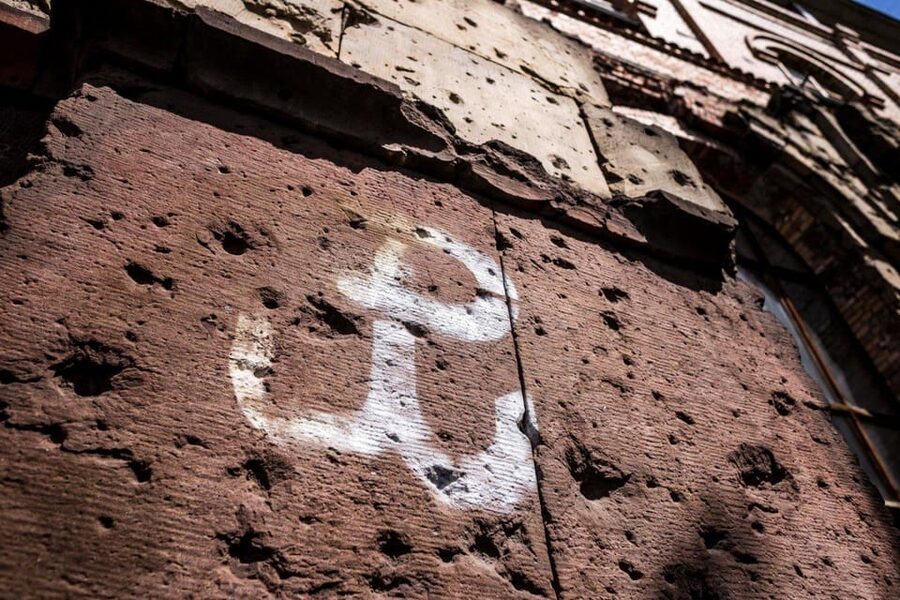
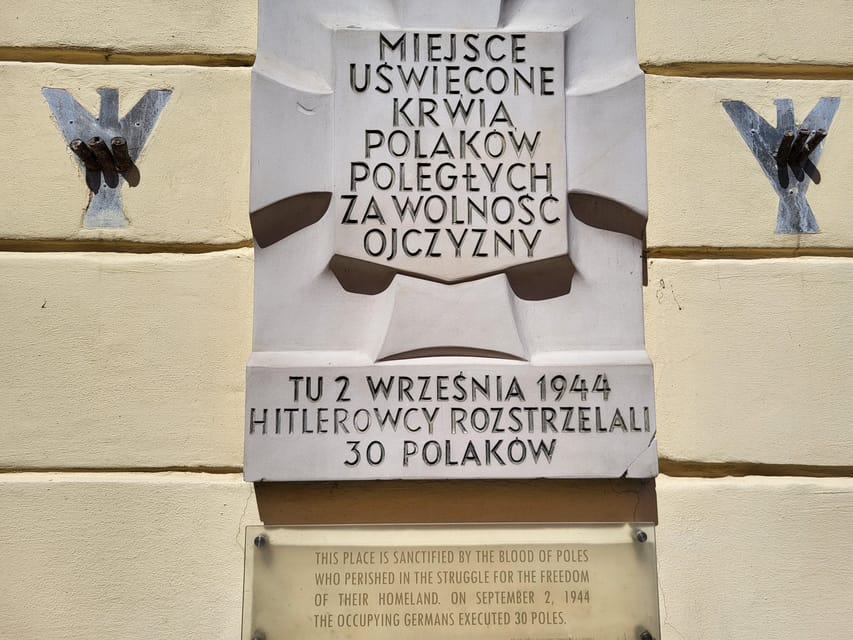
The route also includes execution sites. These stops can be less visually dramatic than a museum display, yet they may leave the strongest impression because the locations are part of the living city.
Your guide explains what happened at each place and places the violence within the wider occupation. The aim is not to shock you with isolated facts. It is to show how executions formed part of a system used to punish and intimidate the population.
This is a useful reason to take the walk early in your Warsaw stay. Afterward, you will see streets and memorials with more context. A map or written route would help you revisit some of these places later, and one participant specifically wished for a map to follow the route and look up names afterward. Bring your own notes if you want to continue studying once the walk ends.
Polish Resistance and the 1944 Warsaw Uprising
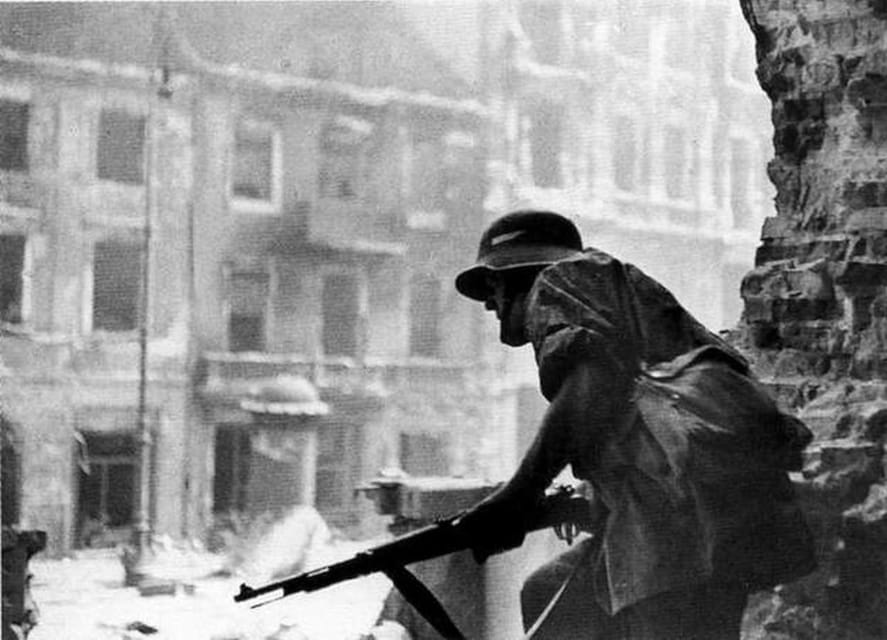
The final sections turn toward the Polish Resistance and the 1944 Warsaw Uprising. This gives the tour a second major arc, distinct from the Jewish Ghetto Uprising.
The guide explains where resistance strongholds were located and how the uprising shaped the city. You learn about Polish efforts to fight German rule, the pressure on civilians, and the scale of the destruction that followed.
The difference between the two uprisings is important. They involved different communities, circumstances, aims, and periods, even though both grew from the brutal conditions of German occupation. A guide who explains those distinctions clearly helps you avoid treating Warsaw’s wartime story as one undifferentiated event.
Several participants singled out the guides’ ability to answer difficult questions. That is valuable here, because the subject involves military decisions, political conflict, civilian suffering, and the later fate of Poland. The best explanations leave room for uncertainty and competing viewpoints while still giving you a clear account of what happened.
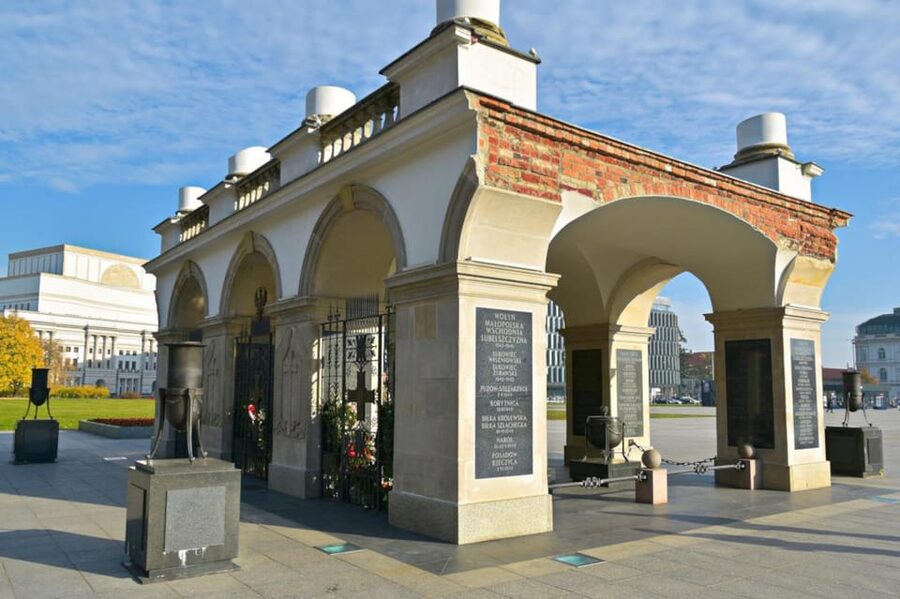
The route may also include the changing of the guard at the Tomb of the Unknown Soldier. One participant described this as the emotional highlight. If the timing works, it adds a present-day ceremonial note to a tour otherwise focused on occupation and destruction.
Old photographs make vanished Warsaw visible
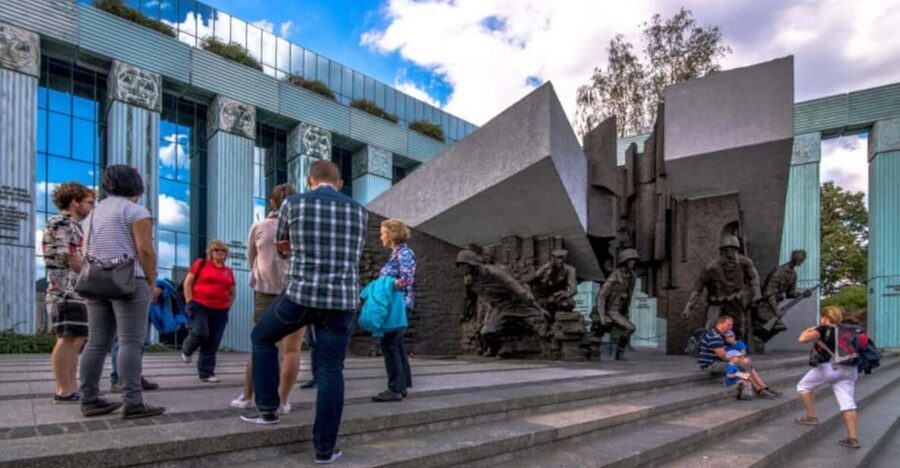
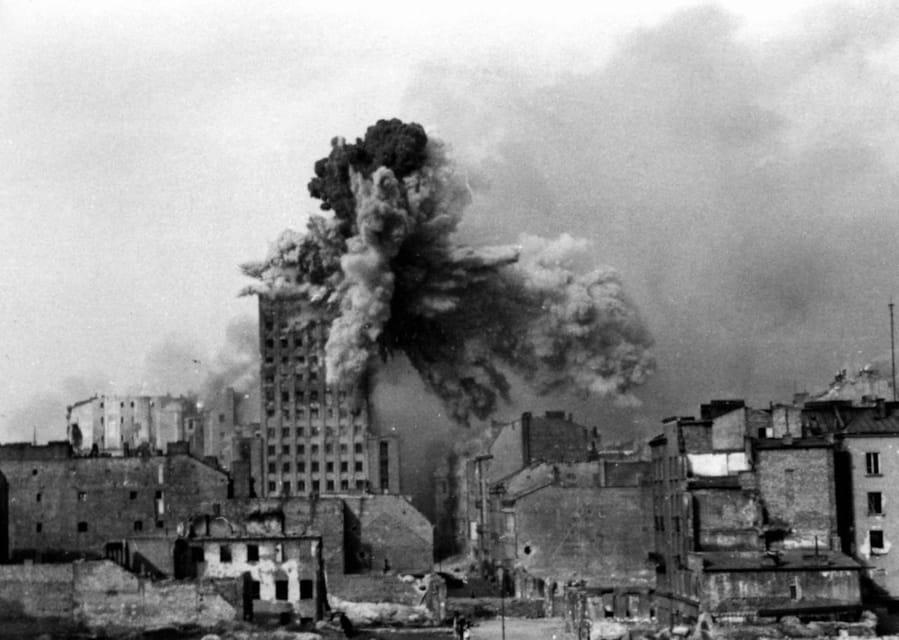
The most effective feature of this walk is the visual material. Guides show photographs of Warsaw before, during, and after the war, and some use maps to clarify how the city changed.
That sounds simple, but it transforms the experience. Without images, you may hear that a district was destroyed and then continue looking at modern buildings. With an old photograph held beside the current street, you can compare the city directly.
The photographs also help non-specialists. You do not need to remember every political faction or military date to understand the basic message: Warsaw was damaged, rebuilt, and altered so extensively that the present city can conceal the scale of what happened.
Family stories add a different kind of detail. A guide may explain how the war affected relatives or how ordinary people experienced shortages, fear, and uncertainty. These memories do not replace documented history. They give it a human scale.
The guides make or break the experience
The guide is the main reason this tour receives such strong praise. Magda is repeatedly described as warm, clear, and deeply engaged with the subject. Gosia is praised for guiding the group through a complicated story while keeping the walk moving. Andrew is noted for answering questions, and Albert for explaining Poland’s painful past with both frankness and compassion.
Names may change from day to day, so book this for the format and subject rather than expecting one particular person. Still, the range of positive comments suggests a consistent effort to train guides who can explain serious history in good English.
A few practical points matter:
- Ask for clarification: The guides are willing to discuss difficult questions, and the small-group format makes that easier.
- Stay near the guide: Traffic noise can make parts of the explanation hard to hear.
- Expect a real walk: One participant felt the pace was closer to a brisk walk than a gentle stroll.
- Mention your limits: If you are older or have trouble walking for two hours, say so at the start.
- Dress for the season: Extreme cold has shortened tours. Participants described temperatures around minus 17 to minus 20 Celsius, with windchill making conditions even harder.
The tour is wheelchair accessible according to the activity details, but the experience still involves a long outdoor walk. If you use a wheelchair, confirm the route conditions and pace when you arrive so the guide can help you plan comfortably.
Is $20 good value for 150 minutes?
At $20 per person, this is a strong-value introduction to Warsaw’s wartime past. You receive two and a half hours with a professional local guide, historical photographs, family stories, and access to places that are easy to pass without understanding their importance.
The value is greatest if you are new to Warsaw or have limited time. A museum can provide more objects, documents, and indoor detail, but this walk gives you a sense of location. You stand where major events unfolded rather than treating them as distant chapters.
The price also suits a mixed group. A family, couple, or solo visitor can use the walk to decide which museums and memorials deserve more time later. If you already have detailed academic knowledge of the war, you may find the tour introductory in places. The personal stories and on-site setting should still add something, but do not expect a specialist seminar.
The provider notes that agency commissions, taxes, and other costs take a large share of the booking price, and invites you to tip if you feel the guide earned it. Tipping is optional, not part of the listed $20.
Weather, pace, and the practical side
The walk lasts 150 minutes, with starting times shown according to availability. There is no indoor shelter built into the experience, so the weather should influence your booking choice.
Winter can be severe. A guide may be excellent, but minus 20 Celsius is a serious obstacle to any outdoor tour. Bring warm layers, gloves, a hat, and shoes suited to walking. In warmer months, the main issue is stamina rather than cold.
The route is described as wheelchair accessible, and one participant noted that it did not include difficult steps or rough ground. Still, accessibility on a long city walk can depend on the exact route, street conditions, and group pace. Ask the guide at the meeting point if you need a slower rhythm or extra time at stops.
Cancellation is flexible: you can cancel up to 24 hours in advance for a full refund. You can also reserve now and pay later, which helps if your Warsaw plans are still changing.
Who should take this tour?
I would choose this walk if you want a clear starting point for Warsaw’s World War II story, especially if you prefer places and people to a museum-only approach.
It suits:
- First-time visitors to Warsaw
- Families with older children or teenagers who can handle serious subject matter
- Anyone interested in the Jewish Ghetto Uprising or Warsaw Uprising
- Visitors who want local Polish perspectives
- People who like asking questions during a guided walk
- Anyone planning to visit Warsaw museums after gaining basic context
It may not suit you if you dislike long outdoor walks, need frequent indoor breaks, or want a highly specialized military history lecture. The pace can feel quick for some older participants, and the emotional material is not light entertainment.
Should you book the Warsaw World War II walk?
Book it if you want to understand why Warsaw’s streets look the way they do and how occupation shaped the people who lived here. The combination of local guides, wartime photographs, family memories, and sites tied to both uprisings gives the tour more weight than a simple list of landmarks.
I would schedule it near the beginning of your stay, when its context can sharpen the rest of your time in Warsaw. Choose a mild-weather day if possible, wear comfortable shoes, and arrive ready to walk and listen.
At $20, it offers unusually good value for a serious, well-paced introduction. Just remember that you are signing up for an outdoor history lesson, not a casual sightseeing stroll.
FAQ
How long is the World War II in Warsaw walking tour?
The tour lasts 150 minutes, or two and a half hours.
What language is the tour conducted in?
The live tour guide speaks English.
How much does the tour cost?
The listed price is $20 per person.
Where is the meeting point?
Meet the guide near the 20-meter-high column with a statue on top. Look for the guide holding an orange umbrella.
What places does the tour visit?
The route includes the former Nazi German District, the former Adolf Hitler Square, the former Jewish Ghetto, execution sites, and locations connected with Polish Resistance strongholds during the 1944 Warsaw Uprising.
Does the tour cover both Warsaw uprisings?
Yes. It covers the 1943 Jewish Ghetto Uprising and the 1944 Warsaw Uprising.
Is the tour wheelchair accessible?
Yes, the activity information describes the tour as wheelchair accessible.
Can I cancel the booking?
Yes. You can cancel up to 24 hours before the tour for a full refund.
Can I reserve now and pay later?
Yes. You can reserve your place and pay later, which keeps your plans flexible.
Just added in Warsaw
- A unique walking tour of Jewish Warsaw — past and present★ 5.0 · 8 reviews
- Tour from Warsaw: Wolf’s Lair, Hitler’s HQ Zones I and II★ 5.0 · 32 reviews
- Wolf’s Lair Private Day Trip from Warsaw★ 5.0 · 50 reviews
- Wolf’s Lair & Treblinka Tour in 1 day from Warsaw★ 5.0 · 37 reviews
- Jewish Warsaw Walking Tour★ 5.0 · 95 reviews
- Warsaw: The Original Pub Crawl★ 4.5 · 97 reviews
- Warsaw: Gun Shooting Experience with Transfers★ 4.8 · 97 reviews
- Warsaw: Vistula Cruise★ 4.3 · 110 reviews
WWII Memorial & Camp Tours, compared.
Warsaw for WWII Buffs – private tour with hotel pickup
Read the review →
Wolf’s Lair & Treblinka Tour in 1 day from Warsaw
Read the review →Browse the lists this tour appears in