
Reviewed · SCHINDLER'S FACTORY TOURS
Cracow: Guided Tour of Schindler’s Factory & Jewish Ghetto
Schindler’s Factory is only part of this moving Krakow experience. The tour also takes you through Podgórze, where a preserved fragment of the ghetto wall, former Jewish homes, Under the Eagle pharmacy, and the 68-chair monument in Heroes’ Square connect museum displays with real streets. I like that the walking route gives the museum a human setting, rather than leaving the story behind glass.
I also like the live guide format, especially for a subject that can become a blur of dates and names. Guides such as Margherita and Phill have been singled out for being warm, prepared, and engaging. The main drawback is pace: the advertised time is three hours, but one group found it lasted about three and a half, so leave some room in your schedule.
Key points to know before booking
- Schindler’s Factory focuses on Krakow Under Nazi Occupation: The museum explains wartime daily life and Schindler’s actions through a structured exhibition.
- Podgórze adds the physical evidence: You see a surviving ghetto wall, former residences, and key memorials on foot.
- Under the Eagle pharmacy is a powerful stop: The pharmacy is tied to help given to Jews during the occupation.
- Heroes’ Square has 68 empty chairs: The monument offers a stark visual reminder of lives uprooted from the ghetto.
- The guide matters here: Margherita, Phill, and other multilingual guides lead the visit in English, Italian, French, Spanish, or German.
- Allow more than the stated three hours: The route can run to roughly three and a half hours, depending on the museum schedule and pace.
Starting at Schindler’s Factory in Podgórze
You meet the guide in front of the main entrance to Schindler’s Factory Museum. Look for the excursions.city sign. This is an important detail because the museum sits in Podgórze, away from Krakow’s Old Town, and you do not want to waste the start of a serious tour searching for the correct entrance.
The price is $58 per person. That includes museum admission, a professional guide, and the walking portion of the tour. It does not include hotel pickup, drop-off, food, or drinks, so plan to arrive on your own and eat before or after the visit.
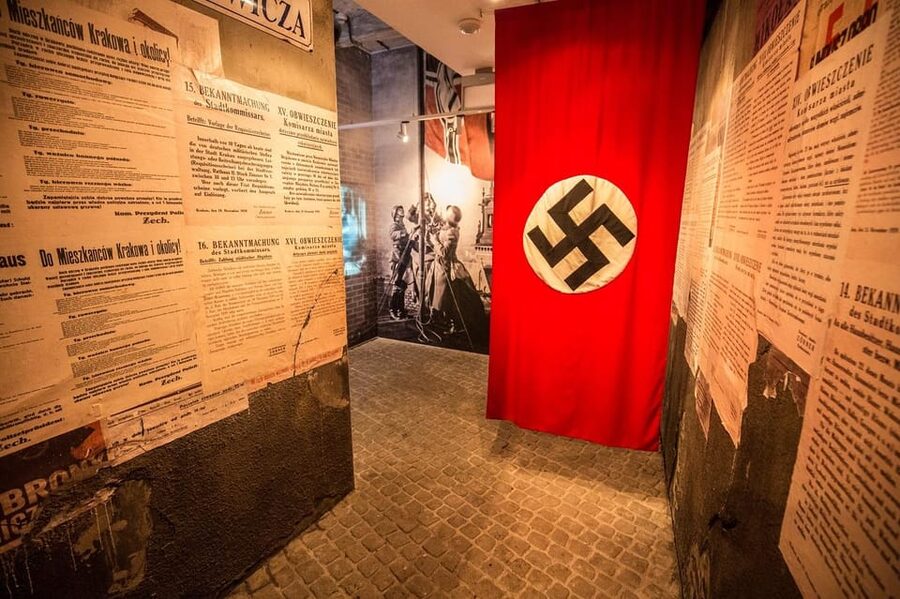
The route is built around two connected parts. First comes the museum, where you learn about Krakow during Nazi occupation. Then you walk through the former Jewish Ghetto area, seeing places that give the museum’s story a physical scale.
That order works well. You first get a broad explanation of the period, then you can look at the streets and monuments with more context. Without a guide, it would be easy to see a wall fragment or a chair monument without understanding why it matters.
More Schindler's Factory tours from Kraków:
- Krakow: Oskar Schindler’s Factory Entry Ticket & Guided Tour
★ 4.2 · 3,793 reviews - Krakow: Schindler’s Factory Tour with Entrance Ticket
★ 4.5 · 3,182 reviews - Krakow: Schindler’s Factory Skip-the-Line Ticket
★ 4.4 · 3,105 reviews
Inside the exhibition Krakow Under Nazi Occupation
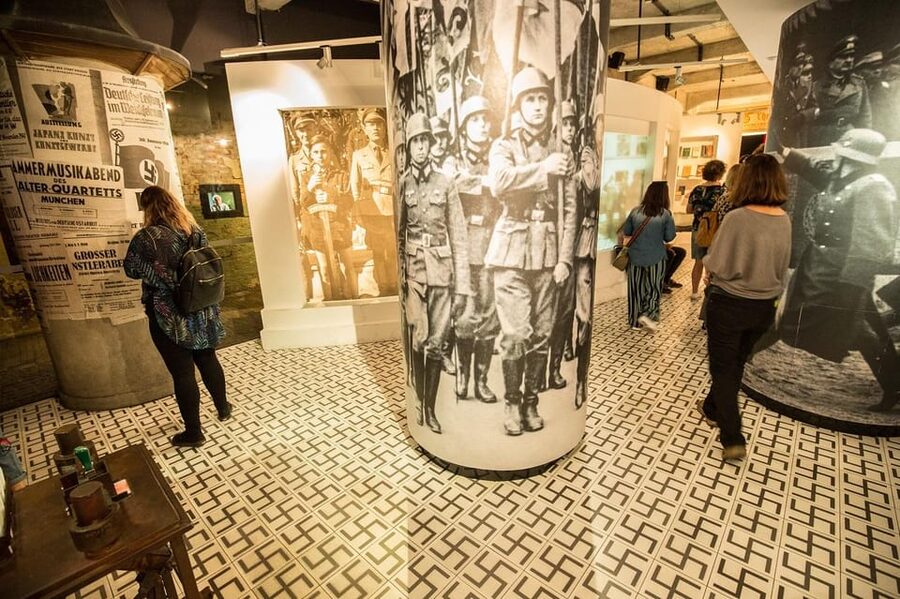
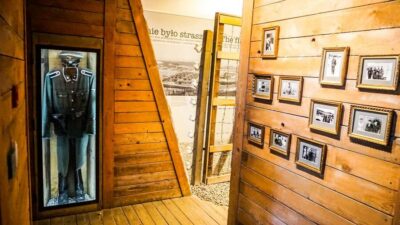
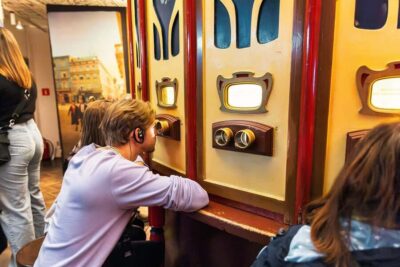
The museum’s central exhibition is called Krakow Under Nazi Occupation. It examines daily life during the Second World War and explains the setting in which Oskar Schindler acted.
Schindler is remembered as the German entrepreneur who helped numerous Jews during the war. His story became widely known through the film Schindler’s List, but this visit is not simply a film-location stop. The museum places Schindler within the wider experience of occupied Krakow, including the pressures faced by Jewish residents and the changes imposed on the city.
That wider frame is one of the tour’s strongest features. You are not left with the idea that one individual story explains everything. Instead, the guide helps connect Schindler’s actions with the lives of people who faced displacement, forced labor, fear, and severe restrictions.
The exhibition is especially useful if you want to understand ordinary life under extraordinary pressure. A history museum can sometimes turn wartime events into a list of battles and political decisions. Here, the focus on Krakow and its residents makes the subject more immediate.
Expect a serious visit rather than a light sightseeing stop. The subject includes persecution, displacement, and loss. Families should decide in advance if children are ready for this material. The supplied information does not give a recommended minimum age, so use your own judgment.
A guide adds value because the exhibition contains more information than you can absorb at a glance. A prepared guide can point out the people, places, and choices that connect one display to the next. The guide also gives you a chance to ask questions while you are still inside the museum, rather than trying to reconstruct the story later.
Walking through the former Jewish Ghetto
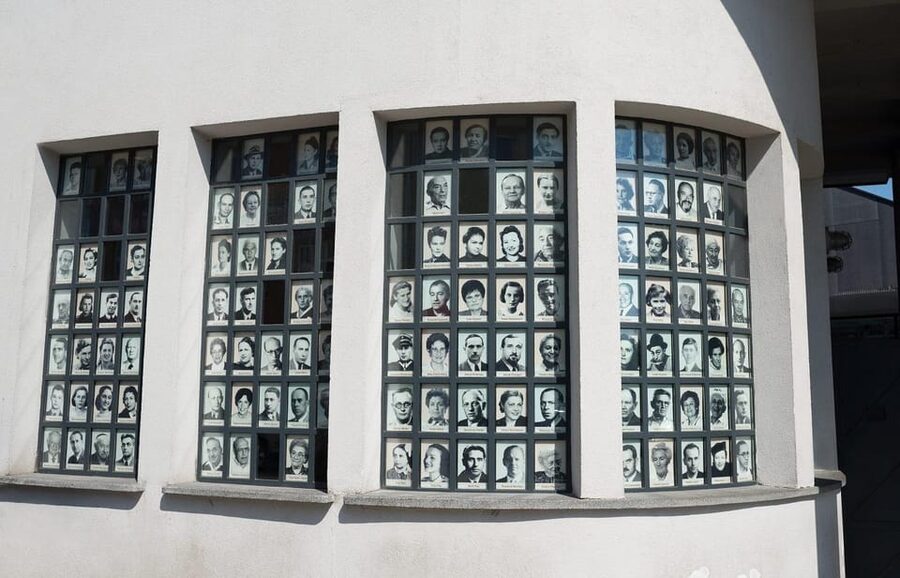
After the museum, the tour continues through Podgórze. This is where the experience shifts from an indoor exhibition to a walk through places linked to the wartime ghetto.
You see a preserved section of the ghetto wall. It is a modest physical remnant, but that is part of its force. A museum can show maps and photographs. A surviving piece of wall lets you grasp how confinement was built into the city itself.
You also pass residences where thousands of displaced Jews once lived. These buildings are not presented as isolated curiosities. Their value comes from the connection between ordinary streets and the people who were forced to live there under Nazi rule.
I find this part especially useful for anyone who wants more than a museum visit. The walking route helps you understand that the ghetto was not an abstract zone on a map. It occupied real streets, near buildings and public spaces that still form part of modern Krakow.
The walking element also means you should wear sensible shoes and dress for the weather. The tour lasts three hours and includes outdoor time. No transportation is included, and the information provided does not describe hotel collection, so treat the meeting point as the beginning of the experience.
Under the Eagle pharmacy and the role of one place
One of the key stops is the Pod Orłem pharmacy, known in English as Under the Eagle. It is among the most significant places on the route because it links a working business with the desperate conditions of the ghetto.
The pharmacy is associated with help given to Jews during the occupation. Its presence on the tour gives you a more personal way to consider how assistance could take place under danger and pressure.
This stop is also a good example of why the walking section matters. In the museum, you gain the larger story. At Under the Eagle, you encounter a particular place tied to individual decisions and acts of courage.
The information supplied for the tour does not promise a specific length of time inside the pharmacy or describe every display. Keep your expectations focused on a guided visit to this important site, not on a long independent museum session. Your guide will provide the context that makes the stop meaningful.
The combination of the pharmacy, the former residences, and the wall creates a clear progression. You see where people lived, how the ghetto was enclosed, and how a place of work could become connected with help and survival.
Other Jewish-heritage walks around Kraków:
- Krakow: Schindler’s Factory & Ghetto Guided Tour
★ 4.7 · 1,694 reviews - Krakow: Jewish Quarter and Former Ghetto Tour
★ 4.9 · 1,441 reviews - Krakow: Bike Tour of Old Town, Jewish Quarter and the Ghetto
★ 4.9 · 1,155 reviews - Krakow: Kazimierz Jewish Quarter Walking Tour
★ 4.8 · 571 reviews
The 68 empty chairs at Heroes’ Square
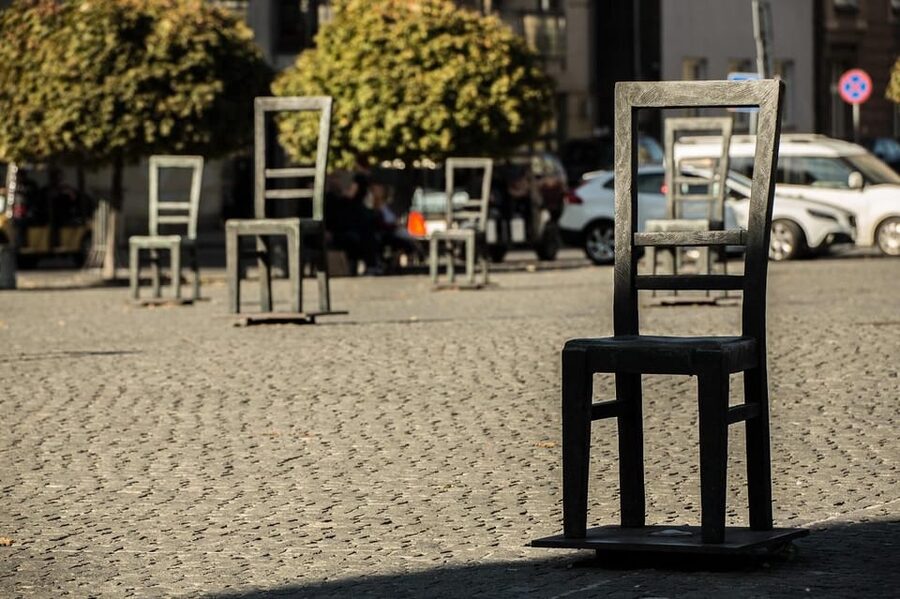
The final memorial stop is the Empty Chair Monument in Heroes’ Square. The installation uses 68 chairs, each one representing the absence created when Jewish residents were removed from the ghetto.
It is a simple design, but the empty seats are hard to miss. Instead of relying on a long inscription, the monument uses repeated objects to show absence in a public space. You can see how many lives were affected without needing a complicated visual explanation.
Your guide can tie the monument to the wider story of displacement and removal. That is useful because memorials can lose their meaning when viewed without context. Here, the earlier museum visit and the walk through Podgórze prepare you to read the chairs as more than street furniture.
For many people, this will be the most quietly affecting part of the tour. The museum presents evidence and explanation. The square gives you a place to pause and consider what those facts meant for families and neighbors.
The route does not appear designed as a fast checklist. One Finnish participant found that the tour lasted about three and a half hours rather than three. That may be inconvenient if you have a tight schedule, but it also suggests that the guide may allow time for explanation and stops. I would avoid booking another fixed activity immediately afterward.
How the guides shape the experience
A live guide is included, with tours offered in English, Italian, French, Spanish, and German. The guide’s role matters more here than on a simple sightseeing walk because the tour combines museum interpretation, wartime history, memorials, and sensitive personal stories.
The strongest praise has focused on the guides. Margherita has been described as engaging, kind, and well prepared. Phill received especially warm praise for being enthusiastic and for sharing a great deal of information. Other comments highlight guides who were exceptionally prepared.
Those individual names may help you understand the style of the experience, but they do not guarantee who will lead your departure. The booking information lists the available languages rather than a fixed guide for every date.
You should expect a guided presentation rather than a casual stroll. If you prefer to move at your own pace and read every museum panel alone, a self-guided visit may suit you better. If you want someone to connect the pieces and explain what you are seeing, this format makes sense.
The tour is also a good choice for visitors who have limited time in Krakow. In three hours, you cover the museum and several important Podgórze sites. You will not study every wartime location in the city, but you get a focused introduction to Schindler, the ghetto, and the district’s memorials.
Is $58 a fair price?
At $58 per person, the cost is not the cheapest way to visit Schindler’s Factory. The value comes from the combination of admission, a professional guide, and a walking route through related sites.
If you only want to enter the museum, paying for a full guided experience may feel unnecessary. But the tour covers more than the museum ticket. You receive an explanation of the exhibition, a route through the former ghetto, and visits to the preserved wall, Under the Eagle pharmacy, and Heroes’ Square.
The price is easier to justify if you care about context. These places are spread across a district, and their meaning is not always obvious from a quick look. The guide helps you connect them into one story instead of treating them as separate photo stops.
It is also good value for visitors who do not speak Polish. The multilingual format gives you a way to understand the museum and the outdoor sites in English, Italian, French, Spanish, or German.
Still, keep the limits in mind. Food, drinks, and hotel transport are not included. You pay for the tour and museum access, then arrange your own way to the meeting point and onward travel.
Timing, tickets, and practical planning
The stated duration is three hours, but allow three and a half. A previous departure ran to roughly that length, and museum scheduling can affect the exact timing.
The activity offers free cancellation up to 24 hours before the start time and a reserve now, pay later option. These features help if your Krakow plans are still shifting. Check the available starting times when booking.
From January 1, 2026, the museum’s scheduling rules become especially important. Times are approximate and may change because of the museum’s schedule. You can select a preferred time, but the exact time is not guaranteed.
You must also provide the full names of everyone in your party when reserving. Bring a passport or ID for entry. Because the museum uses personalized tickets, missing identification or incomplete names could result in refused entry.
For a smooth day, arrive early at the main entrance and look for the excursions.city sign. Wear comfortable shoes, leave room in your schedule after the tour, and bring water since food and drinks are not included.
Who should book this tour?
I would recommend it to you if you want a focused introduction to Krakow’s wartime history and prefer having the major sites explained in one outing. It suits first-time visitors, history-minded adults, and anyone who wants to see more than the museum alone.
It is also a strong fit if you value personal stories and memorials over general city sightseeing. The former residences, wall, pharmacy, and empty chairs make the subject feel tied to specific places.
You may want a different plan if you dislike guided pacing, need a strictly timed schedule, or prefer to examine museums independently. The duration can stretch beyond three hours, and the subject matter is serious.
Should you book it?
Book this tour if you want Schindler’s Factory placed in the wider setting of occupied Krakow. The museum is the anchor, but Podgórze supplies the emotional and physical connection: the ghetto wall, the former homes, Under the Eagle pharmacy, and the 68 empty chairs.
The main reasons to choose it are the prepared multilingual guides, the combination of indoor and outdoor sites, and the useful three-hour focus. Just allow extra time, bring identification, and treat the experience as a thoughtful history visit rather than a quick attraction.
FAQ
How long does the tour last?
The advertised duration is three hours. Allow about three and a half hours, since the timing can run longer.
What does the $58 price include?
The price includes admission to Schindler’s Factory Museum, a professional tour guide, and the walking tour.
Is hotel pickup included?
No. Hotel pickup and drop-off are not included.
Where is the meeting point?
Meet the guide in front of the main entrance to Schindler’s Factory Museum. Look for the excursions.city sign.
Which languages are available?
Live guides are available in Italian, French, English, Spanish, and German.
What places are visited besides Schindler’s Factory?
The route includes streets in Podgórze, a preserved section of the ghetto wall, former residences where displaced Jews lived, Under the Eagle pharmacy, and the Empty Chair Monument in Heroes’ Square.
Do I need identification?
From January 1, 2026, you must bring a passport or ID for entry to Schindler’s Factory Museum. You must also provide the full names of all participants when booking.
Can I cancel for a full refund?
Yes. You can cancel up to 24 hours in advance for a full refund.
Can I pay later?
Yes. The reserve now, pay later option lets you hold a place without paying at the time of booking.
Just added in Kraków
- Wawel Castle, Old Town with St. Mary’s Church Guided Tour★ 5.0 · 5 reviews
- Wawel Castle, Old Town with St. Mary’s Church Guided Tour★ 5.0 · 3 reviews
- Wawel Castle, Cathedral, Old Town and St. Mary’s Basilica★ 4.8 · 13 reviews
- Wawel Castle, Cathedral, & Rynek Underground Tour with Lunch★ 4.5 · 10 reviews
- Wawel Castle & Cathedral Skip the Line Small Group Tour★ 5.0 · 3 reviews
- Wawel Castle and Cathedral Guided Tour★ 4.6 · 44 reviews
- Wawel Castle, Cathedral, Rynek Underground Tour with Lunch★ 5.0 · 3 reviews
- Wawel Castle and Cathedral Guided Tour★ 5.0 · 8 reviews
Schindler's Factory Tours, compared.
Oskar Schindler’s Factory Entry Ticket & Guided Tour
Read the review →
Schindler’s Factory Tour with Entrance Ticket
Read the review →
Schindler’s Factory in Krakow: Guided Tour & Skip the Line Ticket
Read the review →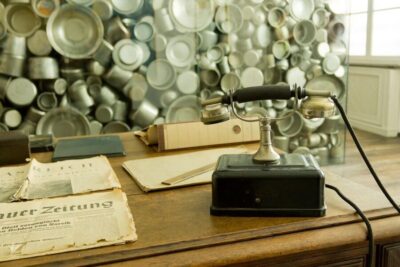
Schindler’s Factory Ticket with Guided Tour Option
Read the review →
Krakow Schindler’s Factory Guided Tour with Admission Ticket
Read the review →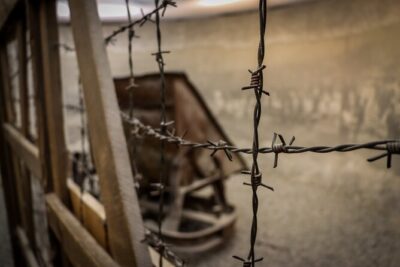
Krakow Schindler’s Factory Museum Guided Tour in English
Read the review →Browse the lists this tour appears in