
Reviewed · JEWISH QUARTER & GHETTO TOURS
Krakow: Jewish Ghetto Walking Tour
The most powerful part of this Krakow walking tour is that the ghetto has not vanished into a museum display. You walk through ordinary streets where the wartime boundary, buildings, and street plan still help you picture how more than 15,000 people were confined in a few city blocks. The history feels close because modern life continues around it.
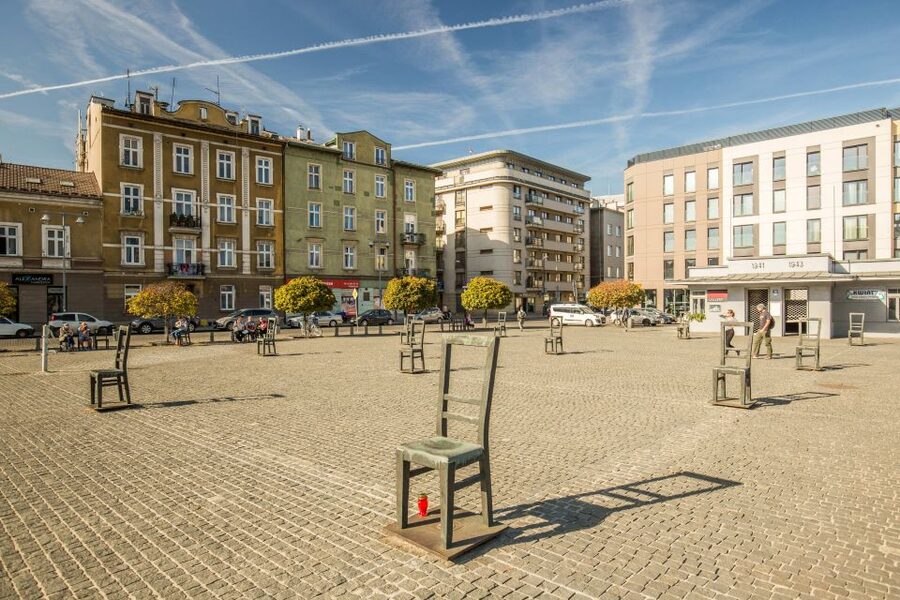
I like the surviving section of ghetto wall, which gives you a physical sense of confinement, and I like the stop at Ghetto Heroes Square, where empty metal chairs mark the people taken away. Guides including Olga, Joanna, Ewa, and Phil have been praised for clear, sensitive storytelling, and the one-hour length makes this an easy addition to a busy Krakow day.
The main limitation is time. One hour is enough for the key sites and a strong introduction, but not enough for every detail. The pharmacy may also be closed, and the tour runs in all weather, so bring suitable shoes and clothing.
Key points to know before you go
- The original ghetto wall remains: See one of the few surviving fragments that enclosed the Krakow Ghetto.
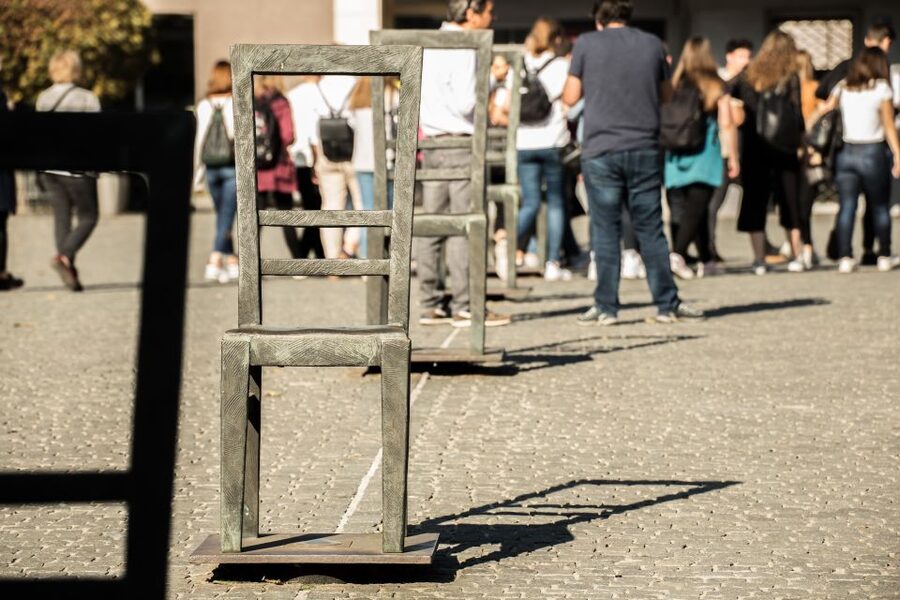
- Ghetto Heroes Square is the emotional center: Empty metal chairs recall the people deported from this place.
- Under the Eagle Pharmacy tells a story of courage: Learn how Tadeusz Pankiewicz and his staff helped people inside the ghetto.
- The route uses real streets and wartime buildings: Photos and surviving details help you compare the past with the present.
- The tour lasts one hour: It is short, focused, and easy to pair with Schindler’s Factory.
- Language choice matters: Group tours run in one selected language, with English, French, German, Italian, Spanish, Russian, Portuguese, Swedish, and Slovak available.
Why Podgórze gives this tour its force
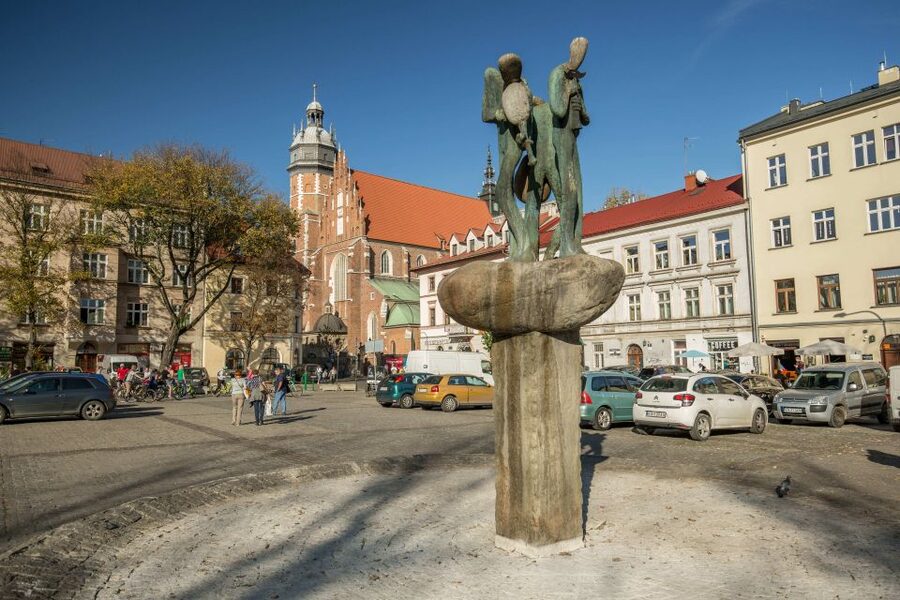
Krakow’s former Jewish Ghetto is in Podgórze, across the Vistula from the old town. It is not presented as a single preserved historic compound. Instead, the route takes you through a living district, where roads, homes, shops, and traffic share space with memories of wartime persecution.
That setting can be unsettling in a useful way. You are not simply looking at an old photograph or reading a plaque. You are trying to match the guide’s explanation with the streets beneath your feet. The area looks quiet today, but the guide reconstructs the fear, crowding, uncertainty, and daily struggle that shaped life behind the ghetto walls.
The tour focuses on the Krakow Ghetto during Nazi occupation. You learn how residents were forced into a confined area, how daily life changed, and how deportations broke apart families and communities. The guide also brings attention to courage and solidarity, rather than presenting the people of the ghetto only as victims.
That balance matters. The subject is painful, but the best guides keep the people at the center of the story. Ewa has been praised for speaking with care about suffering and survival, while Aga connected the local story with the wider consequences of Nazi occupation and the need to learn from the past. Those details suggest the experience is more than a list of dates.
More walking tours in Kraków:
- Old Town Krakow & Wawel Castle Walking Tour
★ 5.0 · 1,508 reviews - Creepy Krakow: 2-Hour City Walking Tour
★ 4.7 · 1,131 reviews - Krakow: The Old Town Walking Tour
★ 4.8 · 794 reviews
Beginning near Schindler’s Factory
The meeting point can vary by booking option, but several tour arrangements begin near Schindler’s Factory. That is a useful place to start because the factory is closely tied to Krakow’s wartime story. Some people pair the walking tour with a visit there, while others book the ghetto walk on its own.
If your tour begins at Schindler’s Factory, allow extra time to find the guide. The meeting instructions may identify the company, language, and start time, and you should arrive at least 10 minutes early. Once the group has left, late arrivals cannot join and the ticket cannot be refunded.
The start may include a short wait outside, although one group was invited indoors on a bitterly cold day. Do not count on that, so check the forecast and dress for the conditions. The tour goes ahead in rain or shine.
Some guides use headphones or an audio system. That helps when the group is spread along the pavement, though one person found that a guide without amplification was sometimes hard to hear. If you have trouble hearing, move close to the guide and ask for a slower pace or clearer volume early on.
The ghetto wall and the meaning of confinement
The remaining section of the original ghetto wall is one of the most useful stops on the route. Very little of the old ghetto survives in an untouched form, so this fragment helps turn an abstract boundary into something you can see and touch.
The guide explains that more than 15,000 people were confined within only a few city blocks. That number becomes more powerful when you look at the wall and the narrow urban setting around it. You can begin to imagine how limited movement, privacy, food, medicine, and personal space must have been.
The wall is also a good example of why a guide adds value here. If you walked through Podgórze alone, you might notice the masonry but miss its purpose and wider setting. With photographs, dates, and explanations, the surviving section becomes part of a larger picture of forced relocation and control.
Do not expect a fully preserved wall or a grand monument. The physical remains are modest. The value lies in the context, and the guide’s ability to connect this fragment with the people who lived behind it.
Ghetto Heroes Square and the empty chairs
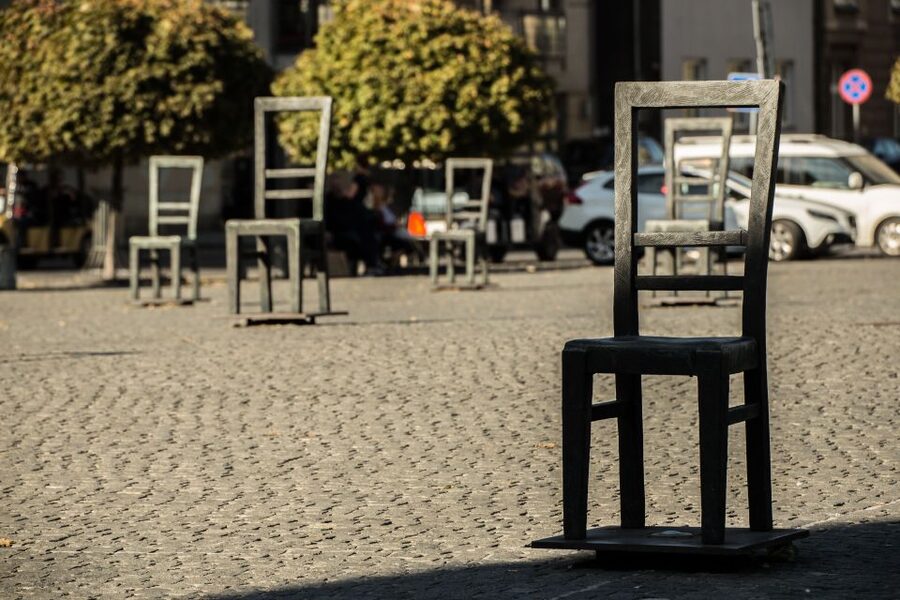
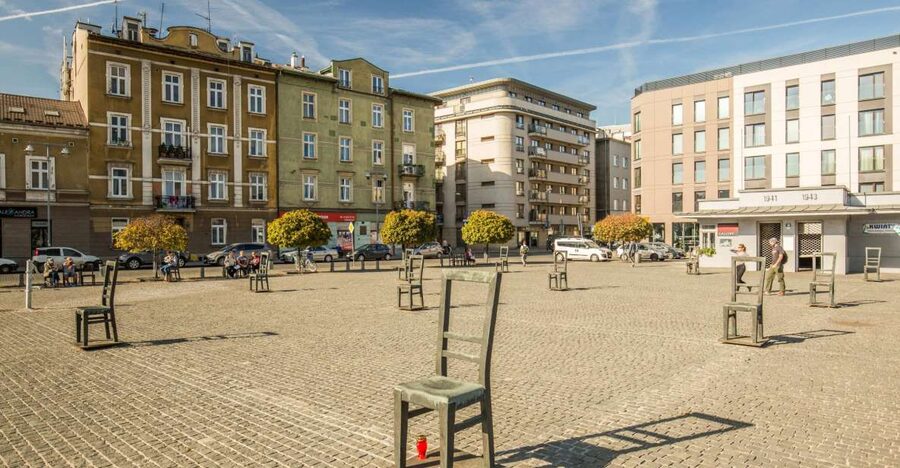
The route continues to Ghetto Heroes Square, the emotional center of the walk. During the war, this was connected with the gathering and deportation of ghetto residents to concentration camps. Today, the square is marked by rows of empty metal chairs.
The chair memorial is simple but hard to forget. The chairs represent the lives lost during the Holocaust, and their arrangement gives the square a feeling of absence. Instead of a long inscription or a large statue, you see ordinary objects repeated across an open public space.
Your guide will explain what happened here and how the square functioned during the deportations. This is usually the point where the broad story becomes personal. The tour has already covered confinement and daily life, but the chairs bring the consequences into sharp focus.
Give yourself a moment to look around rather than rushing to the next stop. The square is still part of the city, so people pass by and normal activity continues. That contrast is part of the experience. The memorial does not isolate the past from the present. It places the memory of loss in a public space used every day.
Other Jewish-heritage walks around Kraków:
- Krakow: Schindler’s Factory & Ghetto Guided Tour
★ 4.7 · 1,694 reviews - Krakow: Jewish Quarter and Former Ghetto Tour
★ 4.9 · 1,441 reviews - Krakow: Bike Tour of Old Town, Jewish Quarter and the Ghetto
★ 4.9 · 1,155 reviews - Krakow: Kazimierz Jewish Quarter Walking Tour
★ 4.8 · 571 reviews
Under the Eagle Pharmacy and stories of help
Across from the square is the historic Under the Eagle Pharmacy. Its wartime story adds an important layer to the tour because it shows how people inside and outside the ghetto tried to help one another.
Tadeusz Pankiewicz and his staff risked their lives to assist ghetto residents. The pharmacy provided medicine and shelter, and the guide explains the practical dangers behind those acts. This is not a simple story of one heroic building. It is a reminder that small acts of care could carry enormous risk under Nazi rule.
The pharmacy can be visited as a museum, but it may be closed during your walk. One person found that the building was not open on the day of the tour, so do not book this short walk expecting a guaranteed interior visit. Even from outside, the guide can explain why the site matters, but an open door gives the story more physical detail.
This stop also helps prevent the tour from becoming only a sequence of tragedies. The history includes fear and deportation, but it also includes choices made by people who offered medicine, shelter, information, or human contact when doing so could put their own lives in danger.
Original streets, buildings, and everyday life
Between the main stops, the guide points out original buildings and parts of the wartime street layout. This is where the walk becomes less about monuments and more about daily life.
You may hear how people lived under severe restrictions, how the ghetto was controlled, and how residents tried to survive from day to day. The guide also explains what happened as deportations began and how the ghetto was ultimately destroyed.
Photographs can make this section especially useful. Phil has used old images to show how places looked during the war, helping you compare the historic scene with the street in front of you. Without that help, some locations may look like ordinary parts of modern Krakow. The physical remains are limited, so visual material and explanation do much of the work.
The walking itself is manageable. The route is generally flat, and one-hour tours keep a steady pace. You will spend most of the time moving between stops, though the guide pauses to speak. This is not a strenuous hike, but it is still a walking tour, so wear comfortable footwear and prepare for cold, rain, or heat.
How the guides shape the experience
The guide is the most important part of a tour like this. The sites are meaningful, but the wall, square, and buildings need careful explanation. A strong guide helps you understand both the historical facts and the human choices within them.
The available guides vary, but names praised for warmth, clarity, and strong storytelling include Olga, Joanna, Ewa, Aga, Helen, Fil, Kris, and Krzysztof. That does not mean you can request a particular guide, but it gives you an idea of the qualities to expect: careful delivery, personal engagement, and room for questions.
Joanna has been noted for setting a steady pace, which helps anyone who walks more slowly. Helen’s style has been described as clear and compassionate, while Fil has kept the story lively and used photographs to improve the sense of place. Ewa has been especially careful with the emotional weight of the subject.
The group tour is conducted in one language only, selected when you book. English is available, along with French, German, Italian, Spanish, Russian, Portuguese, Swedish, and Slovak. A private group option is also available if you want a more personal pace or a chance to ask more questions.
Is one hour enough?
One hour works well as an introduction. You can see the major sites, understand the basic timeline, and leave with a clearer sense of what happened in Podgórze. It also fits neatly before or after another Krakow attraction.
But one hour creates limits. One guide noted that there was far more information to share than the schedule allowed. If you want a detailed study of the ghetto, its people, and the wider wartime history, you will need to continue learning elsewhere.
Think of this tour as a focused walk, not a full-day history course. It gives you the essential geography and a human framework. You can then spend longer at the pharmacy museum, Schindler’s Factory, or another historical site if your schedule allows.
The short length may also suit people who have already visited Auschwitz and feel they need a pause from a full day of difficult material. The subject remains serious, but the route is contained and moves at a clear pace.
The $11 price and what you receive
At $11 per person, this is strong value if you want context rather than a self-guided stroll. You receive a licensed guide and a one-hour walking route through the ghetto area. There is no food or drink included, but none is expected on a short historical walk.
The price is especially reasonable for first-time visitors who might otherwise pass the wall or square without understanding what they are seeing. A guide turns scattered locations into one connected story, and that is the main thing you are paying for.
The value is lower if you want long museum visits or extensive time at each location. The walk does not promise entry to every site, and the pharmacy may be closed. You are paying for interpretation, not a series of admission tickets.
Free cancellation is available up to 24 hours before the start, and you can reserve now and pay later. Those options help if your Krakow schedule is still shifting.
Who should book this Krakow Ghetto walk?
I would recommend it to anyone interested in Krakow’s wartime past, especially if you want to understand how persecution affected ordinary daily life. It is also a good choice if you have already visited Schindler’s Factory and want to see the streets connected with that history.
The tour suits first-time visitors, history students, families with older children, and anyone who prefers a short, guided introduction. The flat route and one-hour schedule make it easier to fit into a full day.
You should think carefully if you find Holocaust history emotionally difficult. The tour covers deportations, loss, fear, and survival. It is respectful, but it is not light entertainment.
Should you book it?
Book this tour if you want the human story behind Podgórze’s streets, not just another photograph at a memorial. The remaining wall, the empty chairs, and the pharmacy are far more meaningful when a guide explains the people and events tied to them.
Skip it only if you have very little interest in wartime history or already have a longer, detailed visit to the same sites arranged. For $11 and one hour, this is a practical way to understand a part of Krakow that is easy to overlook. Arrive early, wear good shoes, check the weather, and keep your expectations focused: the power comes from the stories and setting, not from a large collection of preserved buildings.
FAQ
Where does the Krakow Jewish Ghetto walking tour take place?
The tour takes place in Podgórze, the district that became the Krakow Ghetto during World War II. The exact meeting point may vary according to the option you book.
How long does the walking tour last?
The tour lasts one hour. It covers the main ghetto sites at a focused pace.
What places will I see?
You will see the remains of the original ghetto wall, Ghetto Heroes Square, the Chair Memorial, wartime buildings and street layouts, and the historic Under the Eagle Pharmacy.
Is entry to Under the Eagle Pharmacy included?
The tour includes the walking tour and guide, but food, drinks, and separate admissions are not included. The pharmacy may also be closed on the day of your walk.
Which languages are available?
Tours are available in French, German, Italian, English, Spanish, Russian, Portuguese, Swedish, and Slovak. Group tours operate in one language, which you select when booking.
Is a private tour available?
Yes. A private group option is available.
How early should I arrive?
You should arrive 10 minutes before the scheduled start. Latecomers cannot join after the group has departed, and their tickets cannot be refunded.
Does the tour run in bad weather?
Yes. The tour goes ahead in all weather, including rain. You should check the forecast and bring suitable clothing and footwear.
What is included in the price?
The price includes an expert guide and the walking tour of the Krakow Ghetto. Food and drinks are not included.
Can I cancel my booking?
You can cancel up to 24 hours in advance for a full refund. A reserve-now, pay-later option is also available.
Just added in Kraków
- From Krakow: Guided Tour of Zalipie★ 4.6 · 30 reviews
- From Krakow: Zalipie Village Day-Tour★ 4.9 · 74 reviews
- Krakow: Zalipie Village Tour★ 4.6 · 8 reviews
- ZALIPIE – painted village, unique PRIVATE tour from Krakow★ 5.0 · 20 reviews
- Electric Scooter Tour: Old Town Tour – 2-Hours of Magic!★ 4.7 · 77 reviews
- Czestochowa the Black Madonna Day Tour from Krakow★ 4.5 · 64 reviews
- Dunajec River Gorge and Zakopane: Full-Day Trip from Krakow★ 4.6 · 57 reviews
- Zator: Energylandia Amusement Park Entry Ticket★ 4.6 · 58 reviews
Jewish Quarter & Ghetto Tours, compared.

Bike Tour of Old Town, Jewish Quarter and the Ghetto
Read the review →
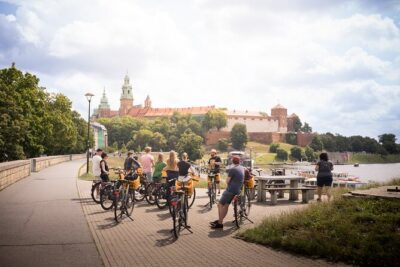
Full Bike Tour – the Old Town, Jewish Qtr & the Ghetto NEW BIKES
Read the review →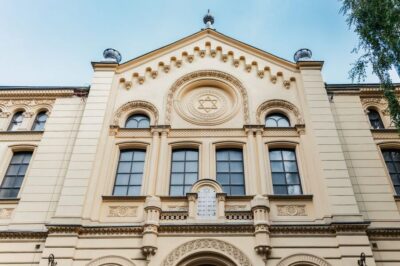
Warsaw Ghetto Private Walking Tour with Hotel Pickup
Read the review →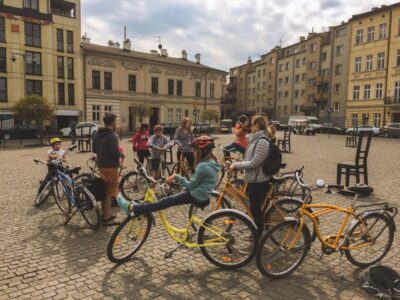
Bike Tour of the Old Town, Kazimierz, and the Ghetto
Read the review →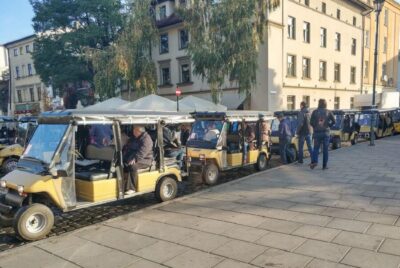
Jewish Quarter and Ghetto Electric Golf Cart Tour
Read the review →Browse the lists this tour appears in