
Reviewed · WWII MEMORIAL & CAMP TOURS
III Reich & WW2 in Wroclaw. Monday, Wendsday, Friday regular tour
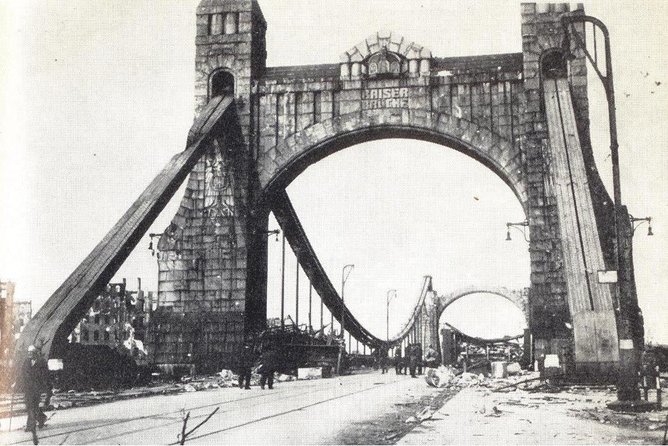
Wrocław’s wartime story is easier to grasp when you walk through the places where it happened. This tour links a destroyed synagogue, the former Gestapo area, the Jewish quarter, the main market square, university buildings, and the route toward Cathedral Island. You are not just hearing dates. You are watching the city change from German Breslau to wartime fortress and then to postwar Wrocław.
I like the strong local focus, especially the attention given to Jewish life, Edith Stein, Dietrich Bonhoeffer, and German opposition to Nazism. I also like the small maximum group of 20 and the useful route from Hotel Monopol to Cathedral Island. The main drawback is pace: two hours to two and a half hours is a lot of ground for eleven stops, and one short account describes the guide as less engaging than expected.
Key points to know before booking
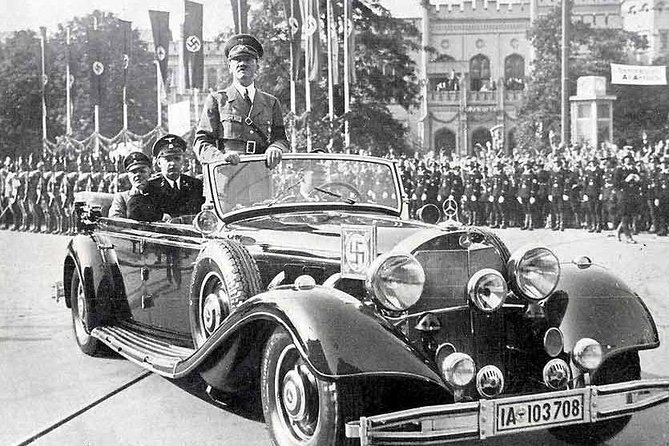
- A walking history of changing Wrocław: Follow the city from the early Nazi era through the siege of Festung Breslau and the first months after the war.
- Jewish heritage has a central place: The route includes the former New Synagogue, the White Stork Synagogue, and stories of local Jewish life and the Holocaust.
- Guide Michael brings a Polish perspective: He is described as especially effective at explaining Third Reich history and answering questions.
- The route covers about 1.7 miles: Wear comfortable shoes and expect regular stops rather than long periods in one place.
- It ends at Cathedral Island: You finish away from the starting point, near one of Wrocław’s most important historic areas.
- The $32.20 price buys context, not museum entry: Most stops are outdoors, and admission to Wrocław University and the Parish of the Most Holy Name of Jesus is not included.
Why Wrocław needs a wartime walking tour
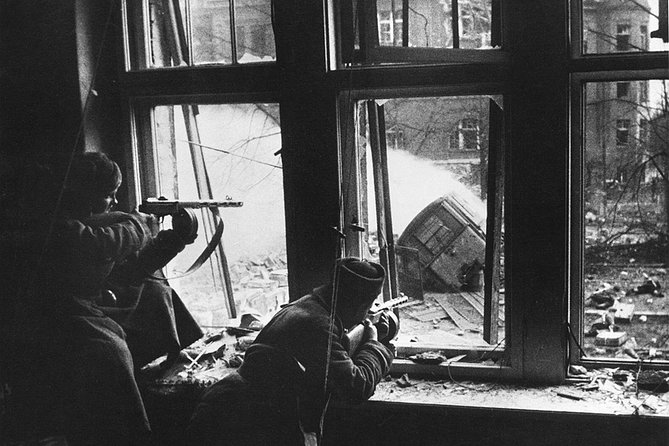
Wrocław can feel like a handsome medieval and baroque city, but its twentieth-century story is far more complicated. Before 1945, it was German Breslau. Under the Nazi regime it was shaped by dictatorship, persecution, war production, and military planning. In the final months of World War II, it became Festung Breslau, a fortified city ordered to resist the advancing Soviet army.
The tour works because it uses ordinary streets and public squares to explain those changes. You begin at Hotel Monopol, near the center, and finish at Cathedral Island. Along the way, the guide connects places that can otherwise look unrelated: a synagogue site, a university, a market hall, churches, and the main square.
I would choose this tour if you want a focused introduction before exploring museums on your own. It also suits anyone who already knows the broad outline of World War II but wants more local detail. It is not a museum visit or a long lecture. It is a brisk outdoor history walk, with short explanations at each stop.
The tour is offered in English on Mondays, Wednesdays, and Fridays. It lasts approximately two to two and a half hours, and the group is capped at 20 people. That is small enough for questions without promising a private tour.
Other wartime memorials reachable from Wrocław:
- The secrets of World War II
★ 5.0 · 18 reviews - Wroclaw To Stalag Luft Tour – The Great Escape Tour
★ 5.0 · 16 reviews - Wroclaw to Project Riese and Gross Rosen Museum – WW2 Tour including tickets
★ 5.0 · 13 reviews
From Hotel Monopol to the destroyed New Synagogue
Meet outside Hotel Monopol on Ulica Heleny Modrzejewskiej. The first stop is the site of the New Synagogue, destroyed in 1938, followed by the former Gestapo building.
This opening gives the tour a clear moral and historical direction. The destroyed synagogue is not treated as an isolated architectural loss. It introduces the destruction of Jewish life in Breslau and the machinery of persecution that followed. The nearby Gestapo site helps connect antisemitic policy with state violence.
There is no admission fee here, and the stop lasts about five minutes. That short timing is practical, but it also means you should listen closely. The point is to establish the setting rather than provide a long architectural study.
Wolności Square and the beginning of the Nazi era
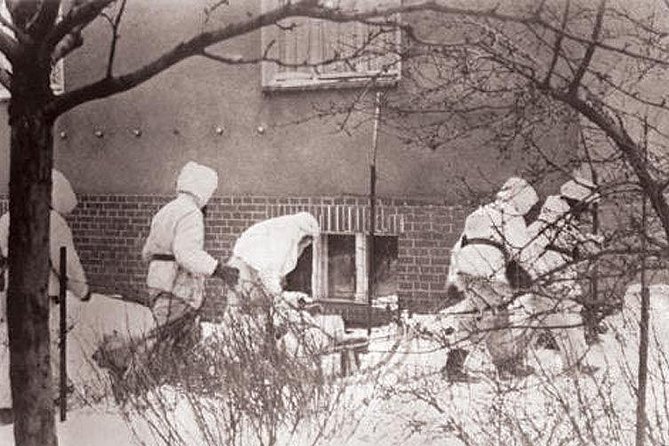
At Wolności Square, you hear how the Nazi era began in Germany. This is an important transition from local Jewish history to the wider political story.
A good guide can make this part useful by explaining how ordinary civic life was reshaped by dictatorship. The tour’s route suggests that the focus is not only on Hitler and major battles, but also on how a political system took hold in the city.
Again, the scheduled stop is brief, about five minutes. If you prefer long discussions at each site, the pace may feel quick. If you want a clear framework before moving through the city, the short explanation keeps the walk moving.
The White Stork Synagogue and Wrocław’s Jewish quarter
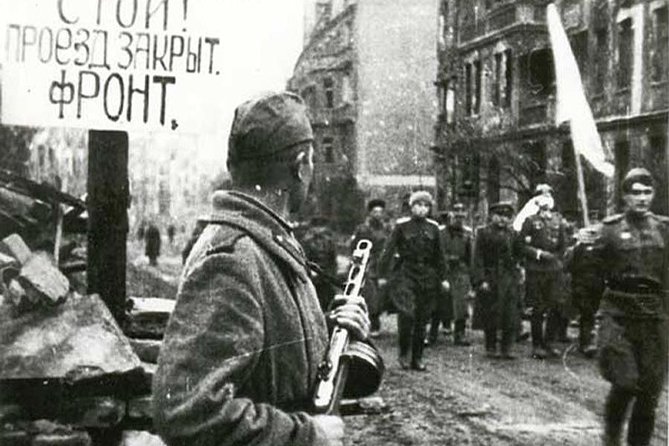
The White Stork Synagogue survived the war and sits in the heart of the former Jewish district. This is one of the most meaningful stops because the building gives you a physical link to a community that was almost destroyed.
Here the guide discusses local Jewish heritage and the Holocaust. The contrast with the New Synagogue site is powerful: one building remains, while the other exists only as a place of memory. You also get a better sense of Jewish life in Wrocław before the war, rather than hearing only about persecution and death.
The stop lasts about ten minutes. Admission is listed as free, but the tour description does not promise an interior visit, so you should think of this as an outdoor history stop unless the guide says otherwise.
Several parts of the route depend on the guide’s ability to add human detail. Michael is repeatedly singled out for explaining the city’s wartime story clearly and for pointing out things you could otherwise pass without noticing. That matters here, where the value comes less from a sweeping view and more from understanding what the district once contained.
Same base, a different kind of day:
- Wroclaw: E-Car Tour and Audio Guide
★ 4.6 · 1,738 reviews - Wroclaw: 2-Hour Private Guided Tour by Electric Car
★ 4.8 · 805 reviews - Wrocław: Old Town and Ostrów Tumski Walking Tour in English
★ 4.8 · 311 reviews - Wroclaw: Private Old Town Guided Walking Tour (2 hours)
★ 4.8 · 275 reviews
Rynek, daily life, and the final battle for Breslau
On the main square, Rynek, the subject shifts to everyday life under the Nazi regime. You also hear about Festung Breslau and the destruction of the city.
Rynek is a useful place to discuss daily life because it is the center of modern Wrocław as well as a historic civic space. The guide can set official Nazi control against the routines of work, shopping, education, and public life. Then the story turns toward the war’s final stage, when Breslau was transformed into a fortress.
The distinction between Nazi rule and the later siege is worth paying attention to. They were connected, but they were not the same experience. The tour treats the city as a place where ideology, military orders, and civilian survival collided.
You spend about ten minutes here. The square can be busy, and outdoor explanations may be affected by weather or street noise. The tour requires good weather, so dress for a walking route rather than a quick city-center outing.
Dietrich Bonhoeffer and opposition inside Germany
The Dietrich Bonhoeffer Memorial provides a short pause to discuss German opposition to Nazism. Bonhoeffer was a Protestant theologian and a well-known opponent of Hitler’s regime.
This stop broadens the story. A tour about the Third Reich should not leave you with the impression that every German accepted the regime in the same way. The guide uses Bonhoeffer to introduce resistance, moral conflict, and the risks faced by people who opposed Hitler.
The stop is only about five minutes, so expect a concise explanation rather than a full biography. Still, it is a useful counterpoint to the military and political material elsewhere on the route.
Wrocław University and education under the Reich
At Wrocław University, the tour examines education in the Third Reich and discusses Jewish scientists. Admission is not included, so do not assume that your ticket covers entry inside.
This stop helps explain how universities can be shaped by a dictatorship. Education was not separate from Nazi policy. Institutions could be used to promote ideology, remove Jewish academics, and control what counted as acceptable knowledge.
The mention of Jewish scientists gives the guide a chance to bring the subject back to individual lives and careers. It also balances the focus on buildings and military events with a look at professional and academic communities.
Allow about ten minutes. If you are especially interested in university history, ask questions while you are there, since the overall schedule keeps each stop compact.
The Most Holy Name of Jesus during the siege
At the Parish of the Most Holy Name of Jesus, the story moves into everyday life during the siege and the first months after the war. Admission is not included.
This may be one of the route’s most useful stops for understanding civilians. Military history often reduces a siege to maps, dates, and troop movements. A discussion of daily life gives you a sense of what the conflict meant for people trying to eat, shelter, work, worship, and survive in a city under attack.
The stop lasts about ten minutes. Since much of the subject concerns conditions rather than visible wartime damage, the quality of the explanation matters greatly. Michael’s strength, according to the supplied comments, is his ability to add local details and respond to questions. That is especially valuable here.
Ossolineum, education, and a city in transition
The Ossolineum stop returns to education under the Third Reich. You hear more about how learning and cultural institutions functioned during the period.
This is not simply a repeat of the university stop. The route uses different institutions to show that Nazi influence reached beyond political offices and military sites. Schools, libraries, scholars, and cultural bodies were all part of the wider struggle over identity and authority.
Plan for another ten-minute explanation. The tour’s structure is thematic, not strictly chronological, so you may hear related subjects at several locations. That approach can help reinforce the main ideas, but it also requires you to keep track of the timeline.
Hala Targowa and the siege of Festung Breslau
The Market Hall, Hala Targowa, is where the siege story receives another look. You also get a short break.
That pause is welcome. The route covers roughly 1.7 miles, and the tour includes repeated standing stops. A brief rest helps, especially in cold or wet weather.
The hall is also a practical setting for talking about a city under pressure. The guide discusses the siege and the conditions around the final defense of Breslau. This part should help you connect the earlier explanation at Rynek with the physical scale of the city’s wartime ordeal.
There is no admission fee for this stop. Do not expect a long market visit as part of the experience. The main purpose is the war story and a chance to regroup before the final section.
Sand Island, Edith Stein, and the road to the cathedral
On Sand Island, you hear about Edith Stein and more about the siege. Edith Stein was a Jewish-born philosopher who became a Catholic nun and was later killed at Auschwitz. Her story adds another personal and religious dimension to the tour’s discussion of persecution.
Sand Island also provides a change of setting as you move toward the cathedral area. The guide continues the siege narrative here, linking Wrocław’s religious landmarks with the city’s wartime experience.
This is a short stop of about five minutes. It is best understood as part of the route’s final sequence rather than a standalone visit.
The walk ends on Cathedral Island, or Ostrow Tumski. The final stop lasts about ten minutes and includes a few additional stories. Ending here gives you a natural place to continue exploring Wrocław after the tour, though the experience itself does not include a separate cathedral admission.
What the $32.20 price really covers
At $32.20 per person, this is reasonably priced if you want a guided historical framework and do not want to assemble the route yourself. You are paying mainly for the guide’s interpretation, local connections, and the efficient use of two hours to two and a half hours.
Most stops are free. Admission is not included at Wrocław University or the Parish of the Most Holy Name of Jesus, and the tour does not appear to be built around extended indoor visits. That keeps the cost down, but it also means the value depends on how much you enjoy walking and listening.
I would not book this expecting a large number of exhibits or a slow architectural tour. I would book it for the chance to connect scattered places into one story. The small group limit and English-language format add practical value, particularly if you want to ask questions.
Pace, weather, and who should book
You should wear comfortable shoes. The route covers about 1.7 miles, includes eleven stops, and moves steadily between them. Winter weather can be severe in Wrocław, and one account describes enjoying the tour in frigid, snowy conditions, but cold weather will make the outdoor format more demanding.
The tour is a good match for:
- People with a strong interest in World War II and the Third Reich
- First-time visitors who want local history beyond the main tourist sights
- Anyone interested in Jewish heritage and the Holocaust in Wrocław
- Visitors who prefer a small group and a clearly planned walking route
- People who want to understand Festung Breslau and the city’s postwar change
It may not suit you if you want a relaxed stroll, lengthy time inside buildings, or a tour focused mainly on medieval Wrocław. The schedule is tight, and one short account found the presentation too surface-level. That is a fair caution: the experience can depend heavily on the guide on the day.
The cancellation terms are simple. You can cancel at least 24 hours before the start for a full refund. Bad weather or failure to reach the minimum group size can also lead to a new date, another experience, or a full refund. Service animals are allowed, and the meeting point is near public transportation.
Should you book the Wrocław Third Reich and World War II tour?
Book it if you want a focused, place-based account of Wrocław’s Nazi, Jewish, wartime, and early postwar history. The most valuable parts are the links between the destroyed New Synagogue and the surviving White Stork Synagogue, the discussion of daily life under Nazi rule, and the explanation of Festung Breslau.
I would especially consider it early in your stay, when the route can give meaning to places you encounter later. Choose it with the understanding that it is an outdoor walking lecture, not a series of museum entries. If Michael is leading your group, expect a guide who can add local detail and handle questions, though the pace still leaves limited time at each stop.
For $32.20, the tour offers a solid historical introduction and a route you would be unlikely to build on your own. It is best for curious walkers who want Wrocław’s twentieth-century story told directly on the streets where it unfolded.
FAQ
How long does the tour last?
The tour lasts approximately two hours to two and a half hours.
Where does the tour start?
It starts at Hotel Monopol, Ulica Heleny Modrzejewskiej 2, 50-071 Wrocław, Poland.
Where does the tour end?
The tour ends on Cathedral Island, also called Ostrow Tumski, in Wrocław.
What days is the tour offered?
The regular English-language tour is offered on Mondays, Wednesdays, and Fridays.
Is admission included at every stop?
Most stops are free. Admission is not included at Wrocław University or the Parish of the Most Holy Name of Jesus.
What happens if the tour is canceled because of weather?
You will be offered a different date or a full refund if poor weather causes the cancellation.
Just added in Wrocław
- Wroclaw to Rock City in Adrsprach★ 4.5 · 10 reviews
- Wroclaw to Rock City Adrspach in Czech Republic Private Tour including tickets★ 4.5 · 8 reviews
- Wroclaw to Project Riese and Gross Rosen Museum – WW2 Tour including tickets★ 5.0 · 13 reviews
- Wroclaw to Project Riese and Ksiaz Castle Private Tour★ 5.0 · 10 reviews
- Delicious Wroclaw Vodka Tour★ 5.0 · 14 reviews
- Wroclaw to Rock City in Adsprach and Church of Peace in Świdnica Private Tour★ 5.0 · 3 reviews
- Wroclaw to Prague Day Trip★ 5.0 · 5 reviews
- Wroclaw Old Town Highlights Private Walking Tour★ 4.0 · 5 reviews
WWII Memorial & Camp Tours, compared.
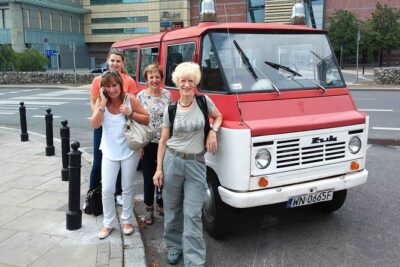
Warsaw for WWII Buffs – private tour with hotel pickup
Read the review →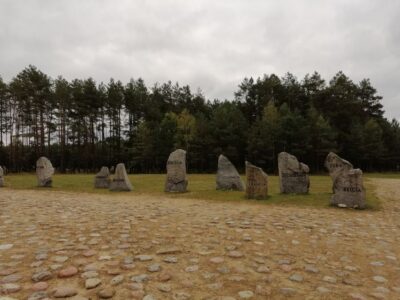
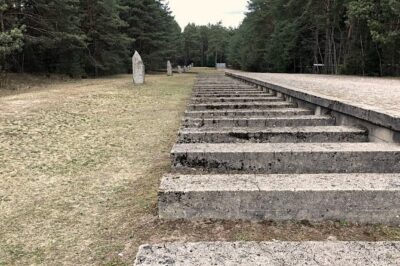
Treblinka Death Camp 6 Hour Private Tour from Warsaw
Read the review →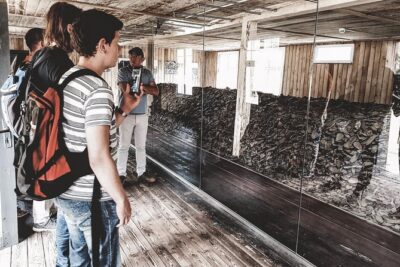
Stutthof Concentration Camp English Tour with Gdansk Hotel pickup
Read the review →
Majdanek Concentration Camp & Lublin Full Day Private Tour from Warsaw
Read the review →Browse the lists this tour appears in