
Reviewed · WWII MEMORIAL & CAMP TOURS
The secrets of World War II
Gross-Rosen concentration camp is the emotional center of this day, while the tunnels at Osówka reveal a colder, more mysterious side of Nazi Germany’s wartime plans. Together with Książ Castle, these sites show how forced labor, military construction, and aristocratic power became tangled in Lower Silesia.
I like the hotel pickup and round-trip transport, especially because the three stops are spread across the countryside. I also like the unusual combination of a concentration camp, a grand castle, and an unfinished underground complex. The main drawback is the price, $239.10 per person, and the fact that parts of the day may be self-guided or handled by venue staff rather than one tour guide throughout.
Key points to know before booking
- Gross-Rosen comes first: Starting at the concentration camp allows about two hours for a quiet, serious visit before the day grows busier.
- The Osówka tunnels are physically different: Expect an underground visit connected to the huge Riese construction project, with a moderate fitness level required.
- Książ Castle adds contrast: The castle is beautiful, but its wartime role gives the final stop a darker edge.
- Transport saves time: Hotel pickup, an air-conditioned minibus, and return service remove the need to plan several rural connections.
- Guiding can vary by site: Your driver or tour host provides context, but venue-led sections may use Polish-speaking staff and an audio guide.
- Bring food: Lunch is not included, and the long day has no stated meal stop.
Why these three sites belong together
This is not a standard castle outing with a quick museum stop attached. The route connects three places shaped by Nazi rule in very different ways.
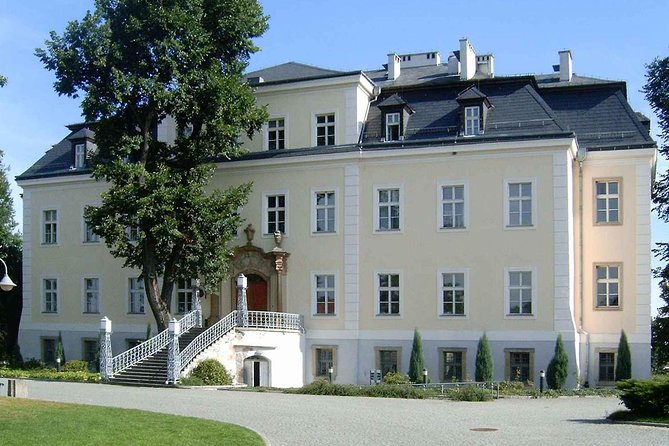
At Gross-Rosen, you confront the camp system and the use of prisoners as forced labor. At Książ, you see how the Nazi organization Tod altered a major Polish castle for wartime purposes. At Osówka, you enter one part of the Riese project, a huge network of underground works that was never fully explained or completed.
That connection is the tour’s strongest idea. You are not simply ticking off three unrelated attractions. You are moving from imprisonment and mass death to military engineering and secret headquarters. The settings change sharply, which helps keep the long day from feeling repetitive.
The route also gives you a look at Lower Silesia beyond Wroclaw. This is countryside history, not just city history. The tradeoff is time: nine hours is a serious commitment, and the day includes several hours of driving as well as site visits.
Other wartime memorials reachable from Wrocław:
- III Reich & WW2 in Wroclaw. Monday, Wendsday, Friday regular tour
★ 4.5 · 32 reviews - Wroclaw To Stalag Luft Tour – The Great Escape Tour
★ 5.0 · 16 reviews - Wroclaw to Project Riese and Gross Rosen Museum – WW2 Tour including tickets
★ 5.0 · 13 reviews
Gross-Rosen: the day’s most important stop
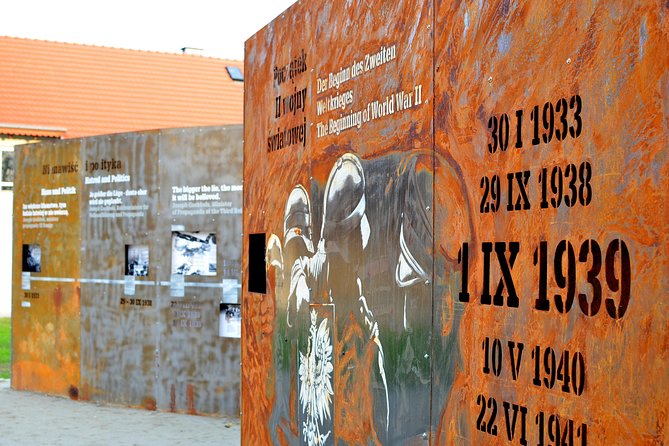
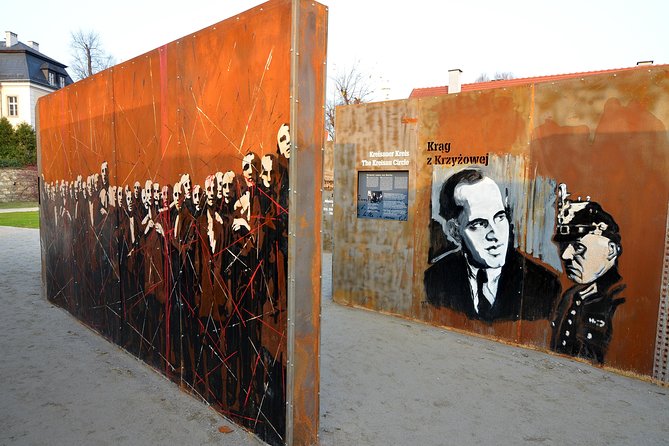
Gross-Rosen in Rogoźnica was the largest Nazi-German concentration camp in Lower Silesia. The camp was known for harsh conditions and penal work in the nearby quarries. Its stated logic was annihilation through work, a phrase that captures the deliberate brutality of the system.
Around 40,000 prisoners died there. The camp held Poles, Jews, Russians, French prisoners, Hungarians, and others. You should allow yourself time to move slowly here. Two hours is a useful amount of time, though the subject matter may make the visit feel longer than the clock suggests.
The first stop is also a smart choice for the emotional rhythm of the tour. The group may arrive early enough to have the grounds largely to itself. That matters at a place where quiet is part of the experience. You can pause, read, and reflect without trying to squeeze the camp between lighter attractions.
I would give Gross-Rosen your full attention rather than treating it as a quick historical preface. The site is the reason to book this tour if your main interest is Poland under Nazi occupation and the human cost of the war.
There is one practical point to keep in mind. The guiding arrangement may not be what you expect from a fully escorted historical tour. The venue guide may speak Polish, with an audio guide provided for other languages. Your English-speaking driver or host can add context, but you should not assume that the same person will lead every indoor and outdoor section.
Książ Castle and its wartime secrets
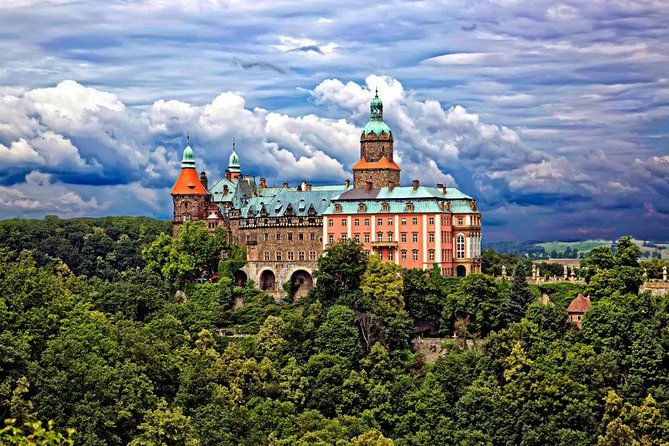
Książ Castle is the third-largest castle in Poland and one of the day’s biggest visual changes. It sits about 395 meters above sea level beside the Pelcznica River, surrounded by forest and built on a rocky cliff. Its size and setting make it an impressive place even without the wartime story.
The castle is often called the Pearl of Lower Silesia, but the tour does not treat it as only a pretty historic building. In 1943, Hitler’s paramilitary organization Tod began work on one of his main headquarters here. The construction was tied to the wider Riese project, including the underground works near Osówka and Włodarz.
You have about 90 minutes at Książ, with admission included. That is enough for a useful visit, but not enough to see every corner at a leisurely pace. If you love architecture, gardens, and castle interiors, you may wish you had longer. The upside is that the castle provides a change of mood after Gross-Rosen.
I like the way this stop makes the war’s machinery visible in a different form. At the camp, the system is about confinement and forced labor. At Książ, it is about taking over an existing place and reshaping it for military power. The castle’s beauty does not soften that history. It makes the contrast sharper.
The castle is also a good final stop for many people because it lets you process the harder first visit in a different setting. Still, keep your expectations clear. The main focus is the connection between Książ and the wartime construction program, not a full-length castle tour with unlimited time.
Inside the Osówka underground complex
The Osówka Complex is part of Riese, a major Nazi German project carried out between 1943 and 1945. The name means Giant, and the scale of the project is one reason this visit feels so different from the camp and castle.
You enter an underground site often described as an underground city. Its full purpose and intended use remain uncertain, which gives the visit a strong sense of mystery. The tour presents Osówka as one of the largest and most complex headquarters projects associated with Hitler in Lower Silesia.
The scheduled visit lasts about an hour. Expect a physically active stop rather than a simple museum walk. The tour asks for moderate physical fitness, and sensible shoes are a good idea even though the provided information does not set out a detailed footwear policy.
The underground setting is the highlight for anyone drawn to wartime engineering, secret construction, and unfinished military projects. It also brings the forced labor question back into view. The tunnels were not created in a vacuum. They belong to the same wartime system that exploited prisoners and workers on a vast scale.
A useful warning: the underground venue may rely on its own guide and audio system. One person on the tour found that the site guides spoke only Polish, though an audio guide was available. If you need detailed English commentary at every step, confirm the arrangements before paying. If you are comfortable combining audio material with explanations from your tour host, the visit should still make sense.
Same base, a different kind of day:
- Wroclaw: E-Car Tour and Audio Guide
★ 4.6 · 1,738 reviews - Wroclaw: 2-Hour Private Guided Tour by Electric Car
★ 4.8 · 805 reviews - Wrocław: Old Town and Ostrów Tumski Walking Tour in English
★ 4.8 · 311 reviews - Wroclaw: Private Old Town Guided Walking Tour (2 hours)
★ 4.8 · 275 reviews
The long day made easier by transport
The tour begins at about 7:00 a.m. and lasts around nine hours. Pickup from your hotel or hostel, transport in an air-conditioned minibus, and return drop-off are included. Admission to all three sites is also included, and the stated price includes no extra charges beyond lunch.
That transport is a major part of the value. Gross-Rosen, Książ Castle, and Osówka are not compact Wroclaw attractions. You would need to plan the route, parking, opening times, entrance tickets, and rural driving yourself. If you do not have a car, arranging the same day independently would be awkward.
The minibus also lets you use the road time to ask about Lower Silesia, Wroclaw, and Polish history. Guides named in past bookings include Jakub, Paweł, and Tomek. Paweł was praised for speaking several languages and for offering food suggestions in Wroclaw, while Jakub was noted for his helpful manner and careful driving on rough roads.
Do not expect a relaxed late start. A 7:00 a.m. pickup and three substantial stops make this a packed day. Bring water and snacks, since lunch is not included. One useful advantage is that the group is intended to be small, with the main tour description giving a maximum of nine people. Additional booking information gives a maximum of 15, so confirm the expected group size if that detail matters to you.
Is $239.10 a fair price?
At $239.10 per person, this is expensive for a day trip. The price makes more sense when you count what is bundled in: hotel pickup, a full day of transport, an English-speaking driver, tour assistance, sightseeing in your chosen language, three admission tickets, and return service.
You are paying for convenience and access to a difficult route, not just for entry to three attractions. If you already have a car, can plan rural driving confidently, and prefer to set your own pace, you may find the cost hard to justify. One booking made exactly that point: with a personal car, the same stops could have been visited independently.
If you do not have a car, the calculation changes. You would need to arrange transport to three separate locations and manage the timing yourself. The tour also gives you a human point of contact for questions and local suggestions. That is valuable when you want the day interpreted rather than simply transported.
The strongest value comes from the combination. A visit to Gross-Rosen alone would suit a more focused historical day. Książ and Osówka add the wider story, but they also make the trip longer and more expensive. Book it as a full Lower Silesia history day, not as a cheap sightseeing transfer.
Who should book this experience?
I would recommend it to you if you have a serious interest in World War II, Nazi occupation, Polish resistance, forced labor, or military construction. It also suits first-time visitors to Wroclaw who want to see important regional sites without renting a car.
You should be comfortable with difficult subject matter. Gross-Rosen is not a casual attraction, and the visit may leave you subdued for the rest of the day. That is not a weakness, but it is worth knowing before you book.
The tour also suits people who like variety. You get a memorial site, a castle, and an underground complex in one outing. You will not get long, unhurried time at each one, so history fans who prefer careful independent study may want separate visits instead.
It is less suitable if you dislike early starts, long driving days, or venue-led sightseeing. It may also disappoint you if you expect one expert guide to personally lead every minute. The driver and host can be central to the day, but individual sites may provide their own commentary.
Practical advice for a better day
Set aside the full nine hours. Do not plan a demanding evening event immediately afterward, since the early start, driving, and emotional weight of Gross-Rosen can make the day tiring.
Bring snacks, water, and clothing suited to changing conditions. The tour requires moderate physical fitness, and Osówka is an underground visit rather than a purely seated museum experience.
At Gross-Rosen, read the information carefully and give yourself quiet time. At Książ, pay attention to the wartime alterations and its link with Riese rather than viewing it only as a castle. At Osówka, listen for the connection between the unfinished tunnels, military planning, and forced labor.
If English commentary at every site is essential, ask before booking how the venue guides and audio guides will work. English is the offered tour language, but that does not necessarily mean every local guide speaks English.
Free cancellation is available if you cancel at least 24 hours before the 7:00 a.m. start. Changes or cancellations made within that period are not accepted for a refund. The activity may also be canceled for poor weather, in which case you are offered another date or a full refund.
Should you book it?
Book this tour if you want a carefully connected look at Lower Silesia’s World War II sites and value hotel pickup over complete independence. Gross-Rosen is the central reason to go, while Osówka adds a rare underground perspective and Książ gives the story a striking architectural setting.
Skip it if you have a car, want to spend unlimited time at each site, or expect a single specialist guide to lead every visit. For most people without a car, the route is difficult to reproduce in one day. The price is high, but the transport, admissions, and unusual combination can justify it if this subject matters to you.
FAQ
What time does the tour start?
Pickup begins at approximately 7:00 a.m.
How long does the experience last?
The tour lasts about nine hours.
Which sites are included?
The tour visits the Gross-Rosen Museum in Rogoźnica, Książ Castle in Wałbrzych, and the Osówka underground complex.
Is transportation included?
Yes. Hotel or hostel pickup, round-trip transport in an air-conditioned minibus, and return drop-off are included.
Is lunch included?
No. Lunch is not included, so bring snacks or plan to buy food during the day.
What happens if I need to cancel?
You can receive a full refund if you cancel at least 24 hours before the local start time. Cancellations or changes made less than 24 hours before departure are not accepted for a refund.
Just added in Wrocław
- Wroclaw to Rock City in Adrsprach★ 4.5 · 10 reviews
- Wroclaw to Rock City Adrspach in Czech Republic Private Tour including tickets★ 4.5 · 8 reviews
- Wroclaw to Project Riese and Gross Rosen Museum – WW2 Tour including tickets★ 5.0 · 13 reviews
- Wroclaw to Project Riese and Ksiaz Castle Private Tour★ 5.0 · 10 reviews
- Delicious Wroclaw Vodka Tour★ 5.0 · 14 reviews
- Wroclaw to Rock City in Adsprach and Church of Peace in Świdnica Private Tour★ 5.0 · 3 reviews
- Wroclaw to Prague Day Trip★ 5.0 · 5 reviews
- Wroclaw Old Town Highlights Private Walking Tour★ 4.0 · 5 reviews
WWII Memorial & Camp Tours, compared.
Warsaw for WWII Buffs – private tour with hotel pickup
Read the review →
Treblinka Death Camp 6 Hour Private Tour from Warsaw
Read the review →
Stutthof Concentration Camp English Tour with Gdansk Hotel pickup
Read the review →
Majdanek Concentration Camp & Lublin Full Day Private Tour from Warsaw
Read the review →Browse the lists this tour appears in