
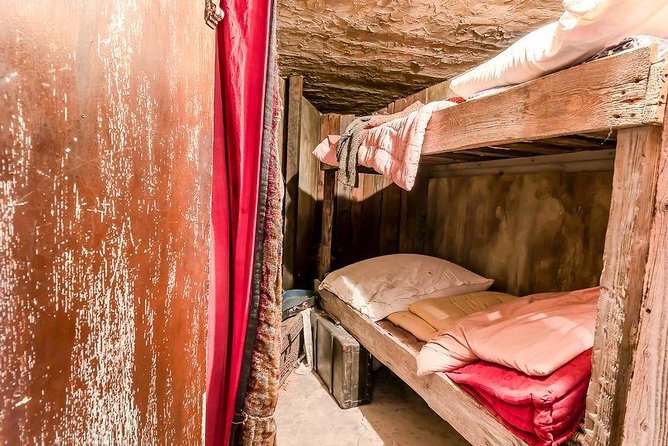
Reviewed · SCHINDLER'S FACTORY TOURS
Kraków: Schindler’s Factory and Former Ghetto Tour
Kraków’s former Podgórze Ghetto is not a place to rush through. This tour gives you a practical way to see its key sites, then sets aside the most time for the excellent historical exhibition at Oskar Schindler’s Enamel Factory. You move between locations in a quiet electric car, with a prerecorded audio guide explaining what you are seeing.
I like the easy hotel pickup and the simple two-hour format. I also like that the route includes both Ghetto Heroes Square and Eagle Pharmacy, rather than treating Schindler’s Factory as an isolated museum visit. The main drawback is clear: there is no live guide to answer questions, so the experience depends on the audio program and your own reading at the museum.
Key points to know before booking
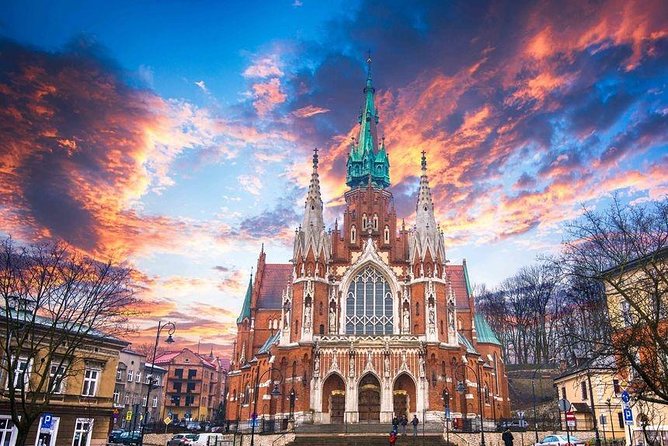
- Electric-car transport: Move between the Podgórze sites without a long walk or a confusing public transport connection.
- Three important stops: See Ghetto Heroes Square, Eagle Pharmacy, and Schindler’s Factory in one short outing.
- Clear prerecorded commentary: The audio guide explains the district while your driver handles the route.
- The factory visit is self-guided: You receive time to explore the museum, but no expert guide walks through it with you.
- Hotel pickup may save time: Pickup is offered, and you can also choose from two central Kraków meeting points.
- Best for a first visit to Podgórze: The tour gives you the basic framework before you return for a slower, more detailed look.
Why this Podgórze tour works
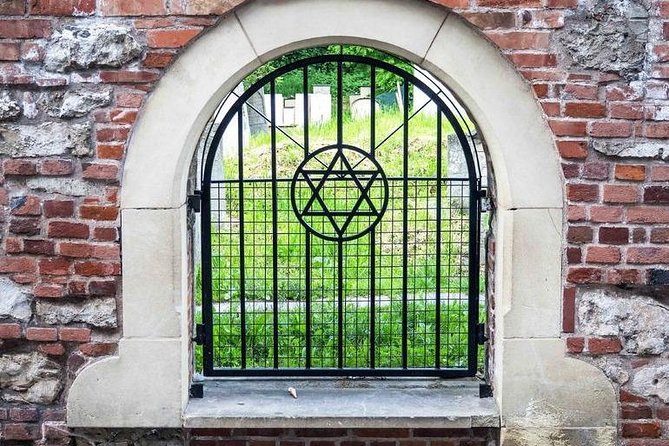
Podgórze sits across the Vistula River from Kraków’s Old Town. During the German occupation, the Nazis forced Kraków’s Jewish population into a sealed ghetto here. The district now contains quiet streets, memorials, museum spaces, and fragments of the wartime walls.
This tour is useful because the sites are connected by a difficult story, not just by geography. Ghetto Heroes Square shows the scale of the deportations. Eagle Pharmacy introduces the people who tried to help inside the ghetto. Schindler’s Factory places those events within the larger story of occupied Kraków.
You travel by an electric car, which makes the outing less tiring than walking between every stop. It is also handy if you have limited time in Kraków or if you want to save your energy for the museum. The vehicle allows quick stops for photos, and the driver helps with the practical side of getting around.
The tradeoff is that this is not a traditional guided walk. Your driver is helpful and manages the transport, but the historical explanations come from a recording. You cannot stop the tour to ask why a particular event happened or ask for more detail about a person you see in the exhibition.
More Schindler's Factory tours from Kraków:
- Krakow: Oskar Schindler’s Factory Entry Ticket & Guided Tour
★ 4.2 · 3,793 reviews - Krakow: Schindler’s Factory Tour with Entrance Ticket
★ 4.5 · 3,182 reviews - Krakow: Schindler’s Factory Skip-the-Line Ticket
★ 4.4 · 3,105 reviews
Ghetto Heroes Square and the empty chairs
The first stop is Plac Bohaterów Getta, known in English as Ghetto Heroes Square. Its most recognizable feature is a collection of empty chairs spread across the square.
The chairs represent the furniture and possessions left behind when Jewish residents were forced from their homes. They also suggest the absence created by deportation and murder. It is a memorial that uses a very plain object to make the loss visible.
You have about 15 minutes here. That is enough to take in the square and hear the main explanation, but it is not a long period for quiet reflection. If you are interested in memorial design, you may want to pause before taking photographs and consider what the chairs are meant to convey.
The square also helps you understand the physical setting of the former ghetto. This was not an abstract area on a map. People lived in these streets, were confined here, and were later sent away from here. The tour’s short stop gives you the location and the basic story, while the later museum visit supplies much more detail.
Because the stop is brief, keep your attention on the audio guide. It is easy to focus on getting out of the car, taking pictures, and preparing for the next stop. The historical explanation is the part that gives the place meaning.
Eagle Pharmacy and the role of Tadeusz Pankiewicz
Apteka pod Orłem, or Eagle Pharmacy, is one of the most important surviving places connected with the ghetto. The pharmacy operated inside the district during the occupation, and its owner, Tadeusz Pankiewicz, played an important role in helping Jewish residents.
You have about 30 minutes here, with admission included. That longer stop gives you more time to take in the site than you get at the square. The pharmacy is not simply a preserved shopfront. It tells the story of daily life under confinement and the difficult choices made by people living under Nazi rule.
The value of this stop is its human scale. Schindler’s Factory presents broad events and many individual stories, but Eagle Pharmacy focuses attention on one place where people came for medicine, news, contact, and help. It gives you a closer sense of how an ordinary business became part of the life of the ghetto.
The audio format works reasonably well here because the site has a specific purpose and a clear story. Still, you should expect a self-directed visit rather than a conversation with a museum specialist. If you have questions about Pankiewicz or the objects on display, you will need to read the information provided or save the question for later research.
The remaining wall and what it tells you
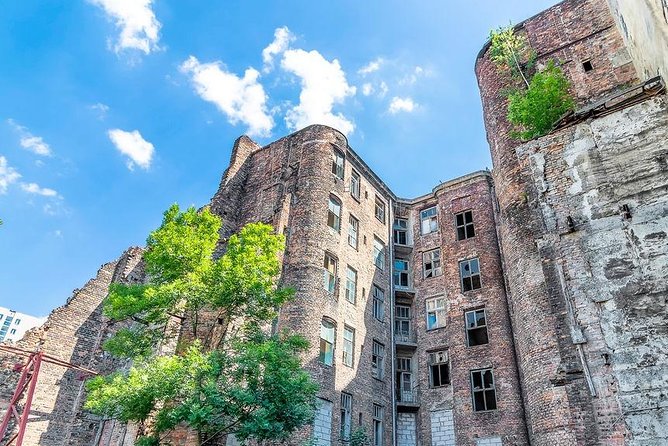
The route also includes remnants of the wall that once surrounded the ghetto. These fragments matter because they show the physical barrier used to confine the population.
A museum can explain forced separation in words and photographs. A surviving section of wall makes the system easier to picture. You can see the scale of the structure and understand that the ghetto was a controlled, enclosed space rather than simply a neighborhood where people happened to live.
The stop is short, but it adds an important piece to the route. Ghetto Heroes Square shows the human cost. Eagle Pharmacy shows daily life and assistance. The wall shows the machinery of confinement.
The tour does not promise a long walking route through every surviving location in Podgórze. Instead, it offers a compact circuit of the best-known sites. That makes it practical, but it also means you will not get the same slow, street-by-street experience as you would from a longer walking tour.
Other Jewish-heritage walks around Kraków:
- Krakow: Schindler’s Factory & Ghetto Guided Tour
★ 4.7 · 1,694 reviews - Krakow: Jewish Quarter and Former Ghetto Tour
★ 4.9 · 1,441 reviews - Krakow: Bike Tour of Old Town, Jewish Quarter and the Ghetto
★ 4.9 · 1,155 reviews - Krakow: Kazimierz Jewish Quarter Walking Tour
★ 4.8 · 571 reviews
Schindler’s Factory, the main visit
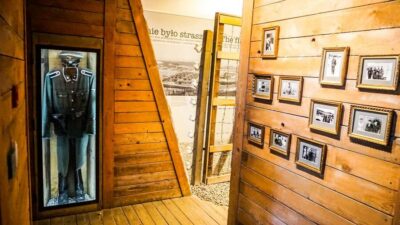
You spend about 75 minutes at Oskar Schindler’s Enamel Factory, making this the central part of the experience. The museum exhibition is mainly about Kraków and its residents, both Polish and Jewish, during World War Two.
Despite its familiar name, the museum is not simply a biography of Oskar Schindler. Its subject is broader: the city under German occupation, the disruption of Polish-Jewish life, the arrival of the Nazi occupiers on September 6, 1939, and the personal suffering created by the war.
That distinction matters if you arrive expecting a museum devoted mainly to the film Schindler’s List or to Schindler’s private life. You will find his factory and his connection to Jewish workers, but the exhibition uses that setting to tell the story of occupied Kraków. It connects major events with ordinary routines and personal tragedies.
I think that wider focus is one of the museum’s strengths. It prevents the story from becoming a simple tale of one rescuer. You see how the occupation changed the whole city and how individual decisions took place inside a much larger system of violence.
At the same time, some visitors may want more biographical information about Schindler himself, including his childhood, education, and life before the war. If that is your main reason for visiting, you may find the exhibition less focused than expected. Go in ready to learn about Kraków during the occupation, not just about one man.
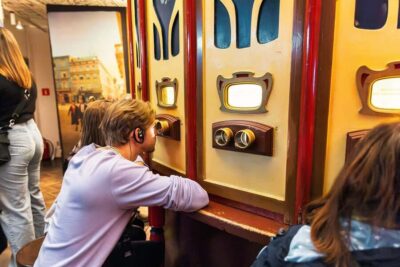
The museum can also feel dense. There is a lot to read, see, and absorb in 75 minutes. You should pay attention to the meeting time and avoid spending too long in the first sections. The allotted period is useful, but you may wish for more time if you read every panel carefully.
What the audio guide changes
The prerecorded audio guide is clear and easy to hear, which helps during the moving parts of the tour. You can listen while seeing the square, the surrounding streets, and the former ghetto sites without trying to keep up with a walking guide.
The guide also keeps the route efficient. Your driver can focus on the road and the short transfers, while the recording provides the historical background. This division works well for a small, practical sightseeing outing.
But an audio guide cannot react to you. A live historian might explain a difficult point in another way, connect the site to something you saw earlier, or answer a question about the occupation. Here, you receive the prepared material and then explore the museum largely on your own.
That makes this experience a good fit if you like setting your own pace. It is less suitable if you want a seminar-style tour with discussion and personal interpretation. Before booking, decide which type of visit you want. The transport is guided in a practical sense, but the history is not presented by a person traveling with you.
Is $65 a fair price?
At $65, the value depends on how you use the two hours. You are paying for transport in an electric car, a driver, the audio commentary, admission to Eagle Pharmacy, and admission to Schindler’s Factory. Pickup may also remove the cost and effort of arranging your own route from central Kraków.
The price is easier to justify if you want to combine several Podgórze sites without planning the connections yourself. You see the square, pharmacy, wall remains, and factory in one organized outing. For a first visit, that convenience has real value.
It is less attractive if you are comfortable walking, using public transport, and arranging museum tickets independently. You may prefer to spend longer at each site and set your own schedule. The tour is paying for convenience and structure rather than for a long live-guided lecture.
The 3.5 rating from four published reviews points to a mixed but generally useful experience. The strongest praise is for the reliable organization, on-time pickup, comfortable vehicle, and clear audio. The main reservation is the lack of someone available to answer questions, along with the expectation that Schindler’s Factory would focus more heavily on Schindler.
Who should book this experience?
I would choose this tour if you have limited time in Kraków and want an organized introduction to Podgórze. It also suits you if walking long distances is tiring or if you prefer not to work out the route between the sites.
It is a sensible option for first-time visitors who want context before exploring more deeply. The tour gives you the basic locations and the main historical framework, then leaves you with a clear idea of where you might return.
Families and mixed-age groups may also appreciate the electric car and short transfers. The experience does not require you to spend the entire time on foot, although the museum still requires attention and reading.
I would hesitate if you want a specialist guide, detailed discussion, or a full biography of Oskar Schindler. You may also prefer a longer walking tour if the streets and surviving traces of the former ghetto interest you more than transport convenience.
Practical details that matter
You can choose from two meeting points in central Kraków, and pickup is offered. Confirm the exact arrangement at booking, since the meeting point and pickup option affect how much time you spend getting to the start.
The activity lasts about two hours. The planned timing gives roughly 15 minutes at Ghetto Heroes Square, 30 minutes at Eagle Pharmacy, and 75 minutes at Schindler’s Factory. These times are useful, but the museum portion is the one most likely to feel short if you read everything carefully.
Most people can participate, and the maximum group size is 100. The electric car creates a more personal feel during transport, but the museum portion remains self-guided, and the overall experience may not feel like a private tour.
Free cancellation is available up to 24 hours before the start time. Within 24 hours, changes and cancellations are not accepted for a refund. The activity also depends on suitable weather and a minimum number of participants. If the operator cancels for either reason, you can choose another date or experience, or receive a full refund.
Should you book the Kraków Ghetto and Factory tour?
Book it if you want a well-organized introduction to Podgórze, reliable transport, and the three most important stops in one compact outing. The combination of Eagle Pharmacy and Schindler’s Factory gives the visit both a personal story and a wider citywide setting.
Skip it if you mainly want a live historian or a detailed study of Schindler himself. In that case, choose a tour built around a personal guide, or visit the museum independently and spend more time with the exhibition.
For most first-time visitors with only a few days in Kraków, this is a useful, emotionally serious introduction. Just set your expectations correctly: the electric car and audio guide make the route easy, while the museum asks you to do much of the looking and thinking on your own.
FAQ
How long does the tour last?
The tour lasts approximately two hours. The planned stops include about 15 minutes at Ghetto Heroes Square, 30 minutes at Eagle Pharmacy, and 75 minutes at Schindler’s Factory.
Is transportation included?
Yes. You travel between the sites in a comfortable electric car. Pickup is offered, and you can also choose from two meeting points in central Kraków.
Is there a live guide?
No live historical guide is described for the tour. Your driver handles the route, and a prerecorded audio guide provides information during the visit.
What places are included?
The experience includes Ghetto Heroes Square, Eagle Pharmacy, remnants of the former ghetto wall, and Oskar Schindler’s Enamel Factory.
Is admission included?
Admission to Eagle Pharmacy and Oskar Schindler’s Enamel Factory is included. Admission to Ghetto Heroes Square is free.
What happens if the tour is canceled because of weather?
If poor weather causes the operator to cancel the experience, you will be offered another date or a full refund.
Just added in Kraków
- Wawel Castle, Old Town with St. Mary’s Church Guided Tour★ 5.0 · 3 reviews
- Wawel Castle, Old Town with St. Mary’s Church Guided Tour★ 5.0 · 5 reviews
- Wawel Castle, Cathedral, & Rynek Underground Tour with Lunch★ 4.5 · 10 reviews
- Wawel Castle & Cathedral Skip the Line Small Group Tour★ 5.0 · 3 reviews
- Wawel Castle, Cathedral, Old Town and St. Mary’s Basilica★ 4.8 · 13 reviews
- Wawel Castle and Cathedral Guided Tour★ 4.6 · 44 reviews
- Wawel Castle, Cathedral, Rynek Underground Tour with Lunch★ 5.0 · 3 reviews
- Wawel Castle and Cathedral Guided Tour★ 5.0 · 8 reviews
Schindler's Factory Tours, compared.
Oskar Schindler’s Factory Entry Ticket & Guided Tour
Read the review →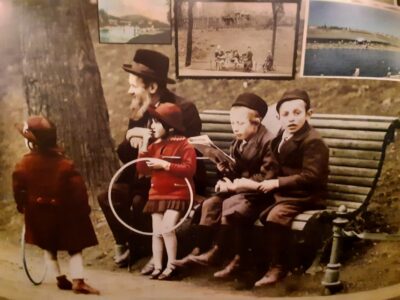
Schindler’s Factory Tour with Entrance Ticket
Read the review →
Schindler’s Factory in Krakow: Guided Tour & Skip the Line Ticket
Read the review →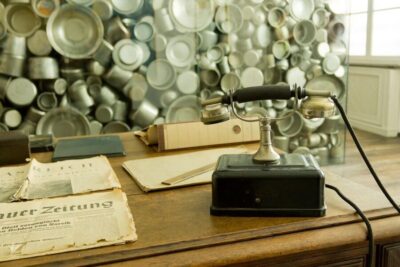
Schindler’s Factory Ticket with Guided Tour Option
Read the review →
Krakow Schindler’s Factory Guided Tour with Admission Ticket
Read the review →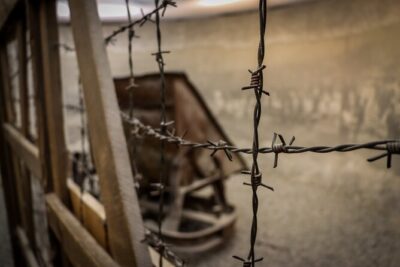
Krakow Schindler’s Factory Museum Guided Tour in English
Read the review →Browse the lists this tour appears in