
Reviewed · OLD TOWN TOURS
Warsaw: 2-Hour Old Town Walking Tour
Warsaw’s Old Town has an unusual claim to fame: it is one of the youngest historic old towns in the world. Almost every building was destroyed during World War II, then rebuilt in its prewar form. This two-hour walk makes that story the main event, not a footnote. I like the focus on postwar reconstruction and the way the route links royal landmarks with ordinary city streets.
I also like the personal touch. Guides such as Marzena and Mary have led this walk in English, German, and Polish, answering questions and adding food tips along the way. The main caution is time: two hours goes quickly, especially if you stop often for photographs or want to go inside attractions, since entrance fees are not included.
Key points at a glance
- The rebuilt Old Town: Learn how Warsaw recreated its historic center after total wartime destruction.
- The Royal Route: Walk from the Copernicus Monument toward Castle Square and the royal monuments of the old city.
- Canaletto’s unusual role: See how paintings by the Venetian artist helped guide the rebuilding of Warsaw.
- War, faith, and resistance: Hear about St. John’s Cathedral and the church connected with fighting on the wartime front.
- A private two-hour walk: A private group gives you more room for questions than a large public tour.
- Useful local guidance: The tour includes a map and information booklets, while some guides also offer practical food suggestions.
Why Warsaw’s reconstructed Old Town matters
At first glance, Warsaw’s Old Town looks like a classic European historic center. You find a market square, narrow lanes, a cathedral, a defensive wall, and a royal castle. The surprise comes when you learn how recently much of it was built.
World War II left Warsaw’s Old Town almost entirely destroyed. After the war, the city rebuilt it in a form that followed the prewar streets, buildings, and decorative details. Canaletto’s paintings became important reference material during this work because they showed Warsaw’s earlier appearance with unusual care.
That gives this walking tour a useful focus. You are not simply looking at old buildings. You are learning how a city decided what to save, what to recreate, and how to give a ruined center back to its residents.
I find this more interesting than a standard monument checklist. The buildings matter, but the question behind them matters more: how can a city rebuild its identity after catastrophe? Your guide brings that question into the streets, where it is easier to understand than in a museum display.
The rebuilt center also earned UNESCO World Heritage status. That recognition reflects the quality and importance of the reconstruction, not the uninterrupted age of every building. Your guide can help you notice the difference between original fabric, restored sections, and postwar work designed to match the earlier city.
More old town tours in Warsaw:
- Warsaw: Chopin Concert in the Old Town
★ 4.8 · 2,287 reviews - Warsaw: Old Town Highlights Walking Tour in English
★ 4.7 · 1,516 reviews - Warsaw: Old Town Guided Walking Tour
★ 4.9 · 599 reviews
Meeting at the Copernicus Monument
The walk begins in front of the Nicolaus Copernicus Monument and Staszic Palace, at Nowy Świat 72. The meeting point is also given as Krakowskie Przedmiescie, 00-333 Warsaw, so check the map link and address carefully before setting out.
Look for a guide carrying a PolinTours sign that says PolinTours, Private Guide. This is a city-center meeting point along the Royal Route, not a hotel pickup. You should arrive ready to walk, with comfortable shoes and a little protection from the sun.
The Copernicus Monument is a fitting place to start. Copernicus is one of the famous figures linked with Poland, and the tour later broadens that human story to include Frédéric Chopin, Marie Curie, and Pope John Paul II. The route is not only about kings and palaces. It also follows the people who helped shape Poland’s science, music, faith, and public life.
The activity is listed as wheelchair accessible, though the practical ease of any historic walking route can depend on the exact streets and conditions on the day. Large bags, luggage, oversized luggage, pets, alcohol, and drugs are not allowed, so pack light.
Walking the Royal Route toward Castle Square
The Royal Route gives the tour a natural spine. As you move through Warsaw’s central streets toward the Old Town, your guide points out royal residences, palaces, monuments, and buildings connected with major Polish figures.
I like this part because it puts the Old Town in context. You see that the historic center was not an isolated pocket. It connected royal power, religious life, public ceremonies, and the wider city.
Your guide also shares legends and authentic local stories. That detail matters in Warsaw, where a short walk can carry several layers of meaning. A building may look elegant today, yet its past may involve royal politics, wartime damage, scientific achievement, or the Solidarity movement.
The walk is led in English, German, or Polish. Previous tours have included guides named Marzena and Mary. Marzena has led tours in both English and German, and one description of her guiding highlights clear explanations of the city’s history along with food suggestions useful for the rest of your stay.
Do not expect a long stop at every monument. The two-hour schedule works best when you treat it as an introduction. You will get the story and the important viewpoints, then you can return later to places that deserve more time.
Castle Square and King Sigismund’s Column
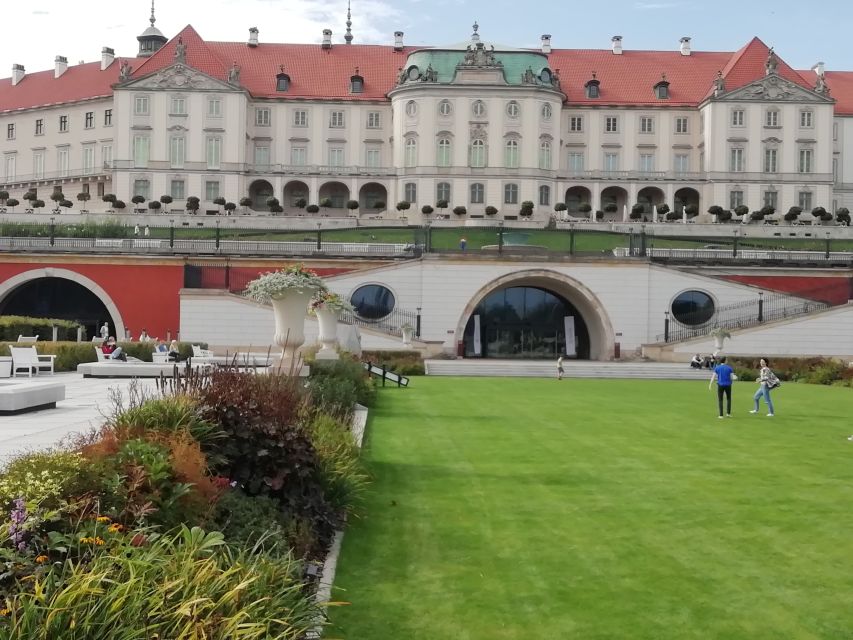
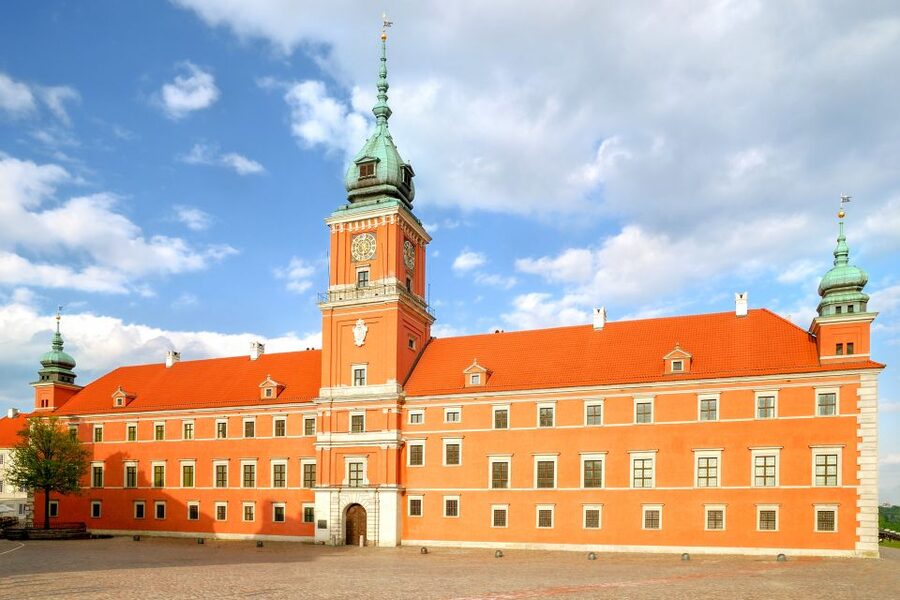
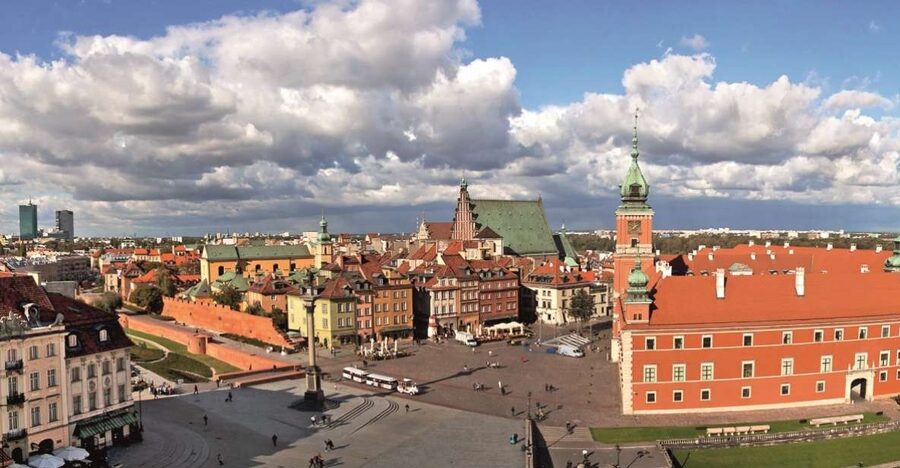
Castle Square is one of the tour’s key stops. It opens the Old Town with a broad view toward the Royal Castle and the column of King Sigismund III Vasa.
The column is an easy landmark to recognize, but your guide adds the reason it matters. Sigismund moved Poland’s capital from Kraków to Warsaw in the late sixteenth century, a change that helped shape Warsaw’s royal role. The square then becomes more than a photogenic meeting place. It is a symbol of the city’s political importance.
The Royal Castle is also connected with the adoption of the Constitution of May 3, 1791, described as the second-oldest constitution in the world. That makes the castle one of the most important political sites on the route.
The tour does not include entrance fees, so do not assume you will go inside the castle as part of the two-hour walk. You should think of this stop as an exterior visit and historical explanation unless your guide tells you otherwise. If the castle interior is a priority, set aside a separate visit.
More walking tours in Warsaw:
- Half-Day Polish Food Walking Tour with Guide and Dinner
★ 4.5 · 381 reviews - Warsaw: Warsaw Ghetto Private Walking Tour with Hotel Pickup
★ 4.9 · 369 reviews - Old Town Warsaw Walking Tour
★ 4.5 · 333 reviews - Warsaw: Jewish History Guided Walking Tour in English
★ 4.7 · 324 reviews
St. John’s Cathedral and Warsaw’s wartime story
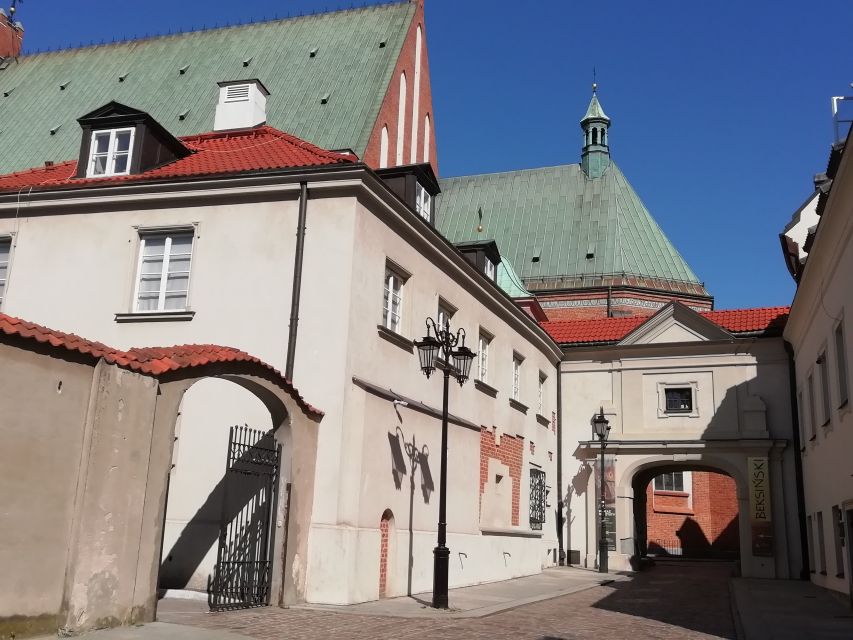
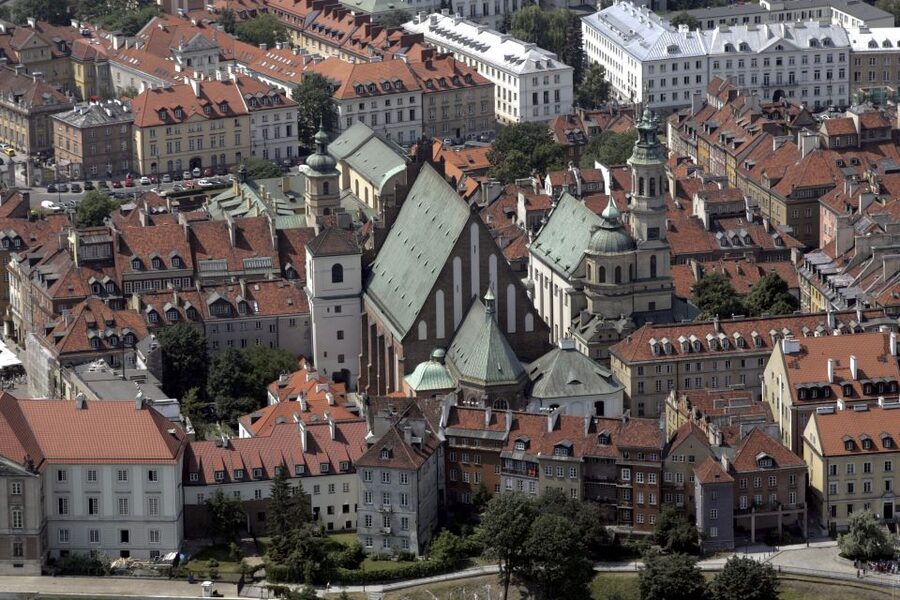
St. John’s Cathedral brings religious history into the walk. Its location in the Old Town makes it an important stop, and the guide connects the building with Warsaw’s wartime experience.
The tour also includes a church described as the only church in the world to have served as a war front. That is a striking detail, and it shows how the 1944 Warsaw Uprising and the later destruction of the city affected religious buildings as well as homes and civic spaces.
The value here is not just the dramatic fact. Your guide helps you picture how ordinary streets became places of fighting and survival. A cathedral or church was not safely removed from the conflict. It could become shelter, a landmark, or part of the front itself.
Because this is a walking tour rather than a dedicated church visit, you should expect an explanation of the site and its setting rather than a long architectural study. Entrance costs are separate, and the route has several more stops to cover.
Market Square and the romantic Old Town streets
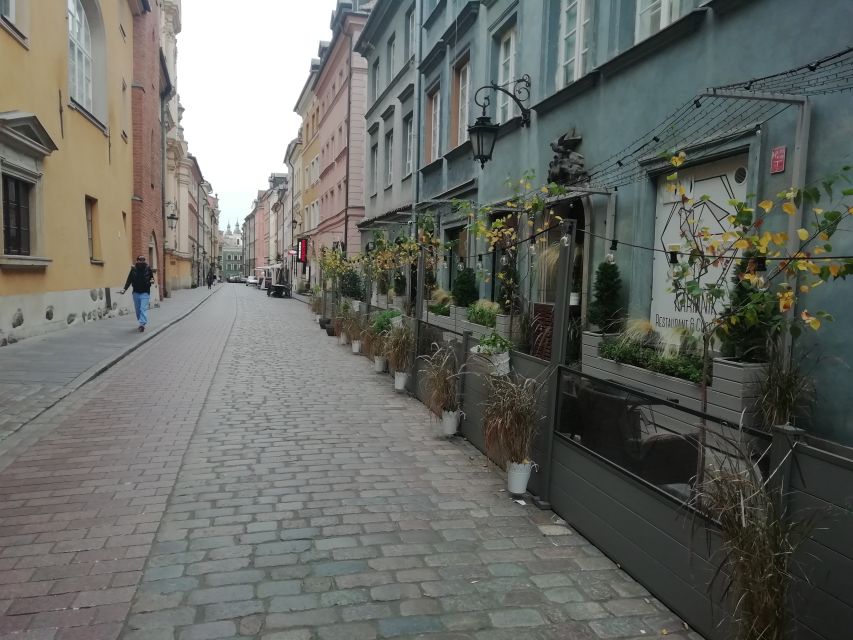
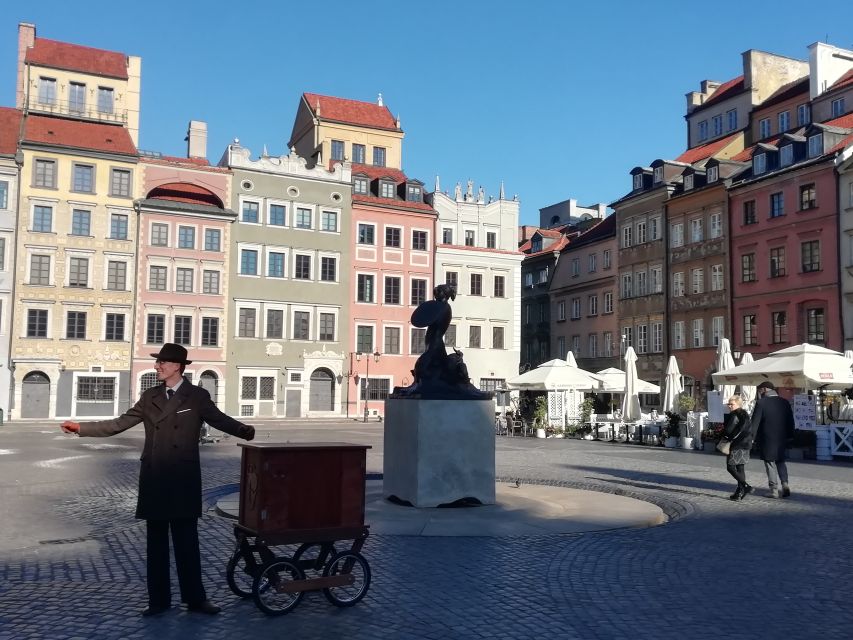
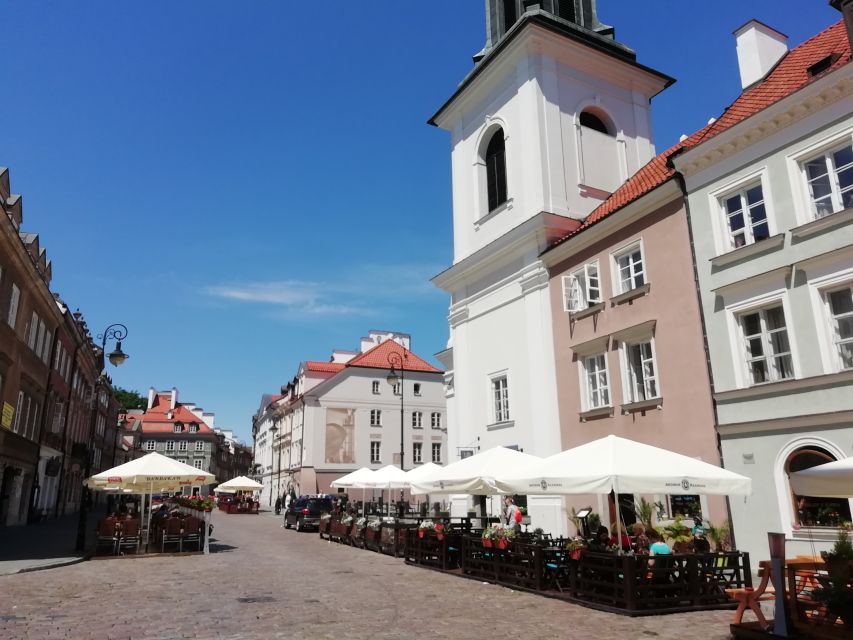
Warsaw’s Market Square is the prettiest part of the walk for many people. Narrow streets lead into an open square surrounded by colorful facades, restaurants, and historic-looking buildings.
The phrase historic-looking matters here. The square was rebuilt after the war, but that does not make it false or unimportant. The reconstruction followed the earlier appearance closely enough to preserve the character and shape of the Old Town.
Your guide can point out details you might miss while walking alone, from decorative features to the way the streets connect. This is where local legends work especially well. The stories give the rebuilt facades a sense of place instead of leaving you with a collection of attractive walls.
The Market Square is also a useful point for your own plans. You can note where to return for a meal or coffee, though no food is served during the tour. A cafe is available where you can buy something, but the walk itself is not a food tour.
The Barbican and the route into New Town
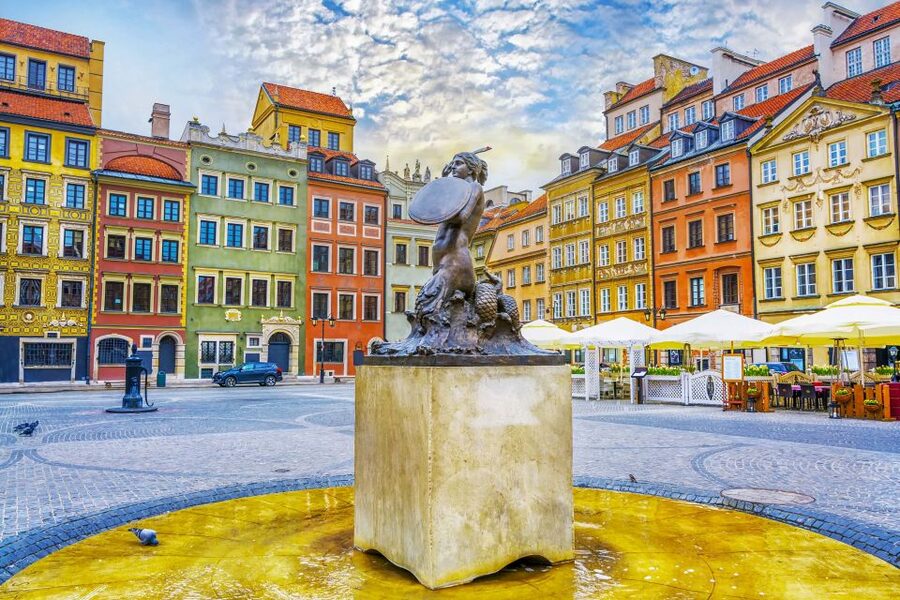
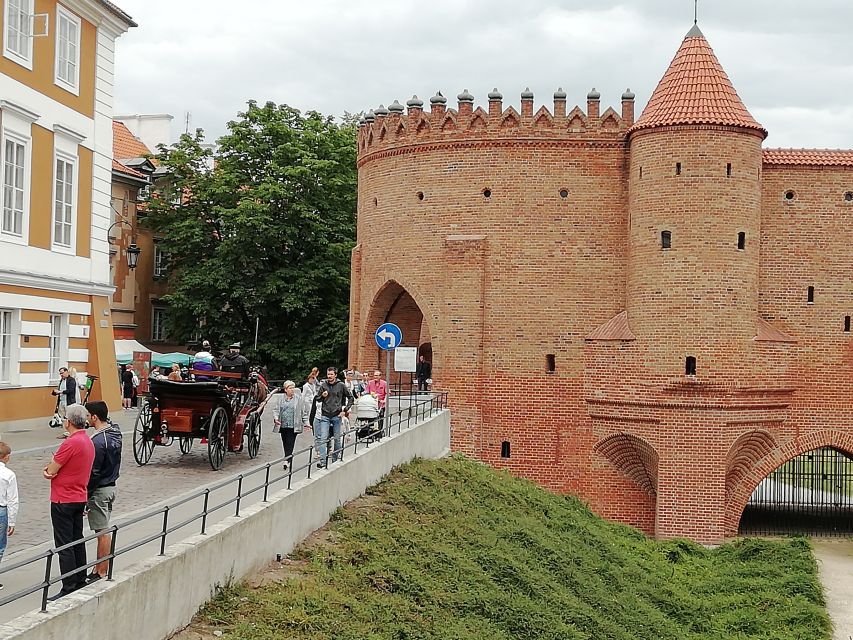
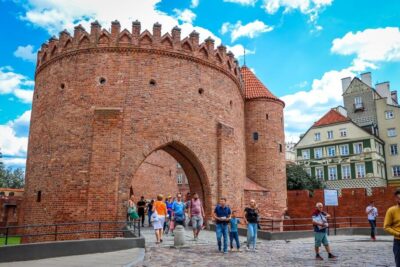
The Barbican marks the old defensive edge of the city. Its brick walls and rounded form make it one of the easiest Old Town structures to identify, and it helps explain how Warsaw was once protected.
The tour continues toward New Town, giving you a broader sense of the historic center. This is a good choice because it prevents the walk from ending at the most polished postcard view. You see how the older center connects with another historic district and how the city continues beyond the main square.
The New Town portion also helps spread the story. Warsaw’s history is not contained in one square or one castle. Royal life, religion, war, science, music, and modern political movements all appear in different corners of the route.
If you prefer a slow pace with long photo stops, the Old Town and New Town sections may feel brisk. If you want a clear first look at the main monuments, the pace should give you a useful orientation.
Chopin, Marie Curie, and the people behind the city
The tour gives attention to people associated with Warsaw, including Frédéric Chopin, Pope John Paul II, and Marie Curie. These names help keep the walk from becoming only a lesson in architecture.
Chopin connects Warsaw with music and national identity. Marie Curie adds a scientific story with an international reach. Pope John Paul II brings in Poland’s religious and public life. Your guide places these figures within the city rather than treating them as names from a textbook.
The tour also includes places linked with the Solidarity movement. That moves the story into modern Poland and reminds you that Warsaw’s political history did not end with the royal period or the Second World War.
This range is one of the walk’s strongest features. In two hours, you move from royal power to wartime destruction, reconstruction, science, music, religion, and modern civic change. The trade-off is that none of these subjects receives the depth of a specialist tour.
What the guide adds to the experience
A guide makes the largest difference on this walk. Warsaw’s Old Town is easy to walk through, but much harder to interpret without context.
A local expert can explain why a rebuilt facade matters, how Canaletto’s paintings were used, and which people or events are connected with a particular street. The guide can also answer questions as they arise instead of forcing you to wait for a formal stop.
Marzena has been praised for clear guiding in German and for answering detailed questions. Mary has led walks that included Old Town and New Town, with special attention to World War II and the city’s rebuilding. The available information also points to guides who are friendly, helpful, and willing to offer practical food advice.
Since the booking is for a private group, you should have more control over questions and pace than on a large shared walk. Headsets are supplied for groups of up to 10 people. That is useful near busy streets or when the guide is explaining something from a short distance.
The exact guide is not guaranteed in the information provided, so book this for the route and format rather than for one named person. If a specific language matters, select English, German, or Polish when checking availability.
Is $69 a fair price for two hours?
At $69 per person, this is not the cheapest way to see Warsaw’s Old Town. The value depends heavily on group size.
For a private group, the price can make sense if you want direct access to a guide, a flexible question-and-answer format, and a focused introduction to the city. You are paying for interpretation, not transportation or attraction admission.
The price includes a certified guide, a city map, and information booklets. Headsets are included for groups of up to 10 people. Lunch and entrance fees are not included, and you should budget separately for a tip. A 15 to 20 percent gratuity is recommended at the end.
I would choose this walk early in a Warsaw visit if history is important to you. The guide can help you decide which places deserve a return visit, and the map and booklet give you something practical to use afterward.
If you already know Warsaw well, or if you prefer to explore at your own slow pace, $69 may feel high for two hours. The strongest value comes when you want the city’s wartime reconstruction explained clearly and want a private guide rather than a self-guided route.
Practical advice for a comfortable walk
Wear comfortable shoes. The route covers several historic areas on foot, and two hours is long enough for poor footwear to become a real problem.
Bring sunglasses, a sun hat, sunscreen, and cash. The tour does not provide food, though you can buy something at a cafe. Do not bring large bags or luggage, since these are not allowed.
Free cancellation is available up to 24 hours before the start time, and you can reserve now and pay later. Starting times vary, so check availability for your date.
The tour is wheelchair accessible, and it is offered in English, German, and Polish. Since the meeting point is in front of the Copernicus Monument, allow time to find the correct sign and guide rather than relying on a hotel pickup.
Who should book this Warsaw walk?
I would recommend it to a first-time visitor who wants the main Old Town sights tied into one clear story. It suits anyone curious about how Warsaw rebuilt itself after wartime destruction, especially if a guide’s explanation matters more to you than entering every building.
Families can also benefit from the short format and the stories about kings, artists, scientists, churches, and wartime events. The private setup gives you a better chance to ask questions or adjust the pace.
It is less suitable if you want a museum-heavy tour, a food experience, or long interior visits. The two hours are spent mainly outdoors, and admission costs are separate.
Should you book it?
Book this tour if you want Warsaw’s Old Town to make sense, not just look attractive. The strongest parts are the reconstruction story, the Royal Route, the wartime sites, and the chance to ask a local guide about details you would probably pass without noticing.
I would book it near the start of your stay, wear sensible shoes, and keep the rest of the day open for a cafe or a return visit to the Royal Castle. For a short, private introduction to Warsaw’s royal center and its remarkable rebirth, $69 can be fair value, especially for a small group.
FAQ
Where does the tour meet?
Meet in front of the Nicolaus Copernicus Monument and Staszic Palace at ul. Nowy Świat 72. The meeting point is also listed as Krakowskie Przedmiescie, 00-333 Warsaw. Look for a guide holding a PolinTours, Private Guide sign.
How long does the walking tour last?
The tour lasts two hours. Starting times depend on availability for your chosen date.
Which languages are available?
The tour is offered in English, German, and Polish.
Is the tour private?
Yes. The activity is arranged as a private group tour.
Is the tour wheelchair accessible?
Yes, the activity is listed as wheelchair accessible.
What is included in the price?
The price includes a certified guide, a city map, information booklets, and headsets for groups of up to 10 people.
Are entrance fees and food included?
No. Entrance fees and lunch are not included. A cafe is available where you can purchase food.
How much should I tip the guide?
Gratuities are not included. A tip of 15 to 20 percent at the end of the tour is recommended.
Just added in Warsaw
- Warsaw Zoo Skip-the-Line Entry Ticket with Private Transport★ 4.8 · 3 reviews
- Warsaw Private Wilanow Palace & Garden Tour★ 4.6 · 30 reviews
- Warsaw: Vodka Tour★ 4.4 · 18 reviews
- Warsaw Wolf’s Lair with St. Lipka and Mamerki Private Guided★ 4.2 · 3 reviews
- Warsaw Uprising and WWII Old Town Walking Tour with Museum★ 4.7 · 15 reviews
- Warsaw Old Town UNESCO HERITAGE walking tour in English★ 4.5 · 23 reviews
- Warsaw: Private Vodka Tasting Night with Snacks and Pickup★ 5.0 · 7 reviews
- Warsaw: Treblinka Heartbreaking Concentration Camp Tour★ 4.8 · 45 reviews
Old Town Tours, compared.
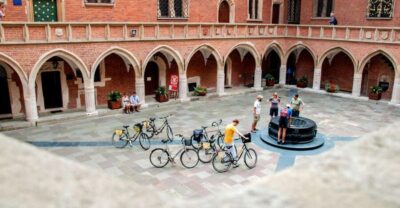
Bike Tour of Old Town, Jewish Quarter and the Ghetto
Read the review →

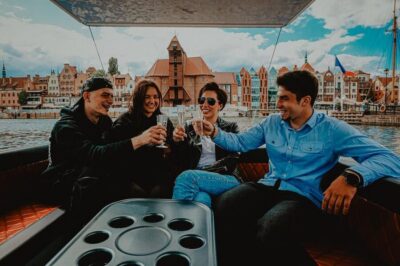
Sightseeing EcoCruise around the Old Town of Gdansk
Read the review →
Browse the lists this tour appears in