
Reviewed · NOWA HUTA & COMMUNISM TOURS
Solidarity Tour
The heart of this tour is not a pretty old-town stroll. It is a close look at how Polish workers challenged communist rule from the Gdansk shipyards, a story brought to life inside the European Solidarity Center and at the actual places where change began. You’ll visit Sala BHP and walk through the former shipyard, including the Lenin Gates area.
I like the generous two-hour museum visit and the private format, which gives you room to ask questions. I also like that the route moves beyond polished streets into docks, warehouses, and working industrial spaces. The main drawback is that the subject is serious, and three hours can feel short if you want to read every museum display.
Key points to know
- Two hours at the European Solidarity Center: The museum supplies the political and human background for the rest of the tour.
- Sala BHP is a real historical setting: This is where Lech Wałęsa signed the Gdansk Agreement with Poland’s communist authorities.
- The shipyard walk adds physical context: Docks, old warehouses, clubs, galleries, and new entertainment spaces show how the area is changing.
- A private English-language experience: Only your group participates, with guides such as Bozena or Sebastian leading the visit.
- Good value for history-minded visitors: The price includes the museum ticket, a local guide, and beverages.
- Plan for outdoor weather: The tour operates in all conditions and requires moderate physical fitness.
Why Gdansk’s shipyard matters
Gdansk’s Solidarity story is one of the most important political stories in modern Europe. It began with workers, strikes, negotiations, and a demand for change, then helped shape events far beyond this Polish port city.
You do not need a detailed knowledge of Polish politics before arriving. The tour is designed to explain the people, places, and pressure points that made the Solidarity movement possible. A strong guide can help you connect the museum exhibits with the buildings and gates outside, which is where this experience earns its place on a Gdansk itinerary.
The story is also personal. This is not only a lesson about governments and agreements. It is about people living under communism, making difficult choices, and organizing in a time when opposition carried real risks. I would set aside some quiet time afterward. The subject may stay with you longer than the three-hour schedule suggests.
Other communist-era tours around Gdańsk:
- Gdansk: Private Communism Tour with Solidarity Center Museum
★ 5.0 · 28 reviews - Gdansk Private Communism Tour with Solidarity Center Museum
★ 5.0 · 14 reviews - Gdansk: European Solidarity Centre Guided Tour
★ 4.9 · 14 reviews
Two hours inside the European Solidarity Center
Your meeting point is the European Solidarity Center at Plac Solidarności 1. The museum is the main part of the experience, with about two hours set aside for the visit and admission included in the tour price.
That time matters. The museum is not treated as a quick stop between photo opportunities. You get enough time to build a working understanding of the Solidarity movement before heading to the historic sites connected with it.
Expect the guide to explain the struggle for a free Poland, daily life during the communist period, and the people involved in the movement. The museum gives you the broad picture, while the later stops supply the physical places where key events unfolded.
I like this order. Starting indoors gives you a framework, so the shipyard does not feel like a collection of old industrial buildings. You know what to look for and why certain locations matter.
Two hours can still be a compromise. If you read every panel carefully or want to examine each exhibit at length, you may want more time than the scheduled visit allows. The private format helps because you can ask for clarification, but the guide still has to keep the tour moving.
A local guide is especially useful here. Names associated with this experience include Bozena and Sebastian, and the strongest praise focuses on guides who explain difficult political events in plain language while answering questions along the way. You should expect the exact guide to depend on the date you book.
Sala BHP and the Gdansk Agreement
The next stop is Sala BHP, visited for about 20 minutes. The admission cost is included, and the setting is important because Lech Wałęsa signed the Gdansk Agreement here with representatives of the communist government.
This is a short stop, but it carries unusual weight. You have just learned about the broader movement in the museum. Here, you are connected to one particular room and one important agreement. That shift from general history to a specific place helps fix the story in your memory.
Do not judge this part by its length. Twenty minutes is enough for an explanation and a look around, but it is not meant to be a full museum visit on its own. The guide’s narration does much of the work.
If you enjoy political and social history, this may be one of the most useful stops on the route. You can ask how the agreement fit into the wider Solidarity movement, how the people involved shaped events, and why Gdansk became such an important center of opposition.
Walking through the former Gdansk Shipyard
The final scheduled stop lasts about 40 minutes and takes you through the former Gdansk Shipyard. This is where the tour becomes more physical and less museum-like.
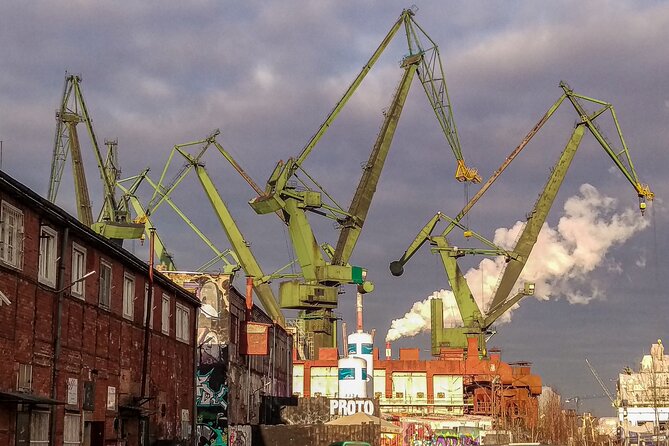
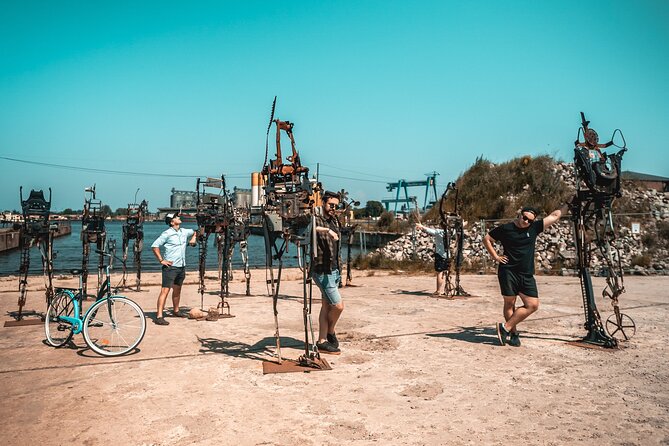
You will pass through an area that still functions as a shipyard but is changing. Old warehouses and dock areas sit alongside newer clubs, galleries, and entertainment spaces. The mix gives you a sense of a place caught between industrial work, memory, and redevelopment.
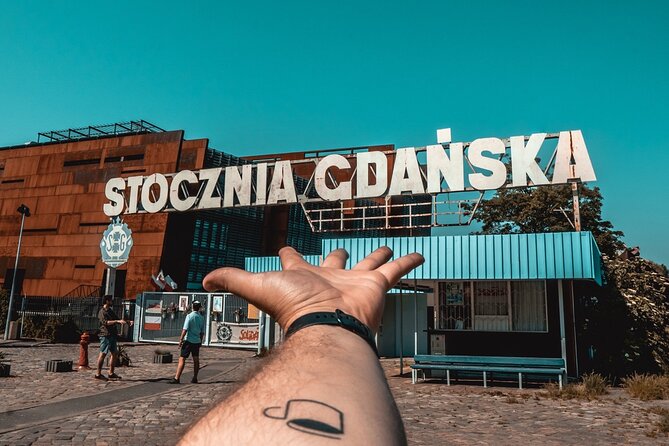
The route includes the Lenin Gates area, one of the best-known landmarks connected with the shipyard. You are not simply looking at a historic marker. You are seeing the kind of working environment that shaped the movement’s identity.
I like this part because it prevents the Solidarity story from becoming sealed behind glass. The shipyard remains a real place, even as its use and appearance change. You might find some parts rough around the edges, but that is part of the point. This is not a carefully restored old-town attraction.
Wear sensible shoes. The tour requires a moderate level of physical fitness, and the route includes outdoor walking. Since it operates in all weather, bring clothing suited to the forecast. Rain or wind can make the shipyard portion less comfortable, but the outdoor setting remains central to the experience.
Same base, a different kind of day:
- Gdansk: City Cruise on Historical Polish Boat
★ 4.8 · 2,913 reviews - Gdańsk: Sunset Cruise on a Historic Polish Boat
★ 4.9 · 977 reviews - Gdańsk City Sights & History Guided Walking Tour in English
★ 4.8 · 876 reviews - Gdansk: Firearm Shooting Experience with Instructor
★ 4.8 · 866 reviews
What a private tour changes
This is a private activity, so only your group takes part. That is a useful advantage for a subject with many names, dates, and political details.
You can ask the guide to slow down when a point is unclear or spend more time on a subject that interests you. A guide such as Bozena or Sebastian may also adjust the conversation to your questions and background. That personal contact is one reason this tour can work well for visitors who do not usually enjoy formal history lessons.
The private format does not mean the tour is unstructured. The schedule still allows roughly two hours at the museum, 20 minutes at Sala BHP, and 40 minutes in the shipyard. You should expect a guided route rather than unlimited time at each place.
One useful detail is that the tour has sometimes been adapted when arrangements change. In one reported case, an itinerary problem led the guide to add alternative stops that broadened the story around the shipyard and Gdansk. That suggests some flexibility, but you should not assume extra stops are guaranteed. The stated route remains the museum, Sala BHP, and shipyard.
Guide quality and the human side of the story
The strongest part of this experience is the guide. A museum can give you facts, but a good local guide helps you understand how those facts affected people in Gdansk and across Poland.
Bozena is described as energetic, personal, and able to make the history engrossing. Sebastian is praised for giving a large amount of information while keeping the tour open to questions. Those qualities matter here because the subject can become dense very quickly.
Look for a guide who explains rather than simply recites. You want clear links between the museum, the Gdansk Agreement, Lech Wałęsa, the shipyard, and the wider end of communist rule in Europe.
The tour also appears suited to a one-to-one booking or a small private group. That can make an emotional subject easier to discuss. You are not trying to hear a guide over a large crowd, and you can raise questions without interrupting a set speech.
Still, guide style can vary. Bozena and Sebastian are named examples, not a promise that either will lead your booking. The experience will depend partly on who is assigned and on how much you engage with the conversation.
Is $114.45 a fair price?
At $114.45 per person, this is not a bargain-priced walk. The value depends on what you want from Gdansk.
The fee includes a local guide, beverages, admission to the European Solidarity Center, and a private tour for your group. The museum admission is important because it accounts for the longest part of the visit. You are paying not only to enter the building, but also for a guide to connect the museum with Sala BHP and the shipyard.
For a private experience, the price is easier to justify, especially if you are traveling with people who care about history and want to ask questions. Group discounts are available, so the cost may work better when shared across a larger party.
If you want a cheap introduction to Gdansk’s old town, this is not the right purchase. If you want context for the Solidarity movement and prefer a personal guide rather than exploring the museum alone, the package offers solid value.
Beverages are included. Alcoholic drinks are not included but can be bought separately. That is a minor detail, but it is worth knowing so you do not read the beverage inclusion as a full drinks package.
Who should book this experience?
I would recommend this tour to you if you enjoy modern European history, political change, labor movements, or places where major events happened. It also suits anyone who wants to understand Gdansk beyond its attractive historic center.
It works well for first-time visitors because the guide supplies context you may not have. It can also suit repeat visitors who have seen the old town and want a different side of the city.
The tour may be less suitable if you want a relaxed sightseeing walk with frequent cafés, scenic viewpoints, or light entertainment. The subject is serious, and the shipyard can be exposed to the weather. You should also be comfortable walking for several hours and spending a substantial amount of time in a museum.
Since the experience is offered in English, it is a practical choice for English-speaking visitors. Confirmation is provided at booking, and the meeting point is easy to identify at the European Solidarity Center. The tour ends back at the same meeting point.
You can cancel for a full refund if you do so at least 24 hours before the start time. Changes or cancellations made inside that window are not accepted for a refund, and the cut-off follows local Gdansk time.
How to get the most from the three hours
Give yourself enough time to reach Plac Solidarności 1 without rushing. The tour begins at the European Solidarity Center, not in the old town, and arriving calm will help you make better use of the museum portion.
Before the tour, think of one or two questions you want answered. You might ask how the agreement changed daily life, how Lech Wałęsa fit into the movement, or how the shipyard area is being used today. A private tour gives you a better chance to ask those questions.
Dress for outdoor walking even though the museum occupies most of the schedule. The shipyard portion takes place outside, and the tour runs in all weather. Comfortable shoes and a weather-appropriate layer are sensible choices.
Do not plan a tight appointment immediately afterward. The stated duration is about three hours, and serious discussion or changes to the route may affect the pace. Leaving a little space gives you time to reflect and explore the area without watching the clock.
Should you book the Solidarity Tour?
Book it if you want the history behind Gdansk’s shipyard explained by a local English-speaking guide, with the museum ticket and key sites handled in one private visit. The mix of the European Solidarity Center, Sala BHP, and the former shipyard gives you both background and place.
I especially recommend it if you have limited time in Gdansk but want more than a surface-level look at the city. The price is high for a three-hour activity, yet the private format, included museum admission, and guide-led interpretation make it reasonable for history-focused visitors.
Skip it if you mainly want old-town architecture, shopping, or a casual walk. Choose it if you want to understand why Gdansk mattered, see where the Solidarity movement took shape, and spend time with a guide who can turn a complicated period into a clear human story.
FAQ
Where does the Solidarity Tour begin?
The tour begins at the European Solidarity Center, Plac Solidarności 1, 80-863 Gdańsk, Poland.
Where does the tour end?
The activity ends back at the same meeting point, the European Solidarity Center.
How long does the tour last?
The tour lasts approximately three hours. The schedule includes about two hours at the European Solidarity Center, 20 minutes at Sala BHP, and 40 minutes in the former Gdansk Shipyard.
Is admission to the European Solidarity Center included?
Yes. Admission to the European Solidarity Center is included in the tour.
Is the tour private?
Yes. Only your group participates in the activity.
What happens if the weather is bad?
The tour operates in all weather conditions, so you should dress appropriately. A moderate level of physical fitness is recommended because the experience includes outdoor walking through the shipyard area.
Just added in Gdańsk
- Gdansk, Gdynia, and Sopot: 8-Hour Private Sightseeing Tour★ 4.9 · 13 reviews
- Undercover City Games: Gdynia★ 5.0 · 34 reviews
- Private WW2 Tour of Westerplatte,Gdansk and Stutthof Including Lunch★ 5.0 · 12 reviews
- Whisky Tasting in Gdańsk★ 5.0 · 3 reviews
- Gdansk EVERYDAY Vodka Tasting Tour★ 5.0 · 6 reviews
- Westerplatte private tour led by Expert-Guide (door to door)★ 5.0 · 5 reviews
- Torun – City of Copernicus Private Tour★ 4.5 · 5 reviews
- TriCity Tour (Gdansk, Gdynia, Sopot) – PRIVATE (8h)★ 5.0 · 4 reviews
Nowa Huta & Communism Tours, compared.

Legendary Private Nowa Huta Communism Tour with Crazy Guides
Read the review →
Nowa Huta: Steelworks Administration Buildings/Shelters Tour
Read the review →
Private Tour: Warsaw’s Communist History by Retro Fiat
Read the review →
Private Nowa Huta Adventure Tour in Communist Cars
Read the review →


Browse the lists this tour appears in