
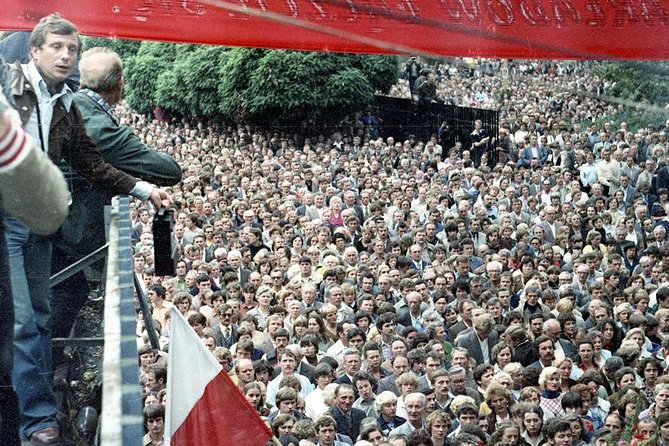
Reviewed · NOWA HUTA & COMMUNISM TOURS
Gdansk: Private Communism Tour with Solidarity Center Museum
Gdansk’s story of resistance is not locked away in a museum. It began among shipbuilders, spread through the city, and helped weaken Communist rule across Eastern Europe. This private tour connects the European Solidarity Centre with the actual shipyard sites where the movement took shape.
I like the way the tour pairs strong museum displays with places such as Sala BHP, where the Gdańsk Agreement was signed on 31 August 1980. I also like the hotel pickup within Gdansk Old Town, plus the chance to hear personal stories from guides such as Małgorzata, who has led this route in excellent French and knows the changing shipyard area well.
The main consideration is the price: at $184 per person, this is not a cheap city walk. You are paying for a private guide, transport, museum entry, and a focused history lesson, so it makes more sense for visitors who want context than for anyone looking for a quick sightseeing stroll.
Key points to know before booking
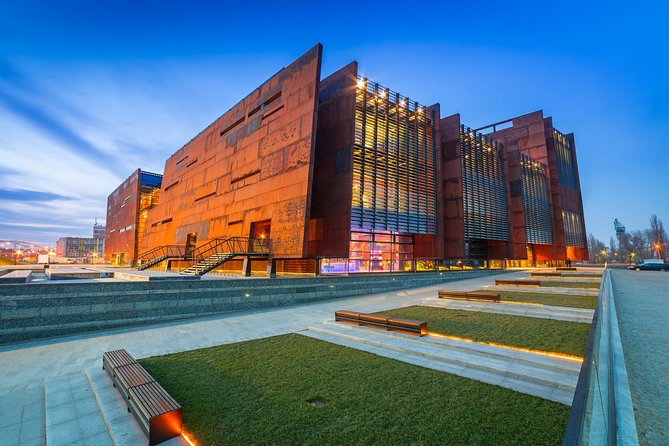
- The European Solidarity Centre anchors the story: See the original 21 demands written by the striking workers in 1980.
- Sala BHP adds a powerful historical setting: This is where the Gdańsk Agreement was signed.
- The four-hour route goes beyond the museum: You visit Solidarity Square, the shipyard, and memorials to workers killed in 1970.
- A private guide makes the politics easier to follow: The tour explains Communist-era Poland, the strikes, the 1989 talks, and the first pluralistic election since 1947.
- Old Town pickup saves time: Pickup is available if your accommodation is within 1.5 kilometers of the meeting point.
- The schedule matters: Gdansk Shipyard is closed on Saturdays and Sundays, so choose your date carefully.
Why Gdansk is the right place to study Communism’s collapse
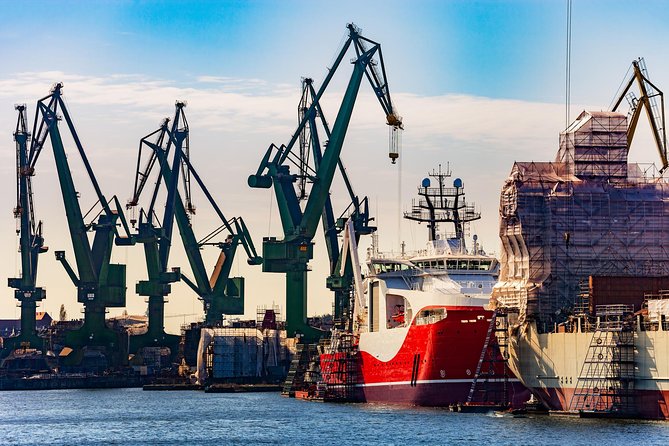
Gdansk gives this subject a human scale. You are not only looking at dates and political slogans. You are following workers who used a strike at the Lenin Shipyard, now called Gdansk Shipyard, to challenge a government that controlled public life, the press, and elections.
The key date is 31 August 1980. On that day, the government signed an agreement with the striking workers. The deal allowed the creation of the independent Solidarity trade union, a major break with Communist rule in Eastern Europe.
The movement did not bring instant freedom. Martial law followed, and the struggle continued for years. But Solidarity created a legal and social force the government could not easily erase. By 1989, talks between the authorities and opposition leaders helped open the way to a partly free election. The results changed Poland and sent a clear signal across the Communist Bloc.
A private guide is useful here because the story has many turns. You will hear about Lech Wałęsa, Anna Walentynowicz, the shipyard strikes, the Round Table talks, and the wider push for democracy. Without context, the museum’s photographs and documents can feel like a lot to absorb. With a guide, the names and events fit together.
Other communist-era tours around Gdańsk:
- Solidarity Tour
★ 5.0 · 25 reviews - Gdansk Private Communism Tour with Solidarity Center Museum
★ 5.0 · 14 reviews - Gdansk: European Solidarity Centre Guided Tour
★ 4.9 · 14 reviews
Inside the European Solidarity Centre
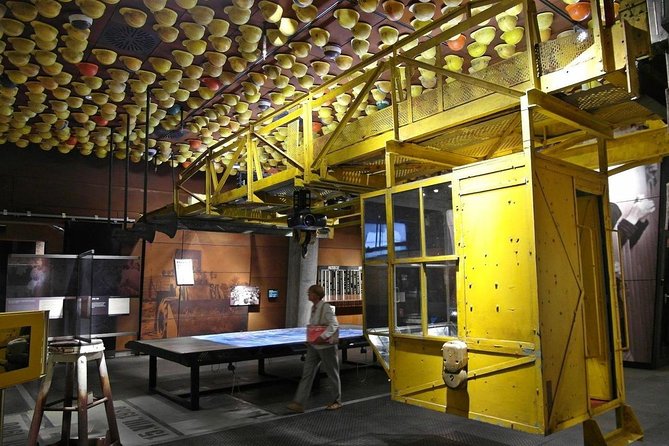
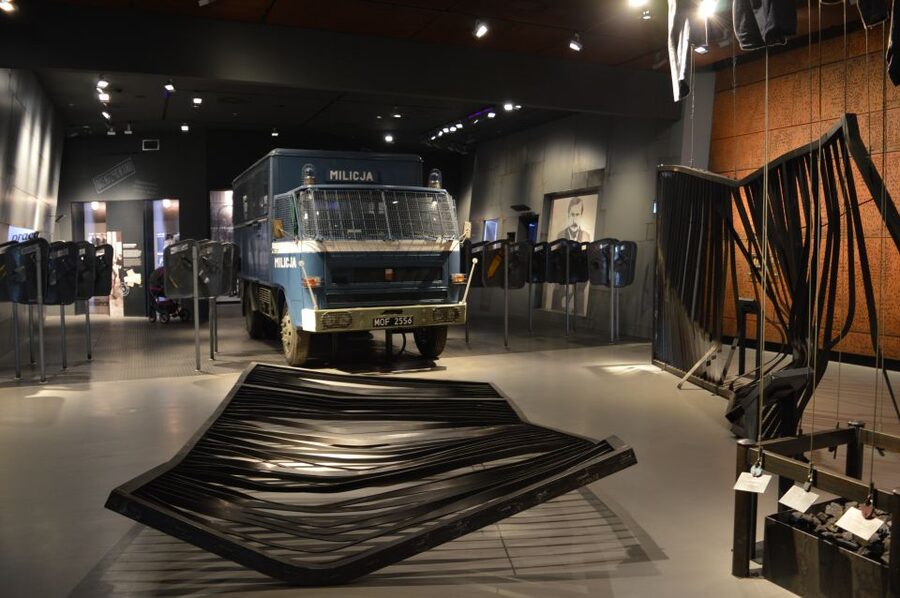
The European Solidarity Centre is the main indoor stop and the heart of the shorter route. The museum follows the Solidarity movement step by step, using original objects, documents, photographs, and large exhibition spaces.
The most important item is the original set of the 21 Postulates. These were the written demands presented by workers during the 1980 strike. They are more than a political document. They show how the protest moved beyond wages and workplace issues to demand basic civic rights, free trade unions, freedom of expression, and respect for workers.
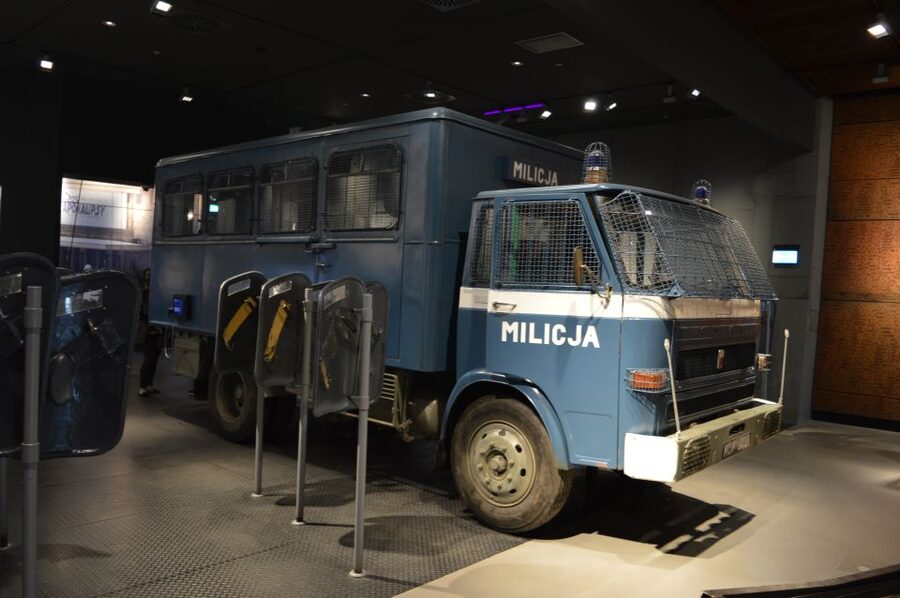
You will also see material on the strikes, the government response, the rise of Solidarity, the 1989 Round Table talks, and the election that followed. The exhibits place local events in a wider Eastern European setting without losing sight of the people involved.
I would allow yourself time to pause. This is not a museum to rush through simply because the tour has a schedule. The guide can point out what matters most, explain unfamiliar political terms, and connect a photograph to the place you will visit next.
Skip-the-line entry is helpful, though it does not mean you should expect to race through the building. The real value is time saved at the entrance and the chance to use your limited hours with the guide and exhibitions.
Solidarity Square and the fallen shipyard workers
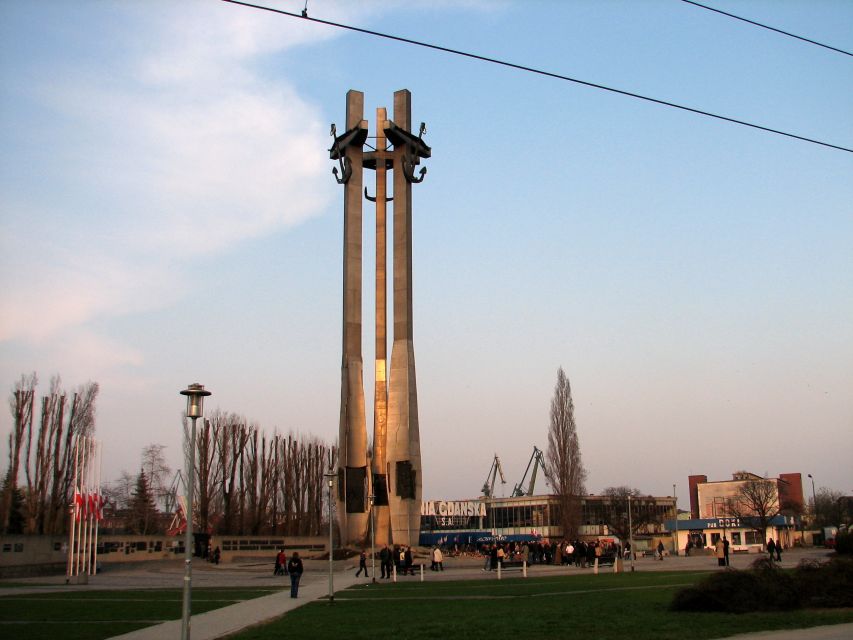
The tour continues outside at Solidarity Square, under the Monument to the Fallen Shipyard Workers of 1970. The three tall crosses are among Gdansk’s most recognizable modern memorials, but the story behind them is more important than the photograph.
In December 1970, workers in several Polish coastal cities protested rising food prices. The authorities responded with force, and shipyard workers were killed. The monument remembers those workers and links their deaths to the later Solidarity movement.
Your guide explains why the 1970 tragedy mattered in 1980. The workers who struck a decade later knew the risks. The memorial helped turn the shipyard into a place of mourning, political memory, and public resistance.
This is also the meeting point if you do not use hotel pickup. If your accommodation is in Gdansk Old Town and within 1.5 kilometers of the monument, pickup can be arranged. Otherwise, you meet the guide under the monument. Give your full accommodation address when booking if you want the pickup option considered.
Sala BHP and the agreement of 31 August 1980
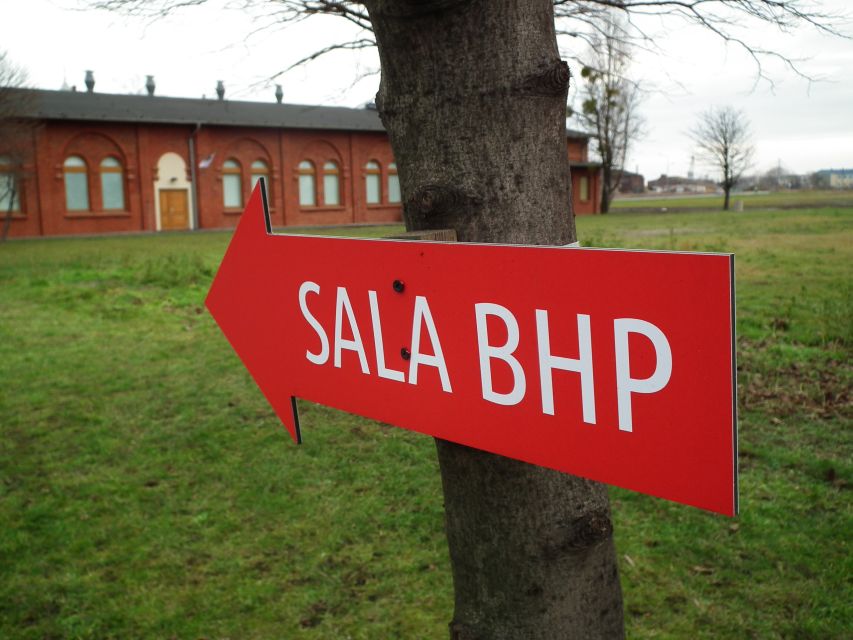
Sala BHP is one of the strongest stops because it places you in the room connected to the agreement that changed Poland’s political direction. The building served as the Center of Worker Protection of the Gdansk Shipyard.
On 31 August 1980, representatives of the striking workers and the government signed the Gdańsk Agreement there. The agreement recognized the workers’ right to form an independent trade union, which became Solidarity.
This stop works best with a guide who can explain the pressure surrounding the signing. You are not simply seeing a historic room. You are considering why the workers chose to strike, what concessions the government made, and why the agreement was so unusual inside the Communist system.
Access to Sala BHP is included only with the four-hour option. If this location matters to you, do not book the shorter museum-focused format by mistake.
A few more things to do in Gdańsk worth a look
- Museum of the Second World War Gdansk Private Tour & Tickets
★ 5.0 · 24 reviews - Gdansk Private WWII Tour with Museum of the Second World War
★ 4.9 · 22 reviews - Gdansk: Museum of World War II – True Story of a Living Hell
★ 4.5 · 6 reviews - From Gdansk: Stutthof Concentration Camp Museum Day Tour
★ 4.9 · 4 reviews
Walking through Gdansk Shipyard
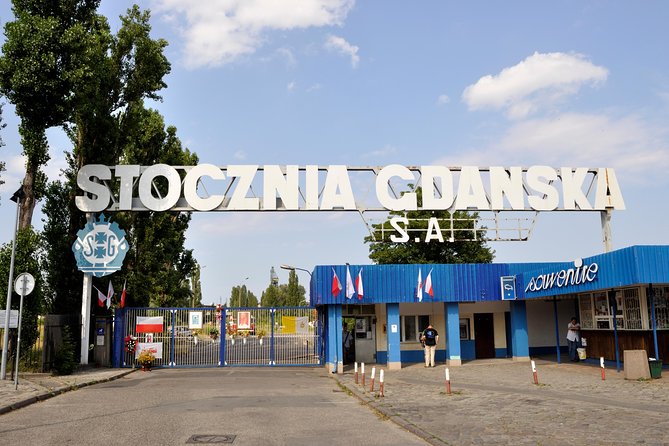
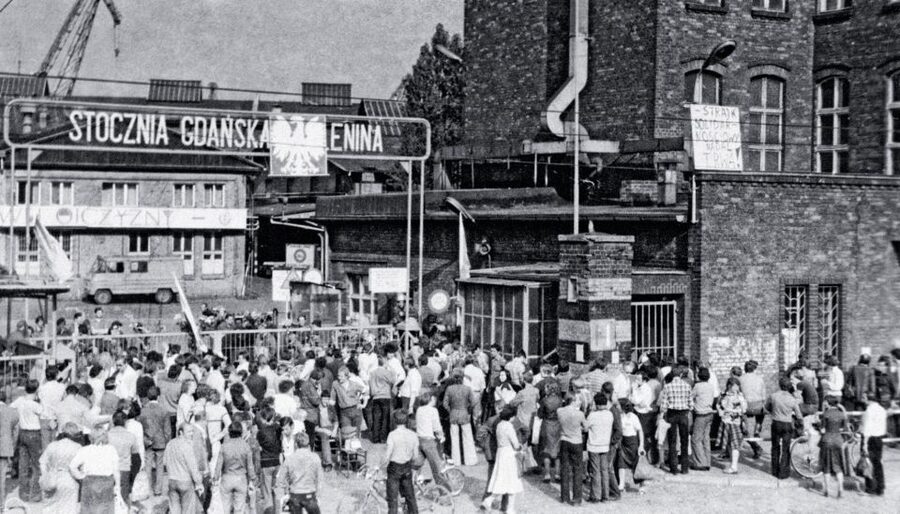
The final major stop is Gdansk Shipyard, known in the Communist period as the Lenin Shipyard. The supplied tour details connect the site to the 17,000 shipbuilders who began the 1980 civil resistance.
The shipyard is not presented as a polished historical park. It is a working and changing area, and that is part of the point. You can better understand the scale of the strikes when you see the industrial setting rather than only reading about it in a gallery.
The route may feel less tidy than a standard old-town walk. Buildings, access points, and the surrounding area can change. This is where a local guide earns the fee. Małgorzata, for example, is familiar with the shipyard’s history and its many corners, a useful advantage in an area that is not always easy to read on your own.
The shipyard is closed on Saturdays and Sundays. Plan this tour for a weekday if you want the complete four-hour itinerary. If your date falls on a weekend, check how the route will be adjusted before you rely on the shipyard visit.
The difference between the two tour lengths
The four-hour option is the serious choice for history fans. It includes the European Solidarity Centre, Solidarity Square, the Monument to the Fallen Shipyard Workers of 1970, Sala BHP, and Gdansk Shipyard. It also includes car transport and a shot of traditional Polish vodka.
The shorter format focuses on the European Solidarity Centre and the wider story of Communist-era Poland and the birth of democracy. The supplied schedule describes this museum portion as two hours, while the full activity lasts four hours. Check the available starting time and exact option when booking, since the added locations are tied to the longer version.
I would choose four hours if this is your first visit to Gdansk or if you have a strong interest in twentieth-century European history. Choose the shorter format if you have limited time and mainly want the museum with a guide.
The vodka is a small extra, not a reason to book the tour. It fits the period theme and gives the route a light ending after a serious subject. If you do not drink alcohol, ask the guide about the alternative available at the time.
How good is the private format?
The private setup lets you ask direct questions and set the pace within the fixed route. That matters in a museum where one person may want more political detail while another wants to focus on personal stories and photographs.
The languages offered are English, German, Polish, and Russian. A German-language tour has been provided for a group of 18, and Małgorzata has guided in French, although French is not included in the listed language options. Confirm your requested language before booking rather than assuming every date has every option.
A private tour does not make the subject simple. The history includes several organizations, leaders, dates, and changes in government policy. The benefit is that you can stop and ask what a term means, why a particular person mattered, or how the 1980 strike led to the events of 1989.
The guide is especially important at the shipyard, where the setting can be harder to interpret than a museum display. A skilled guide helps connect the memorials, buildings, and documents into one story.
Transport, timing, and the $184 price
The listed price is $184 per person. That is a high cost for a four-hour city activity, but the comparison should be made against what is included: private transport, hotel pickup and drop-off in the Old Town area, a licensed history guide, skip-the-line entry to the European Solidarity Centre, and admission to Sala BHP and Gdansk Shipyard on the four-hour route.
You are also paying for a specialist subject. A general Gdansk walking tour may show you the old city and mention Solidarity in passing. This one gives the movement most of the morning or afternoon and takes you to the places where it happened.
The value improves if you are traveling with several people who want the same subject and can share the private format. It is harder to justify if you are a solo visitor on a tight budget, especially if you are happy to visit the museum independently.
Pickup is limited to Gdansk Old Town accommodations within 1.5 kilometers of the meeting point. If you stay farther away, the plan may change, and you may need to reach Solidarity Square yourself. Check your email the day before for final instructions.
The tour is wheelchair accessible, which is useful to know when planning a museum and city route. Still, the shipyard is a large, changing area, so ask for current route details if you have specific mobility needs.
Who should book this Gdansk history tour?
I would recommend it to you if you want more than attractive streets and waterfront views. It suits visitors who are curious about how ordinary workers confronted a powerful state, and those who want Poland’s modern history explained by a person rather than left to wall text.
It is also a good choice for a first visit when you want the main Solidarity sites organized efficiently. Hotel pickup, car transport, skip-the-line entry, and a private guide remove several small planning tasks.
Families with older children and teenagers may appreciate the clear human story, though the subject includes violence, repression, and political conflict. The tour also suits German-speaking visitors and anyone who wants to ask questions in English, Polish, Russian, or German.
I would skip it if your main goal is medieval Gdansk, food, architecture, or a relaxed city walk. The route is focused, serious, and tied to the four-hour schedule. It is not a general introduction to every side of the city.
Should you book it?
Book this tour if the history of Solidarity is high on your Gdansk list and you want to see both the museum and the real shipyard sites. The four-hour option gives you the fullest account, especially because Sala BHP and Gdansk Shipyard are not part of the shorter format.
At $184 per person, the tour needs to match your interests. I see the best value in the private guide, the transport, and the links between the European Solidarity Centre, Solidarity Square, Sala BHP, and the shipyard. Check the weekend closure, confirm pickup eligibility, and request your preferred language before paying.
FAQ
How long is the Gdansk Communist tour?
The full option lasts four hours. The museum-focused portion is described as a two-hour tour, while the four-hour version adds Solidarity Square, Sala BHP, and Gdansk Shipyard.
What is included in the four-hour option?
It includes a private Communist-themed tour, a licensed history guide, hotel pickup and drop-off in the eligible Gdansk Old Town area, skip-the-line entry to the European Solidarity Centre, entry to Sala BHP and Gdansk Shipyard, car transport, and a shot of traditional Polish vodka.
Where does the tour meet?
The meeting point is under the Monument to the Fallen Shipyard Workers of 1970 at Plac Solidarności in Gdansk. Pickup can be arranged from accommodation within 1.5 kilometers of this point.
Is hotel pickup available everywhere in Gdansk?
No. Pickup is available only in the Gdansk Old Town area, within 1.5 kilometers of the meeting point. If your accommodation is outside that area, the itinerary may be changed.
What languages are available?
The listed guide languages are English, German, Polish, and Russian.
Is Gdansk Shipyard open every day?
No. Gdansk Shipyard is closed on Saturdays and Sundays. Schedule the four-hour tour on a weekday if you want the shipyard visit.
Can I cancel the booking?
Yes. You can cancel up to 24 hours in advance for a full refund. The reserve-now-and-pay-later option lets you hold a place without paying immediately.
Just added in Gdańsk
- Gdansk, Gdynia, and Sopot: 8-Hour Private Sightseeing Tour★ 4.9 · 13 reviews
- Undercover City Games: Gdynia★ 5.0 · 34 reviews
- Private WW2 Tour of Westerplatte,Gdansk and Stutthof Including Lunch★ 5.0 · 12 reviews
- Whisky Tasting in Gdańsk★ 5.0 · 3 reviews
- Gdansk EVERYDAY Vodka Tasting Tour★ 5.0 · 6 reviews
- Westerplatte private tour led by Expert-Guide (door to door)★ 5.0 · 5 reviews
- Torun – City of Copernicus Private Tour★ 4.5 · 5 reviews
- TriCity Tour (Gdansk, Gdynia, Sopot) – PRIVATE (8h)★ 5.0 · 4 reviews
Nowa Huta & Communism Tours, compared.

Legendary Private Nowa Huta Communism Tour with Crazy Guides
Read the review →
Nowa Huta: Steelworks Administration Buildings/Shelters Tour
Read the review →
Private Tour: Warsaw’s Communist History by Retro Fiat
Read the review →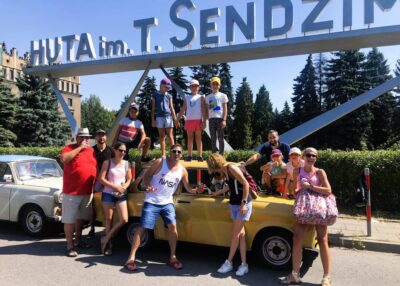
Private Nowa Huta Adventure Tour in Communist Cars
Read the review →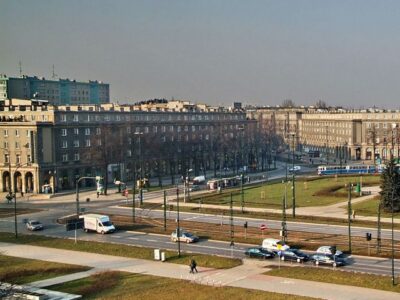

Browse the lists this tour appears in