
Reviewed · NOWA HUTA & COMMUNISM TOURS
Gdansk Private Communism Tour with Solidarity Center Museum
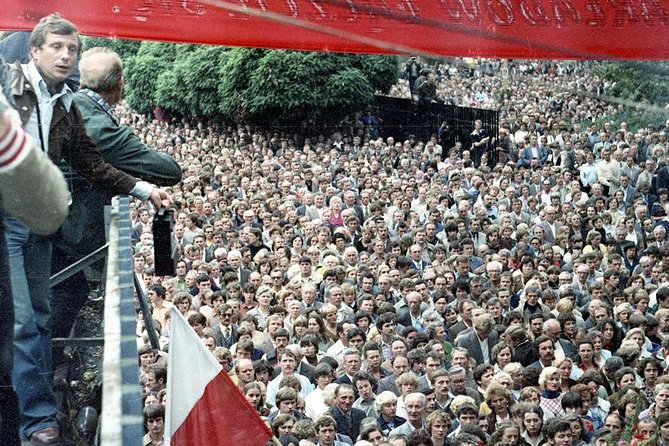
Gdansk’s shipyards are where Poland’s fight against communism moved from private anger to public action. This private walking tour puts you beside the Monument to the Fallen Shipyard Workers, inside historic Sala BHP, and at the gates of the yard where Solidarity began its challenge to Soviet-backed rule. The story is political, personal, and tied closely to the ground beneath your feet.
I like the private format, since you can ask direct questions instead of following a large group. I also like the European Solidarity Center, where original documents and the 21 Postulates give shape to a story that can otherwise feel like a blur of names and dates.
The main caution is timing. The shorter option may feel brisk, and one booking reported a late start and a four-hour tour ending after about three hours. If the museum matters most to you, choose the longer option and protect enough time for it.
Key points to know before booking
- The shipyard is the classroom: You walk through the places where the 1980 strikes took shape.
- The four-hour option goes further: It includes Sala BHP, the shipyard, the European Solidarity Center, and a Polish vodka shot.
- A private guide changes the experience: You can ask about Lech Wałęsa, Anna Walentynowicz, martial law, and the fall of communism as you go.
- The museum adds the missing detail: Original photographs, documents, and the 21 Postulates explain how a workers’ protest became a national movement.
- Old Town pickup is limited: Your guide can collect you only if your accommodation is within 1.5 kilometers of the meeting point.
- Avoid weekends for the shipyard section: Gdansk Shipyard is closed on Saturdays and Sundays.
Why Gdansk is the right place to study the fall of communism
The usual picture of the Cold War is a map of borders, walls, and government speeches. Gdansk gives you a more human version. Here, shipyard workers used strikes, negotiations, and organized civil resistance to challenge the Polish communist government.
The movement became known as Solidarity, or Solidarność. It was not simply a political party. It began as an independent trade union, built around demands for workers’ rights and basic freedoms. Those demands grew into a national challenge to one-party rule.
That is why this tour works best when you want more than a museum visit. You are not only looking at displays behind glass. You are walking through the setting of the strikes, seeing the monument raised to workers killed in 1970, and visiting the building where the Gdansk Agreement was signed in 1980.
A private guide also helps with names that can quickly become confusing. Lech Wałęsa became the best-known face of Solidarity, but Anna Walentynowicz and many other workers played important roles. Your guide can explain the rivalries, risks, and choices that shaped the movement rather than reducing the story to one famous leader.
Other communist-era tours around Gdańsk:
- Gdansk: Private Communism Tour with Solidarity Center Museum
★ 5.0 · 28 reviews - Solidarity Tour
★ 5.0 · 25 reviews - Gdansk: European Solidarity Centre Guided Tour
★ 4.9 · 14 reviews
Meeting the Monument to the Fallen Shipyard Workers
The tour begins beneath the Monument to the Fallen Shipyard Workers of 1970 at Plac Solidarności. Allow about ten minutes here, although your guide may spend longer if you have questions.
The monument commemorates shipyard workers killed during protests in December 1970. Their deaths became part of the memory that later fueled the 1980 strikes. Three tall steel crosses rise above the square, making this one of the clearest visual markers of Gdansk’s modern political story.
Your meeting point is easy to identify, but pickup details matter. If your hotel is in Gdansk Old Town and within about 1.5 kilometers of the monument, the guide can meet you there. If your accommodation is farther away, you need to go to the monument yourself, or the route may be adjusted.
This first stop is brief, but do not treat it as a photo-only pause. Ask your guide to connect the 1970 protests with the events ten years later. That link helps explain why the shipyard workers chose the monument site and why the memory of earlier deaths mattered so much.
Anna Walentynowicz, Lech Wałęsa, and the people behind Solidarity
The next stop is the monument to Anna Walentynowicz, with about twenty minutes set aside for her story and the wider cast of the movement.
Walentynowicz was a crane operator and shipyard worker whose dismissal helped trigger the August 1980 strike. Her role is important because it keeps the story from becoming a simple Lech Wałęsa biography. Solidarity depended on workers, organizers, families, advisers, and people willing to take serious personal risks.
You will also hear about Wałęsa and other figures who helped lead the strike and shape its public message. The guide’s value here is interpretation. Dates and names are easy to find in a book, but the connections between them are less obvious when you first encounter the subject.
One especially useful detail is the chance to ask about the movement’s legacy beyond Poland. The strikes in Gdansk helped encourage opposition across Eastern Europe, contributing to the political changes that led to the collapse of communist governments in 1989.
The strongest feedback about the tour has focused on guides who could explain this past with both historical command and personal connection. One guide named Aneta was praised for her enthusiasm and her ability to present Poland’s role in the move toward democracy. Another guide used first-hand family or local accounts to explain events shown in the museum. Guide quality matters here, so use the private setting to ask questions rather than simply listening in silence.
Sala BHP and the agreement signed in 1980
The tour then turns to Sala BHP, a former worker protection center at the Gdansk shipyard. This is the building where the Gdansk Agreement was signed on August 31, 1980.
You can expect roughly an hour here on the longer tour. The stop adds substance to the walk because it places a major political agreement in a working setting. The strike was not just an outdoor protest. It required organization, written demands, negotiations, and a structure that could hold together under government pressure.
The guide will also explain the Polish People’s Republic, commonly called the PRL. This context is essential. Without it, the 1980 demands can sound like a standard labor dispute. With it, you see why independent unions, access to information, and the right to organize had such force in a tightly controlled state.
Sala BHP is included only with the four-hour option. If you choose the two-hour tour, check exactly what time is reserved for the museum and outdoor sites, since the shorter version cannot give every stop the same attention.
This is also the point where a private tour can be more useful than a large group walk. You can stop over a document or ask your guide to explain how the government responded. You can also ask about the difference between Solidarity as a workers’ union and its later role in national politics.
A few more things to do in Gdańsk worth a look
- Museum of the Second World War Gdansk Private Tour & Tickets
★ 5.0 · 24 reviews - Gdansk Private WWII Tour with Museum of the Second World War
★ 4.9 · 22 reviews - Gdansk: Museum of World War II – True Story of a Living Hell
★ 4.5 · 6 reviews - From Gdansk: Stutthof Concentration Camp Museum Day Tour
★ 4.9 · 4 reviews
Walking through Stocznia Gdańska
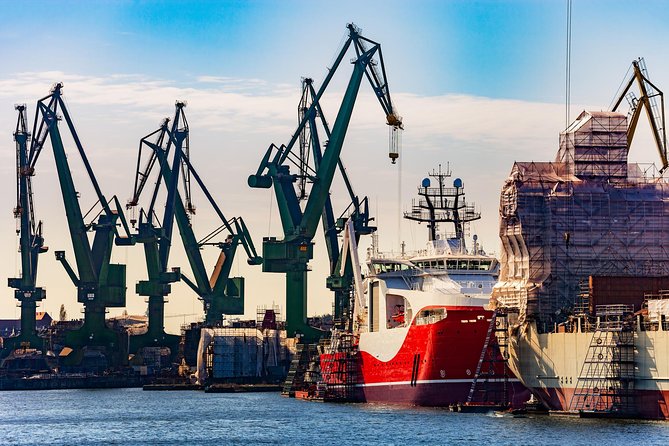
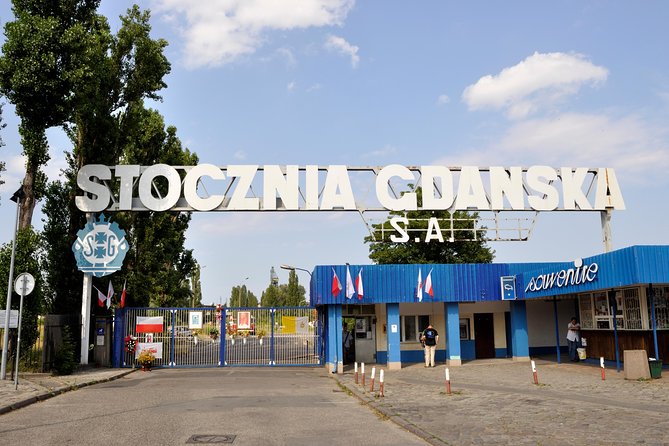
The final outdoor stop is Gdansk Shipyard, or Stocznia Gdańska. The shipyard employed about 17,000 shipbuilders, and its scale helps explain why a strike there could carry such force.
The tour presents the yard as the place where civil resistance against the communist regime gathered momentum in 1980. You will hear how workers organized and why the shipyard became a symbol well beyond Gdansk.
Do not expect a standard sightseeing attraction with a polished visitor route at every turn. This is a working and historic area, and the experience depends heavily on your guide’s explanation. The value is in understanding what happened here, not in checking off a long list of monuments.
The tour traditionally includes a shot of Polish vodka on the longer option. It is a small gesture, but it fits the tone of the experience. After a serious discussion of strikes, state power, and political repression, the drink adds a bit of Polish social custom and lightness. You can enjoy that moment without confusing it for the main attraction.
There is one important scheduling warning: Gdansk Shipyard is closed on Saturdays and Sundays. If you want the full shipyard portion, book a weekday. This is one of the few details that could change the character of the experience rather than merely affect convenience.
What the European Solidarity Center adds
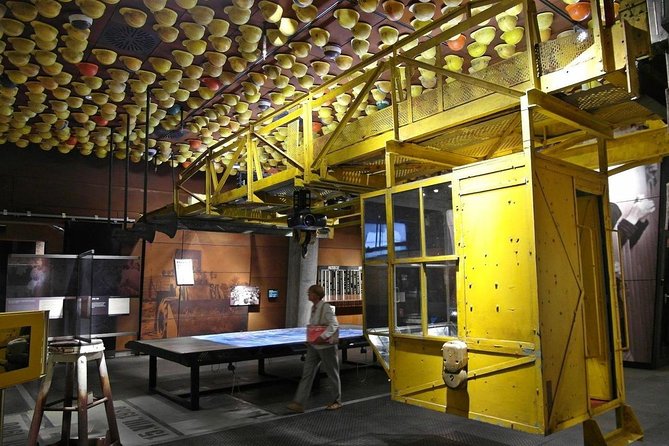
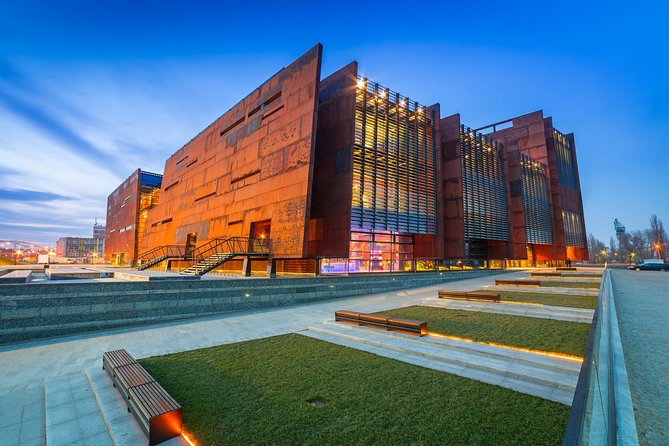
The European Solidarity Center is the strongest reason to choose the longer tour. The modern museum takes about an hour and follows Solidarity from the strikes through the 1989 Round Table Talks and Poland’s first pluralistic election since 1947.
You will see the original Tables of the 21 Postulates, the written demands presented by the strikers at the Lenin Shipyard, now called Gdansk Shipyard. These documents make the movement concrete. Instead of hearing only that workers wanted freedom and reform, you can examine the demands that put those ideas into a formal program.
The museum also uses photographs and other documents to show the stages of the struggle. The sequence matters. You can follow the initial strike, the growth of Solidarity, the pressure from the communist authorities, the negotiations of 1989, and the move toward democratic elections.
Skip-the-line entry is included with the two-hour and four-hour options. That can save useful time, especially when your visit is tied to a fixed walking route. Still, skip-the-line entry does not mean you will see everything. An hour is enough for a guided introduction, but you may want more time if you read every panel.
One weakness raised by the available feedback was that the museum portion felt too short, even on a four-hour booking. I would take that seriously. The European Solidarity Center is not a quick final stop to squeeze in after the walk. If you care most about the exhibits, ask at the start how the guide plans to divide the time, and choose the longer version.
Two hours or four hours?
The shorter tour suits you if your schedule is tight and you mainly want a guided introduction to the shipyard story. You will still get the key figures, the monument, and the political background, but the pace may be faster.
The four-hour option is the better choice for most people interested in the subject. It includes Sala BHP, free entry to Gdansk Shipyard, the vodka tasting, and the European Solidarity Center. Those additions turn a basic orientation walk into a fuller study of how Solidarity developed.
The advertised duration is approximately two to four hours, so treat the timing as a range rather than a guarantee. A private tour should allow room for questions, but the experience can still feel compressed if the guide starts late or the museum visit is not carefully planned.
The tour is offered at different departure times and in nine European languages. That makes it easier to fit into a Gdansk itinerary, but you should still read the confirmation and check your email the day before. The operator advises doing so for important tour information.
Is $139.10 per person a fair price?
At $139.10 per person, this is not a budget walk. The price makes more sense if you are traveling with a small private group, need Old Town pickup, or want a guide who can explain the political background in your chosen language.
The private format is the main value. You are paying for a dedicated guide rather than a standard group commentary. That gives you more control over questions and pace, though it does not automatically guarantee that every minute will be used well.
The four-hour option offers the strongest return because it includes the museum ticket, Sala BHP, the shipyard, and the vodka. If you only have time for a quick introduction, the shorter option may be enough, but compare what is included before paying the full price.
Group discounts may be available, which could improve the cost for families or friends booking together. Pickup is included only from qualifying Old Town accommodation. If you are staying outside that zone, you should factor in the time and cost of reaching Plac Solidarności.
Who will get the most from this tour?
I would recommend it most strongly to you if Polish history, Cold War politics, labor movements, or modern European democracy interest you. It is also a good choice if you have visited Gdansk’s old center and want to understand a less decorative but more politically important side of the city.
History students, teachers, and older children who can follow a serious discussion should find plenty to discuss. The subject includes protest, government pressure, and deaths during earlier strikes, so it is not a light sightseeing walk.
You do not need prior knowledge of Solidarity. The guide is expected to explain the setting and key figures. Still, you will gain more if you arrive knowing that the 1980 strike did not appear from nowhere. The 1970 deaths, worker grievances, and restrictions of the PRL all form part of the story.
The tour is less suitable if you want a relaxed city stroll with many unrelated sights. Most of the time is focused on shipyards, political history, and the museum. That focus is the point, but it may feel narrow if you are looking for food, architecture, or general Old Town sightseeing.
The activity is private, and most people can participate. It is near public transportation, but the information provided does not promise a fully accessible route, so you should ask the operator about specific mobility needs before booking.
Practical advice for a smoother visit
Book a weekday if the shipyard is important to you. The site is closed on Saturdays and Sundays, and that could force a changed route.
Choose the four-hour version if you want time at the European Solidarity Center. Tell the guide early that the museum matters to you, especially since one experience ended earlier than expected and left too little time inside.
Use the private format actively. Ask about Anna Walentynowicz, the 1970 monument, the 21 Postulates, and the difference between Solidarity’s early union role and its later political influence.
Wear shoes suited to a walking tour and allow extra time around the scheduled duration. The exact route can change if your accommodation is outside the Old Town pickup area or if site access affects the program.
Free cancellation is available until 24 hours before the start time. Cancellations made inside that window are not refunded, and changes made then are not accepted.
Should you book the Gdansk Communism Tour?
Book it if you want Gdansk’s modern story explained at the places where it happened. The combination of the shipyard, Sala BHP, the workers’ monument, and the European Solidarity Center gives you a clear path from protest to democratic change.
I would choose the four-hour weekday option, especially for a first visit. The shorter tour can work when your schedule is tight, but the museum and Sala BHP are too important to treat as optional extras. Before you pay, confirm the duration, pickup point, language, and how much time is planned inside the museum.
The tour earns its price through its private guide and focused subject, not through a long list of attractions. If that subject interests you, it offers one of the clearest ways to understand why Gdansk mattered in the end of communism in Europe.
FAQ
Where does the tour begin?
The standard meeting point is beneath the Monument to the Fallen Shipyard Workers of 1970 at Plac Solidarności in Gdansk.
Can I be picked up from my hotel?
Pickup is available from accommodation in Gdansk Old Town within about 1.5 kilometers of the meeting point. If you provide your address when booking, the guide can meet you there. Otherwise, meet at the listed starting point.
How long does the tour last?
The experience lasts approximately two to four hours, depending on the option selected.
What is included in the four-hour option?
The four-hour option includes the European Solidarity Center, Sala BHP, Gdansk Shipyard, skip-the-line museum tickets, and a shot of traditional Polish vodka.
Is the European Solidarity Center included in the shorter tour?
Skip-the-line tickets to the European Solidarity Center are included with both the two-hour and four-hour options.
Is the shipyard open every day?
No. Gdansk Shipyard is closed on Saturdays and Sundays, so book a weekday if you want the shipyard portion.
Can I cancel for a refund?
You can cancel for a full refund up to 24 hours before the experience begins. Cancellations or changes made less than 24 hours before the start time are not accepted for a refund.
Just added in Gdańsk
- Gdansk, Gdynia, and Sopot: 8-Hour Private Sightseeing Tour★ 4.9 · 13 reviews
- Undercover City Games: Gdynia★ 5.0 · 34 reviews
- Private WW2 Tour of Westerplatte,Gdansk and Stutthof Including Lunch★ 5.0 · 12 reviews
- Whisky Tasting in Gdańsk★ 5.0 · 3 reviews
- Gdansk EVERYDAY Vodka Tasting Tour★ 5.0 · 6 reviews
- Westerplatte private tour led by Expert-Guide (door to door)★ 5.0 · 5 reviews
- Westerplatte – 2h private trip by luxury car|★ 5.0 · 4 reviews
- Torun – City of Copernicus Private Tour★ 4.5 · 5 reviews
Nowa Huta & Communism Tours, compared.
Legendary Private Nowa Huta Communism Tour with Crazy Guides
Read the review →
Nowa Huta: Steelworks Administration Buildings/Shelters Tour
Read the review →
Private Tour: Warsaw’s Communist History by Retro Fiat
Read the review →
Private Nowa Huta Adventure Tour in Communist Cars
Read the review →

Browse the lists this tour appears in