
Reviewed · JEWISH QUARTER & GHETTO TOURS
Krakow Jewish District and Ghetto Guided Tour in a Small Group
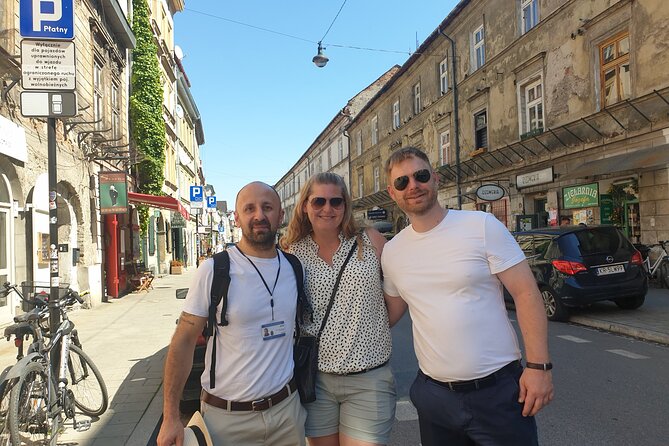
Krakow’s Jewish Quarter and former ghetto are best understood on foot, where streets, synagogues, memorials, and fragments of the old walls fit together. This tour links them in about two hours, with the guide adding context that you would likely miss while walking alone. I especially like the small group limit of 10 and the route’s clear focus on Jewish Krakow.
I also like that the tour begins on Szeroka Street and finishes at Ghetto Heroes Square, so you cover two connected but different areas instead of circling one neighborhood. The main consideration is that nearly every religious building is viewed from outside, and admission tickets are not included.
Key points to know before booking
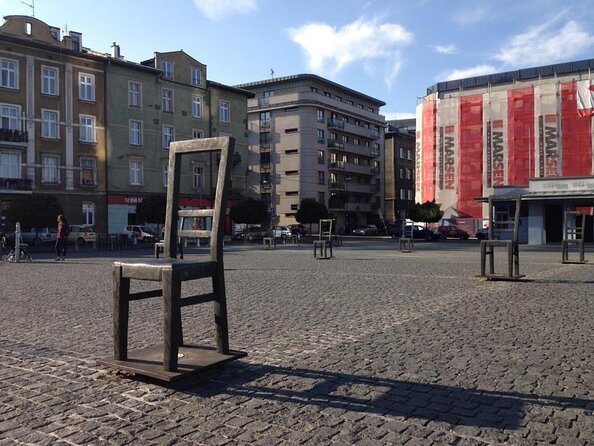
- A two-hour route across two districts: You begin in Kazimierz and finish in Podgórze, where the former Krakow Ghetto was located.
- Small groups capped at 10 people: This gives you a better chance to hear the guide and ask questions.
- Historic synagogues are exterior stops: Remuh, the Old Synagogue, the High Synagogue, and Izaak Synagogue are seen from outside.
- The route includes major memorial sites: You visit the Jan Karski statue, Eagle Pharmacy, Ghetto Heroes Square, and a surviving section of the ghetto wall.
- The tour is conducted in English: A mobile ticket is provided, and confirmation arrives when you book.
- The $60.21 price mainly pays for guiding: No attraction admissions are included, so the value rests on the route, explanation, and small-group format.
From Szeroka Street into Jewish Krakow
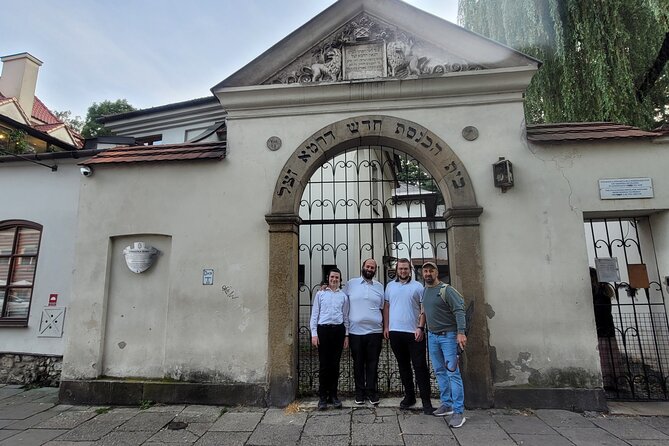
Meet at Szeroka 6, in the heart of Kazimierz. This is an excellent starting point because Szeroka Street is one of the oldest parts of Krakow’s Jewish Quarter. Rather than beginning with a general city introduction, the tour places you immediately among the buildings and public spaces tied to Jewish life.
You spend about 10 minutes here. That is enough to get your bearings and hear why this street matters, but not enough for a long architectural study. If you want time for photographs or a quiet look at the buildings, arrive a few minutes early.
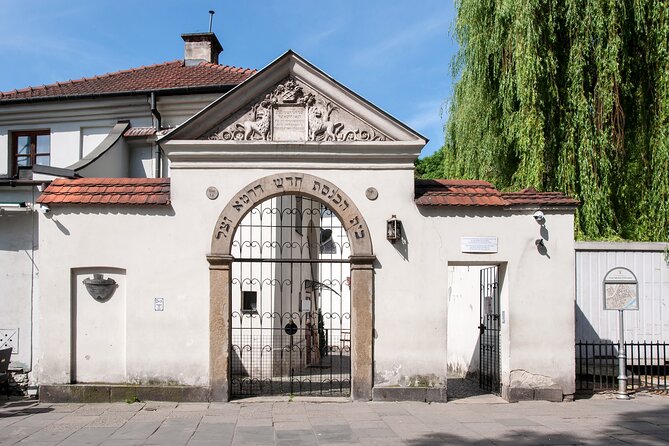
The first synagogue stop is the 16th-century Remuh Synagogue, viewed from outside for about 15 minutes. The exterior gives the guide a chance to discuss the building and its place in the district without turning the tour into a rushed interior visit.
The Old Synagogue follows, also from outside. This is another 10-minute stop. The name can be confusing because it refers to the building’s age within Krakow’s Jewish community, not to a separate modern institution. Your guide’s explanation is useful here, since the value of the stop is not simply seeing a facade. It is understanding how several synagogues sit close together within the old quarter.
Other Jewish-heritage walks around Kraków:
- Krakow: Schindler’s Factory & Ghetto Guided Tour
★ 4.7 · 1,694 reviews - Krakow: Jewish Quarter and Former Ghetto Tour
★ 4.9 · 1,441 reviews - Krakow: Bike Tour of Old Town, Jewish Quarter and the Ghetto
★ 4.9 · 1,155 reviews
Synagogues, memory, and the Jan Karski statue
The route continues to the Wolf Popper Synagogue, a 16th-century building seen during a short five-minute stop. The visit is brief, so you should not expect a full interior tour or a long pause for close inspection. Instead, it works as part of a sequence showing how concentrated Jewish life once was in this section of Krakow.
Next comes the statue of Jan Karski, described as the man who tried to stop the Holocaust. The stop lasts about five minutes. Karski is an important figure to encounter because the tour moves beyond buildings and dates into the moral choices and warnings connected with the Holocaust.
You then pass a 19th-century synagogue and the High Synagogue, each viewed from outside. The High Synagogue receives about five minutes. These short stops may feel quick if you want detailed architectural information, but they keep the tour moving and let you see several sites within a limited time.
The route also includes the 17th-century Izaak Synagogue. Again, the visit is from outside and takes roughly five minutes. Taken together, these synagogue stops help you see the district as a working community rather than a collection of isolated monuments.
That distinction matters. A solo walk can show you attractive facades, but it may not explain why the buildings are grouped so closely or how the neighborhood changed over time. The guide provides the thread connecting the sites.
Plac Nowy and the Jewish Community Center
Plac Nowy is the next major stop, with about 10 minutes in the square. It once served as a center for trade for Krakow’s Jewish community. The square is useful in the tour because it shifts attention from worship to daily commerce and public life.
You will not spend a long time here, so treat it as a focused orientation stop. The guide can explain what made the square important, while you take in the surrounding streets and the relationship between the market area and the synagogues already visited.
The route then passes the Krakow Jewish Community Center, known as JCC Krakow. This is a short, five-minute stop. Its presence adds a present-day point to a route that could otherwise focus only on the past.
You also see Izaak Synagogue during this part of the walk. The repeated exterior focus is worth keeping in mind when you book. This is not a synagogue admission tour or a museum visit. It is a guided neighborhood walk, and its strength is the way the sites are placed in relation to one another.
Crossing toward Podgórze and the former ghetto
The tour ends in a different part of Krakow, at Ghetto Heroes Square in Podgórze. That change of setting is one of the route’s strongest features. You begin amid the old Jewish Quarter and finish at places linked directly to the Krakow Ghetto.
The transition helps you separate two parts of the story. Kazimierz was the center of Jewish life before the war. Podgórze became the site of the ghetto during the German occupation. Seeing both areas in one guided route gives you a clearer sense of that forced break.
The route includes the Eagle Pharmacy, viewed from outside for about 10 minutes. This stop is tied to the Krakow Ghetto and gives the guide a place to explain the pharmacy’s connection to the people confined there.
Since the building is seen from outside, you should not book this tour expecting a museum visit inside. If you have a separate interest in Krakow’s museums, set aside additional time beyond the two-hour walk. The tour itself keeps moving and focuses on the street-level setting.
A few more things to do in Kraków worth a look
- From Krakow: Auschwitz-Birkenau Guided Tour & Hotel Pickup
★ 4.5 · 33,358 reviews - From Krakow: Auschwitz-Birkenau Guided Tour & Hotel Pickup
★ 4.5 · 29,340 reviews - Krakow: Auschwitz Guided Tour with Optional Hotel Pickup
★ 4.5 · 15,280 reviews - Krakow: Auschwitz-Birkenau Guided Tour with Pickup & Lunch
★ 4.5 · 9,800 reviews
Ghetto Heroes Square and the surviving wall
Ghetto Heroes Square is the final main stop, with about 10 minutes. The square was the main public place of the Krakow Ghetto, and it is an important place to pause after the earlier synagogue and community sites.
The tour ends here, at Plac Bohaterów Getta, rather than returning to Szeroka Street. That is practical if you plan to continue exploring Podgórze, but less convenient if you need to get back to Kazimierz immediately. Check your plans before booking and allow time for your own return journey.
A fragment of the former ghetto wall follows, with about five minutes at the site. The remaining section is modest in size, but physical traces often make the past easier to understand than a description alone. The guide can place this fragment within the wider story of the ghetto’s boundaries and daily reality.
The final stop gives the tour a firm ending. You are not left with only a list of synagogues. You also see a memorial square and a surviving piece of the wall, which connect the older neighborhood to the destruction that followed.
What the two-hour format does well
Two hours is a useful length for this route. You can cover many locations without committing half a day, and the number of stops gives the walk a steady rhythm. The short visits also make this a reasonable choice if you are fitting the Jewish Quarter into a busy Krakow schedule.
The limit is depth. You are seeing a large number of places in a short time, and several stops last only five minutes. You will get a guided overview, not an exhaustive study of every synagogue, memorial, or street.
That tradeoff is easier to accept because the route has a clear theme. It is not a random list of sights. It moves from the old Jewish Quarter to the former ghetto, then ends with physical reminders of wartime persecution.
I would choose this format if I wanted a strong first introduction. I would not choose it as my only activity if I planned to spend several days studying Krakow’s Jewish heritage in detail.
Small group size and guide service
The group is capped at 10 people, which is a meaningful feature on a walking tour. A smaller group usually makes it easier to stay together in busy streets, hear explanations, and ask a question without interrupting a large crowd.
The tour includes the guide service but no admission tickets. Since the listed stops are primarily exterior locations, that is not a major problem, but it explains why the price should be judged mainly against the guiding and group size.
The experience is offered in English. The provider is Krzysztof Blaszczyk Hussar Travel. No individual guide name is provided, so you should not book expecting a particular named guide.
The route is near public transportation, and most people can take part. Wear comfortable shoes and plan for a walking route through city streets, though the supplied information does not give an exact distance or accessibility specification.
Is $60.21 a fair price?
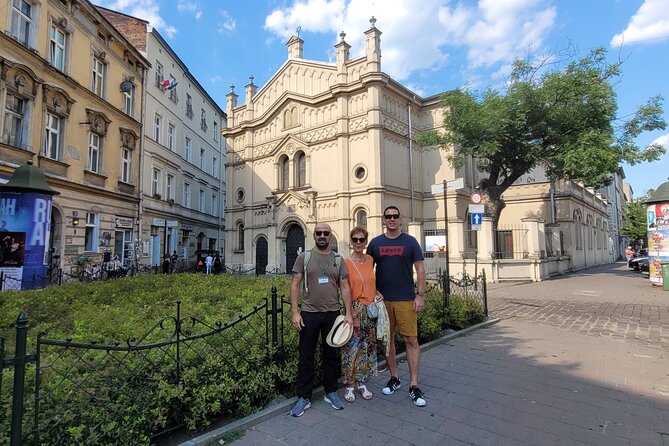
At $60.21 per person, this is not the cheapest way to look around Kazimierz and Podgórze. You can walk through the districts on your own for free, and the tour does not include entry to the synagogues, Eagle Pharmacy, or other museums.
The price makes more sense if you value explanation and a compact route. A guide takes you to many connected sites, handles the direction, and provides the historical link between them. The group size of no more than 10 also gives the experience a more personal feel than a large coach-style walk.
You are paying for structure, not admission. That is good value for someone who wants an efficient introduction and does not want to spend time planning the route. It is weaker value for someone who is comfortable reading signs, using a map, and exploring independently.
I would also compare the tour with your own schedule. Because the walk ends at Ghetto Heroes Square, you can continue from there instead of retracing the route. That can make the one-way design more useful, especially if you have plans in Podgórze afterward.
Who should book this Krakow Jewish Quarter tour?
This experience suits first-time visitors who want the main Jewish Quarter and ghetto sites explained in one short outing. It is also a good match for anyone who prefers a guide but dislikes large groups.
You will likely get the most from it if you are interested in:
- The layout of Kazimierz and Podgórze
- Krakow’s Jewish community before the war
- Synagogue exteriors and historic streets
- Jan Karski and Holocaust remembrance
- The former Krakow Ghetto
- A guided route with a clear beginning and end
It is less suitable if you want interior access to several synagogues, extended museum time, or a slow photography walk. Since most buildings are viewed from outside, anyone looking for detailed architecture or religious interiors should add separate visits.
Book ahead if your dates are fixed. The experience is often reserved well in advance, with an average booking lead time of about 33 days. Free cancellation is available up to 24 hours before the start time, but changes or cancellations made later are not refunded.
My take: a useful first walk, with clear limits
I like this tour because it connects places that are easy to visit separately but harder to understand as one story. Szeroka Street, the synagogues, Plac Nowy, the JCC, Eagle Pharmacy, Ghetto Heroes Square, and the wall fragment form a logical route from Jewish community life to wartime persecution.
The 10-person maximum is the feature I value most. It keeps a serious subject from becoming a hurried parade behind a large flag. Still, remember that the tour is an exterior walking introduction, not a full museum and synagogue program.
Book it if you want context, a manageable two-hour route, and an English-speaking guide to show you how Krakow’s Jewish Quarter connects with the former ghetto. Skip it if you mainly want to enter buildings or prefer to explore at your own pace.
FAQ
How long does the Krakow Jewish District and Ghetto Guided Tour last?
The tour lasts approximately two hours.
What language is the tour offered in?
The tour is offered in English.
How large is the tour group?
The group is capped at 10 participants.
Where does the tour begin?
The meeting point is Szeroka 6, 31-053 Kraków, Poland.
Where does the tour end?
The tour ends at Ghetto Heroes Square, also called Plac Bohaterów Getta, in Krakow.
Which main areas does the tour cover?
The route covers Krakow’s Jewish Quarter, including Kazimierz, and the former Krakow Ghetto area in Podgórze.
Are admission tickets included?
No. The tour includes guide service, but admission tickets are not included.
Are the synagogues visited inside?
The listed synagogue stops are viewed from outside, including Remuh Synagogue, the Old Synagogue, Wolf Popper Synagogue, the High Synagogue, and Izaak Synagogue.
Is the tour near public transportation?
Yes. The experience is described as being near public transportation.
Can I cancel for a full refund?
Yes, if you cancel at least 24 hours before the experience start time. Cancellations or changes made less than 24 hours before the start time are not refunded or accepted.
Just added in Kraków
- Wawel Castle, Old Town with St. Mary’s Church Guided Tour★ 5.0 · 3 reviews
- Wawel Castle, Old Town with St. Mary’s Church Guided Tour★ 5.0 · 5 reviews
- Wawel Castle, Cathedral, Old Town and St. Mary’s Basilica★ 4.8 · 13 reviews
- Wawel Castle, Cathedral, & Rynek Underground Tour with Lunch★ 4.5 · 10 reviews
- Wawel Castle & Cathedral Skip the Line Small Group Tour★ 5.0 · 3 reviews
- Wawel Castle and Cathedral Guided Tour★ 4.6 · 44 reviews
- Wawel Castle, Cathedral, Rynek Underground Tour with Lunch★ 5.0 · 3 reviews
- Wawel Castle and Cathedral Guided Tour★ 5.0 · 8 reviews
Jewish Quarter & Ghetto Tours, compared.
Bike Tour of Old Town, Jewish Quarter and the Ghetto
Read the review →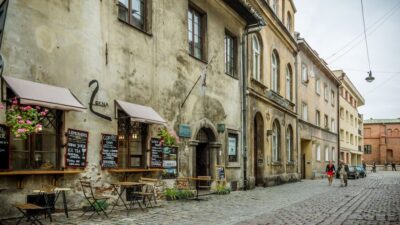
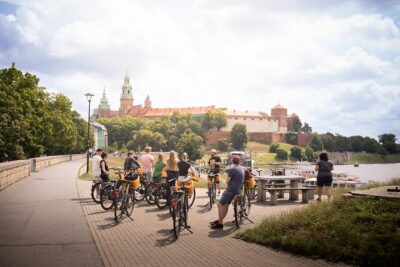
Full Bike Tour – the Old Town, Jewish Qtr & the Ghetto NEW BIKES
Read the review →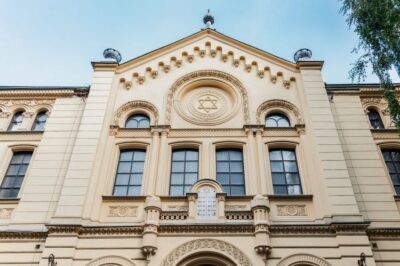
Warsaw Ghetto Private Walking Tour with Hotel Pickup
Read the review →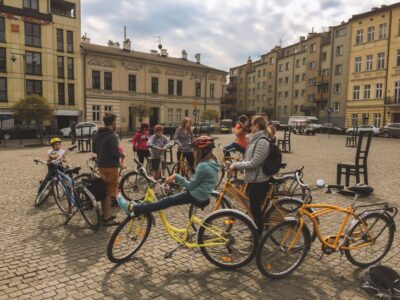
Bike Tour of the Old Town, Kazimierz, and the Ghetto
Read the review →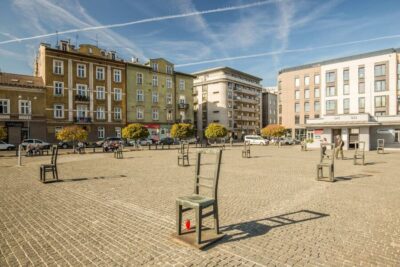
Browse the lists this tour appears in