
Reviewed · SCHINDLER'S FACTORY TOURS
Krakow: Schindler’s Factory & Ghetto & Plaszow Camp Guided Tour
Krakow’s wartime story comes into sharper focus on this five-hour walking tour through the former Jewish Ghetto and Plaszow Camp. You see the places where people were confined, forced to work, and sent away, then finish inside the excellent Schindler’s Factory Museum.
I like the route for two reasons: it reaches less-visited Plaszow, where a guide helps you read an open, altered site, and it joins that experience to Ghetto Heroes Square and the surviving wall fragment. Guides such as Dominika and Matthew have been singled out for clear explanations and strong local knowledge.
The main drawback is the amount of walking on uneven, hilly ground. Plaszow can be muddy, and the museum is not a simple biography of Oskar Schindler. If you want a gentle city outing or a quick Schindler story, this may feel heavy and demanding.
Key points to know before booking
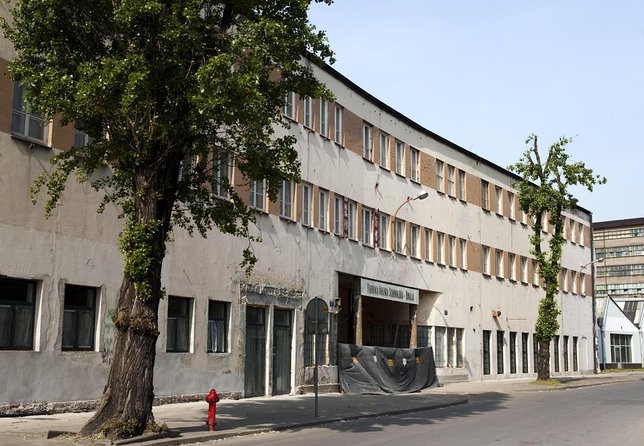
- Schindler’s Factory is a Krakow history museum, not a Schindler biography.
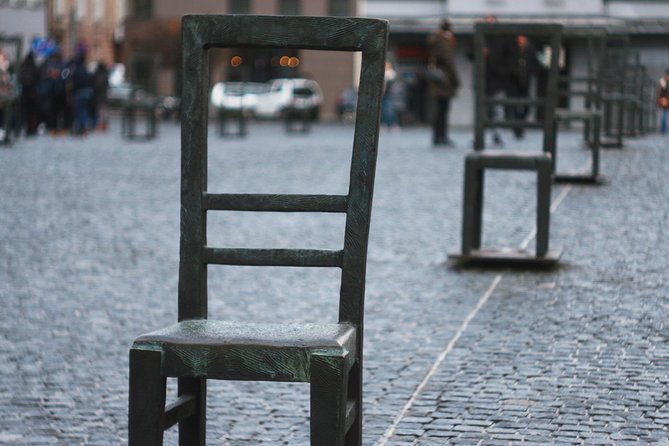
- Ghetto Heroes Square has 70 large metal chairs, a stark memorial to Jewish lives disrupted by deportation.
- Plaszow is quiet and difficult to interpret alone, with few intact camp structures remaining.
- The route includes about three hours of sightseeing on foot, including hilly and muddy sections.
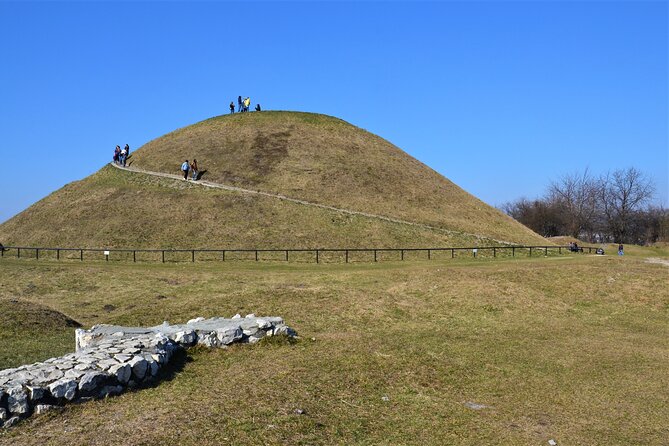
- Krakus Mound provides a wider view of the city, adding a physical sense of the area’s geography.
- The $76.33 price includes the guide and museum admission, but not the tram ticket.
Why this route adds more than a museum visit
Many Krakow visitors know Schindler’s name from the film, but the city’s wartime story is larger and more painful than one industrialist. This tour helps you connect the museum to the streets, walls, square, quarry, and former camp where the history unfolded.
I like that the day moves through real places rather than keeping you inside one exhibition. The wall fragment is small. The square may look ordinary at first. Plaszow has been altered and partly reclaimed by time. Yet these locations matter because they show how persecution was organized through everyday urban space.
The tour is also useful because Plaszow is not laid out like a polished memorial site. You do not get a neat sequence of preserved buildings and signs. A guide gives the terrain meaning, explains what happened there, and points out the remains that are easy to miss.
The experience has an average rating of 4.6 out of 5, with 93 percent recommending it. That fits the tour’s strongest quality: the guide can make a difficult subject understandable while adding local detail that you would likely miss on your own.
More Schindler's Factory tours from Kraków:
- Krakow: Oskar Schindler’s Factory Entry Ticket & Guided Tour
★ 4.2 · 3,793 reviews - Krakow: Schindler’s Factory Tour with Entrance Ticket
★ 4.5 · 3,182 reviews - Krakow: Schindler’s Factory Skip-the-Line Ticket
★ 4.4 · 3,105 reviews
Starting at Schindler’s Factory on Lipowa Street
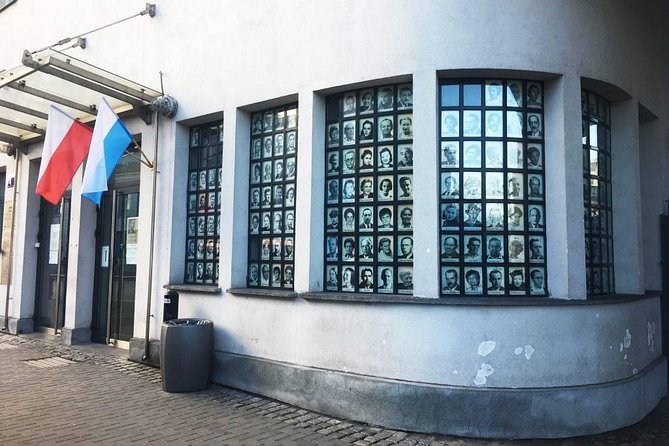
The tour begins at Oskar Schindler’s Enamel Factory at Lipowa 4. You receive admission to the museum and spend about 90 minutes inside, generally at your own pace.
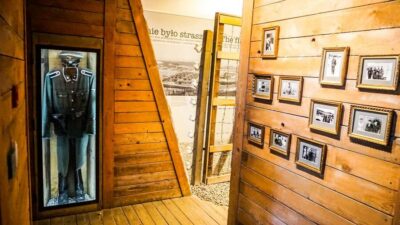
The museum’s main exhibition is called Krakow under Nazi Occupation 1939 to 1945. That title tells you what to expect. Schindler is part of the story, but the exhibition focuses on the city, its residents, and the machinery of occupation. It covers how life changed under German rule and how Krakow’s Jewish population was persecuted.
This distinction matters. If you arrive expecting a small, personal exhibit about Schindler’s private life, you may be surprised. The museum is wider in scope. It explains occupied Krakow and the Holocaust through objects, displays, photographs, and the experience of the city itself.
I would give the museum your full attention, even though the rest of the route is waiting outside. The 90-minute visit is not just a warm-up. It provides the background needed for the later stops, especially the Ghetto and Plaszow.
The guided format also helps with timing. You are not left to work out how long to spend inside before moving on. After the museum, the group continues through the Podgórze district and toward the former Ghetto sites.
The Ghetto wall fragment and a difficult memorial square
The next stop is a surviving 12-metre section of the original Ghetto wall. You spend about 15 minutes here. It is not a large monument, but its physical presence is powerful because it shows how confinement was imposed on a real neighborhood.
A plaque in Hebrew and Polish marks the wall as a place where people lived, suffered, died, and began their final journey to the death camps. Your guide can place this fragment within the wider story of the Ghetto, rather than leaving you with an isolated piece of masonry.
From there, the tour reaches Ghetto Heroes Square, also known as Plac Bohaterów Getta. During the German occupation, the square was inside the Ghetto and served as a gathering point before people were transported to camps.
Today, 70 large cast-iron chairs are spread across the square. They represent furniture and possessions left behind after the Ghetto was liquidated. The design is simple, but the empty spaces between the chairs make the memorial especially effective. You are not looking at a crowded monument. You are looking at absence.
The stop lasts around 15 minutes, which is enough for an explanation and a quiet look around. You should not expect a long museum-style visit here. The value comes from seeing the place in context, with the guide connecting the square to the wall and the next part of the route.
Reading Plaszow when little remains
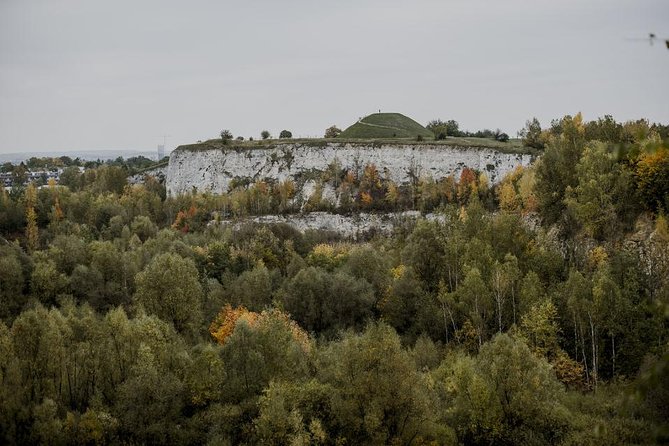
Plaszow is the tour’s most unusual stop and, for many people, its most demanding one. The former Nazi camp lies in the southern part of Krakow. It began as a forced labor camp and was later expanded into a concentration camp. From October 1942, Jewish people from the Krakow Ghetto were deported there.
The camp supplied labor for military factories and a quarry. The site is also linked to the story shown in Schindler’s List, but the tour does not treat the film as the whole story. You are taken into the actual area and shown what happened there.
The scheduled visit lasts about 90 minutes. That sounds generous, and it needs to be. Plaszow is not a compact, intact camp museum. Parts of the site were destroyed, and the remaining area can be difficult to understand without help. A guide such as Dominika or Matthew can explain what you are seeing and how the area functioned.
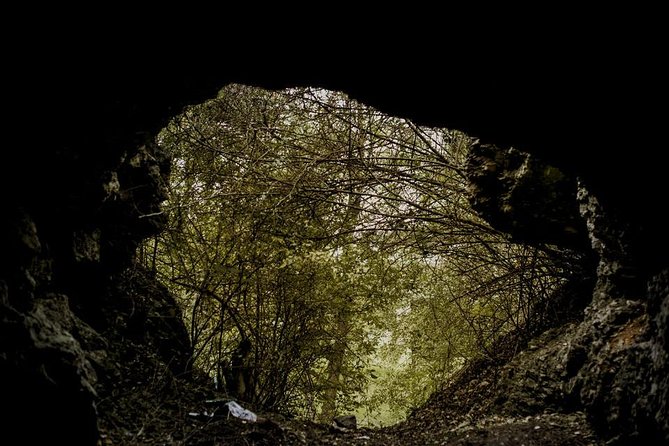
You might find the site visually underwhelming at first. That is part of the challenge. There are not rows of preserved barracks creating an immediate picture. Instead, you have open ground, remnants, slopes, and the Liban Quarry. The absence of buildings can make the visit feel less direct than Auschwitz, but it also forces you to think about how a place of mass suffering can disappear from ordinary sight.
Wear comfortable shoes with good grip. The route is hilly in places, and muddy ground is possible. Bad weather can make the walking harder, though strong guiding can still keep the visit focused. This is not the right outing for flimsy footwear or anyone hoping to avoid outdoor walking.
Other Jewish-heritage walks around Kraków:
- Krakow: Schindler’s Factory & Ghetto Guided Tour
★ 4.7 · 1,694 reviews - Krakow: Jewish Quarter and Former Ghetto Tour
★ 4.9 · 1,441 reviews - Krakow: Bike Tour of Old Town, Jewish Quarter and the Ghetto
★ 4.9 · 1,155 reviews - Krakow: Kazimierz Jewish Quarter Walking Tour
★ 4.8 · 571 reviews
The Liban Quarry and Krakus Mound
The Liban Quarry adds another layer to the Plaszow section. It connects the camp’s forced labor system to the physical work of extracting stone. The quarry is not simply a scenic stop. It helps you understand that labor, punishment, and industrial production were tied together in this part of Krakow.
The route also includes a climb toward Krakus Mound. The mound gives you a broader view of the city and the surrounding area. After spending time on the ground where the camp operated, looking across Krakow helps you grasp the site’s position within the city rather than treating it as a remote historical island.
The climb is another reason to plan for sturdy shoes. This part of the tour adds effort, but it also gives the day a change of pace. You move from enclosed museum rooms to city streets, then to an open historical site and a higher viewpoint.
The description of the route includes Plaszow and Krakus Mound, but the exact order and time at each outdoor point may depend on the guide and the group. The full Plaszow portion is listed at about 90 minutes, so expect a focused visit rather than a long hill walk.
Guide quality matters more than usual here
This tour depends heavily on the guide. Plaszow is not self-explanatory, and the Ghetto sites require careful context. A strong guide can explain the history clearly without turning the visit into a string of dates.
Dominika is specifically noted for her friendly manner, clear English, and strong command of the subject. She has also been praised for continuing thoughtfully in poor weather. Matthew is described as a Krakow native who connects wartime history with the city’s present-day community and streets.
Those names do not guarantee who will lead your departure, but they show the level of guide experience associated with the tour. You should still understand the possible variation. One account describes a guide whose discussion felt too general, especially around the Ghetto. That is a useful warning: the quality of the day can depend on how much attention your particular guide gives to local detail and to your questions.
The group can contain up to 25 people. That is not a private tour, so you may be part of a fairly large walking group. A smaller group would make discussion easier, but a maximum of 25 is still manageable if the guide keeps everyone together and speaks clearly.
What the $76.33 price includes
At $76.33 per person, this is not the cheapest way to visit Schindler’s Factory. The price makes more sense when you consider what is bundled: a professional guide, museum admission, transport between the city locations as part of the organized route, and interpretation at Plaszow.
The museum ticket alone does not solve the problem of visiting the former Ghetto and Plaszow. You would still need to work out the route, identify the surviving places, and understand a site where little remains. The value here is strongest if you want historical context and do not want to arrange several separate stops.
The tram ticket is not included. You should budget for public transportation and pay attention to the meeting and ending points. The tour begins at Lipowa 4 and ends at Henryka Kamieńskiego 57, so you do not finish where you started. That matters when planning lunch, a museum visit, or an evening reservation.
The tour is usually booked well in advance, with an average of 55 days. That suggests you should not leave it until the last moment if the timing matters to you. Confirmation is provided at booking, and free cancellation is available up to 24 hours before the start time. If the minimum group size is not reached and the operator cancels, you are offered another date or experience, or a full refund.
Who will get the most from this experience
I would choose this tour if you want to understand Krakow’s wartime history through actual places, not just displays. It suits adults and older children who can handle a serious subject, a five-hour schedule, and substantial walking.
It is especially useful for you if:
- You have already seen Krakow’s main center and want a more historically focused day.
- You want to visit Plaszow but do not feel confident finding or interpreting it alone.
- You prefer a local guide to explain the connection between the museum, Ghetto, and camp.
- You are comfortable with a solemn subject and outdoor conditions.
- You want to see a quieter site than Auschwitz, while understanding that less is physically preserved.
I would skip it if your main interest is Schindler’s personal biography. The museum does not focus only on him. I would also think twice if you dislike uneven paths, hills, mud, or a long day centered on Nazi persecution and the Holocaust.
Should you book the Schindler and Plaszow tour?
Book it if you want a serious, place-based look at Krakow under Nazi occupation and you value having someone explain what is no longer obvious. The Ghetto wall, the chairs in Ghetto Heroes Square, and the altered ground of Plaszow create a strong sequence. The museum gives that sequence a useful framework.
Do not book it expecting a polished memorial park or a light city excursion. The route is emotionally heavy, the outdoor section can be muddy, and the guide matters. Wear good shoes, allow for the tram ticket, and keep your schedule open after the tour.
For most people who want more than the familiar Schindler film story, this is a worthwhile use of half a day. Its best feature is not one spectacular sight. It is the way the guide links ordinary streets and difficult-to-read remains into a clearer picture of what happened in Krakow.
FAQ
How long does the tour last?
The tour lasts approximately five hours.
Where does the tour begin?
It begins at Lipowa 4, 32-051 Krakow, Poland, at Schindler’s Enamel Factory.
Where does the tour end?
It ends at Henryka Kamieńskiego 57, 30-644 Krakow, Poland.
Is admission to Schindler’s Factory included?
Yes. The entrance ticket to Schindler’s Factory Museum is included.
Is public transportation included?
No. A tram ticket or other public transportation cost is not included.
Is the Schindler museum only about Oskar Schindler?
No. The main exhibition focuses on Krakow under Nazi occupation from 1939 to 1945. It is not a biographical museum devoted only to Schindler.
How long do you spend inside Schindler’s Factory?
The museum visit lasts about one hour and 30 minutes.
What is included at Plaszow?
The tour includes a guided visit to the former Plaszow Concentration Camp area, including the Liban Quarry and a climb toward Krakus Mound. The visit lasts about one hour and 30 minutes.
Is the tour suitable for most people?
Most people can participate, but the route includes a lot of walking and hilly or muddy sections at Plaszow. Comfortable shoes are recommended.
How many people can join the tour?
The group can include a maximum of 25 people.
Can you cancel for a full refund?
Yes. You can cancel up to 24 hours before the experience begins for a full refund. Changes or cancellations made less than 24 hours before the start time are not accepted for a refund.
More wartime memorial tours from Kraków
- Krakow: Plaszow Concentration Camp Walking Tour
★ 4.8 · 39 reviews - Guided Tour in Kraków-Płaszów Former Concentration Camp
★ 5.0 · 19 reviews - Krakow World War II Private Tour
★ 5.0 · 16 reviews - Krakow: Former Concentration Camp Plaszow Guided Tour
★ 4.8 · 10 reviews
Just added in Kraków
- Wawel Castle, Old Town with St. Mary’s Church Guided Tour★ 5.0 · 3 reviews
- Wawel Castle, Old Town with St. Mary’s Church Guided Tour★ 5.0 · 5 reviews
- Wawel Castle, Cathedral, Old Town and St. Mary’s Basilica★ 4.8 · 13 reviews
- Wawel Castle, Cathedral, & Rynek Underground Tour with Lunch★ 4.5 · 10 reviews
- Wawel Castle & Cathedral Skip the Line Small Group Tour★ 5.0 · 3 reviews
- Wawel Castle and Cathedral Guided Tour★ 4.6 · 44 reviews
- Wawel Castle, Cathedral, Rynek Underground Tour with Lunch★ 5.0 · 3 reviews
- Wawel Castle and Cathedral Guided Tour★ 5.0 · 8 reviews
Schindler's Factory Tours, compared.
Oskar Schindler’s Factory Entry Ticket & Guided Tour
Read the review →
Schindler’s Factory Tour with Entrance Ticket
Read the review →
Schindler’s Factory in Krakow: Guided Tour & Skip the Line Ticket
Read the review →
Schindler’s Factory Ticket with Guided Tour Option
Read the review →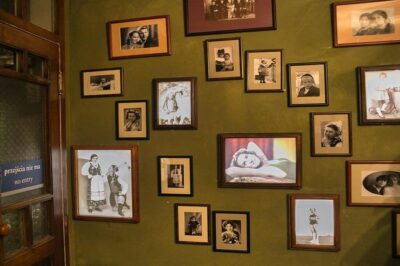
Krakow Schindler’s Factory Guided Tour with Admission Ticket
Read the review →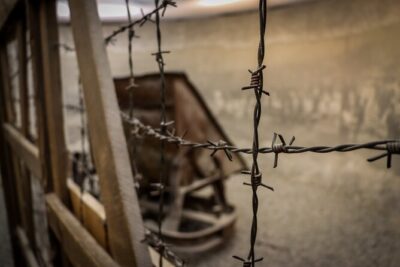
Krakow Schindler’s Factory Museum Guided Tour in English
Read the review →Browse the lists this tour appears in