
Reviewed · JEWISH QUARTER & GHETTO TOURS
Tour of the Warsaw Ghetto
Warsaw’s former ghetto is not a preserved historic quarter. Much of it was destroyed, rebuilt, or absorbed into the modern city. That makes this tour especially useful: Marzena and the other guides use old photographs and maps to help you see the streets, walls, and buildings that are no longer there. You follow the story from Jewish life before the war through confinement, deportation, and revolt.
I like two things right away. First, the route reaches small, easily missed traces, including fragments of the ghetto wall at Waliców. Second, it connects famous places such as Umschlagplatz and Miła 18 with personal stories, including those linked to Władysław Szpilman. The drawback is clear: this is a serious, emotionally heavy tour with a lot of walking, and it is not designed for children.
Key points to know before booking
- Old photographs bring vanished streets back into view: Guides use images and maps to show what stood where.
- The route covers the ghetto’s full story: You learn about daily life, the 1943 uprising, deportations, and the destruction of the Jewish community.
- About 2.5 hours are spent on foot: The remaining time uses buses, trams, or the underground.
- The Nożyk Synagogue costs extra: Admission is €5 per person, and it is closed to this tour on Friday afternoons, Saturdays, and Jewish holidays.
- The POLIN Museum is only an exterior and historical stop: The main exhibition is not included.
- This is a private tour: Only your own group takes part, with hotel pickup available in central Warsaw.
Why this route matters in modern Warsaw
The former Warsaw Ghetto can be hard to read at street level. A broad road may now cross an area that once held crowded apartment blocks. A quiet memorial may mark a place where thousands were forced onto trains. Without a guide, you can easily pass these sites without grasping their scale.
I value the way this tour links separate locations into one clear sequence. You begin with Jewish life and the surviving Nożyk Synagogue, then move through the ghetto’s streets, wall fragments, bridge site, deportation point, resistance memorials, and prison history. That order gives the day a strong shape.
The tour also shows the limits of what remains. You are not walking through a preserved ghetto. You are reading traces in a rebuilt city. The guides help you compare the present view with prewar and wartime photographs, which is one of the most useful parts of the experience.
Other Jewish-heritage walks around Warsaw:
- Warsaw: Warsaw Ghetto Private Walking Tour with Hotel Pickup
★ 4.9 · 369 reviews - Warsaw: Jewish History Guided Walking Tour in English
★ 4.7 · 324 reviews - Private Tour: Warsaw’s Jewish Heritage by Retro Fiat
★ 5.0 · 208 reviews
Nożyk Synagogue, the rare survivor
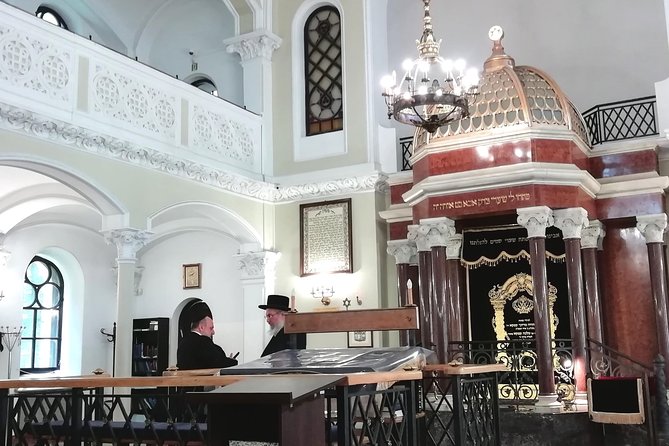
The Nożyk Synagogue is the only synagogue in Warsaw that survived the Second World War and continues to operate. The stop lasts about 15 minutes, and admission costs €5 per person.
This is a brief visit, not a full religious or architectural tour. Its value comes from its survival. In a city where so much of Jewish Warsaw was destroyed, a working synagogue offers a direct link to the community that existed before the war and continues today.
Check the day and time carefully. The synagogue is not visited on Friday afternoons from 1 p.m., Saturdays, or Jewish holidays. On those departures, the tour continues without this stop, so you should not book expecting entry every day.
Próżna and Waliców, seeing what remains
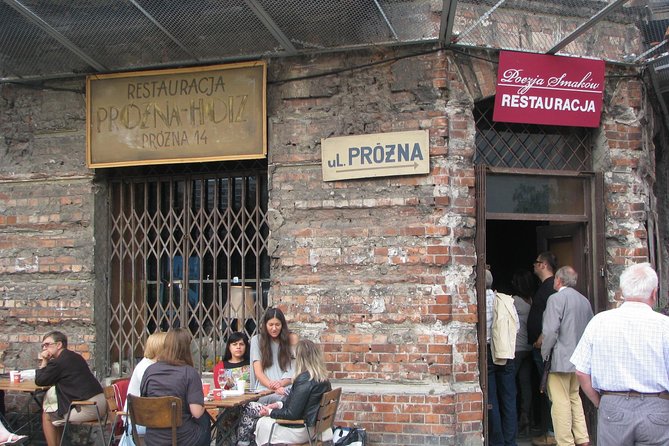
Próżna is one of the last surviving streets connected with the ghetto. You spend about 20 minutes here, looking at the remaining urban fabric and learning how the district fit into the larger wartime story.
The street is important partly because it makes absence visible. You see a small surviving piece of the prewar city, while the surrounding Warsaw gives you a sense of how much has changed. I like this early stop because it prepares you for the rest of the route: some places retain walls, while others survive only through photographs, maps, and memorials.
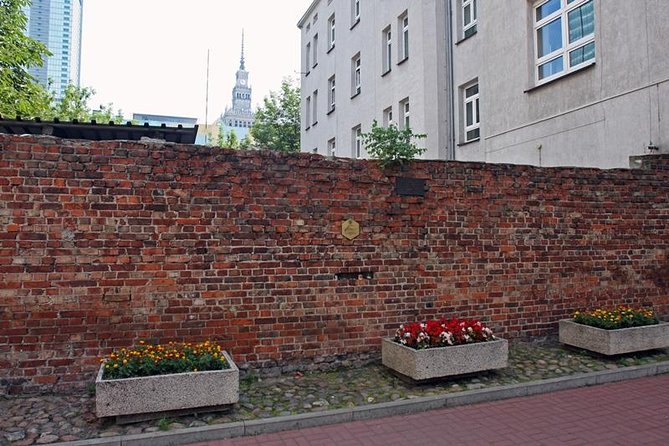
At Waliców, the guide points out fragments of the ghetto wall. The stop is shorter, about 15 minutes, but it carries considerable weight. A piece of masonry can seem modest until you understand that it once helped confine a huge population.
This is where the guide’s visual material earns its keep. The old images help you picture the wall in its original setting rather than treating it as an isolated relic. The tour also explains how the ghetto began, what ordinary life was like under Nazi rule, and how the 1943 uprising developed.
Chłodna Street and the vanished bridge
Chłodna Street marks the former location of the bridge that connected the Small Ghetto with the Big Ghetto. The bridge became one of the best-known images of the Warsaw Ghetto because it physically separated people within the enclosed district.
The tour spends about 20 minutes here. You learn why the bridge mattered and how its location fits into the wider geography of the ghetto. Since the bridge itself is gone, the guide’s explanation and photographs are essential.
This stop also brings in the story of Władysław Szpilman, the central figure in Roman Polański’s film The Pianist. That connection gives the location a personal dimension, but the tour does not treat the film as the whole story. It uses the place to explain the real setting and the experiences of people who lived through the occupation.
You should expect traffic, modern buildings, and an ordinary city street rather than a preserved memorial complex. That contrast can be jarring, but it is also part of the lesson. The past is underneath the current city, not displayed in a neat historical enclosure.
Same base, a different kind of day:
- Warsaw: Chopin Concert in the Old Town
★ 4.8 · 2,287 reviews - Warsaw: Traditional Galar Cruise on The Vistula River
★ 4.6 · 1,640 reviews - Warsaw: Old Town Highlights Walking Tour in English
★ 4.7 · 1,516 reviews - Warsaw Concert: Chopin – Painted by Candlelights with Wine
★ 4.8 · 1,442 reviews
Umschlagplatz and the machinery of deportation
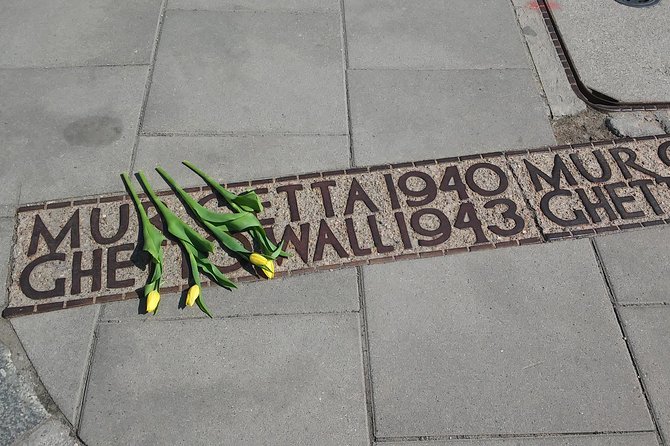
At Umschlagplatz, the guide explains the place where Jews were assembled before deportation. The stop lasts about 15 minutes and focuses on how the Nazi plan of mass murder was put into practice.
This is one of the most sobering points on the route. The location was not simply a railway stop. It was part of an organized process of confinement, deception, forced movement, and deportation. The guide places that process within the larger history of the Final Solution.
I find this stop valuable because it moves the story beyond general wartime statistics. You are shown a real location and asked to consider how policies became physical actions: people were driven together, held there, and sent away. The explanation also helps you understand why the ghetto’s residents faced impossible choices long before the uprising.
POLIN Museum and Willy Brandt’s kneeling
The tour reaches the POLIN Museum area and explains the transition from ghetto life to armed resistance. You learn why people took up weapons, who offered help, and how the 1943 uprising fits into the story of the ghetto.
The tour does not include the main POLIN Museum exhibition. That matters when you compare this experience with a museum visit. The guide gives you a focused outdoor introduction, while the museum provides a much longer presentation of Jewish life in Poland across many centuries.
You also stop at the monument connected with Willy Brandt’s famous kneeling gesture. The site is part of the Ghetto Heroes Memorial area, and the guide explains its symbolism as well as the broader meaning of the monument.
If you have time, the main POLIN exhibition is a useful addition. The suggested visit takes about 2.5 hours with an audio guide. Opening hours provided for the museum are Monday and Thursday through Friday, 10 a.m. to 6 p.m.; Wednesday, Saturday, and Sunday, 10 a.m. to 8 p.m.; Tuesday closed. Check the museum’s current schedule before planning your day.
Miła 18 and the final phase of resistance
At Miła 18, you see the former location of the bunker connected with the Warsaw Ghetto uprising. The stop takes about 10 minutes, but the site carries major historical importance.
The guide explains the events around the bunker and the people who fought there. This is not a grand ruin. It is a memorial location in a rebuilt part of Warsaw, so you need the spoken account to understand what happened on the ground.
The route gives you a broad account of the uprising, though the time at each location is limited. If your main interest is military strategy, resistance networks, or the day-by-day fighting in 1943, you may want to pair the tour with a book, the POLIN exhibition, or a longer specialist visit.
Pawiak Prison and the wider occupation
The final listed stop is the Pawiak Prison Museum area, where you learn about the prison and its place in the occupation of Warsaw. The stop lasts about 10 minutes.
Pawiak broadens the tour beyond the ghetto itself. The story here concerns imprisonment and Nazi repression in occupied Warsaw, showing that the ghetto was part of a larger system of terror. It helps connect Jewish history with the wider wartime experience of the city.
The listed endpoint is near the POLIN Museum at Mordechaja Anielewicza 6. The exact order can change according to the location of your hotel, so the experience may not unfold in precisely the sequence described above.
Walking, public transport, and physical demands
Plan on about 2.5 hours of walking and 30 minutes using public transport. You may ride a bus, tram, or underground train as the route moves between areas.
Comfortable shoes are essential. The tour covers many sites, and the walking is not a minor part of the experience. It is also worth checking the weather forecast, since much of the learning takes place outdoors.
The pace includes short stops of 10 to 20 minutes, with the guide speaking at each location and answering questions. Some sessions may run longer than the stated three hours if the group has many questions or the route takes extra time, so I would avoid scheduling a tight connection afterward.
The tour is not suitable for children. That is both a practical and emotional warning. The subject includes persecution, deportation, starvation, mass murder, and armed resistance, and the presentation is intended for people ready to engage with that material.
What the guide adds to the experience
A strong guide makes a major difference here because so little of the physical ghetto survives. Marzena is repeatedly singled out in the supplied material for her clear storytelling, careful answers, and command of Warsaw’s wartime history. Olivia is also named as a guide who uses photographs and commentary especially well.
The most useful guide practice is carrying a notebook of large photographs and maps. You can compare a present-day street with its wartime appearance, see the scale of the Small and Big Ghettos, and understand why a particular corner mattered.
The best part of this approach is its restraint. The subject is painful, but the guide’s job is not to turn it into spectacle. You get a timeline, location-based explanation, and personal stories. The tone can include warmth and even occasional humor in the right place, but the main focus remains respectful and serious.
English is the listed language. The guides are praised for clear English and for taking time with questions, which matters when the subject includes unfamiliar names, changing borders, and several stages of Nazi policy.
Is $102.78 a fair price?
At $102.78 per person, this is not a low-cost walk. The value depends on what you want from Warsaw.
The price includes hotel pickup in the city center and a licensed city tour. It is also a private activity, so only your group participates. That can make the cost reasonable for two or more people who want to ask questions and set the pace within the three-hour format.
You still pay €5 per person to enter the Nożyk Synagogue. Public transport is part of the route, but the supplied details do not list a separate transport fee, so confirm the current arrangements when booking.
I would not choose this tour simply to check off monuments. I would choose it because the former ghetto is difficult to understand alone. The guide helps you locate vanished streets, read small remains, and connect the geography to the historical sequence. For a first visit to Warsaw, that service has real value.
Free cancellation is available up to 24 hours before the start time. Changes or cancellations made later are not refunded.
Who should book this tour?
I recommend it to adults interested in Jewish history, the Second World War, Warsaw’s destruction, and the 1943 uprising. It is also a good fit if you prefer learning through real places rather than spending the whole day inside a museum.
It suits you especially well if you want a private setting, hotel pickup, and a guide who can answer detailed questions. The photographs and maps are a major help if you have trouble imagining a city that was largely erased and rebuilt.
I would look elsewhere if you want a light sightseeing walk, a child-friendly activity, or a full visit to the POLIN Museum. I would also reconsider if you have limited mobility or dislike long walks combined with public transport, since the route spends most of its time on foot.
Should you book it?
Book this tour if you want a serious, place-based introduction to Warsaw’s former ghetto. The route covers the essential sites, from the surviving Nożyk Synagogue and wall fragments to Umschlagplatz, Miła 18, and Pawiak Prison.
Its greatest strength is the guide’s ability to make a largely vanished district understandable through maps, photographs, and carefully told stories. Its main limits are the heavy subject, the walking, the extra synagogue fee, and the fact that the POLIN Museum exhibition is not included.
For many adults visiting Warsaw, I would make room for it early in the trip. You can then return to the POLIN Museum with a clearer sense of the streets and events that its galleries explain.
FAQ
How long does the Warsaw Ghetto tour last?
The tour lasts approximately three hours.
How much does the tour cost?
The listed price is $102.78 per person.
Is hotel pickup available?
Yes. Pickup is available from the reception of a centrally located hotel. If you stay in an apartment, you should wait outside.
How do I recognize the guide?
The guide picks you up with a sign reading PolinTours.
Where does the tour start?
The listed starting point is Próżna 11, 00-107 Warszawa, Poland. The order may change depending on your hotel location.
Where does the tour end?
The listed endpoint is Mordechaja Anielewicza 6, 00-157 Warszawa, near the POLIN Museum.
Is the tour entirely on foot?
No. About 2.5 hours are spent walking, and about 30 minutes use public transport such as a bus, tram, or underground train.
Is admission to the Nożyk Synagogue included?
No. Admission costs €5 per person.
Can I visit the Nożyk Synagogue on every tour?
No. The synagogue is not visited on Friday afternoons from 1 p.m., Saturdays, or Jewish holidays.
Is entry to the POLIN Museum included?
No. The tour does not visit the museum’s main exhibition. You can plan a separate visit, which takes about 2.5 hours with an audio guide.
Just added in Warsaw
- A unique walking tour of Jewish Warsaw — past and present★ 5.0 · 8 reviews
- Tour from Warsaw: Wolf’s Lair, Hitler’s HQ Zones I and II★ 5.0 · 32 reviews
- Wolf’s Lair Private Day Trip from Warsaw★ 5.0 · 50 reviews
- Wolf’s Lair & Treblinka Tour in 1 day from Warsaw★ 5.0 · 37 reviews
- Warsaw: The Original Pub Crawl★ 4.5 · 97 reviews
- Warsaw: Gun Shooting Experience with Transfers★ 4.8 · 97 reviews
- Jewish Warsaw Walking Tour★ 5.0 · 95 reviews
- CHOPIN – Painted by Candlelights with Wine: Warsaw Concert★ 5.0 · 117 reviews
Jewish Quarter & Ghetto Tours, compared.

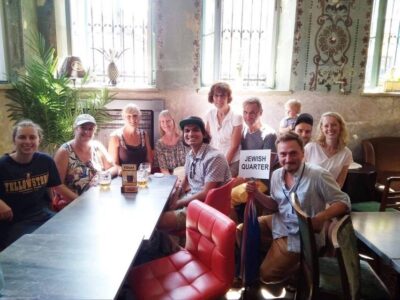
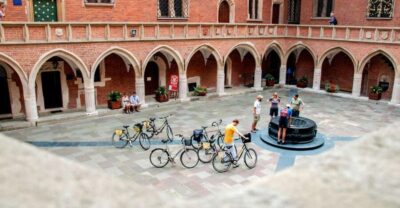
Bike Tour of Old Town, Jewish Quarter and the Ghetto
Read the review →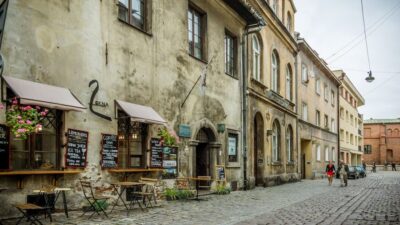
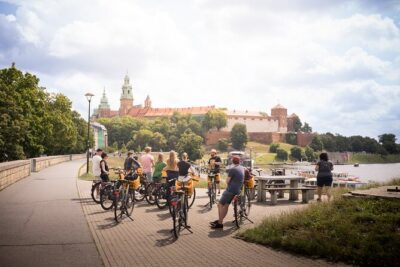
Full Bike Tour – the Old Town, Jewish Qtr & the Ghetto NEW BIKES
Read the review →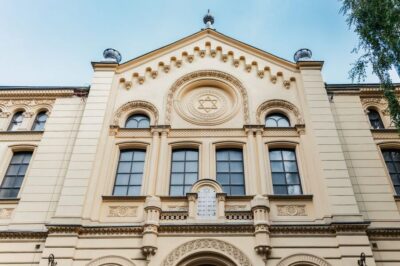
Warsaw Ghetto Private Walking Tour with Hotel Pickup
Read the review →
Bike Tour of the Old Town, Kazimierz, and the Ghetto
Read the review →
Browse the lists this tour appears in