
Reviewed · JEWISH QUARTER & GHETTO TOURS
Cracow – Guided Tour of the Jewish Ghetto
Krakow’s former Jewish Ghetto is not a place for casual sightseeing. Its streets, apartment buildings, square, and surviving wall pieces point to the forced removal and deportation of Jewish residents during World War II. This one-hour walk gives you a direct way to understand that painful chapter without spending a full day at museums.
I like the small price and focused route, especially if you are already visiting the Schindler Factory Museum. I also like the chance to see Under the Eagle pharmacy, a real place of aid and survival rather than only hearing about wartime events in a museum room. The main drawback is time: one hour can feel rushed, and the quality of the experience depends heavily on how much your guide explains.
Key points to know before booking
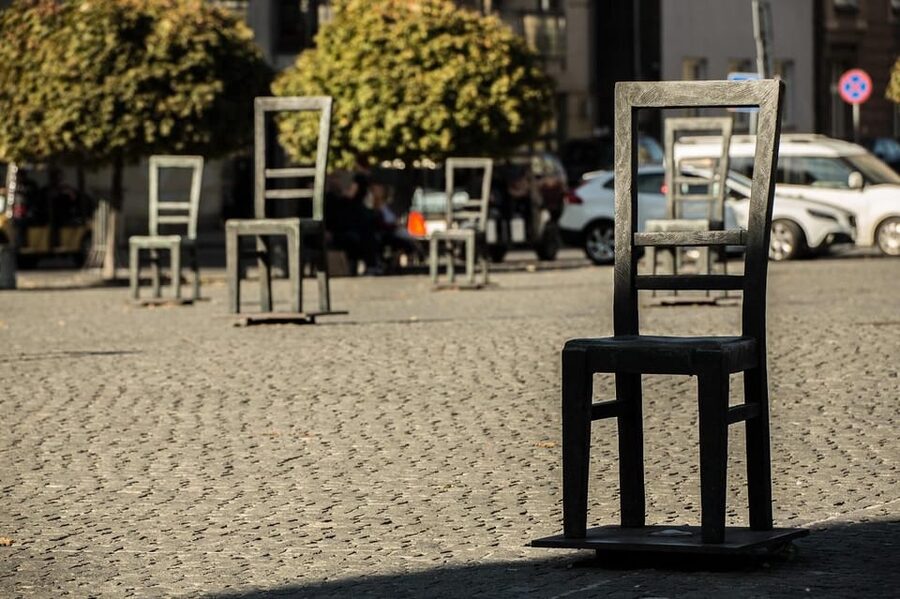
- Ghetto Heroes’ Square: See the place where Krakow’s Jewish residents were identified and sent away to concentration camps.
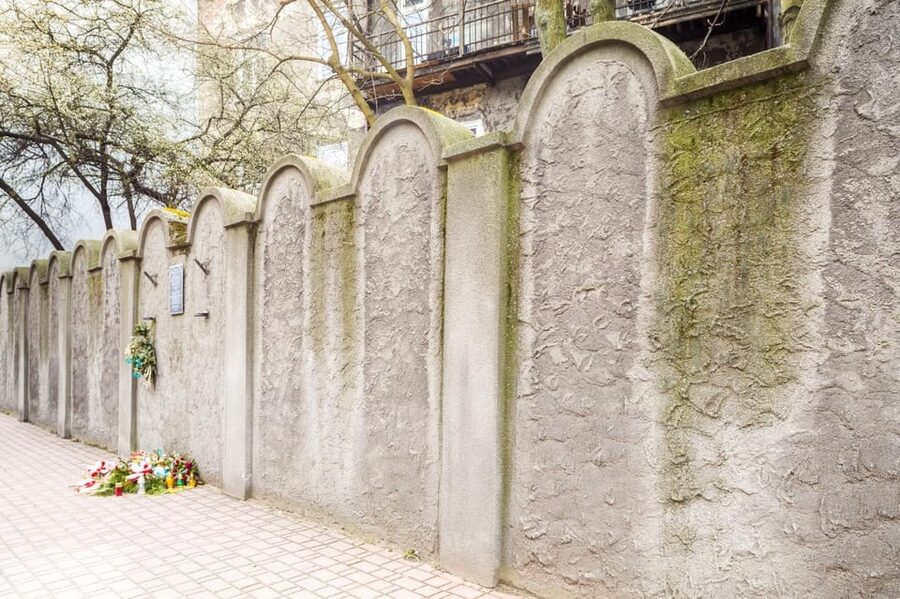
- Original ghetto wall: Visit a remaining fragment of the wall that enclosed the Jewish Ghetto.
- Podgórze buildings: Walk past homes where thousands of displaced Jews lived in cramped conditions.
- Under the Eagle pharmacy: Finish at the famous pharmacy, linked with help and survival during the war.
- One-hour format: This is a compact introduction, not a full study of Krakow’s Jewish past.
- Five guide languages: Choose from English, German, French, Spanish, or Italian when checking availability.
Why this one-hour walk matters
The former Jewish Ghetto lies in Krakow’s Podgórze district, across the Vistula River from the old city center. This tour takes you through an area where wartime history remains tied to ordinary streets and buildings.
That is the strength of the experience. You are not only looking at a display case or reading a plaque. You are walking past the places where thousands of displaced Jewish residents were forced to live. The setting makes the story physical and immediate.
I find this kind of tour most useful early in a Krakow visit. It gives you a framework for understanding the district before you explore the Schindler Factory Museum or other sites connected with the city’s wartime past. The guide can point out how the streets, square, wall, and pharmacy fit together.
The subject is serious, and the tone should be respectful. This is not a light city walk with a few historical facts added along the way. You will hear about identification, deportation, cramped living conditions, and the destruction caused by war. Allow yourself time afterward if you need a quiet break.
Other Jewish-heritage walks around Kraków:
- Krakow: Schindler’s Factory & Ghetto Guided Tour
★ 4.7 · 1,694 reviews - Krakow: Jewish Quarter and Former Ghetto Tour
★ 4.9 · 1,441 reviews - Krakow: Bike Tour of Old Town, Jewish Quarter and the Ghetto
★ 4.9 · 1,155 reviews
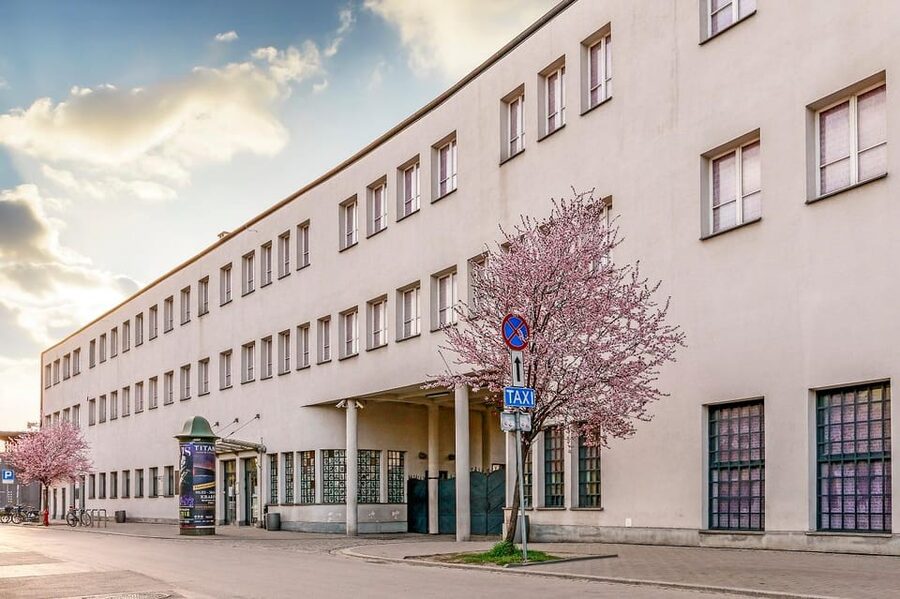
Meeting your guide at Schindler Factory Museum
The meeting point is the entrance to the Schindler Factory Museum. Look for a guide holding an excursions.city sign.
This location is practical because the museum is already one of Krakow’s main places for learning about the city during World War II. You can visit the museum before or after the walk, but you should check your timing carefully. The tour lasts only one hour, and the museum itself needs more time than a quick stop.
The supplied information does not give a guide’s name or a fixed group size. That means you should focus on the language and starting time offered for your date. Live guiding is available in English, German, French, Spanish, and Italian.
The meeting point also makes this tour easy to pair with other Podgórze sights. You do not need to arrange transport as part of the experience. The walk begins at the museum entrance and continues through the historic district.
Ghetto Heroes’ Square and the meaning of the empty chairs
One of the main stops is Plac Bohaterów Getta, known in English as Ghetto Heroes’ Square. This is the emotional center of the walk.
Jewish residents of Krakow were identified here before being deported to concentration camps. The square’s place in the tour helps you understand that deportation was not an abstract process happening somewhere far away. People were gathered, sorted, and removed from the city through public spaces like this one.
The square is also known for its chairs, which give the site a stark visual character. The supplied tour information does not promise a detailed explanation of every memorial feature, so your guide’s commentary will matter. If the guide gives only a short explanation, you may leave with less context than you hoped for.
This is where the tour can be especially powerful when the guide speaks with care. A strong guide does more than name the square. You want clear background about its role in the ghetto, the people who passed through it, and the link between the square and the deportations.
Several recent ratings praised the guide’s explanation and compassion. One English language booking described the tour as highly informative, while an Italian language booking praised the guide’s command of Italian. At the same time, another Italian language booking found the commentary too brief. That contrast is worth keeping in mind. The place is important, but the guide’s depth will shape what you take away.
The surviving ghetto wall
The tour takes you to a remaining piece of the original Jewish Ghetto wall. This is one of the clearest physical reminders of the forced separation imposed on Jewish residents.
A wall fragment may seem modest compared with a large museum, but its value comes from what it represents. It marked the boundary of a confined district where people were displaced and forced into overcrowded conditions. You are looking at part of the structure that helped define daily life inside the ghetto.
The wall is also described as a place of remembrance and pilgrimage for Jewish visitors from around the world. That gives the stop a wider meaning. It is not simply an old building fragment preserved for tourists. It remains connected with memory, mourning, and the need to prevent such persecution from happening again.
Do not expect a long visit at the wall. The tour is moving through several locations within one hour. You may have only a short period to look, listen, and take photographs. I would put your phone away while the guide explains the site, then take a photograph afterward if appropriate.
A few more things to do in Kraków worth a look
- From Krakow: Auschwitz-Birkenau Guided Tour & Hotel Pickup
★ 4.5 · 33,358 reviews - From Krakow: Auschwitz-Birkenau Guided Tour & Hotel Pickup
★ 4.5 · 29,340 reviews - Krakow: Auschwitz Guided Tour with Optional Hotel Pickup
★ 4.5 · 15,280 reviews - Krakow: Auschwitz-Birkenau Guided Tour with Pickup & Lunch
★ 4.5 · 9,800 reviews
Walking past the buildings of the former ghetto
The most unusual part of the experience may be the walk between the named landmarks. You pass buildings where thousands of displaced Jews lived in cramped conditions.
These buildings are important because they make the history less distant. A square or wall can feel like a memorial site. Residential buildings show where people had to carry out ordinary tasks under extraordinary pressure. The tour asks you to picture the district as a place where families and individuals were confined, not as an empty historical backdrop.
The information does not identify specific building addresses or promise entry into the former homes. You should expect to view the buildings from the streets rather than tour private interiors. That is still worthwhile, but it helps to set realistic expectations.
This portion also explains why the tour needs a guide. Without context, you might see a row of old buildings and walk on. With a good explanation, the same streets become part of a larger story about displacement, control, and survival.
Because the walk is short, the guide may not have time to discuss every building in detail. If you want an extended study of wartime Krakow, plan to add the Schindler Factory Museum or another dedicated Jewish history experience. This tour works best as a focused introduction.
Under the Eagle pharmacy, the final stop
The tour concludes at the historic Under the Eagle pharmacy. This is a particularly useful final stop because it shifts the focus from confinement and deportation toward practical acts of help and survival.
The pharmacy is remembered as a symbol of resilience during the war. Ending here gives the walk a human counterpoint. You have seen the places connected with forced living conditions and deportation, then arrive at a site linked with support during a brutal period.
The experience information does not say that the pharmacy entrance or a museum visit is included. Treat this as a stop at the historic pharmacy rather than assume you will receive a full interior tour. If you want to go inside, check opening arrangements separately.
I like the structure of this ending. It gives the route a clear arc: begin with the district, see the square where residents were identified and deported, examine the wall, pass the buildings, and finish at a place associated with survival. In only an hour, that is a sensible sequence.
Still, do not expect the pharmacy stop to replace a full museum visit. The value here comes from the guide connecting the site to the rest of the walk.
How much value do you get for $15?
At $15 per person, this is an inexpensive guided introduction to an important part of Krakow. The price includes a professional live guide, and there is no added charge listed for food or drinks because neither is included.
The value depends less on the number of stops than on the quality of the explanation. You are paying for context at places you could technically visit on your own. If you already know the history well, the walk may feel basic. If you are new to Krakow’s wartime past, the guide can make the district far easier to understand.
I would compare the price with the cost of spending an hour wandering Podgórze without guidance. The landmarks are meaningful, but their significance is not always obvious from the street. For $15, having someone connect the square, wall, buildings, and pharmacy is reasonable.
The short duration keeps the cost low, but it also limits the depth. One recent booking described one hour as far too short to follow an excellent guide through this important area. That is probably the best way to think about the tour: good value for an introduction, but not enough time for a detailed historical examination.
Who should book this experience?
I would suggest this tour to you if you want a short, serious introduction to Krakow’s former Jewish Ghetto. It suits a first visit, a tight schedule, or a day when you are already planning to visit the Schindler Factory Museum.
It is also useful if you prefer learning through places rather than only reading museum displays. The walk puts the history directly in front of you through streets, buildings, the wall, the square, and the pharmacy.
The tour may suit you especially well if you need a particular language. English, German, French, Spanish, and Italian options are advertised, though availability depends on the date and starting time.
I would be more cautious if you want a long, detailed lecture or a broad tour of all Jewish sites in Krakow. One hour cannot cover everything. The mixed feedback about guide detail also means you should not assume every departure will offer the same level of explanation.
The route deals with war, deportation, and persecution. It is not suitable for someone looking for a relaxed sightseeing stroll. The subject deserves attention, patience, and a respectful approach.
Booking details that affect your choice
The experience has free cancellation up to 24 hours before the start time, with a full refund. You can also reserve now and pay later, which helps if your Krakow schedule is still changing.
Check the available starting times before booking. The tour is listed as one hour, and arriving late could mean missing the explanation at the first stop. Meet at the Schindler Factory Museum entrance and look for the excursions.city sign.
Food and drinks are not included. For a one-hour walk, that is not a serious issue, but you may want to eat before or after if you are planning a longer visit in Podgórze.
There is no guide name or group size provided in the available details. I would therefore confirm your selected language and start time at booking, then arrive a little early at the museum entrance.
Should you book this Krakow Jewish Ghetto tour?
Book it if you want a low-cost, one-hour introduction to Podgórze and the former Jewish Ghetto, especially if the route fits around a visit to Schindler Factory Museum. The wall, Ghetto Heroes’ Square, former residential buildings, and Under the Eagle pharmacy give you a meaningful set of places in a short time.
Skip it if you want a long, detailed account with extended time at each stop. The biggest weakness is the limited duration, and the quality of the experience depends on how fully the guide explains the sites.
My call: good value for a focused first look, with the important warning that one hour is only a beginning. Go with realistic expectations, listen closely, and leave time for a museum or further independent exploration if this subject matters to you.
FAQ
Where does the Jewish Ghetto tour meet?
Meet at the entrance to the Schindler Factory Museum. Look for a guide holding an excursions.city sign.
How long does the tour last?
The walking tour lasts one hour.
What languages are available?
Live guiding is available in English, German, French, Spanish, and Italian. Check the available language and starting time when booking.
What places will I see?
The route includes Ghetto Heroes’ Square, a surviving section of the original ghetto wall, buildings where displaced Jewish residents lived, and Under the Eagle pharmacy.
Is a professional guide included?
Yes. A professional live guide is included in the experience.
Is food or drink included?
No. Food and drinks are not included.
How much does the tour cost?
The listed price is $15 per person.
Can I cancel for a refund?
Yes. You can cancel up to 24 hours in advance for a full refund.
Can I reserve now and pay later?
Yes. The reserve now and pay later option lets you hold a place without paying at the time of booking.
Just added in Kraków
- Wawel Castle, Old Town with St. Mary’s Church Guided Tour★ 5.0 · 3 reviews
- Wawel Castle, Old Town with St. Mary’s Church Guided Tour★ 5.0 · 5 reviews
- Wawel Castle, Cathedral, Old Town and St. Mary’s Basilica★ 4.8 · 13 reviews
- Wawel Castle, Cathedral, & Rynek Underground Tour with Lunch★ 4.5 · 10 reviews
- Wawel Castle & Cathedral Skip the Line Small Group Tour★ 5.0 · 3 reviews
- Wawel Castle and Cathedral Guided Tour★ 4.6 · 44 reviews
- Wawel Castle, Cathedral, Rynek Underground Tour with Lunch★ 5.0 · 3 reviews
- Wawel Castle and Cathedral Guided Tour★ 5.0 · 8 reviews
Jewish Quarter & Ghetto Tours, compared.
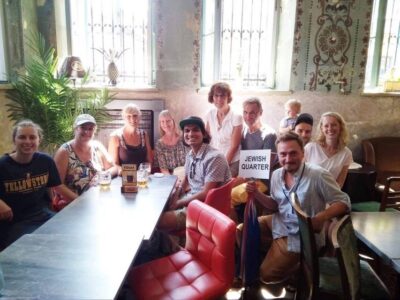
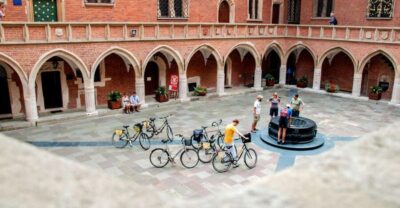
Bike Tour of Old Town, Jewish Quarter and the Ghetto
Read the review →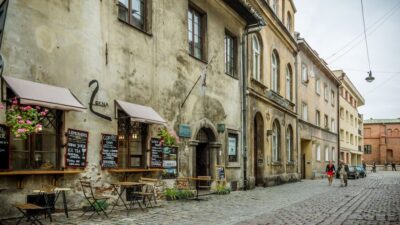
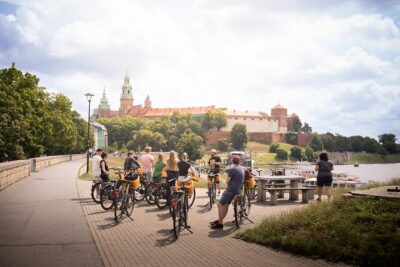
Full Bike Tour – the Old Town, Jewish Qtr & the Ghetto NEW BIKES
Read the review →
Warsaw Ghetto Private Walking Tour with Hotel Pickup
Read the review →
Bike Tour of the Old Town, Kazimierz, and the Ghetto
Read the review →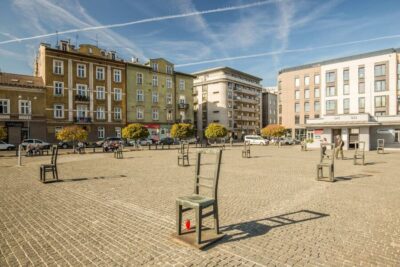
Browse the lists this tour appears in