
Reviewed · JEWISH QUARTER & GHETTO TOURS
Jewish Krakow Walking Tour in English
Krakow’s Jewish Quarter is more than a pretty collection of synagogues and cafés. This walking tour connects prewar Jewish life in Kazimierz with the wartime destruction of Podgórze, helping you read the city’s streets in a way you will miss on your own. I like the strong historical arc and the human storytelling, especially when guides such as Max, Maciek, Lucy, and Pawel bring the subject to life without turning it into a dry lecture.
I also like that the 150-minute route crosses the river into the former ghetto, rather than stopping at Kazimierz’s attractive streets. The mid-tour pause can help, particularly on a cold or rainy day. The main drawbacks are the cobblestones, the possibility of a long walk for young children, and the fact that the tour may not include entry to a working synagogue or the original ghetto wall section some visitors hope to see.
Key points to know before you book
- Seven historic synagogues: Kazimierz’s old Jewish quarter contains seven synagogues that survived World War II and the Holocaust.
- Two districts, one story: The walk links Kazimierz with Podgórze, the former Jewish Ghetto across the river.
- Strong guide-led storytelling: Guides including Max, Maciek, Pawel, Lucy, and Mateusz are praised for clear explanations, humor, and care.
- A thoughtful mid-tour pause: A break for coffee or a drink may come halfway through, useful in poor weather or with children.
- Cobblestones and a distant finish: Wear comfortable shoes, and remember that the tour ends away from the Old Synagogue.
- Good value for history lovers: At $26 per person, the price pays for a focused, live explanation of places that are easy to overlook.
Starting at the Old Synagogue in Kazimierz
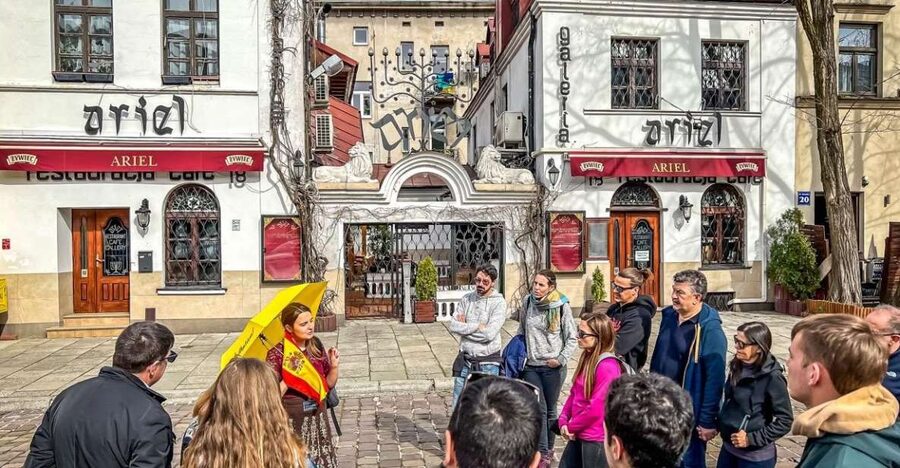
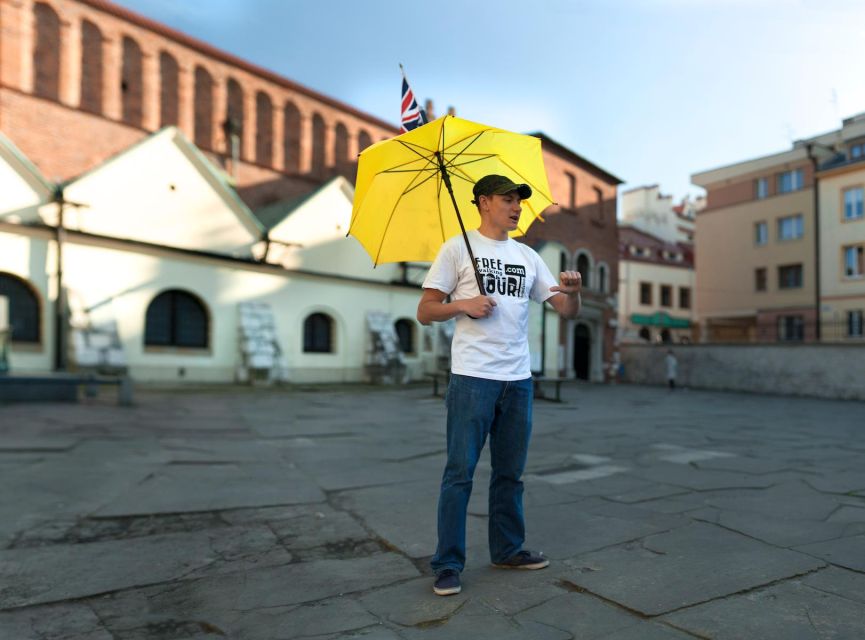
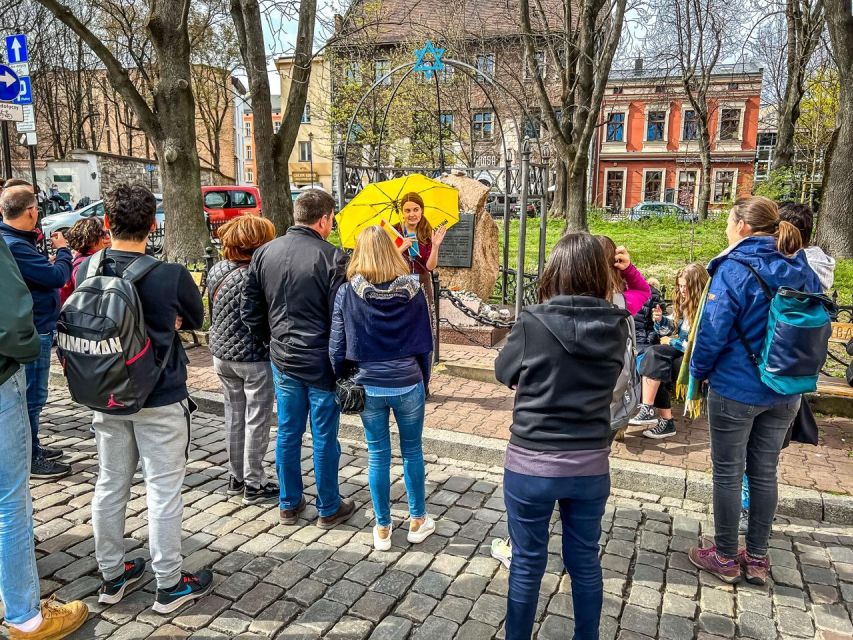
You meet on the stairs in front of the Old Synagogue, on the main street of Krakow’s Jewish Quarter. Arrive 10 minutes early. This is a practical tip, not a fussy one: the meeting point can be harder to spot in rain or among the foot traffic, and one visitor had trouble finding it before being redirected.
The Old Synagogue is a fitting starting place. It puts you in the middle of Kazimierz, once home to a major Jewish community and now one of Krakow’s best-known cultural areas. The tour uses this district to explain how Jewish life developed here, how religion shaped the neighborhood, and how the area changed through the twentieth century.
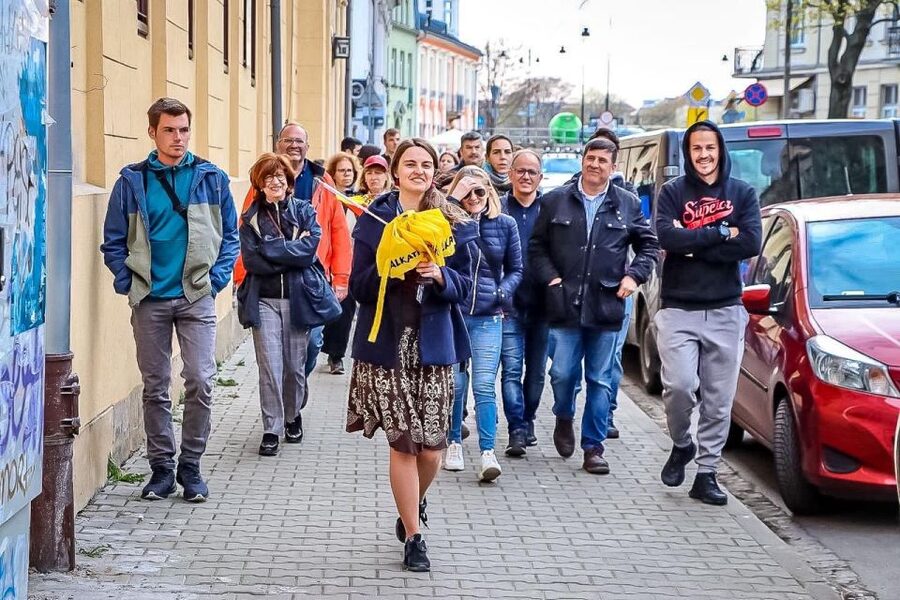
You should expect a walking tour rather than a museum visit. The guide’s explanation is the main attraction. You will hear the historical setting before the war, learn why the synagogues matter, and see how traces of Jewish life remain visible in the streets and buildings.
That approach gives you useful context before the tour moves into its darker chapters. Without it, Kazimierz can seem like a pleasant quarter of old façades, restaurants, and bars. With it, the buildings carry more weight.
More walking tours in Kraków:
- Old Town Krakow & Wawel Castle Walking Tour
★ 5.0 · 1,508 reviews - Creepy Krakow: 2-Hour City Walking Tour
★ 4.7 · 1,131 reviews - Krakow: The Old Town Walking Tour
★ 4.8 · 794 reviews
Kazimierz and its seven surviving synagogues
The heart of the first section is Kazimierz’s Jewish architecture. Seven ancient synagogues survived the destruction of World War II and the Holocaust, an extraordinary survival given what happened to Krakow’s Jewish population.
The walk helps you understand these buildings as more than photographic stops. They point to a community that once had its own religious, social, and cultural life. Your guide explains the local setting and the role of the district, allowing you to connect architecture with the people who used it.
I would not book this tour expecting an extended synagogue interior visit. One piece of practical feedback is that some people wanted to visit a functioning synagogue, even briefly. That is a fair expectation to clarify before booking. The experience focuses on the district and its history, not on a formal service or a guaranteed interior tour.
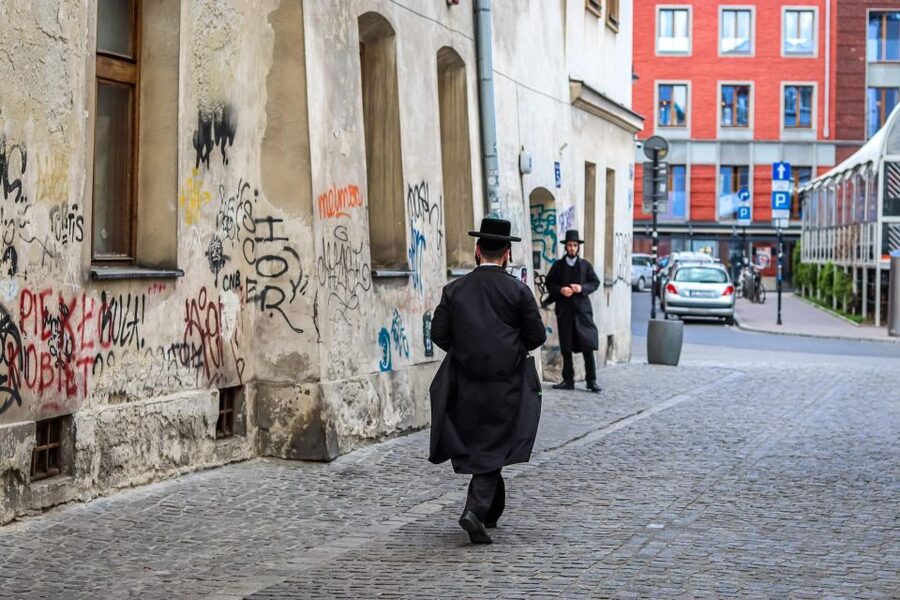
The streets of Kazimierz also provide a useful contrast between past and present. Today, the area is a cultural center with cafés, bars, and a small Jewish community. The tour acknowledges this revival while keeping the focus on the much larger community that existed before the war.
That balance matters. A tour of Jewish Krakow should not reduce the district to Holocaust sites alone. You first need to understand what was lost. The prewar story gives the later sections their human scale.
Moving from community life to wartime destruction
The tour then turns toward World War II and the Holocaust. This part is serious, and rightly so. The guide explains how Jewish life in Krakow was destroyed and identifies places connected with the persecution and murder of the city’s Jews.
This is where an informed guide earns the fee. A plaque or wall can tell you that something happened, but it cannot always explain who lived there, how the neighborhood changed, or why a particular location matters. Guides such as Maciek, Max, Pawel, and Lucy have been praised for combining clear historical detail with a warm, human manner.
The best comments about this tour focus on storytelling. People describe the guides as engaging, sympathetic, friendly, and able to answer questions. That combination is especially useful here. The subject requires care, but a flat recitation of dates would leave you with facts and little understanding.
The pacing also receives strong praise. One guide, Michael, was noted for keeping the route informative without making it too strenuous. Another guide, Tom, helped a visitor prepare for a visit to Auschwitz the following day. That is a sensible way to use the tour: it gives you Krakow’s local wartime setting before you visit a larger memorial site.
You should still set your expectations. This is not an exhaustive Holocaust seminar, and 150 minutes cannot cover every location or personal story. It is a city walk with a carefully built narrative. You will gain a framework, not a complete account of every event.
Crossing the river to Podgórze’s former ghetto
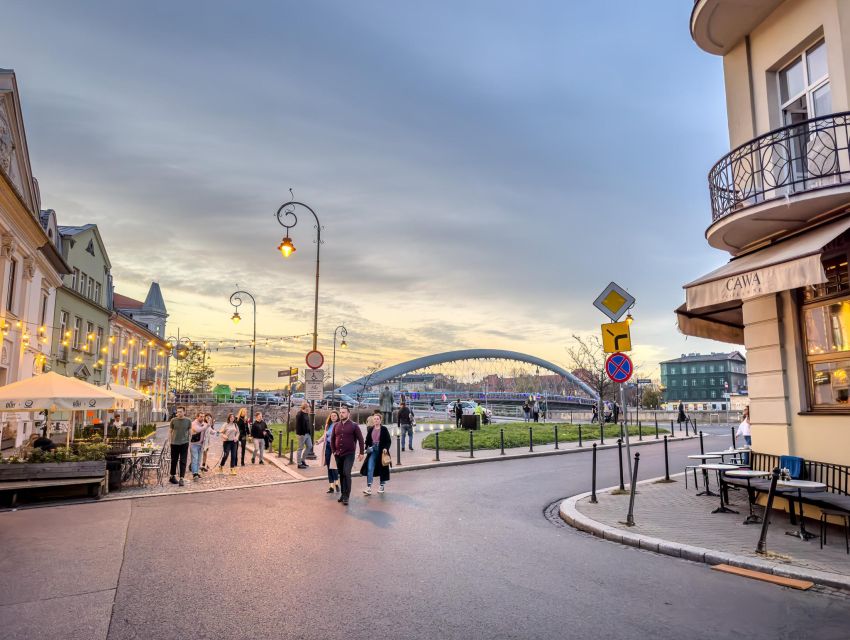
The route’s most important practical feature is that it continues beyond Kazimierz to Podgórze, the district of the former Jewish Ghetto. Crossing the river changes the feel of the experience. You are no longer looking mainly at surviving religious buildings and present-day cultural life. You are tracing the area where wartime decisions reshaped daily life.
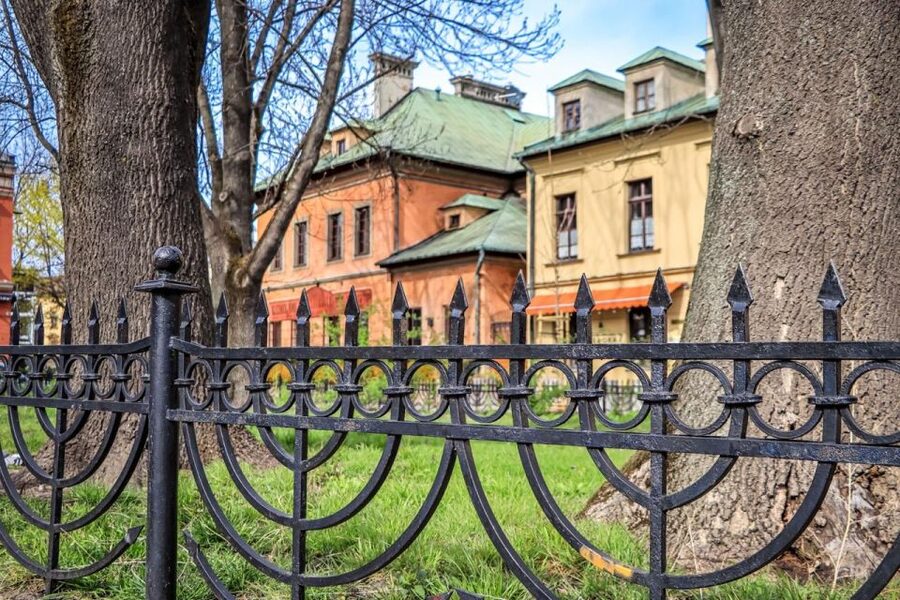
The former ghetto still contains buildings connected with the years from 1941 to 1943. The guide uses the streets and remaining structures to explain the tragedy that took place there. This makes the second half more place-based than the first. Instead of discussing Jewish life in broad terms, you begin to see how ordinary urban spaces were caught up in persecution.
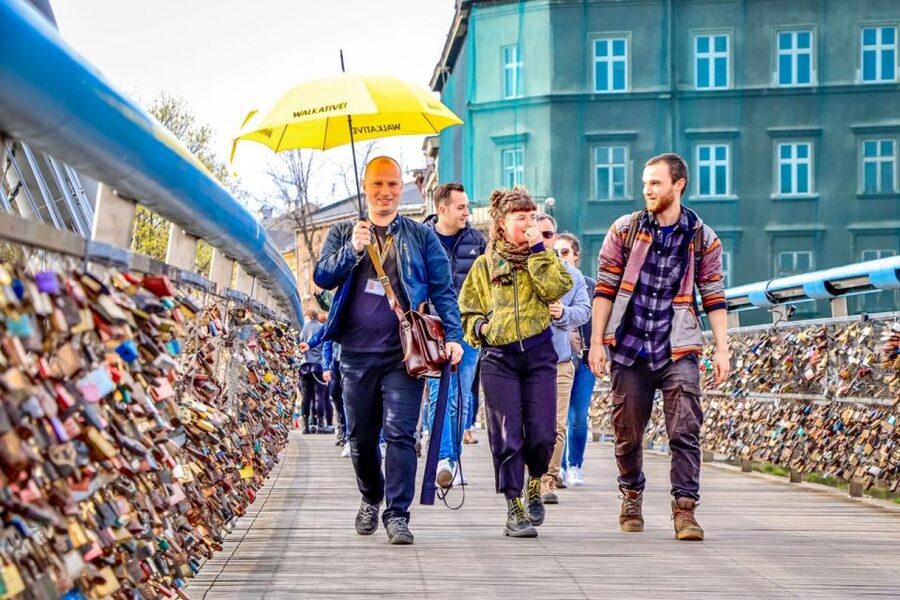
The route is also a reason to wear good shoes. Much of the walk is on cobblestones, and two and a half hours on uneven surfaces can be tiring. One visitor especially praised the tour but advised comfortable footwear. That is good advice for everyone, not just people who usually avoid long walks.
The final location may be a surprise. You begin at the Old Synagogue but finish across the river, away from the starting point. One visitor found the distance back confusing. Plan a few extra minutes to get your bearings after the tour, and do not assume you will be returned to Kazimierz.
The original section of ghetto wall is another point to clarify. The route may not include the remaining wall section that is a short distance farther on. If seeing that specific piece of the wall is important to you, ask the guide or make a separate plan to visit it.
Other Jewish-heritage walks around Kraków:
- Krakow: Schindler’s Factory & Ghetto Guided Tour
★ 4.7 · 1,694 reviews - Krakow: Jewish Quarter and Former Ghetto Tour
★ 4.9 · 1,441 reviews - Krakow: Bike Tour of Old Town, Jewish Quarter and the Ghetto
★ 4.9 · 1,155 reviews - Krakow: Kazimierz Jewish Quarter Walking Tour
★ 4.8 · 571 reviews
Why the halfway break matters
A short pause can make a real difference on this route. The break may be at a café or bar, giving you time to sit down, have coffee, or order a drink before continuing toward the Jewish Quarter and former ghetto.
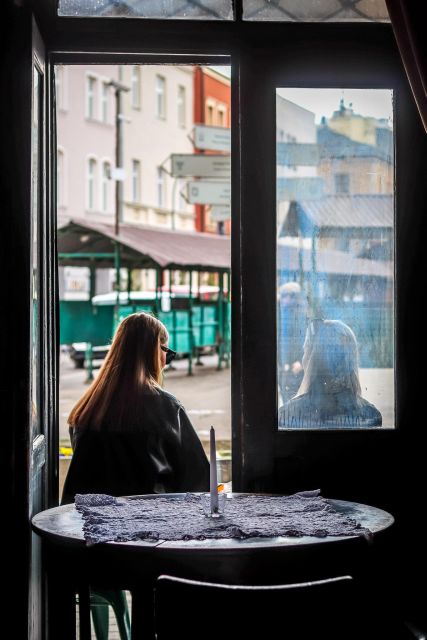
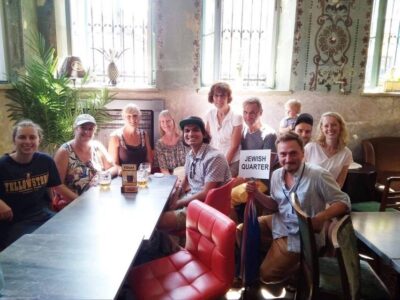
This is not a food tour, and snacks are not included. Still, the pause adds a useful human rhythm to a serious subject. On a cold afternoon, one visitor enjoyed mulled wine at a candlelit table. For a family with a four-year-old, the break offered a chance to rest before deciding whether to continue.
That family ultimately stopped halfway because the child was tired. This is worth noting if you are traveling with young children. The tour is wheelchair accessible, but it remains a 150-minute walking experience, and cobblestones can affect comfort. Ask about the exact route and stopping points if mobility is a concern.
For most adults, the pause helps keep the pace manageable. You can listen, absorb difficult material, and then take a breath before the final section. It also prevents the route from feeling like one long, uninterrupted lecture.
The guides make or break this experience
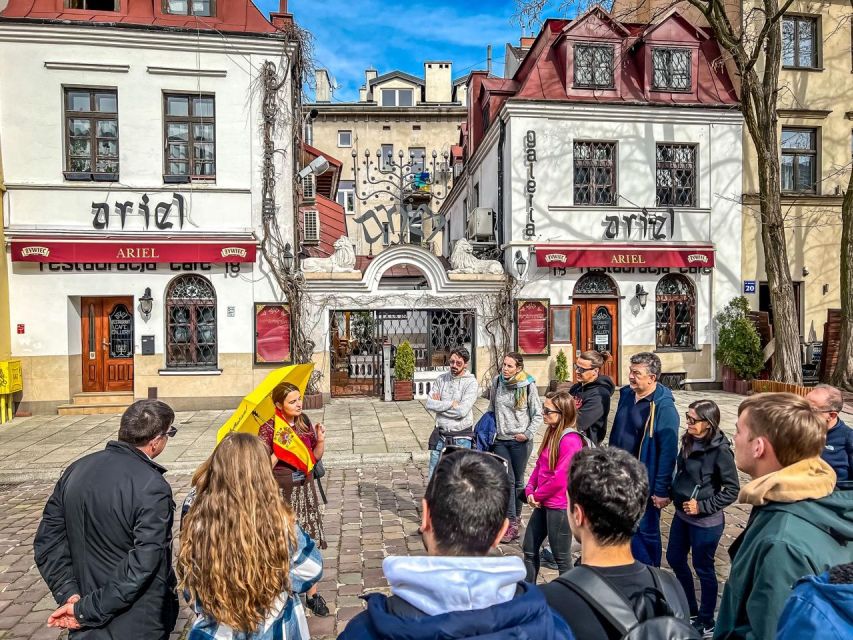
The strongest feature here is the human guide. The operator assigns different English-speaking guides, so the exact style can vary. Names praised for their approach include Max, Maciek, Lucy, Pawel, Mateusz, Tom, Michael, Damian, Natalia, Victoria, Johanna, and Krzysztof.
The repeated strengths are clear explanations, strong command of the subject, humor used at the right moments, and a sense that the guide cares about Krakow. Maciek was especially praised for passion and storytelling. Pawel was described as deeply informed and attentive to the area. Damian received praise for mixing expertise with humor and professionalism.
That does not mean every guide will deliver the same performance. A walking tour depends on the person leading it, group size, weather, and the questions people bring. Still, the consistent pattern is encouraging. You are not simply being led from one photo stop to another.
The tour also uses a pay-as-you-wish format in its general structure. The $26 booking price is described as covering the reservation fee and the guide’s payment, but one visitor was surprised to be asked to pay the guide after already paying through the booking service. Check the payment terms carefully when reserving so you know exactly what is included.
Is $26 a fair price?
At $26 per person, I consider this good value if you want historical context rather than a quick sightseeing loop. You are paying for 150 minutes with a live English-speaking guide, covering two districts and a difficult subject that is not always easy to understand from signs alone.
The value is strongest if you are new to Krakow. Kazimierz has plenty of atmosphere, but you could easily walk through it without grasping the scale of the former Jewish community or the meaning of its synagogues. Podgórze is even more dependent on explanation. The tour shows you where to look and tells you why it matters.
It is less useful if you want museum admission, a guaranteed working synagogue visit, or a highly private experience. The price does not include snacks or hotel pickup and drop-off. The tour is also not a substitute for a full visit to Auschwitz or a dedicated museum program.
The flexible booking terms help. You can reserve now and pay later, and cancellation is available up to 24 hours before the activity for a full refund. Starting times vary, so check availability for your date.
Who should take this walk?
I would recommend it to first-time visitors who want a clear introduction to Jewish Krakow. It also works well before visiting Auschwitz, since it places the Holocaust within Krakow’s streets and neighborhoods rather than treating it as an isolated site outside the city.
History-minded adults, university groups, and visitors who prefer walking to riding in a vehicle should get the most from it. One person specifically preferred this kind of tour to a golf cart outing, finding the walking format more worthwhile for understanding the area.
Families can take it, but consider your child’s stamina. A four-year-old may find 150 minutes, cobblestones, and serious subject matter too much, even with a rest stop.
You should also choose the tour if you want an honest look at both loss and renewal. Kazimierz is not presented only as a memorial, nor only as a modern entertainment district. You see how Jewish culture is being maintained and revived in contemporary Krakow while learning about the community that was destroyed.
FAQ
Where does the Jewish Krakow Walking Tour begin?
The meeting point is on the stairs in front of the Old Synagogue, on the main street in Krakow’s Jewish Quarter. You should arrive 10 minutes before the start time.
How long does the tour last?
The tour lasts 150 minutes, or two and a half hours. Starting times depend on availability for your chosen date.
What language is the tour conducted in?
The tour is conducted in English with a live English-speaking guide.
Does the tour visit Kazimierz and Podgórze?
Yes. The route explores Kazimierz, the historic Jewish district, and continues to Podgórze, the area of the former World War II Jewish Ghetto.
Are hotel pickup and snacks included?
No. Hotel pickup and drop-off are not included, and snacks are not included. A break may be provided during the walk, but you should plan to purchase any coffee, drinks, or food yourself.
Is the tour wheelchair accessible?
The activity is listed as wheelchair accessible. Because the route includes walking across cobblestones and finishes away from the Old Synagogue, ask the operator about the exact route if you need specific accessibility details.
Should you book it?
Book this tour if you want the story behind Krakow’s Jewish Quarter, not just its attractive streets. The combination of Kazimierz’s synagogues, the former ghetto in Podgórze, and a careful English narrative gives you a useful two-and-a-half-hour introduction to Jewish Krakow.
I would skip it only if you dislike long walks, need a guaranteed synagogue interior visit, or want a tour that returns to its starting point. For everyone else, $26 is a sensible price for a serious, well-paced introduction. Wear comfortable shoes, allow time to find the meeting point, and plan your route home from Podgórze.
Just added in Kraków
- From Krakow: Guided Tour of Zalipie★ 4.6 · 30 reviews
- From Krakow: Zalipie Village Day-Tour★ 4.9 · 74 reviews
- Krakow: Zalipie Village Tour★ 4.6 · 8 reviews
- ZALIPIE – painted village, unique PRIVATE tour from Krakow★ 5.0 · 20 reviews
- From Kraków: Slovakia Treetop Walk Bachledka and Zakopane★ 5.0 · 73 reviews
- From Krakow: The Black Madonna of Czestochowa & John Paul II Family Home★ 5.0 · 28 reviews
- Energylandia Theme Park Full Day with optional Krakow Pickup★ 5.0 · 38 reviews
- Krakow City Tour on Scooter and Food Tasting with English Guide★ 5.0 · 84 reviews
Jewish Quarter & Ghetto Tours, compared.

Bike Tour of Old Town, Jewish Quarter and the Ghetto
Read the review →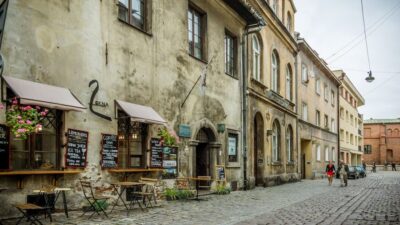
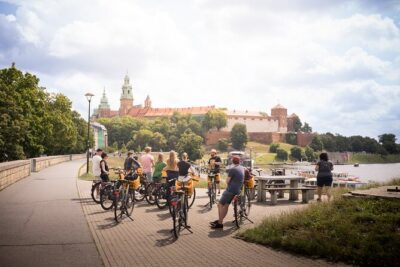
Full Bike Tour – the Old Town, Jewish Qtr & the Ghetto NEW BIKES
Read the review →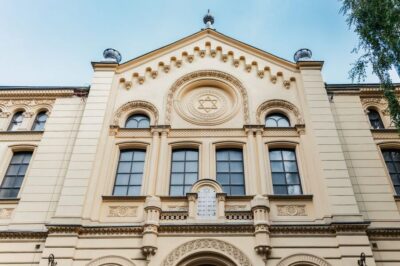
Warsaw Ghetto Private Walking Tour with Hotel Pickup
Read the review →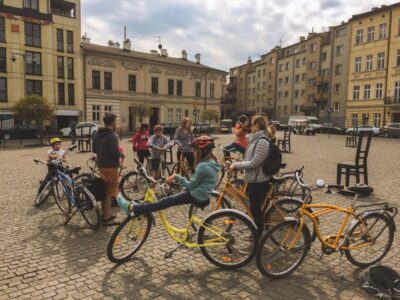
Bike Tour of the Old Town, Kazimierz, and the Ghetto
Read the review →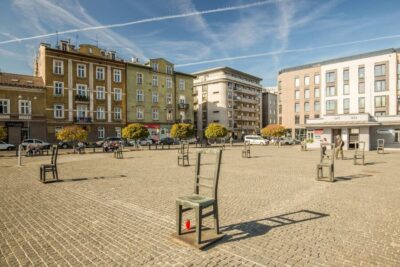
Browse the lists this tour appears in