
Reviewed · JEWISH QUARTER & GHETTO TOURS
Kraków old town and jewish quarter®
Kraków reveals its story in layers, and this tour links them well. In three hours, you move from medieval walls and the Main Market Square to Wawel Hill, then into Kazimierz, where Jewish and Catholic communities lived side by side. The guide’s historical approach is the main reason to book: you are not just ticking off churches and monuments, you are learning how they fit together.
I like the route’s wide reach, especially the move from the royal center to Kazimierz’s Jewish heritage. I also like the Spanish-language explanations, which include maps, photos, and drawings according to the tour’s feedback. The main drawback is time. Three hours is short for this much ground, so some stops receive explanation from the outside rather than a long visit inside.
Key points to know before booking
- A historian leads the walk: Your guide is a graduate in Geography and History, and guide Luis has been praised for clear, lively explanations.
- Two essential Kraków districts: The route covers the Old Town and Kazimierz, giving you both the royal-medieval center and the former Jewish quarter.
- Wawel is part of the route: You climb Wawel Hill to examine the cathedral and the wider castle complex.
- The tour is Spanish-language: All live guiding is offered in Spanish, making this a useful choice for Spanish-speaking visitors.
- Three hours for $16: The price is low for a guided introduction, though the ambitious route means a brisk pace.
- Practical flexibility: You can cancel up to 24 hours ahead for a full refund, reserve now and pay later, and meet the guide by looking for a gray umbrella.
Why this Kraków walk works
I see this as an orientation tour with real historical weight. It gives you a map of Kraków’s central sights while also explaining the political, religious, and social changes behind them. That matters because the city can otherwise feel like a string of handsome buildings with no clear connection.
The route is also useful for a first visit. You see the places most visitors want to find, including St. Mary’s Basilica, the Cloth Hall, Wawel, the old Jewish cemetery, and the synagogues of Kazimierz. At the same time, the guide helps you decide which areas deserve a return visit.
The cost is one of the tour’s strongest points. At $16 per person, it offers an inexpensive way to get a historian’s framework before exploring Kraków on your own. Food and drinks are not included, but this is a walking history tour rather than a tasting outing, so that omission should not affect your decision.
The format suits people who prefer explanation over entertainment alone. The guide is expected to speak Spanish throughout, and the feedback points to an easy-to-follow style with visual aids. If you enjoy dates, connections, and stories about how a city changed, you should get good value here.
More old town tours in Kraków:
- Old Town Krakow & Wawel Castle Walking Tour
★ 5.0 · 1,508 reviews - Krakow: Bike Tour of Old Town, Jewish Quarter and the Ghetto
★ 4.9 · 1,155 reviews - Krakow: The Old Town Walking Tour
★ 4.8 · 794 reviews
From the theater to St. Florian’s Gate
The walk begins in the downtown area with the Juliusz Słowacki Theater, medieval walls, the Barbican, and St. Florian’s Gate. This is a smart opening because it places you at the edge of the old city before moving toward its central square.
The theater gives the route a cultural starting point, while the walls, Barbican, and gate show how Kraków once protected itself. You will not only see old masonry. You will also get a basic sense of how the city was organized, where people entered, and why the historic center retains such a strong medieval character.
This section should be easy to follow, but expect plenty of standing and walking. The tour is wheelchair accessible, though the route includes an ascent toward Wawel Hill later, so you may want to confirm the exact path and access arrangements if you use a wheelchair.
The gray umbrella is the meeting-point marker. That small detail matters in a busy central area, especially if several walking groups gather nearby. A map is also provided to help you reach the starting point.
Main Market Square and Kraków’s monumental center
The Main Market Square is the visual heart of the Old Town, and the tour gives it proper attention. Here you encounter St. Mary’s Basilica, the Sukiennice, the old town hall tower, the Eros Bendato sculpture, the Church of St. Adalbert, and the Adam Mickiewicz Monument.
The value of a guide is clear in a place like this. It is easy to photograph the square and move on. It is harder to understand why so many different buildings and monuments share one space, or how the square reflects Kraków’s religious, civic, commercial, and literary life.
The Cloth Hall, known in Polish as Sukiennice, is one of the square’s major landmarks. The old town hall tower points to the city’s civic past, while the churches and monuments add other layers. Your guide’s job is to connect these pieces instead of treating each one as an isolated photo stop.
The tour also includes Eros Bendato, a modern sculpture that changes the tone of the square. That contrast is useful. Kraków is not only a preserved medieval center. It is also a living city that continues to add new art and public symbols.
Because the square is large and packed with landmarks, this may be one of the busiest sections of the walk. You should expect a fair amount of stopping, looking up, and listening while people move around you. Comfortable shoes are a good idea, and warm clothing matters in winter. One December participant stayed attentive through cold and snow, but the weather clearly made the outing more demanding.
Collegium Maius and Kraków’s university quarter
From the market area, the tour continues into the university neighborhood and visits Collegium Maius. This part adds an academic side to Kraków’s story and introduces major figures connected with the city’s education, including John Paul II and Copernicus.
I like this change of subject. After the royal and commercial center, you see Kraków as a place of study and ideas. The university quarter helps explain why the city has mattered beyond its architecture and political role.
The stop at Collegium Maius is especially useful if you want context rather than a quick exterior view. The guide can connect the buildings to the people who studied there and explain how the university fits into the city’s wider identity.
This is also where the guide’s training becomes important. A graduate in Geography and History can place the university within the development of Kraków and Poland, rather than simply naming famous alumni. The feedback about photos and drawings suggests that the guide uses visual material to make these explanations easier to follow.
Other Jewish-heritage walks around Kraków:
- Krakow: Schindler’s Factory & Ghetto Guided Tour
★ 4.7 · 1,694 reviews - Krakow: Jewish Quarter and Former Ghetto Tour
★ 4.9 · 1,441 reviews - Krakow: Kazimierz Jewish Quarter Walking Tour
★ 4.8 · 571 reviews - Krakow: Kazimierz, Schindler’s Factory & Ghetto Guided Tour
★ 4.8 · 460 reviews
Franciscan Basilica and the Archbishop’s Palace
The route then reaches the Archbishop’s Palace and the Franciscan Basilica. These stops add religious and modern Polish history to the medieval story already established in the Old Town.
The Archbishop’s Palace is connected in the tour’s explanation with John Paul II, while the Franciscan Basilica gives you another important example of Kraków’s church architecture. You are not asked to view the city through only one religious or political lens. Instead, the route shows how churches, universities, royal buildings, and public squares overlap in the city center.
This section may appeal most to visitors who want to understand Poland’s Catholic identity. It should also interest anyone trying to connect Kraków’s local history with wider national events. The guide’s stated focus is on linking what happened in Kraków with the events that affected Poland, which gives the walk a wider frame than a basic city introduction.
The limitation is familiar: a three-hour tour cannot give every interior the time it deserves. If one of these buildings captures your attention, mark it for a separate visit after the walk.
Wawel Hill and the cathedral complex
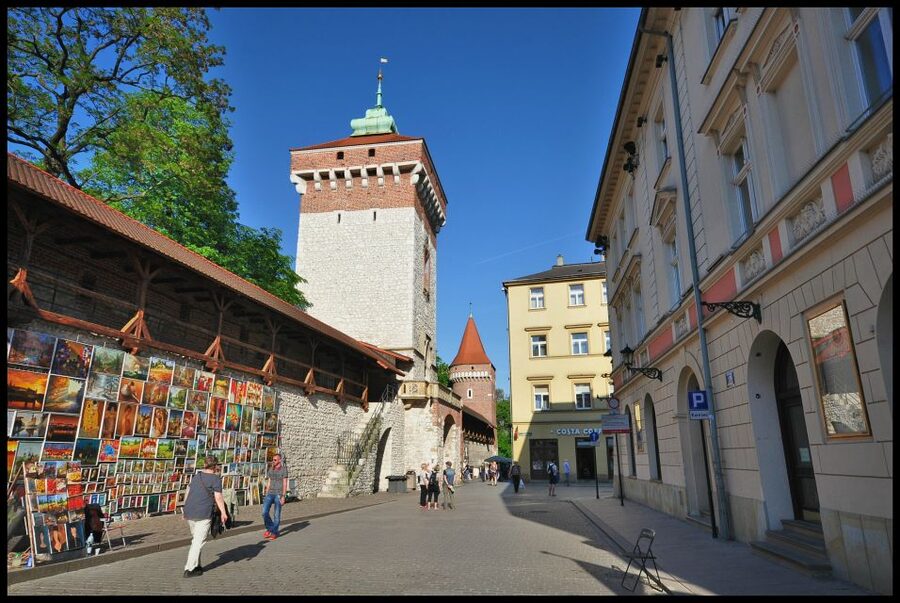
Wawel is the route’s grandest stop. You climb the hill to examine the cathedral and the wider Wawel complex, including its buildings and the dragon sculpture.
Wawel matters because it gathers several strands of Kraków in one place. Royal power, religion, national memory, architecture, and local legend all meet on the hill. The guide’s historical explanation should help you see the complex as more than a scenic overlook above the city.
The dragon sculpture adds a lighter note. It gives the walk a local story after several serious historical stops, and it is a useful landmark for understanding how Kraków balances formal history with popular tradition.
You should expect an uphill section here. The tour is listed as wheelchair accessible, but the exact accessibility of every part of a historic hilltop complex is not described. If mobility is a concern, ask about the route before booking. For everyone else, the climb is part of the experience, but it can make the pace feel brisk, especially after two hours on foot.
Wawel is also the point where I would most want extra time. The complex has enough buildings and history to fill a separate visit. On this tour, you receive an introduction and a way to understand what you are seeing, then you can return later if you want a slower look.
Entering Kazimierz, Kraków’s former Jewish quarter
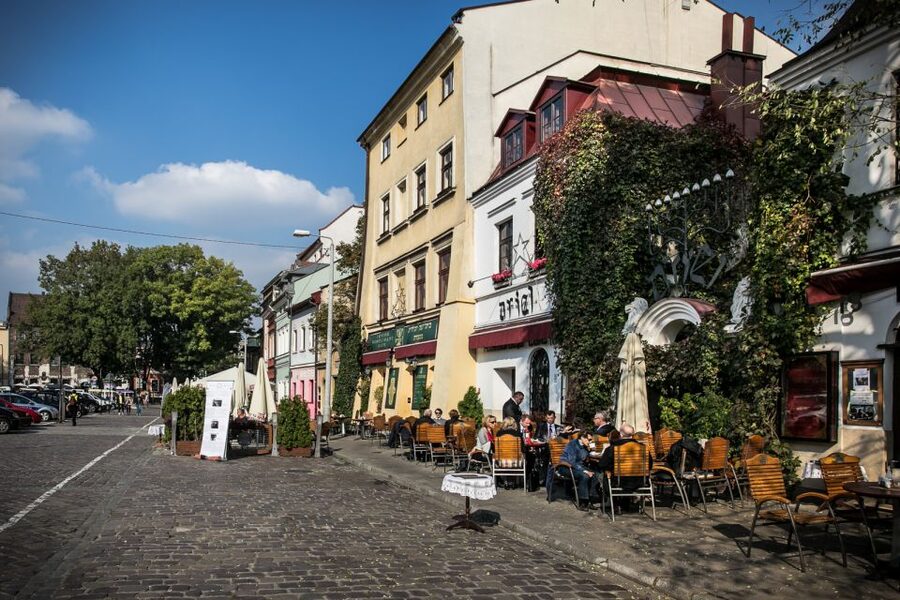
The second major part of the route takes you into Kazimierz, one of Kraków’s most important historic neighborhoods. Here the focus shifts from royal and academic Kraków to the Jewish communities that settled in the city and shaped this district.
This is not a decorative side trip. The tour asks why Jewish communities settled here and how Jews and Catholics lived alongside one another. That subject requires care, and it is one of the strongest reasons to choose a history-led walk instead of relying only on guidebook captions.
You visit the Tempel Synagogue, the Old Synagogue, the old Jewish cemetery, New Square, the medieval square of the Jewish quarter, and the remaining walls of the district. Together, these places show both religious life and everyday urban space.
The Old Synagogue and Tempel Synagogue offer different ways to understand Jewish life in Kazimierz. The cemetery adds another layer, while New Square and the medieval square help you picture the neighborhood as a place where people lived and worked, not simply a museum area.
The tour also covers the Holocaust memorial, the monument to the Righteous Among the Nations, and the monument to Polish victims during the occupation. These are serious stops, and the guide’s role is particularly important here. You should expect the tone to become more solemn as the route examines persecution, wartime suffering, and the complicated relationship between Jewish and Catholic communities.
The wording of the tour points to both the importance and controversy surrounding the Jewish community in Polish history. That is valuable. Kazimierz deserves more than a simplified story of picturesque synagogues and cafés. You need the difficult parts as well, and this walk makes them part of the route.
What the guide adds to the experience
The guide is a graduate in Geography and History, and the strongest praise is directed at the way the history is explained. Luis is singled out for passion, clear delivery, and an entertaining rhythm. One person wanted the route to continue because three hours felt too short, while another praised the steady pace between stops.
That tells you something useful about the experience. This is not designed as a silent walk from one landmark to the next. You should expect regular explanations, connections between sites, and visual support such as photos and drawings.
The Spanish language is central. If you are comfortable learning in Spanish, the tour offers a chance to discuss difficult historical subjects in a natural way. If you do not speak Spanish, this is not the right booking, since the live guide language is Spanish.
The guide also offers advice to help you get more from Kraków. That can be useful at the start of a visit because you are seeing the city’s main districts in one route. You can use the final part of the tour to decide where to return, which museum or church deserves more time, and how to explore Kazimierz independently.
Pace, weather, and practical comfort
Three hours sounds manageable, but the itinerary covers a lot: the old fortifications, Main Market Square, the university quarter, the Archbishop’s Palace, the Franciscan Basilica, Wawel, and much of Kazimierz. The pace will likely feel active rather than leisurely.
The walk works best when you wear comfortable shoes and dress for changing conditions. Kraków’s historic streets and hill sections reward practical clothing, and winter weather can be hard on an outdoor tour. The December experience was completed in snow and cold, but that should encourage you to prepare, not assume the weather will be pleasant.
There is no food or drink included. Plan your own refreshment before or after the walk, especially if you are booking at a time when you normally eat. The route’s focus is historical explanation, so this is not a food tour with built-in stops.
Cancellation is flexible. You can cancel up to 24 hours before the activity for a full refund, and you can reserve now and pay later. That makes the $16 booking easier to fit into a changing Kraków schedule.
Who should book this $16 tour?
I would choose this walk if you are visiting Kraków for the first time and want a clear overview in Spanish. It is also a good match if you care about the connection between buildings and events, rather than collecting monument names.
History students, culturally curious couples, and families with older children may find the format especially useful. The visual explanations can help make complex subjects easier to follow, and the route includes enough variety to keep the walk moving.
I would be more cautious if you want long interior visits, a relaxed photography walk, or a narrow focus on only one district. The route covers two major areas and many landmarks, so it cannot pause for every detail.
The same applies if you dislike serious historical subjects. Kazimierz includes Holocaust memorials, occupation history, and discussion of Jewish and Catholic coexistence. Those topics are important, but they are not light sightseeing.
Should you book it?
Book this tour if you want a low-cost historical orientation led in Spanish by a trained guide. The route covers Kraków’s essential Old Town sights, Wawel, and Kazimierz, while the guide connects local places to the wider history of Poland.
Skip it if you want an unhurried visit inside every major building. Three hours is ambitious, and Wawel and Kazimierz could each fill a longer outing. For most first-time visitors, though, $16 buys a useful framework, a practical introduction to the city, and several ideas for exploring on your own afterward.
FAQ
How long does the Kraków Old Town and Jewish quarter tour last?
The tour lasts three hours.
What language is the tour conducted in?
The live tour guide speaks Spanish.
How much does the tour cost?
The price is $16 per person.
Which parts of Kraków does the route cover?
The route covers Kraków’s historic center, the university neighborhood, Wawel, and the Jewish quarter of Kazimierz.
Is the tour wheelchair accessible?
Yes, the activity is listed as wheelchair accessible.
What should I look for at the meeting point?
The guide will carry a gray umbrella. A map is also provided to help you reach the meeting point.
Just added in Kraków
- Wawel Castle, Old Town with St. Mary’s Church Guided Tour★ 5.0 · 3 reviews
- Wawel Castle, Old Town with St. Mary’s Church Guided Tour★ 5.0 · 5 reviews
- Wawel Castle, Cathedral, Old Town and St. Mary’s Basilica★ 4.8 · 13 reviews
- Wawel Castle, Cathedral, & Rynek Underground Tour with Lunch★ 4.5 · 10 reviews
- Wawel Castle & Cathedral Skip the Line Small Group Tour★ 5.0 · 3 reviews
- Wawel Castle and Cathedral Guided Tour★ 4.6 · 44 reviews
- Wawel Castle, Cathedral, Rynek Underground Tour with Lunch★ 5.0 · 3 reviews
- Wawel Castle and Cathedral Guided Tour★ 5.0 · 8 reviews
Jewish Quarter & Ghetto Tours, compared.
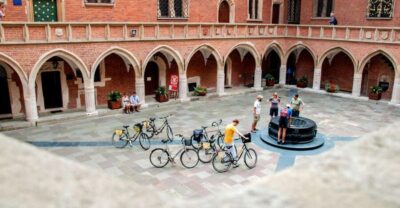
Bike Tour of Old Town, Jewish Quarter and the Ghetto
Read the review →
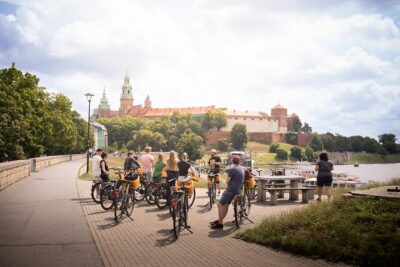
Full Bike Tour – the Old Town, Jewish Qtr & the Ghetto NEW BIKES
Read the review →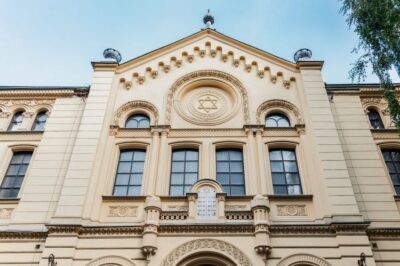
Warsaw Ghetto Private Walking Tour with Hotel Pickup
Read the review →
Bike Tour of the Old Town, Kazimierz, and the Ghetto
Read the review →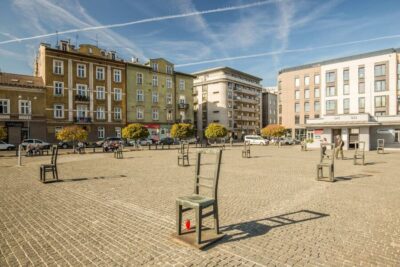
Browse the lists this tour appears in