
Reviewed · JEWISH QUARTER & GHETTO TOURS
Krakow: Old Town – Kazimierz – Ghetto by Electric Golf Cart
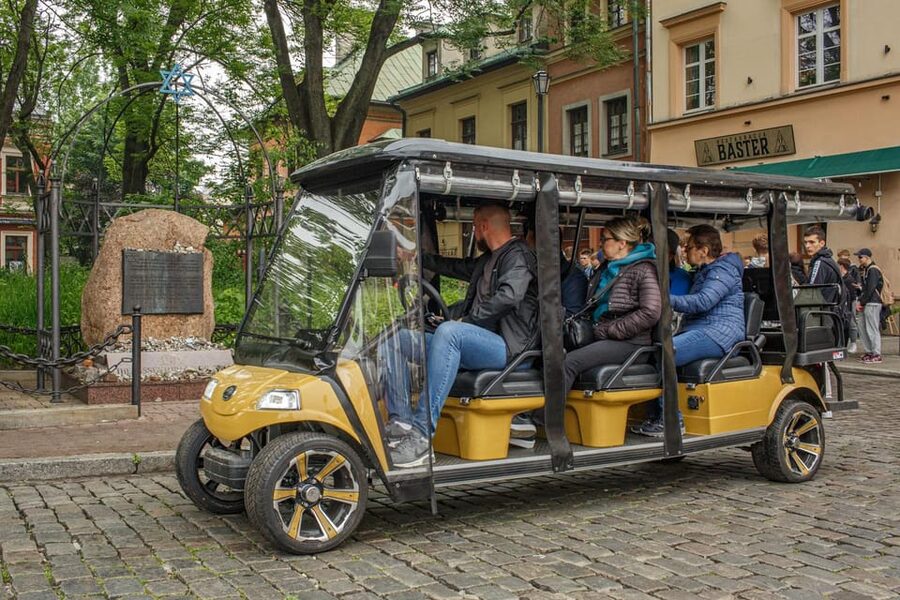
Krakow’s three most important historic districts fit into one rolling tour: the Old Town, Jewish Kazimierz, and Podgórze, the former ghetto area. From your electric golf cart, you get a useful first look at places that would take much longer to connect on foot.
I like the broad route and the live guide paired with an audio system. I also like that the tour goes beyond postcard Krakow to include the ghetto wall, the Pharmacy under the Eagle, and Schindler’s story. The main drawback is practical: the vehicle has strict limits on bags and mobility equipment, and the long list of age restrictions should be checked carefully before booking.
Key points to know before you book
- Three districts in 150 minutes: Cover the Old Town, Kazimierz, and Podgórze without arranging separate visits.
- A history-heavy route: Expect churches, medieval defenses, Jewish synagogues, ghetto landmarks, and World War II sites.
- Live guide plus audio system: Polish and English are available, with commentary from the driver-guide and recorded support.
- Useful first-day overview: This is a good way to mark places you may want to revisit on foot or inside museums.
- Small-vehicle restrictions matter: Bags, bicycles, alcohol, non-folding wheelchairs, and electric wheelchairs are not allowed.
- Strong guide feedback: Radar, Natalie, and another guide praised as exceptionally informed have helped make the tour personal and clear.
This is not a hop-on, hop-off circuit. You stay with the electric golf cart for a continuous 150-minute ride, moving through a carefully packed route with a live driver-guide and audio commentary.
That format is useful in Krakow because the city’s story changes from one district to the next. The Old Town presents royal Krakow, medieval defenses, grand churches, and the Main Square. Kazimierz brings Jewish religious and civic life into view. Across the river, Podgórze shows the darker wartime chapter through the former ghetto and its memorials.
The cart gives you a broad view without requiring a long walk between these areas. I would treat it as an orientation tour rather than a replacement for time on foot. You will see many sites from the vehicle, but the tour does not promise entry into the churches, synagogues, museums, or Pharmacy under the Eagle.
The $41 price is reasonable if you want one organized introduction to all three districts and value the convenience of transport. It is less compelling if you already know Krakow well or prefer to spend your time inside a few museums. The strength here is coverage, not lengthy stops at each landmark.
The meeting point is the Kiss&Ride parking area opposite a Żabka store. Give yourself enough time to identify the exact parking area, since this is a street-level meeting point rather than a famous monument or major museum entrance.
The first section introduces Krakow and follows the Planty, the green belt that traces the line of the former medieval city walls. Planty helps you understand the shape of the Old Town. Instead of seeing Krakow as a collection of unrelated streets, you begin to see the historic center as a compact city once enclosed by defenses.
The route includes the Church of St. Cross and the Słowacki Theater before moving toward the former city walls and the Barbican. The Barbican is one of the tour’s best outdoor reminders of Krakow’s defensive past. Jan Matejko Square, the Church of St. Florian, and Sławkowska Street add more layers to the approach toward the center.
You will also pass the Czartoryski Museum, St. John’s Street and Church, and the Main Square. The museum is an important name on the route, but this tour is not a museum visit. If you want art collections or a closer look at the building interiors, plan a separate stop.
Krakow’s Main Square gives the tour a grand central moment. The route also includes Plac Szczepański, the Palace of Art, St. Anne’s Church, the Town Hall, and the Franciscan Church.
This section works well with an audio guide because the buildings sit close together but represent different sides of the city. You get civic Krakow around the Town Hall, artistic Krakow near the Palace of Art, university-area Krakow around St. Anne’s, and religious Krakow at the churches.
You should expect a moving view rather than a long lecture at every building. With dozens of listed points, the guide has to keep the route moving. That is the tradeoff for seeing so much in two and a half hours.
The tour then reaches Wawel Castle. Wawel is one of Krakow’s essential sights, tied to Poland’s royal and national story. Seeing it from the cart gives you a clear sense of its place above the city, but you should not assume the ride includes castle admission or a full castle visit. If Wawel is your main reason for coming to Krakow, reserve separate time for the grounds and interiors.
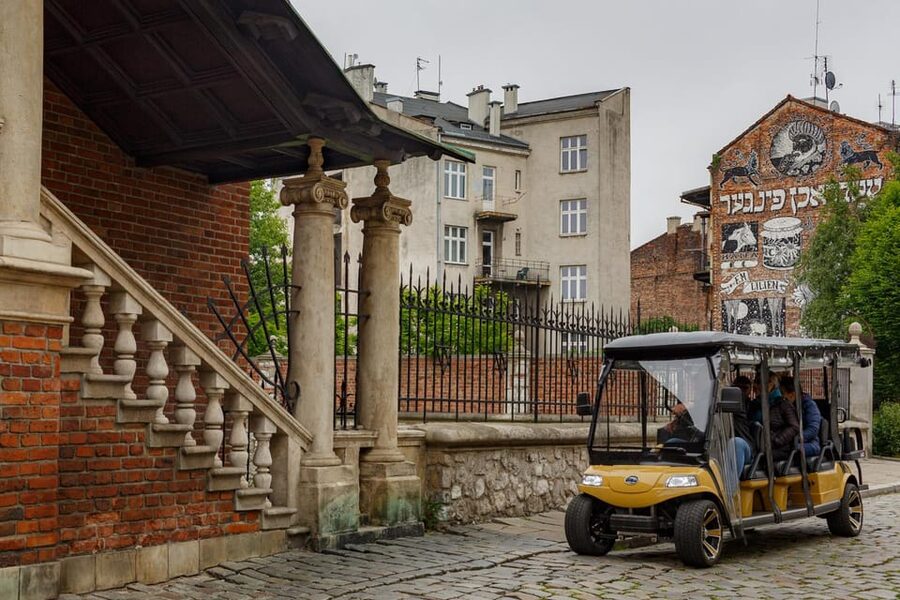
From the royal center, the tour turns toward Kazimierz, Krakow’s historic Jewish district. The guide gives an overview of the area before taking you past the Skałka Church, Church of St. Catherine, and Wolnica Square.
Wolnica Square is especially useful for understanding Kazimierz as more than a collection of synagogues. It was the center of the former Jewish city hall and civic life. The nearby churches also show how Jewish and Christian institutions occupied the same wider district over many centuries.
The route continues to the Church of Corpus Christi and several synagogues: Tempel, Kupa, Isaac, the Old Synagogue, Popper, and Remuh. Ciemna Street and the old Jewish shops add a street-level sense of the district.
The Family House of Helena Rubinstein appears on the route as another personal link to Kazimierz. Remuh Synagogue and the old cemetery bring the tour to one of the district’s most important Jewish landmarks. You will want to remember that the ride provides historical explanation and exterior views. It does not state that synagogue or cemetery admission is included.
This is where the live guide matters most. A list of synagogues can blur together, especially on a short route. A good explanation helps you understand that these are not simply decorative buildings. They point to worship, education, community leadership, commerce, and family life.
The guide names attached to the experience include Radar and Natalie. Radar received particular praise for making a first short visit feel like a useful overview, while Natalie was described as kind, available, and highly capable. A separate comment praised a young male guide for his strong command of the subject. Since guide assignment can vary, you should see those names as examples of the staff rather than a guarantee of who will drive your cart.
The tour’s most serious section covers the former ghetto in Podgórze. Here the mood changes from architectural sightseeing to remembrance and wartime history.
The route includes Ghetto Heroes Square, the Pharmacy under the Eagle, and the former residence of Tadeusz Pankiewicz. It also explains Oskar Schindler’s connection to Krakow, life inside the ghetto, and the remaining section of the ghetto wall.
Ghetto Heroes Square is one of the key places to see in Podgórze. Its memorial chairs give the square a strong visual identity, but the significance lies in what the place represents: the forced displacement and destruction of Krakow’s Jewish population during the German occupation.
The Pharmacy under the Eagle is linked to Tadeusz Pankiewicz, the pharmacist who worked there during the ghetto period. The tour identifies both the site and the person, giving you a reason to return for a closer museum visit if you want more detail.
The ghetto wall is another important stop in the route. A surviving fragment can make the boundaries of the former ghetto easier to understand than a map alone. Still, you should prepare yourself for a short, sober presentation rather than a light sightseeing segment.
The Church of St. Joseph rounds out the Podgórze section. Its inclusion helps keep the district in view as a real neighborhood, not only a memorial zone. The guide’s explanation of the ghetto, Schindler, and daily life should give you a framework for later visits to the Schindler factory museum or other sites, though museum admission is not listed as part of this ride.
The electric vehicle is the main practical reason to choose this experience. Krakow’s Old Town, Kazimierz, and Podgórze are close enough to combine but spread out enough to make a quick walking tour tiring. The cart takes care of the in-between distance.
I also like the open visual quality of a small vehicle. You can look around as you move rather than stare through a bus window. The route gives you repeated glimpses of streets, squares, churches, and walls, which helps you decide where to spend more time later.
There are limits. A cart is not a private car, so the experience is designed around a group. One review described a particularly personal tour because the person happened to be alone, but you should not book expecting that arrangement. The advertised highlight is meeting new people on a group trip.
The vehicle also has strict rules. Do not bring bags, bicycles, alcohol, or drugs. Smoking and alcoholic drinks are not allowed in the vehicle. Non-folding wheelchairs and electric wheelchairs are excluded. Water is the sensible item to bring.
The age information is unusually broad and should be checked before payment. The supplied restrictions list children under several ages, people under 20 or 21, people over 55, 60, 65, 70, 75, 80, and 95, plus other categories. Because those entries overlap and conflict, confirm the exact policy for your booking rather than guessing. The activity is clearly not designed for every age group.
The tour operates in Polish and English. The driver-guide provides live commentary, while the audio guide system adds support during the route.
That combination can be useful on a packed itinerary. A live person can point out the next landmark and respond to the feel of the group, while recorded material helps maintain a steady flow of facts. You should still expect some variation based on the guide assigned that day.
The strongest positive detail is the repeated praise for guide quality. Radar was singled out by name, as was Natalie, and another guide was praised for exceptional command of the subject. That matters here because the route includes many names and institutions: Planty, the Barbican, Wawel, several synagogues, Pankiewicz, Schindler, and the ghetto wall.
If you enjoy asking many questions at each stop, a private walking tour may suit you better. If you want a clear first orientation with live explanations, this setup makes good sense.
I would recommend this ride to a first-time visitor with limited time, especially someone who wants to see more than the Main Square and Wawel. It is also useful for anyone who finds long city walks difficult but still wants a connected view of Krakow’s central districts.
The route suits history-minded visitors. The Jewish quarter and former ghetto are not brief add-ons. They take up a large part of the experience and deserve your attention. You should choose another activity if you want only light sightseeing or a food-focused introduction.
It also works well early in a Krakow stay. The first ride can help you choose where to return, perhaps for a synagogue visit in Kazimierz, a museum visit near Wawel, or a longer look at Podgórze.
I would be cautious if you need a wheelchair-friendly vehicle, plan to carry a day bag, or are traveling with a child or older adult affected by the stated age restrictions. The rules are not minor details here. They may decide if you can take the tour at all.
At $41 per person, the value depends on what you want from the afternoon. You are paying for a 150-minute route, an electric vehicle, a live Polish or English-speaking guide, and audio support. The route covers a lot of ground that would take more effort to connect independently.
The price is fair for a first look at three major districts, especially if transport and historical context are both important to you. It becomes less attractive if you plan to walk the same areas on your own and mainly want entrance time at museums and synagogues.
Free cancellation up to 24 hours before the start gives you some planning room, and the reserve-now, pay-later option can help if your Krakow schedule is still changing. Still, check the starting time and restrictions before committing.
Book it if you want a well-organized overview of Krakow’s Old Town, Kazimierz, and former ghetto in one sitting. The route is unusually broad, and the serious Podgórze section gives the experience more substance than a simple city-center ride.
I would especially choose it near the start of a short Krakow visit. Listen closely to the guide, note the places you want to revisit, and plan separate time for Wawel, the synagogues, the Pharmacy under the Eagle, or the Schindler museum if they catch your interest.
Skip it if you need extensive walking time at each site, museum entry, accessible vehicle equipment, or a tour without strict age and baggage rules. For everyone else, the cart offers a practical way to get Krakow’s basic map in your head before setting out on foot.
FAQ
More golf cart tours in Kraków:
- Krakow: City Sightseeing Tour by Electric Golf Cart
★ 4.5 · 3,264 reviews - Krakow: City Sightseeing Tour Eco Electric Buggy Golf Cart
★ 4.7 · 3,143 reviews - Krakow: Extended City Sightseeing Tour – Eco Buggy Golf Cart
★ 4.7 · 794 reviews
How long does the electric golf cart tour last?
The tour lasts 150 minutes, or two and a half hours.
Which parts of Krakow does the tour visit?
It covers the Old Town, Kazimierz, the historic Jewish district, and Podgórze, the former ghetto area.
What languages are available?
The activity is available in Polish and English.
More old town tours in Kraków:
- Old Town Krakow & Wawel Castle Walking Tour
★ 5.0 · 1,508 reviews - Krakow: Bike Tour of Old Town, Jewish Quarter and the Ghetto
★ 4.9 · 1,155 reviews - Krakow: The Old Town Walking Tour
★ 4.8 · 794 reviews - Krakow: Old Town Guided Segway Tour
★ 4.7 · 756 reviews
Is there a live guide?
Yes. A live Polish or English-speaking driver-guide accompanies the tour, and an audio guide system is also included.
Where is the meeting point?
The meeting point is at the Kiss&Ride parking area opposite the Żabka store.
Is Wawel Castle included?
Wawel Castle is included as a sight on the route. The provided information does not state that entry into the castle is included.
Does the tour enter the synagogues or museums?
The route includes places such as the Czartoryski Museum, synagogues, and the Pharmacy under the Eagle, but the provided information does not say that interior admission is included.
Can I bring a bag?
No. Bags are listed among the items not allowed in the vehicle.
Are wheelchairs allowed?
Non-folding wheelchairs and electric wheelchairs are not allowed.
Can I cancel for a refund?
Yes. You can cancel up to 24 hours in advance for a full refund.
More Jewish-heritage walks around Kraków
- Krakow: Schindler’s Factory & Ghetto Guided Tour
★ 4.7 · 1,694 reviews - Krakow: Jewish Quarter and Former Ghetto Tour
★ 4.9 · 1,441 reviews - Krakow: Kazimierz Jewish Quarter Walking Tour
★ 4.8 · 571 reviews - Krakow: Kazimierz, Schindler’s Factory & Ghetto Guided Tour
★ 4.8 · 460 reviews
Just added in Kraków
- Wawel Castle, Old Town with St. Mary’s Church Guided Tour★ 5.0 · 3 reviews
- Wawel Castle, Old Town with St. Mary’s Church Guided Tour★ 5.0 · 5 reviews
- Wawel Castle, Cathedral, & Rynek Underground Tour with Lunch★ 4.5 · 10 reviews
- Wawel Castle & Cathedral Skip the Line Small Group Tour★ 5.0 · 3 reviews
- Wawel Castle, Cathedral, Old Town and St. Mary’s Basilica★ 4.8 · 13 reviews
- Wawel Castle and Cathedral Guided Tour★ 4.6 · 44 reviews
- Wawel Castle, Cathedral, Rynek Underground Tour with Lunch★ 5.0 · 3 reviews
- Wawel Castle and Cathedral Guided Tour★ 5.0 · 8 reviews
Jewish Quarter & Ghetto Tours, compared.

Bike Tour of Old Town, Jewish Quarter and the Ghetto
Read the review →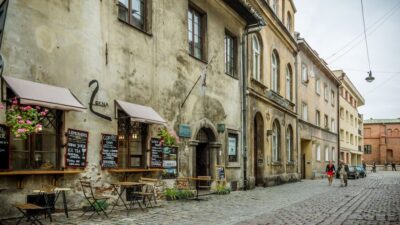
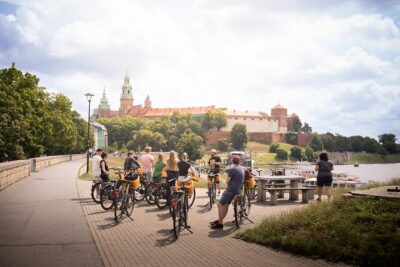
Full Bike Tour – the Old Town, Jewish Qtr & the Ghetto NEW BIKES
Read the review →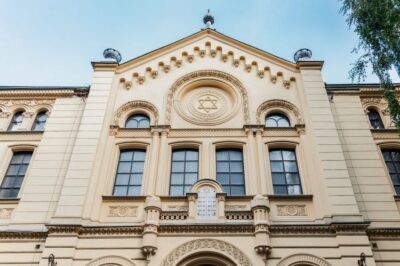
Warsaw Ghetto Private Walking Tour with Hotel Pickup
Read the review →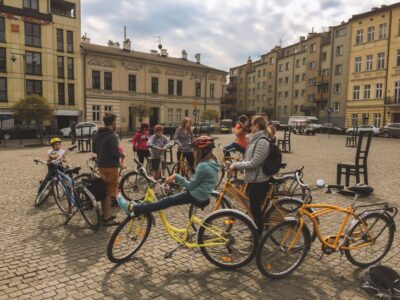
Bike Tour of the Old Town, Kazimierz, and the Ghetto
Read the review →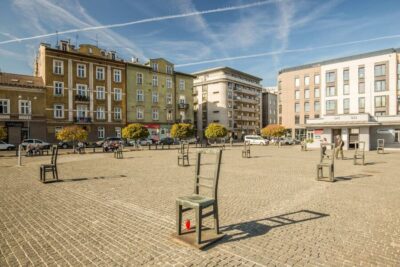
Browse the lists this tour appears in