
Reviewed · WWII MEMORIAL & CAMP TOURS
Museum of the Second World War Gdansk Private Tour & Tickets
Gdansk’s story does not stop when World War II ends. This private tour connects the city’s wartime destruction with its later fight against communist rule, taking you from the Museum of the Second World War to the Polish Post Office, shipyard memorials, and the European Solidarity Centre. The museum is the main event, but the outdoor stops give its story a local face.
I like the private guide format, since you can ask questions without waiting for a group to catch up. I also like the useful combination of pre-booked museum admission and a walking route through places tied to Poland’s struggle for freedom. The main drawback is the price, $153.49 per person, which makes the tour a better fit for a small group that values personal attention than for a budget-conscious solo visitor.
Key points before you book
- The museum visit lasts about two hours: You’ll see the permanent exhibition with a licensed private guide and skip the ticket-office line.
- The four-hour option adds Gdansk’s postwar story: It includes the Polish Post Office, shipyard memorials, the European Solidarity Centre area, the BHP Hall, and the Imperial Shipyard.
- Your guide leads a private group: The tour is offered in English, and the guide can adjust the pace and focus to your interests.
- The meeting point is easy to identify: Meet at the Witold Pilecki Monument outside the Museum of the Second World War.
- Old Town pickup is limited: Hotel pickup is offered only for the extended option and accommodation within 1.5 kilometers of the meeting point.
- The four-hour walk needs sensible shoes: Expect uneven surfaces and some steps, with the tour running in all weather.
Why Gdansk’s wartime story needs more than a museum
The Museum of the Second World War presents a huge international conflict through Poland’s experience. That matters in Gdansk, where the war began nearby and where the city later became a center of resistance to communist rule.
A guide helps you connect the large story to the smaller details. Instead of moving from display to display on your own, you can stop and ask why a document matters, how a particular event affected Poland, or what changed after 1945. The tour is especially useful if you want context rather than a quick walk through a large building.
The subject is serious. You’ll encounter military violence, occupation, persecution, civilian suffering, and the long damage caused by totalitarian rule. This is not a light sightseeing stop, but the presentation is designed to explain events clearly through objects, photographs, documents, and interactive displays.
The private format gives you room to control the pace. If one subject catches your attention, you can spend more time on it. If your group has already studied the war, you can ask for more detail on Poland’s political history rather than receiving a general introduction.
Other wartime memorials reachable from Gdańsk:
- Gdansk: Guided Round-Trip Cruise to Westerplatte
★ 4.3 · 865 reviews - Gdansk: Stutthof Concentration Camp Regular Tour
★ 4.7 · 361 reviews - Stutthof Concentration Camp English Tour with Gdansk Hotel pickup
★ 4.5 · 73 reviews
Meeting at the Witold Pilecki Monument
The tour begins at the Monument to Captain Witold Pilecki in front of the museum at plac Władysława Bartoszewskiego 1. Allow a little extra time to find the monument and arrive promptly, since museum entry is booked for a specific date and time.
The meeting point is near public transportation, and the activity ends back there. If your hotel is in Gdansk Old Town, pickup may be available for the four-hour option, provided the accommodation is within 1.5 kilometers of the meeting point. Pickup is not included for the shorter option or for hotels outside that area.
A practical point is easy to miss: skip-the-line admission means you avoid the ticket-office queue, not every line inside the museum. You still need to arrive on time for the reserved entry slot.
Inside the Museum of the Second World War
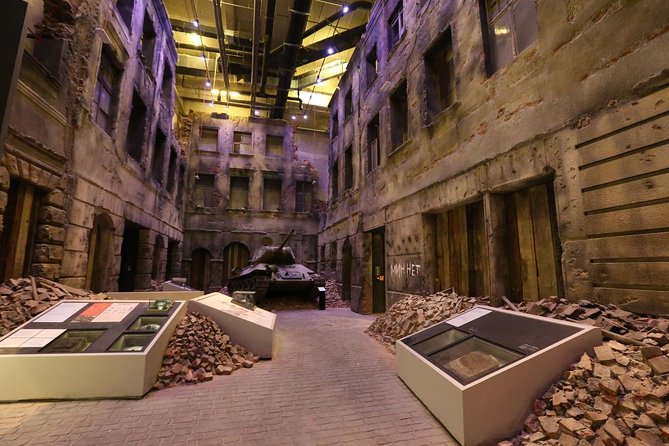
The museum visit takes about two hours. Its permanent exhibition covers the global war while keeping Poland’s experience at the center. You’ll encounter artifacts, photographs, official papers, and interactive displays that explain both the military conflict and its effect on ordinary people.
I like this part of the tour because the museum gives you scale. Gdansk’s local events were part of a much wider conflict, and the exhibition helps you see how decisions made by governments and armies affected families, cities, and entire nations.
Two hours is enough for a guided overview, but it is not enough for every display in a large museum. That is where the private guide earns part of the fee. You can focus on the sections that matter most to you instead of trying to read everything at speed.
The guide’s role also matters emotionally. The subject can feel overwhelming when presented as a long sequence of dates and battles. A good guide can keep the story moving, explain unfamiliar Polish references, and point out the human cost behind the objects.
The guide assigned to your booking may vary. One guide specifically praised for this experience is Małgorzata, described as punctual, attentive, and willing to spend time answering questions. Another strong point associated with the tour is a guide’s clear delivery and passion for Polish history. You should still treat the guide as subject to availability rather than booking on the assumption that Małgorzata will lead your group.
The Defenders of the Polish Post Office
On the extended route, the tour moves outdoors to the memorial honoring the Defenders of the Polish Post Office. This site recalls one of the first battles of World War II and gives the conflict a direct connection to Gdansk streets.
The stop is included without a separate admission charge. Your guide explains the event and places it within the opening days of the war, giving you a reason to pause rather than simply passing a monument on the way to the next sight.
This is one advantage of a walking tour built around history. You see how the city’s public spaces carry memories of conflict. The museum can explain the wider war, but a memorial helps you understand how those events were remembered locally.
The route also includes St. James Church. The information provided for the tour links this part of the walk to wartime resistance and Poland’s later fight for freedom. You should expect a historical stop rather than a separate church sightseeing visit with a ticketed interior tour.
A few more things to do in Gdańsk worth a look
- Gdansk: Private Communism Tour with Solidarity Center Museum
★ 5.0 · 28 reviews - Gdansk Private WWII Tour with Museum of the Second World War
★ 4.9 · 22 reviews - Gdansk Private Communism Tour with Solidarity Center Museum
★ 5.0 · 14 reviews - Gdansk: Museum of World War II – True Story of a Living Hell
★ 4.5 · 6 reviews
From wartime occupation to the shipyard memorials
The Monument to the Fallen Shipyard Workers shifts the story into the postwar period. Here, the focus moves from the Nazi occupation to opposition against communist rule.
That change is essential to understanding Gdansk. World War II did not bring a simple return to normal life. Poland remained under a different form of political control, and the shipyards became tied to the country’s later struggle for greater freedom.
I like this section because it prevents the tour from treating 1945 as a clean ending. The four-hour option shows how memories of war, state power, worker protest, and national independence are linked in Gdansk.
The outdoor route takes about 50 minutes for the Defenders of the Polish Post Office, St. James Church, and the Fallen Shipyard Workers Monument section. It adds movement after two hours indoors, though the walk may feel fast if you want to linger at every stop.
The European Solidarity Centre area and BHP Hall
The extended itinerary also brings you to the European Solidarity Centre, a place devoted to Poland’s path toward independence. The tour includes the surrounding historical sites, including the BHP Hall, where the August Agreements were signed.
You’ll also see the Obrońca mural, a tribute to those who defended Poland, and a preserved World War II air raid shelter. These details broaden the experience beyond major monuments. A mural and a shelter may seem modest beside a large museum, but they help show how public memory is kept alive in everyday parts of the city.
The route ends around the Imperial Shipyard, where wartime industry and later political history meet. This is not simply a stop for industrial scenery. The shipyard helps explain why Gdansk became so important in Poland’s postwar story.
Admission to the European Solidarity Centre is not listed as included. The tour takes you to the site and related locations, but you should not assume the price covers an interior visit to every attraction along the route. If you want a full visit inside the centre, ask the operator before booking.
Choosing between two hours and four
The two-hour option is built around the Museum of the Second World War. It suits you if the museum is your priority, your schedule is tight, or you prefer less walking.
The four-hour option adds the outdoor historical route and the postwar communist history section. It offers a much fuller picture of Gdansk, but it also requires more stamina. The walk is described as moderate and includes uneven surfaces and some steps.
Here is the practical choice:
- Choose two hours if you want a focused museum experience and a shorter commitment.
- Choose four hours if you want the museum connected to real streets, monuments, churches, shipyards, and postwar political history.
- Choose the longer route if you have already seen Gdansk’s main Old Town sights and want a more serious historical theme.
- Choose the shorter route if your group includes people who may find a four-hour walk tiring.
The guide can adjust the pace, but comfortable shoes and clothing for the weather are still important. The tour runs rain or shine.
Is $153.49 per person good value?
At $153.49 per person, this is not a cheap museum visit. The value depends heavily on your group size and on how much you want from the guide.
You are paying for private service, a licensed English-speaking guide, pre-booked museum admission, and, with the four-hour option, an extended walking tour. For a family or small group that would otherwise hire a guide separately, the price may make sense because you receive undivided attention and can ask questions freely.
For one person or a couple watching expenses, the cost is harder to justify. The museum can be visited without a private tour, and the outdoor memorials can be seen independently. The extra money pays for structure, interpretation, timing, and convenience rather than for a long list of paid admissions.
The skip-the-line benefit is useful at a busy museum, but remember its limits. It gets you past the ticket-office queue, while entry remains tied to a reserved time. The tour includes the permanent exhibition, not a general promise of access to every temporary display.
Who will get the most from this tour?
I would recommend this experience to anyone who wants Poland’s World War II story explained by a local guide rather than read from labels alone. It is particularly useful for visitors who want to understand the connection between the war, occupation, postwar communism, and the shipyard movement.
It also suits families and small private groups with mixed levels of historical interest. The guide can answer basic questions without slowing down people who already know the broad outline.
You may prefer to visit independently if you want complete freedom to spend half a day in the museum, read every panel, or move at your own pace. You might also skip the four-hour version if you dislike walking in poor weather or do not want a serious political history tour.
The activity is described as suitable for most people, and the operator asks you to contact customer support in advance about accessibility needs or special requests. The guide can adapt the pace, but you should explain your needs before the tour rather than waiting until the meeting point.
Final call: book the museum only or take the full route?
Book the two-hour option if your main goal is the Museum of the Second World War and you want a clear, guided introduction without a long walk.
Book the four-hour option if you want Gdansk’s history to make sense as one connected story. The Polish Post Office, shipyard memorials, BHP Hall, air raid shelter, mural, and Imperial Shipyard add the local detail that a museum alone cannot provide.
The strongest reasons to book are the private attention, the well-planned museum entry, and the chance to ask direct questions. The main reasons to hesitate are the high per-person price and the fact that some outdoor stops are viewed from the outside rather than entered with included admission.
Free cancellation is available until 24 hours before the start time. Check the operator’s message the day before, arrive on time for the museum slot, and choose the four-hour route only if you are ready for a moderate walk. For history-focused visitors, this is a serious and useful way to understand why Gdansk’s wartime past still shapes the city.
FAQ
Where does the tour start?
The tour starts at the Witold Pilecki Monument in front of the Museum of the Second World War, at plac Władysława Bartoszewskiego 1 in Gdansk.
Where does the tour end?
The activity ends back at the meeting point.
Is hotel pickup available?
Pickup is available only for accommodation in Gdansk Old Town, within 1.5 kilometers of the meeting point, and only with the extended option.
Is the tour private?
Yes. Only your group participates in the private activity.
Is the tour offered in English?
Yes. English is one of the offered languages.
What does skip-the-line admission cover?
It covers the ticket-office queue for the Museum of the Second World War. You still need to arrive on time, and it does not mean you skip every line at the entrance.
Does admission include the whole museum?
Admission is for the permanent exhibition. The supplied tour details do not state that temporary exhibitions or other attractions are included.
How long is the tour?
You can choose an option lasting about two or four hours. The four-hour option includes the extended walking tour covering postwar communist history.
Can I cancel for a refund?
You can cancel at least 24 hours before the local start time for a full refund. Cancellations or changes made less than 24 hours before the start time are not accepted for a refund.
Just added in Gdańsk
- Gdansk, Gdynia, and Sopot: 8-Hour Private Sightseeing Tour★ 4.9 · 13 reviews
- Undercover City Games: Gdynia★ 5.0 · 34 reviews
- Private WW2 Tour of Westerplatte,Gdansk and Stutthof Including Lunch★ 5.0 · 12 reviews
- Whisky Tasting in Gdańsk★ 5.0 · 3 reviews
- Gdansk EVERYDAY Vodka Tasting Tour★ 5.0 · 6 reviews
- Westerplatte private tour led by Expert-Guide (door to door)★ 5.0 · 5 reviews
- Torun – City of Copernicus Private Tour★ 4.5 · 5 reviews
- TriCity Tour (Gdansk, Gdynia, Sopot) – PRIVATE (8h)★ 5.0 · 4 reviews
WWII Memorial & Camp Tours, compared.
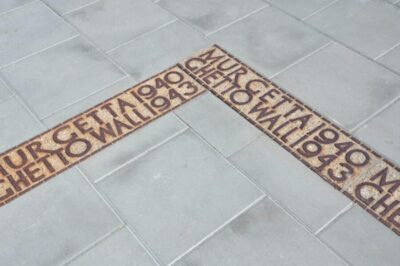
Warsaw for WWII Buffs – private tour with hotel pickup
Read the review →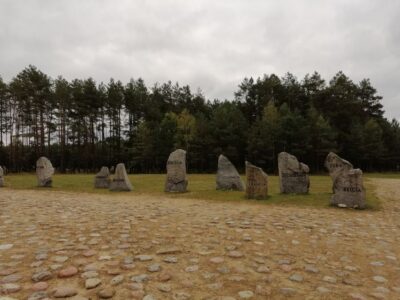
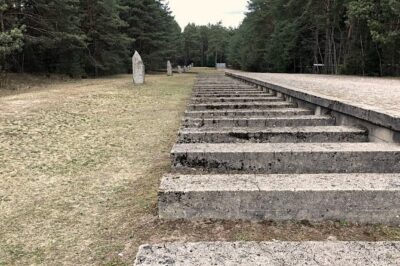
Treblinka Death Camp 6 Hour Private Tour from Warsaw
Read the review →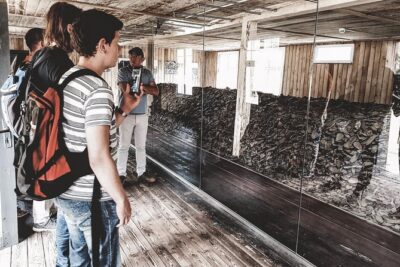
Stutthof Concentration Camp English Tour with Gdansk Hotel pickup
Read the review →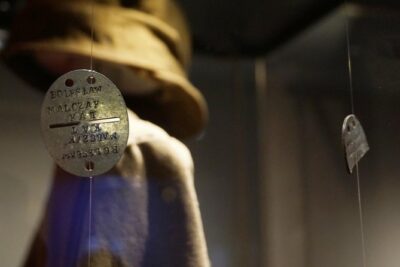
Majdanek Concentration Camp & Lublin Full Day Private Tour from Warsaw
Read the review →Browse the lists this tour appears in