
Reviewed · JEWISH QUARTER & GHETTO TOURS
Private Tour of Krakow Old Town and Jewish Quarter in one walk
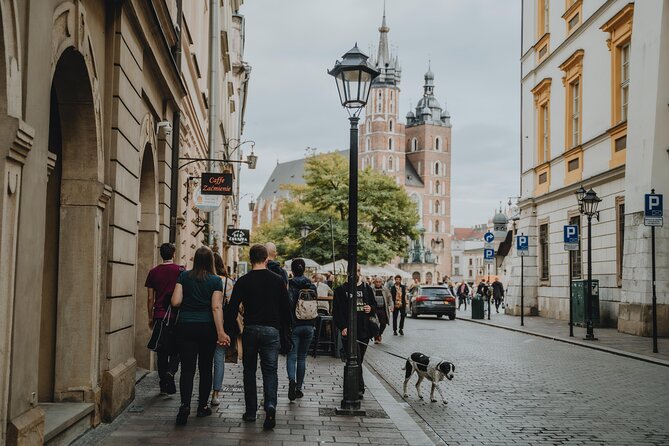
Krakow’s story comes into focus on foot, from the medieval Barbican and grand Main Square to Wawel Hill and the Jewish quarter of Kazimierz. This private walk links the city’s royal, academic, religious, and wartime chapters in one route, with a guide who can adjust the conversation to your questions.
I like the private format, since your group can stop for explanations and ask about Polish life, politics, folklore, or architecture without following a fixed crowd. I also like the route’s strong finish in Kazimierz, where you can continue with dinner, cafés, or a separate food tour.
The main consideration is pace. Three hours covers a lot, and the walk includes several churches, squares, and historic streets. You will see many important places, but this is an orientation tour rather than a detailed interior visit to every monument.
What makes this Krakow walk useful
- The route crosses three major chapters of Krakow: the medieval Old Town, royal Wawel Hill, and Jewish Kazimierz.
- The private group can include up to 15 people, so the price becomes better value when shared by family or friends.
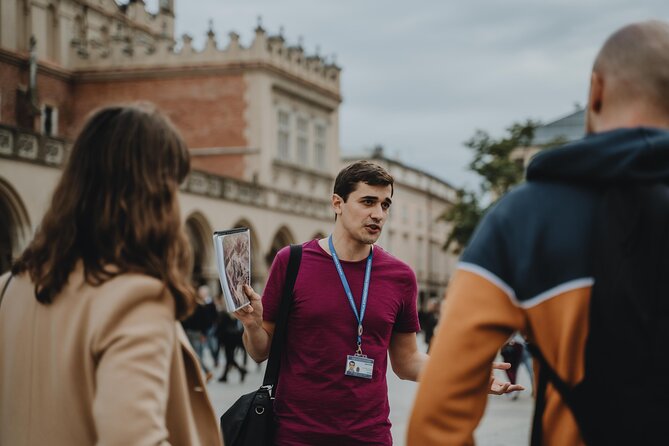
- Tomasz, Tomek, and Marcin are named guides associated with the experience, and the feedback points to lively conversation and strong command of local history.
- The tour ends at Plac Wolnica, close to Kazimierz restaurants, cafés, and tram connections.
- No admission fee is listed for the scheduled stops, making the price mainly cover the guide’s time and personal explanation.
- The walk includes Schindler’s List filming locations, along with synagogues and monuments tied to Krakow’s Jewish past.
From the Barbican into medieval Krakow
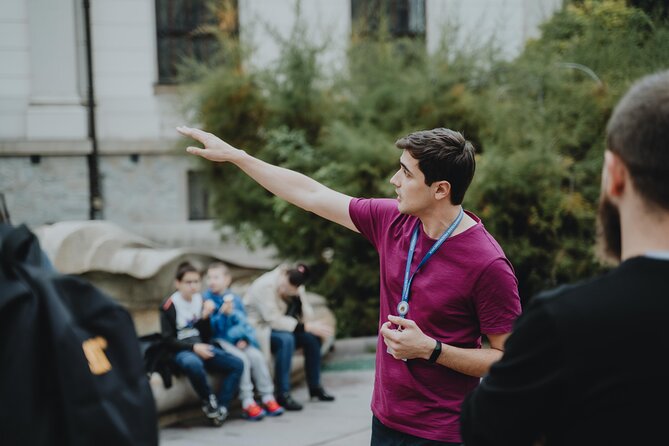
Meet at the Grunwald Monument beside Jana Matejki Square. From there, the walk begins at the Barbican, the round defensive building that once guarded Krakow’s entrance.
You’ll spend about 15 minutes here learning why Krakow expanded in the 13th century and why a new urban area was laid out. This is a useful opening because the walls are not just a photogenic remnant. They explain how medieval cities controlled movement, protected trade, and shaped the streets you are about to walk.
The Barbican stop is brief, so do not expect a full military museum visit. Instead, use it to get your bearings and ask your guide how the old fortifications connected with the city gates and walls.
From here, you follow Ulica Florianska toward the Main Square. The street is lined with historic townhouses and landmarks, and it forms part of Krakow’s famous Royal Route.
I like this stretch because it lets you move through the city as earlier visitors did, rather than jumping between isolated sights by vehicle. Your guide can point out how the street leads naturally toward the heart of Krakow, while the buildings show the long shift from medieval city to modern urban center.
More old town tours in Kraków:
- Old Town Krakow & Wawel Castle Walking Tour
★ 5.0 · 1,508 reviews - Krakow: Bike Tour of Old Town, Jewish Quarter and the Ghetto
★ 4.9 · 1,155 reviews - Krakow: The Old Town Walking Tour
★ 4.8 · 794 reviews
Forty minutes around Krakow’s Main Square
Rynek Glowny, Krakow’s central square, receives the longest single stop at about 40 minutes. It is one of the largest medieval town squares in Europe, and the scale becomes clearer once you are standing in its open center.
The key sights here are St. Mary’s Basilica, the Cloth Hall, and the Town Hall Tower. Each represents a different part of city life: worship, commerce, and civic power. Rather than treating the square as one large photo stop, ask your guide to connect those functions and explain how the buildings worked together.
St. Mary’s Basilica is one of Krakow’s most recognizable landmarks. The Cloth Hall, known in Polish as Sukiennice, recalls the square’s role as a market and trading center. The Town Hall Tower gives the square a strong civic marker, even though the surrounding buildings make the whole area feel like one enormous historic room.
The tour does not list admission tickets for the interiors of these monuments. That matters if you want a detailed look inside the basilica, museum collections, or tower. You can ask the guide what is possible during your visit, but plan on this walk primarily providing context from the square and nearby streets.
Collegium Maius and the university courtyard
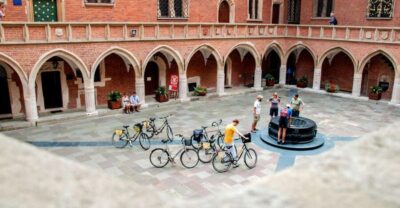
The next stop takes you to the inner courtyard of Collegium Maius, the oldest Polish university building. The scheduled visit lasts about 15 minutes.
This is one of the more distinctive stops because it is easy to miss when you are concentrating on Krakow’s larger landmarks. The courtyard gives you a look at the city’s academic tradition and provides a change of mood after the open Main Square.
One of the strongest practical reasons to take the walk with a guide is this kind of stop. You might pass the university building alone and admire its architecture without understanding why it matters. Here, you can ask questions and connect the building to Krakow’s intellectual life.
The visit is short, so expect an introduction rather than a full university museum tour. If this building is a major priority, you may want to return independently for more time.
The Franciscan Basilica and Krakow’s papal connection
At the Franciscan Basilica, you spend about 20 minutes inside one of Krakow’s most striking churches. The guide also explains the connection to Pope John Paul II.
This stop adds a personal and modern layer to the city’s religious story. Krakow is not presented only as a collection of medieval stones. The church helps place the city within Poland’s 20th-century religious and national life.
The value here lies in explanation. A church can be visually impressive while its meaning remains unclear, especially if you do not know what to look for. Your guide can provide the local context and answer questions as you look around.
Again, the time is limited. You will not have the leisure of a dedicated church tour, and religious services or visitor conditions could affect how much time you spend inside. Treat it as one important chapter in a wider walk.
More walking tours in Kraków:
- Creepy Krakow: 2-Hour City Walking Tour
★ 4.7 · 1,131 reviews - Krakow: Kazimierz Jewish Quarter Walking Tour
★ 4.8 · 571 reviews - Kraków: Old Town & Wawel Castle Walking Tour in English
★ 4.8 · 532 reviews - Krakow: Evening Walking Tour with Spooky Stories
★ 4.7 · 500 reviews
Wawel Hill, cathedral, and Polish identity
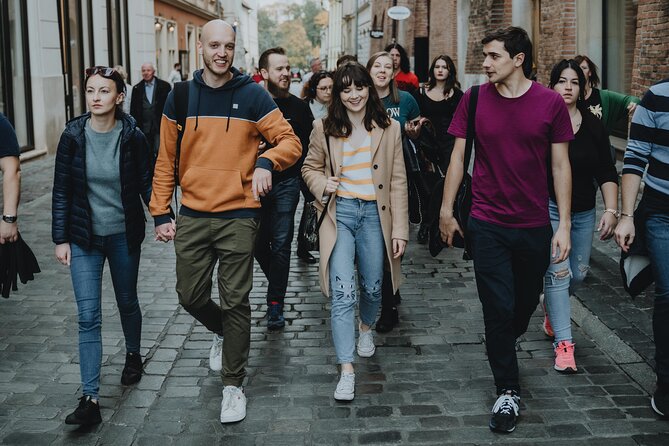
The route continues to Wawel Hill for about 30 minutes. The stop includes the royal cathedral and the courtyard of Wawel Castle, while the guide explains why this place matters so much to Poland.
Wawel is where the tour’s royal and national themes come together. The hill is not simply another grand viewpoint or castle stop. It represents the old center of Polish power, so this is the point where earlier comments about Krakow’s rulers, churches, and civic growth gain weight.
I would pay close attention here to the guide’s explanation of national symbolism. The supplied feedback repeatedly describes guides who connect architecture with politics, culture, and Polish life, rather than reciting dates. That approach is especially helpful at Wawel, where the significance goes beyond the buildings themselves.
The itinerary gives you about half an hour, enough for the cathedral and courtyard in an introductory way. It does not promise entry into every castle exhibition or a complete cathedral visit. If you want a full Wawel Castle experience, plan extra time on another day.
The tour ends roughly 15 minutes on foot from Wawel Hill, but it does not finish there. Instead, you continue toward Kazimierz, shifting from royal Krakow to the city’s Jewish quarter.
Szeroka Street and the Jewish quarter
Szeroka Street receives about 30 minutes and is one of the most important parts of the walk. Here, the focus turns to synagogues, Jewish monuments, and the tragic history of Krakow’s Jews during World War II.
The route also includes a filming location connected with Schindler’s List. This can help you place familiar cinematic images within the actual streets of Kazimierz, but the experience is not presented as a film-only tour. The larger subject is the Jewish community that lived here, the religious buildings that remain, and the destruction caused by the war.
This portion needs a thoughtful guide. The subject is painful, and a short stop cannot cover every detail. The advantage of a private tour is that you can ask questions, slow down when needed, and focus on the parts of the story that matter most to you.
I also appreciate that the walk does not treat Kazimierz as only a fashionable restaurant district. Szeroka Street and the surrounding monuments ask you to see the area as a place shaped by faith, family, persecution, survival, and memory.
Plac Wolnica and the best place to continue
The final stop is Plac Wolnica, which served as the center of the Christian part of the former city of Kazimierz. The scheduled time is about 15 minutes.
This ending works well because it broadens your view of Kazimierz. The Jewish quarter and the Christian part of the former city were connected, but they had distinct identities. A guide can help you understand that the district was never just one single cultural space.
Plac Wolnica is also a practical ending point. You are in the heart of Kazimierz, with restaurants and cafés nearby, along with several tram lines. Your guide can help you work out the route back to your accommodation or onward destination.
I would schedule this tour before dinner if you want to eat in Kazimierz afterward. You can finish the historic walk and continue the evening without crossing town again.
What the private format adds
The price is $200.83 per group of up to 15 people. For a full group, that works out to roughly $13.39 per person, though the value changes sharply if only one or two people book.
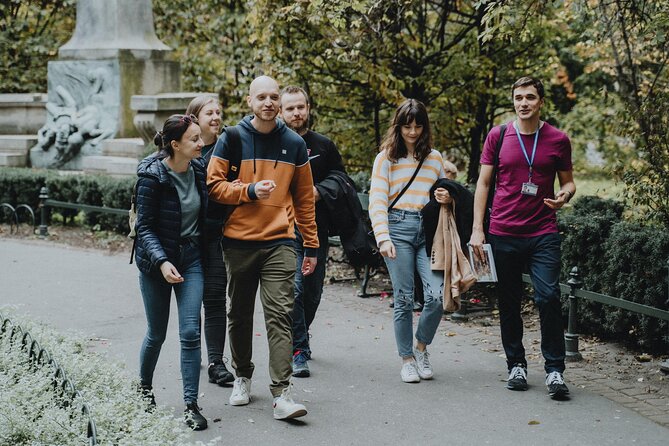
For a couple, the cost is less of a bargain than for a family or group of friends. Still, you are paying for a private English-language guide across three hours, not for a large group following a flag. If you care about asking questions or setting the tone of the conversation, that privacy has real value.
The feedback gives a clear picture of the guiding style. Tomasz, also referred to as Tomek, is described as professional, friendly, punctual, and engaging. One account of a longer two-day program praised his planning, local food suggestions, and ability to explain Polish culture between scheduled visits. Marcin is also praised for combining historical information with old Krakow tales and an easy personal conversation.
Those details suggest a guide-led experience rather than a dry march from monument to monument. You should still confirm your assigned guide at booking, since the information names more than one person and does not promise a specific guide.
Pace, walking, and practical limits
The tour lasts about three hours, though one account describes a 3.5-hour version. Treat three hours as the normal estimate and allow extra time if your guide spends longer answering questions.
The route is on foot and includes historic streets, squares, courtyards, churches, and a hill. Most people can participate, and service animals are allowed. The tour is near public transportation, but you should wear comfortable shoes and be ready for a steady city walk.
There is no hotel pickup listed. You meet at the Grunwald Monument and finish at Plac Wolnica. Confirmation arrives when you book, and the experience is offered in English with a mobile ticket.
Free cancellation is available if you cancel at least 24 hours before the local start time. Cancellations or changes made later are not accepted for a refund.
Who should book this Krakow tour?
I would choose this walk if you have limited time in Krakow and want a well-shaped introduction rather than a single-topic visit. It works especially well on a first day, since the route gives you a mental map of the Old Town, Wawel, and Kazimierz.
It also suits families and small groups who want the freedom to ask questions. The subject matter ranges from medieval defenses to wartime loss, so it can work for mixed interests, provided everyone is comfortable with the serious sections in Kazimierz.
You may want something else if you prefer long museum visits, extensive castle interiors, or a slow photography walk. The schedule covers eight stops in about three hours, so the strength is breadth and connection, not maximum time at each building.
Should you book it?
Book this tour if you want Krakow explained as one connected story: fortified medieval town, royal capital, university city, religious center, and divided Kazimierz. The private setup, English-speaking guide, and sensible ending near restaurants make it particularly useful for a first visit.
Think twice if the $200.83 group price is high for your party size or if you want admission-based tours of the castle, basilica, and museums. For a group of several people, though, the cost becomes reasonable, and the personal guidance from figures such as Tomasz, Tomek, or Marcin can turn a long list of sights into a clear introduction to Krakow.
FAQ
How long does the Krakow Old Town and Jewish Quarter tour last?
The tour lasts approximately three hours. One account describes a 3.5-hour version, so allow some flexibility if you ask many questions.
How many people can join the private tour?
The private activity is available for your group only, with up to 15 people.
Is the tour offered in English?
Yes. The experience is offered in English.
Where does the tour start?
The meeting point is the Grunwald Monument at Plac Jana Matejki, 30-001 Krakow, Poland.
Where does the tour end?
The walk ends at Plac Wolnica, Plac Wolnica 4, 31-060 Krakow, in the heart of Kazimierz.
Which main sights are included?
The route includes the Barbican, Ulica Florianska, Krakow’s Main Square, Collegium Maius, the Franciscan Basilica, Wawel Hill, Szeroka Street, and Plac Wolnica.
Does the tour include Kazimierz?
Yes. The route visits Szeroka Street and ends at Plac Wolnica in the Kazimierz district.
Are admission tickets included or charged at the stops?
The listed stops show free admission. The tour includes the stated visits, but it does not list paid entry to additional castle exhibitions, tower visits, or museum collections.
What is the cancellation policy?
You can cancel at least 24 hours before the start time for a full refund. Cancellations or changes made less than 24 hours before the start time are not refunded or accepted.
More Jewish-heritage walks around Kraków
- Krakow: Schindler’s Factory & Ghetto Guided Tour
★ 4.7 · 1,694 reviews - Krakow: Jewish Quarter and Former Ghetto Tour
★ 4.9 · 1,441 reviews - Krakow: Kazimierz, Schindler’s Factory & Ghetto Guided Tour
★ 4.8 · 460 reviews - Full Bike Tour – the Old Town, Jewish Qtr & the Ghetto NEW BIKES
★ 5.0 · 437 reviews
Just added in Kraków
- Wawel Castle, Old Town with St. Mary’s Church Guided Tour★ 5.0 · 3 reviews
- Wawel Castle, Old Town with St. Mary’s Church Guided Tour★ 5.0 · 5 reviews
- Wawel Castle, Cathedral, & Rynek Underground Tour with Lunch★ 4.5 · 10 reviews
- Wawel Castle & Cathedral Skip the Line Small Group Tour★ 5.0 · 3 reviews
- Wawel Castle, Cathedral, Old Town and St. Mary’s Basilica★ 4.8 · 13 reviews
- Wawel Castle and Cathedral Guided Tour★ 4.6 · 44 reviews
- Wawel Castle, Cathedral, Rynek Underground Tour with Lunch★ 5.0 · 3 reviews
- Wawel Castle and Cathedral Guided Tour★ 5.0 · 8 reviews
Jewish Quarter & Ghetto Tours, compared.
Bike Tour of Old Town, Jewish Quarter and the Ghetto
Read the review →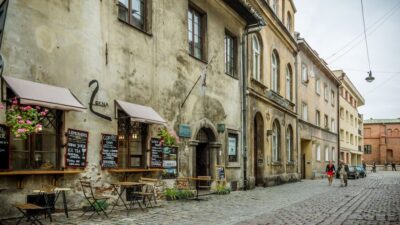
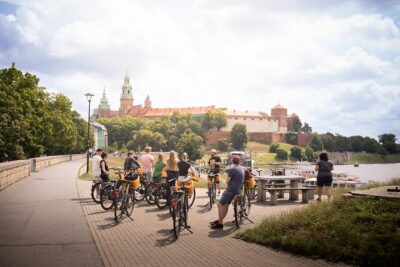
Full Bike Tour – the Old Town, Jewish Qtr & the Ghetto NEW BIKES
Read the review →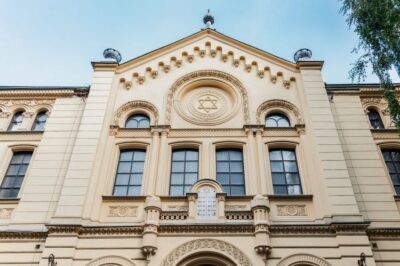
Warsaw Ghetto Private Walking Tour with Hotel Pickup
Read the review →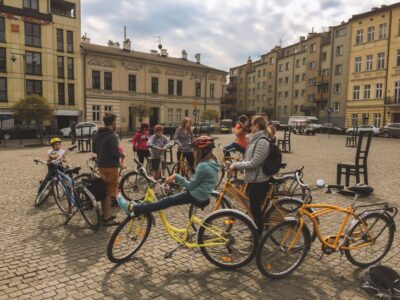
Bike Tour of the Old Town, Kazimierz, and the Ghetto
Read the review →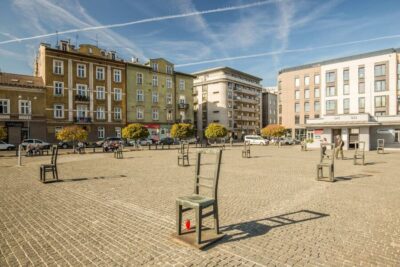
Browse the lists this tour appears in