
Reviewed · JEWISH QUARTER & GHETTO TOURS
The Jewish Quarter – Walking Tour
Krakow’s Jewish Quarter is more than a collection of old synagogues. It is the place to see how Jewish and Christian communities lived side by side for centuries, and how war and the Holocaust changed the city forever. I like the tour’s clear focus on Jewish life in Poland and its use of Schindler’s List filming locations to connect history with places you can actually see. The drawback is that admission tickets are not included, so the $33 price covers guiding rather than entry inside every site.
I also like that the route reaches beyond the best-known streets. You’ll see a 16th-century mikveh, Helena Rubinstein’s birthplace, the Remuh cemetery, and a monument linked to a man who tried to stop the Holocaust. The pace is useful for a first visit, though two hours is short for such a serious and wide-ranging subject.
Key points to know before you book
- Two hours in Kazimierz: The walk covers the district’s main square, synagogues, streets, cemetery, memorials, and film locations.
- Jewish and Christian history together: The tour explains Kazimierz as a place of coexistence, not simply a Jewish-themed quarter.
- Led in English by a licensed guide: Zee, also referred to as Z, personally led the tours described by the operator.
- Admission is separate: Guiding services are included, but entry tickets and public transportation are not.
- A strong WW2 focus: The route connects prewar Jewish life with the destruction and upheaval of the Holocaust.
- Easy booking terms: You can reserve now and pay later, with free cancellation up to 24 hours before the start.
Why Kazimierz deserves more than a quick photo stop
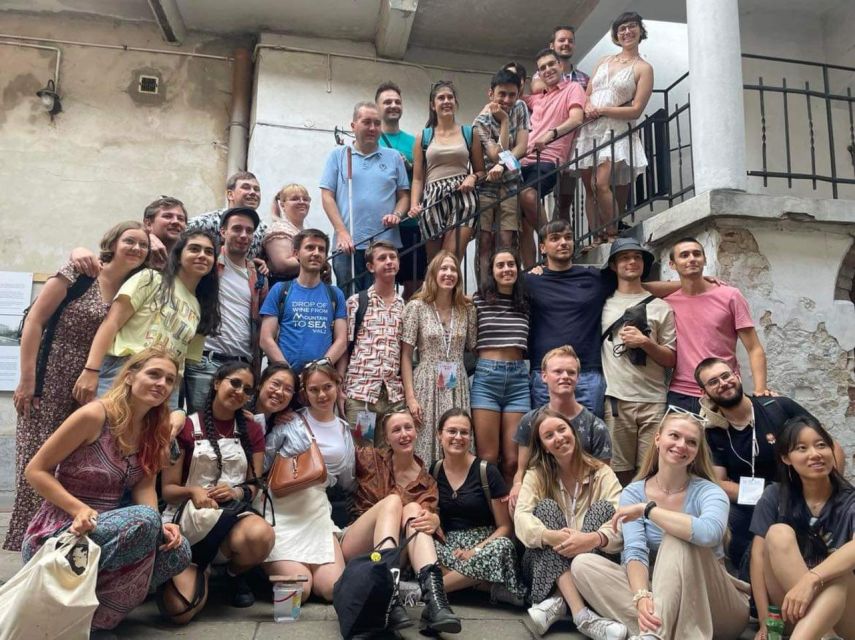
Kazimierz is often introduced as Krakow’s Jewish district, but that label only tells half the story. The area also preserves the long relationship between Jewish and Christian communities, whose lives unfolded close together over many centuries.
This is the central idea that gives the walk its value. You are not simply moving from one synagogue to another. You are being shown how a city once held several religious and cultural communities, and what happened when that world was broken by the Second World War.
The tour reaches back to the 11th century to explain where Jewish history in Poland began. It also places Poland in a wider Jewish story. During the 16th century, around 75 percent of the world’s Jewish population lived in Poland, making the country a major center of Jewish life.
That fact alone changes how you look at Krakow. The quarter is not a small side chapter in European history. It was once part of a much larger Jewish world, with its own religious buildings, schools, businesses, homes, and traditions.
I find this kind of introduction useful because it gives the buildings proper weight. Without context, a synagogue can look like an old stone landmark. With context, you begin to see it as part of a living community that existed long before the war.
More walking tours in Kraków:
- Old Town Krakow & Wawel Castle Walking Tour
★ 5.0 · 1,508 reviews - Creepy Krakow: 2-Hour City Walking Tour
★ 4.7 · 1,131 reviews - Krakow: The Old Town Walking Tour
★ 4.8 · 794 reviews
Kazimierz Main Square and the old city walls
The walk begins around Kazimierz’s Main Square, a practical place to get your bearings. From here, the guide can explain how the district developed and how Jewish and Christian neighborhoods occupied the same wider urban area.
Miodowa Street brings in another layer of the story. The route follows the former city walls of Kazimierz, helping you understand that this was once a separate city rather than simply another Krakow neighborhood.
I like this early part of the walk because it gives you a physical frame for the history. Streets and walls make the past easier to picture. You can see that religious communities were not living in an abstract historical zone. They lived within a planned town, bordered by streets, walls, and ordinary daily routes.
Do not expect every stop to look polished or theatrical. The appeal here is the surviving urban fabric and the explanation that ties it together. The guide’s job matters a great deal, especially when a building’s importance is not obvious from the outside.
The synagogues of Miodowa and Szeroka Streets
The synagogue section is the heart of the tour. The route includes the Tempel Synagogue, Kupa Synagogue, Izaak’s Synagogue, Popper’s Synagogue, and the Old Synagogue, along with the Remuh Synagogue and Jewish Cemetery.
Each name marks a different part of Jewish life in Krakow. The point is not simply to count buildings. It is to understand that the quarter supported several congregations and institutions, each connected to its own community and traditions.
Szeroka Street is especially important to the walk. It provides one of the clearest settings for understanding the Jewish quarter as a social center, not only a religious one. Here, the route can connect the synagogues with the wider neighborhood and explain how Jewish life was rooted in the streets around them.
The Old Synagogue is another major stop. It is one of the key historic buildings in the quarter, and its presence helps anchor the story in Krakow’s long Jewish past.
The route also points out the oldest building inside the Jewish Quarter, dating from the 1400s. That detail is easy to miss when you are focused on larger monuments, but it helps show how far back the district’s built history reaches.
Because entry tickets are not included, you should check what you want to enter before booking. The walk still has value from the streets and explanations alone, but anyone hoping for an interior-heavy synagogue visit should budget separately.
The 16th-century mikveh and Jewish daily life
One of the more unusual stops is the mikveh, a ritual Jewish bathhouse for women dating from the 16th century. It offers a different view of Jewish life than a synagogue does.
Religious history can sometimes become too focused on famous leaders and grand buildings. A mikveh brings the subject back to daily practice, family life, and the role of ritual within a community.
You will want to listen carefully here, since this is the sort of site that can be easy to misunderstand without guidance. The guide explains why the bathhouse existed and how it fitted into Jewish tradition.
For me, this is one of the strongest details on the route because it widens the story. The Jewish quarter was not only about worship. It was also about homes, customs, community rules, and the practical spaces that supported everyday life.
Other Jewish-heritage walks around Kraków:
- Krakow: Schindler’s Factory & Ghetto Guided Tour
★ 4.7 · 1,694 reviews - Krakow: Jewish Quarter and Former Ghetto Tour
★ 4.9 · 1,441 reviews - Krakow: Bike Tour of Old Town, Jewish Quarter and the Ghetto
★ 4.9 · 1,155 reviews - Krakow: Kazimierz Jewish Quarter Walking Tour
★ 4.8 · 571 reviews
Helena Rubinstein and the people behind the places
The tour includes Helena Rubinstein’s birthplace, adding a personal and international angle to the walk. Her story links this Krakow neighborhood with a figure who later became famous far beyond Poland.
This stop is useful because it moves the tour away from buildings alone. A birthplace can make the old quarter feel more human. It reminds you that major lives began in ordinary streets, long before the people connected with them became well known.
The route also includes the Nissenbaum Family Foundation monument. Together with the other memorials, it helps keep the focus on memory and loss, rather than presenting the quarter as a frozen historic set.
I appreciate this balance. You get major landmarks, but also smaller reminders of the people who lived here. The result is more personal than a walk that simply lists dates and architectural styles.
From prewar Krakow to the Holocaust
The Second World War is not treated as a brief closing chapter. It is woven through the route, showing what was lost when Jewish life in Krakow was destroyed.
A further stop is a statue of a man who tried to stop the Holocaust. The description of the route does not identify him by name, but the subject is clearly tied to wartime resistance and the efforts of individuals who attempted to confront mass murder.
This part of the walk requires a serious frame of mind. You are moving through a neighborhood where the prewar community is still visible in buildings and street patterns, yet the people and social world that made those places meaningful were devastated.
I value tours that explain the period before the Holocaust as carefully as the wartime destruction. If you see only the tragedy, you miss the scale of what existed before it. This walk aims to show both: a long history of Jewish settlement and culture, followed by the violent transformation of Poland during WW2.
The guide’s role is especially important here. A licensed guide can help keep the story accurate and measured, while also explaining how Krakow’s past connects to the country’s present appearance. The tour is designed to show that Poland was once far more multicultural and diverse than it may seem to a visitor seeing only modern Krakow.
Remuh Synagogue and the Jewish Cemetery
The Remuh Synagogue and Jewish Cemetery give the tour one of its most important historical settings. The cemetery links the quarter’s religious life with generations of people who lived and died here.
A cemetery can also slow the pace of the walk. After several streets and buildings, it offers a quieter setting for considering the community as a collection of real lives rather than a broad historical subject.
You should expect this stop to be more reflective than entertaining. That is a strength, but it also means the tour is not a casual sightseeing stroll. If you prefer light sightseeing with only a little history, this route may feel weighty.
For anyone trying to understand Krakow’s Jewish past, though, this is essential ground. The cemetery and synagogue help make the connection between long-term community life and the losses of the 20th century.
Schindler’s List locations without losing the history
The route includes numerous filming locations used in Schindler’s List. These sites give you a familiar visual entry point into a difficult subject.
The film connection can be helpful even if you have not seen the movie. It shows how the streets and buildings of Kazimierz have been used to represent wartime Krakow. If you have seen the film, recognizing locations can add another layer to the walk.
Still, I would not book this only as a movie-location tour. The film sites are part of a much broader historical route, which also covers Jewish settlement, religious buildings, social life, memorials, and WW2.
That balance is important. Movie locations can draw you in, but the real value is understanding that these are not just sets. They are places connected to a real community and a real catastrophe.
What the $33 price delivers
At $33 per person, the experience is priced as a guided history walk rather than a ticket package. The fee includes guiding services with a licensed guide, but not admission to attractions or public transportation.
I consider that fair if you want interpretation. Kazimierz is easy to walk around on your own, but it is much harder to understand the links between the buildings, the communities, and the wartime story without help.
The value also depends on your interests. If you only want exterior photographs, you may find the price harder to justify. If you want a structured explanation of Jewish life in Krakow and Poland, the two hours can give you a useful base for further sightseeing.
Past tours were led by Zee, also referred to as Z, and the strongest praise focused on his ability to explain the subject and go beyond the basic route. One booking couple specifically appreciated that he showed them what they wanted to see and more. That suggests some flexibility, although you should share special requests in advance rather than assume every extra stop is guaranteed.
Timing, meeting point, and practical details
The walk lasts two hours and is offered in English. It is wheelchair accessible, which is important for anyone checking the route before booking.
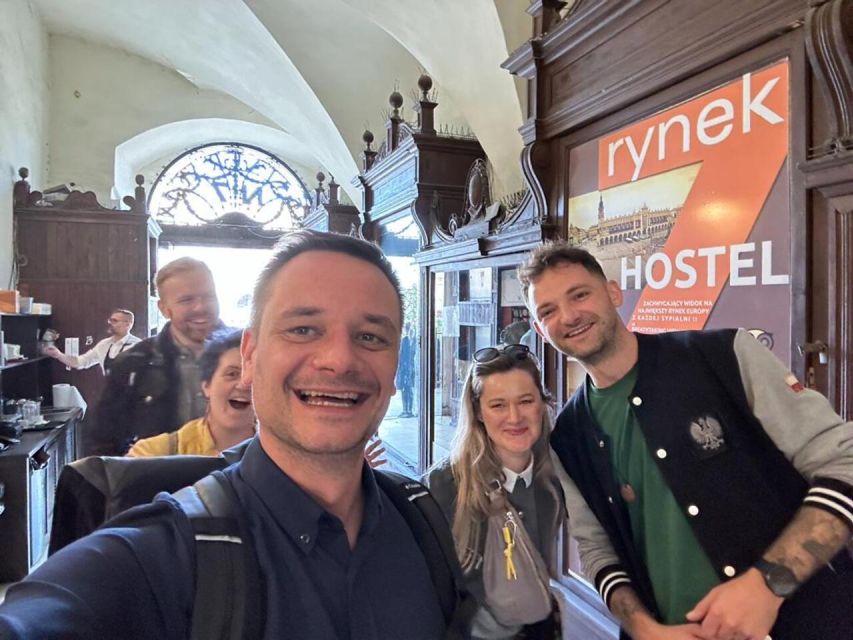
The meeting point is at Restaurant No7. Enter the building and continue into the courtyard, where the ZeeTour office is the second shop on the left. This is worth noting because the office is not simply a street-front meeting spot.
Admission tickets are not included, and public transportation is also separate. The stated route is a walking experience, so wear footwear suited to two hours on city streets and allow extra time if you plan to visit synagogue interiors afterward.
You can reserve now and pay later, which helps if your Krakow schedule is still changing. Cancellation is free up to 24 hours before the start time. Starting times vary, so check availability when you choose a date.
Who will get the most from this walk
I would recommend this tour to a first-time Krakow visitor who wants a clear introduction to Jewish history in the city. It also suits anyone who has seen Schindler’s List and wants to connect the film with real streets and buildings.
It is a good choice for people who want history explained in place, rather than read from a guidebook after the fact. The route covers enough ground to give you a strong overview, while the licensed guide adds context that is difficult to gather from signs alone.
Families and mixed-interest groups may also find the variety helpful. The walk includes architecture, religious customs, famous people, memorials, wartime history, and film locations, so it does not rely on one narrow subject.
I would be more cautious if you want a relaxed, entertainment-first activity. The Holocaust and the destruction of Jewish Krakow are central to the subject, and the tone is necessarily serious. Two hours also means the tour introduces many places without allowing long visits at each one.
Should you book the Jewish Quarter Walking Tour?
Book it if you want a focused, human-scale introduction to Kazimierz and Jewish life in Poland. The mix of synagogues, the 16th-century mikveh, cemetery, memorials, birthplace, wartime sites, and film locations gives you more than a standard old-town stroll.
The best reason to go is the connection between places. You will not only see where the Jewish community worshipped. You will also learn how Jewish and Christian life shared the district, why Poland mattered so much to Jewish history, and how WW2 changed the country.
Skip it if you only want to enter attractions or prefer to explore independently without a serious historical focus. Since admission is extra, you should also decide how many interiors you want to visit before calculating your total cost.
For most visitors interested in Krakow’s past, $33 is a reasonable price for a licensed English-language guide and a well-focused two-hour walk. It is a strong first step, not the final word on the subject.
FAQ
Where does the Jewish Quarter Walking Tour meet?
Meet at Restaurant No7. Enter the building and go into the courtyard. The ZeeTour office is the second shop on the left.
How long does the walking tour last?
The tour lasts two hours.
What language is the tour offered in?
The tour is offered in English with a live English-speaking guide.
Is the tour wheelchair accessible?
Yes, the activity is listed as wheelchair accessible.
What is included in the price?
Guiding services with licensed guides are included.
Are admission tickets included?
No. Admission tickets are not included in the tour price.
Is public transportation included?
No. Public transportation is not included.
Can I reserve now and pay later?
Yes. You can reserve your place and pay later.
What is the cancellation policy?
You can cancel up to 24 hours in advance for a full refund.
Just added in Kraków
- Wawel Castle, Old Town with St. Mary’s Church Guided Tour★ 5.0 · 5 reviews
- Wawel Castle, Old Town with St. Mary’s Church Guided Tour★ 5.0 · 3 reviews
- Wawel Castle, Cathedral, Old Town and St. Mary’s Basilica★ 4.8 · 13 reviews
- Wawel Castle, Cathedral, & Rynek Underground Tour with Lunch★ 4.5 · 10 reviews
- Wawel Castle & Cathedral Skip the Line Small Group Tour★ 5.0 · 3 reviews
- Wawel Castle and Cathedral Guided Tour★ 4.6 · 44 reviews
- Wawel Castle, Cathedral, Rynek Underground Tour with Lunch★ 5.0 · 3 reviews
- Wawel Castle and Cathedral Guided Tour★ 5.0 · 8 reviews
Jewish Quarter & Ghetto Tours, compared.
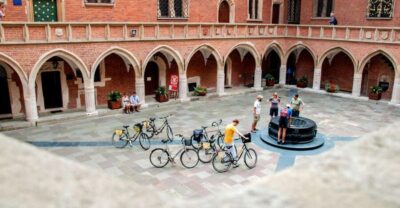
Bike Tour of Old Town, Jewish Quarter and the Ghetto
Read the review →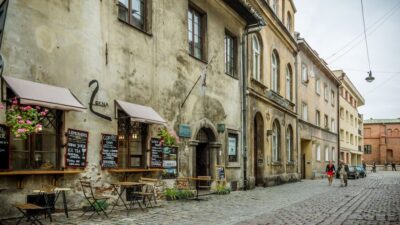
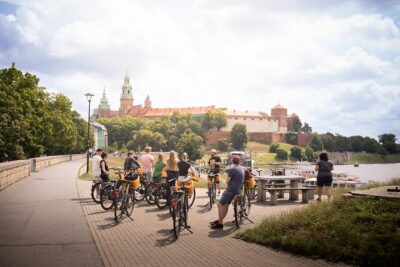
Full Bike Tour – the Old Town, Jewish Qtr & the Ghetto NEW BIKES
Read the review →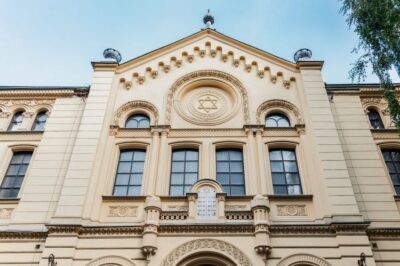
Warsaw Ghetto Private Walking Tour with Hotel Pickup
Read the review →
Bike Tour of the Old Town, Kazimierz, and the Ghetto
Read the review →
Browse the lists this tour appears in