
Reviewed · JEWISH QUARTER & GHETTO TOURS
Lodz: Jewish Heritage Private Tour
Łódź’s Jewish story is both immense and painfully specific. Before World War II, more than 200,000 Jews lived here, about one third of the city’s population. This private tour follows that community through its former neighborhoods, the Litzmannstadt ghetto, Radegast Station, and the Jewish cemetery, then connects the past with the city you see today. I especially like the private format, which lets you ask questions and request extra stops. I also like the contrast between solemn memorials and living Łódź, from Manufaktura to Piotrkowska Street.
The main consideration is that the tour moves quickly. Four hours covers a lot, and the advertised price does not include entrance fees. You should also confirm exactly how transportation will work, since the experience includes transportation but one guest expected a guide-driven vehicle and instead found the arrangement different.
Key points at a glance
- Radegast Station puts the ghetto story in a real place: This former railway station was the departure point for Jews sent from Łódź and other ghettos toward death camps.
- The Jewish cemetery is the largest Jewish necropolis in Poland: Ask to go inside, not just view it from the outside.
- Survivors’ Park has more than 600 memory trees: Each tree marks the personal connection of a survivor to the Litzmannstadt ghetto.
- Reicher Synagogue is Łódź’s only surviving pre-war synagogue: During the occupation, it survived because it was used as a salt warehouse.
- Manufaktura links Jewish enterprise with modern Łódź: Israel Poznański’s former factory is now a huge public complex of shops, restaurants, brick buildings, and fountains.
- The private guide can shape the day: Guides including Marek, Krys, and Krzysztof have adapted routes to personal interests, including film, books, architecture, and wider city history.
Why Łódź needs a Jewish heritage tour
Łódź grew into a major industrial city during the 19th century, attracting Poles, Jews, Germans, and Russians. Jewish residents played a major part in commerce, manufacturing, culture, and civic life. By the eve of World War II, the Jewish population numbered more than 200,000.
That scale matters. This was not a small community represented by one synagogue and a few plaques. Jewish life shaped entire streets, businesses, factories, religious institutions, and neighborhoods. A good guide helps you see that the places on this route are not isolated memorials. They are fragments of a city that once functioned as a shared, multilingual society.
I like this tour for that reason. It does not stop at Holocaust remembrance, though that is a central part of the day. It also introduces the people and institutions that existed before the war. The strongest guides have added context about architecture, Polish history, literature, film, and the wider development of Łódź.
The private setting makes a difference here. You can ask what daily life was like, how Jewish and non-Jewish communities interacted, or how the city has dealt with memory since 1945. Guides have tailored routes to specific interests, so tell your guide early if you want more time for religious sites, industrial history, wartime memorials, or present-day Łódź.
Other Jewish-heritage walks around Poland:
- Krakow: Schindler’s Factory & Ghetto Guided Tour
★ 4.7 · 1,694 reviews - Krakow: Jewish Quarter and Former Ghetto Tour
★ 4.9 · 1,441 reviews - Krakow: Bike Tour of Old Town, Jewish Quarter and the Ghetto
★ 4.9 · 1,155 reviews
Radegast Station and the Litzmannstadt ghetto
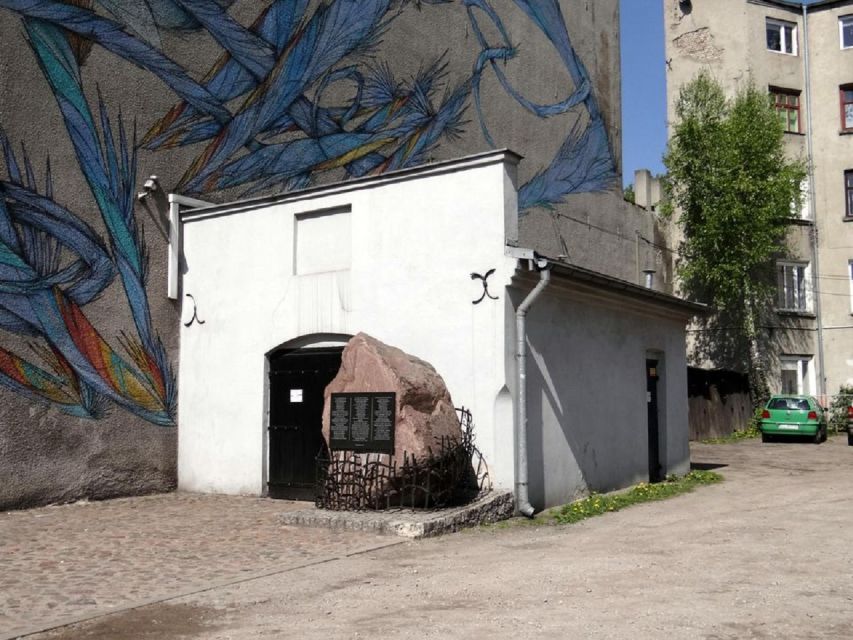
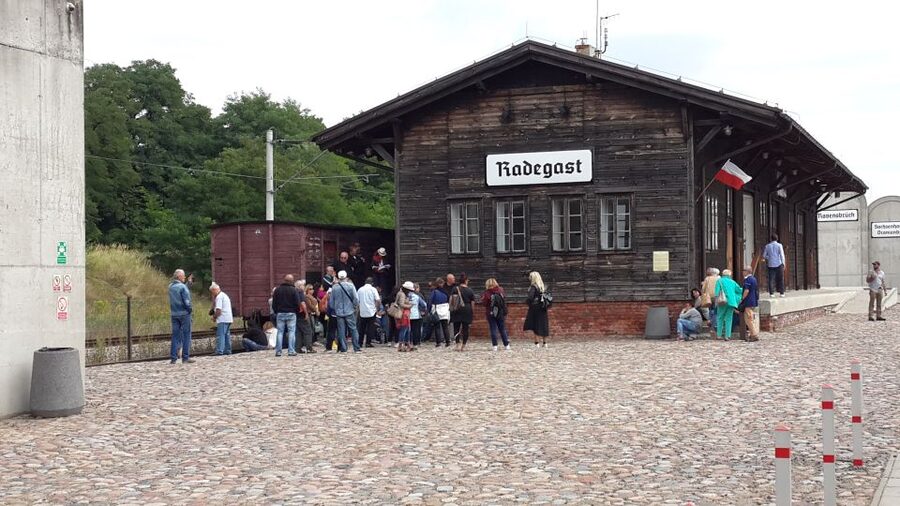
Radegast Station is one of the most serious stops on the route. Trains carrying Jews from Western European countries and from smaller ghettos in Wartheland reached this point before deportations continued to killing centers. The station gives the events a physical setting: rail lines, a departure point, and a place where people were forced into an organized system of removal.
Your guide explains the Litzmannstadt ghetto, the German name for the Łódź ghetto, and how it fit into Nazi persecution. This is not a stop for quick photographs. Give yourself time to read the memorial information and listen closely.
One practical point deserves attention. A German-language guest felt that critical comments about the memorial culture at Radegast were out of place and expected a more neutral and open approach to Jewish life. That concern is worth keeping in mind when you book. This is a difficult subject, and guides may interpret remembrance differently. If you want the tour presented primarily through Jewish voices, ask about the guide’s approach before the day begins.
The stop can also raise questions about how Poland remembers the Holocaust today. I would use the opportunity to ask direct, respectful questions. A private tour is at its best when it gives you room to understand both the documented events and the choices made in memorial design.
The Jewish cemetery: allow time to enter
The Jewish cemetery is described as the largest Jewish necropolis in Poland. Even from outside, it is an important part of the route, but I strongly recommend asking to go inside if conditions and opening arrangements allow. One guest specifically noted that it was worth making this request rather than settling for an exterior view.
This is where the tour’s four-hour limit can become tight. The itinerary includes several major sites, and a short look at the cemetery will not give you the same experience as time among the graves. If this is your main reason for booking, tell the guide at the start. You may need to keep other stops brisk.
The cemetery also helps correct a common problem with Holocaust-focused sightseeing. The Jewish story of Łódź did not begin with persecution and did not end with deportation. Tombstones, family names, religious markings, and the scale of the site point to generations of community life. You get a stronger sense of what was destroyed when you see evidence of the people who lived here, not only the machinery of their murder.
Entrance fees are not included in the $46 price, so budget for admissions. The supplied details do not give an exact cemetery fee or opening schedule. Ask the provider for current information before you go.
The Children’s Martyrdom Monument
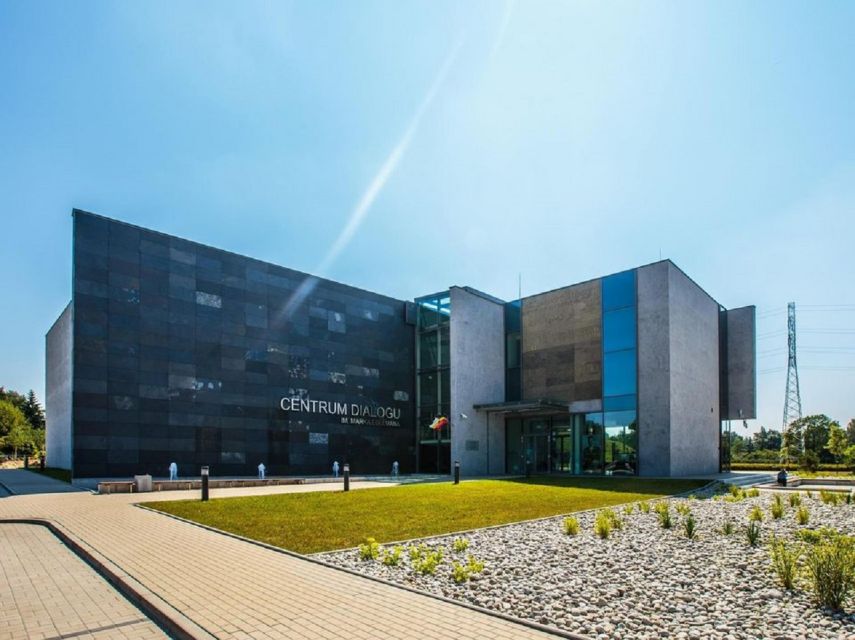
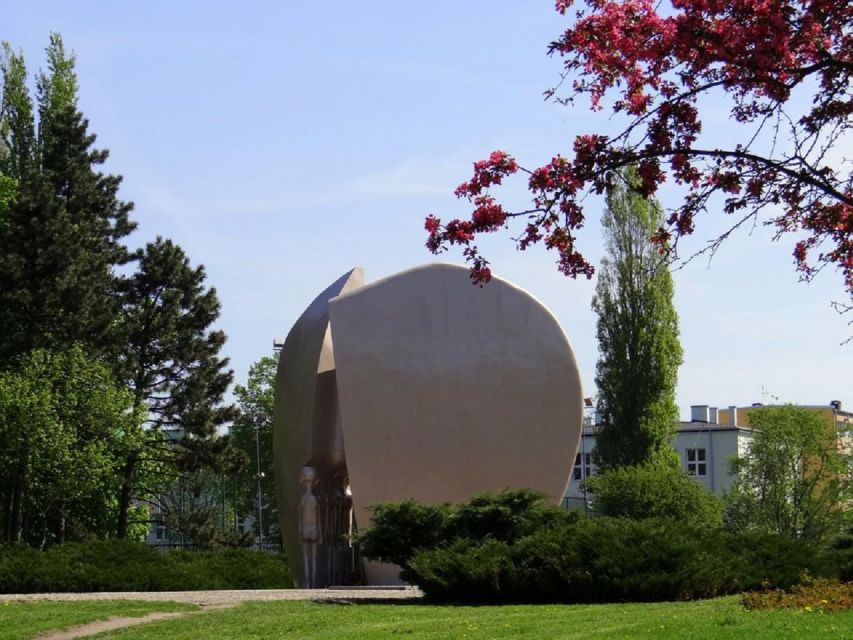
The route passes the Children’s Martyrdom Monument, also called the Monument of the Broken Heart. It honors Polish children who died or were murdered after imprisonment in the camp on Przemysłowa Street.
This stop widens the story beyond the Jewish population. The tour focuses on Jewish heritage, but Łódź’s wartime suffering also included Polish children held in the camp. That distinction matters, and a careful guide should explain the separate experiences rather than blur them together.
I would not expect a long visit here based on the four-hour schedule. Instead, consider it a concentrated memorial stop. Listen for the difference between the monument’s symbols and the facts behind the camp. If you want a fuller account of Przemysłowa Street, tell your guide and be ready to adjust the route.
A few more things to do in Poland worth a look
- Gdansk: City Cruise on Historical Polish Boat
★ 4.8 · 2,913 reviews - Warsaw: POLIN Museum of the History of Polish Jews Ticket
★ 4.7 · 1,142 reviews - Gdańsk: Sunset Cruise on a Historic Polish Boat
★ 4.9 · 977 reviews - Gdańsk City Sights & History Guided Walking Tour in English
★ 4.8 · 876 reviews
Survivors’ Park and the memory trees
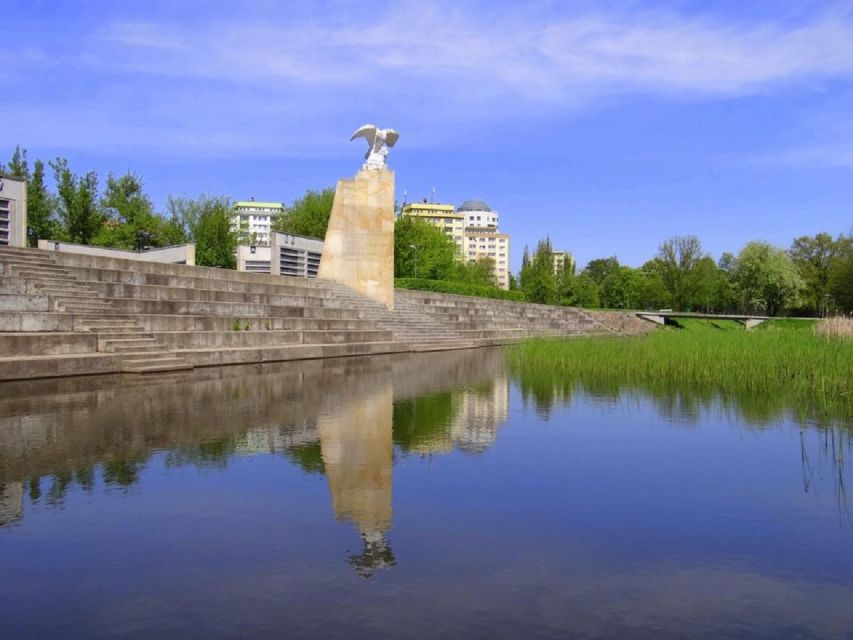
Survivors’ Park commemorates the liquidation of the ghetto. More than 600 memory trees were planted by people who survived the Litzmannstadt ghetto, giving the park a personal and living quality.
I find this one of the most affecting parts of the tour because it shifts attention from numbers to individual lives. The trees are not simply decoration. They represent survivors and their links to a place that tried to erase them.
The park also offers a change of pace after Radegast Station and the cemetery. You can pause, take in the setting, and ask your guide how the city has created memorial spaces over time. A private visit works well here because you can spend longer under the trees if the subject has prompted questions.
The tour description says you can rest in the park, but do not treat it as a casual break. It is a memorial site, and the setting calls for quiet attention.
Reicher Synagogue, a rare survival
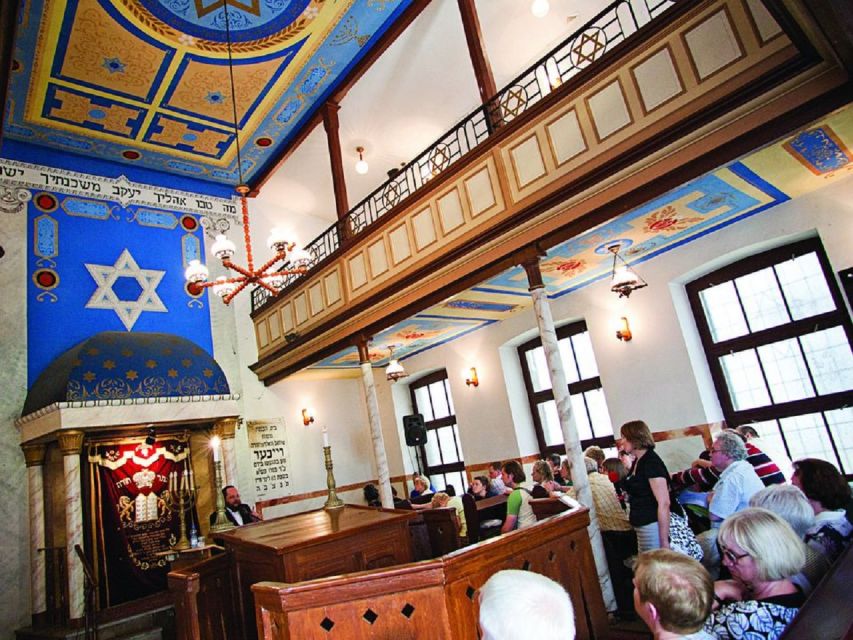
Reicher Synagogue is identified as the only remaining pre-war synagogue in Łódź. Its survival is unusual, but not because it was protected as a religious building. During the occupation, it was used as a salt warehouse.
That detail says a great deal about the destruction of Jewish institutions. A synagogue that once served worshippers was stripped of its purpose and put to industrial use. Its continued existence gives Łódź a rare physical link to the Jewish city that came before the war.
The visit may be brief, depending on access and the pace of the group. Since entrances are not included, ask whether the interior is open on your date and whether admission applies. If you are particularly interested in religious architecture, make that clear before the tour starts.
From Israel Poznański’s factory to Manufaktura
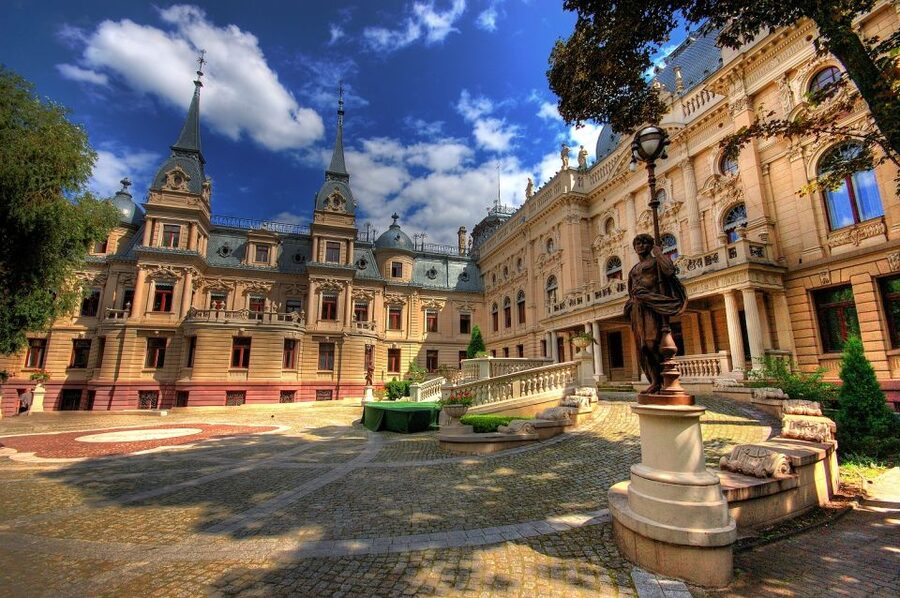
Manufaktura provides the tour’s sharpest change in mood. This renovated industrial complex grew from the former factory of Israel Poznański, a Jewish businessman whose enterprise helped shape Łódź’s industrial identity.
The old brick buildings now surround an open-air plaza with shops, restaurants, and a long stretch of fountains. The site is active and modern, but the brick walls keep the factory era visible. You get a useful lesson in how Łódź has reused its industrial past rather than leaving every former factory empty.
I like this stop because it connects business, architecture, and Jewish history. It also keeps the day from becoming one long sequence of memorials. After the difficult material at Radegast Station and the cemetery, Manufaktura gives you space to see how the city functions now.
Do not expect the entire complex to be a museum visit. It is a public commercial area, so your guide’s explanation is what turns it into a meaningful heritage stop. The former factory’s connection to Poznański is the key point, while the modern shops and fountains are mainly part of the present-day setting.
Piotrkowska Street and the modern city
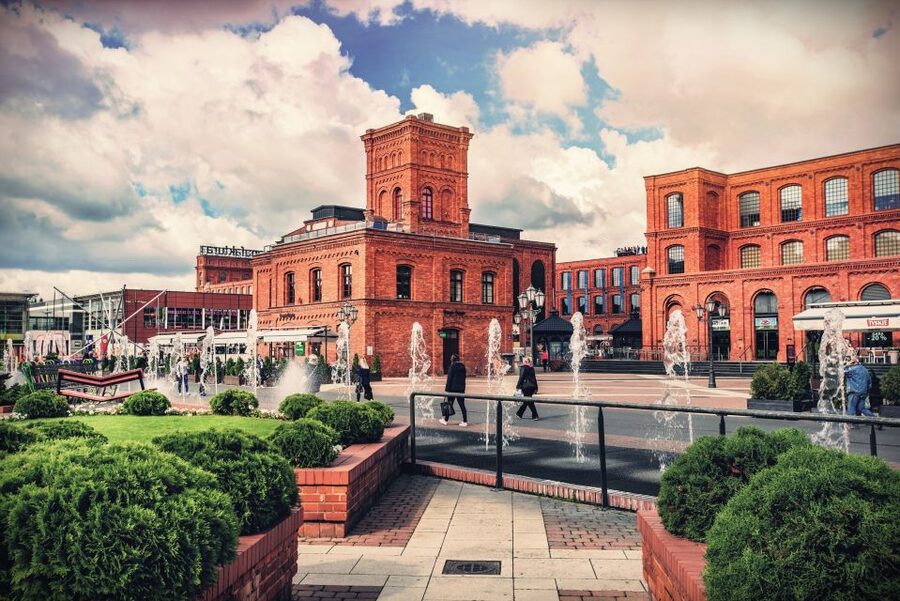
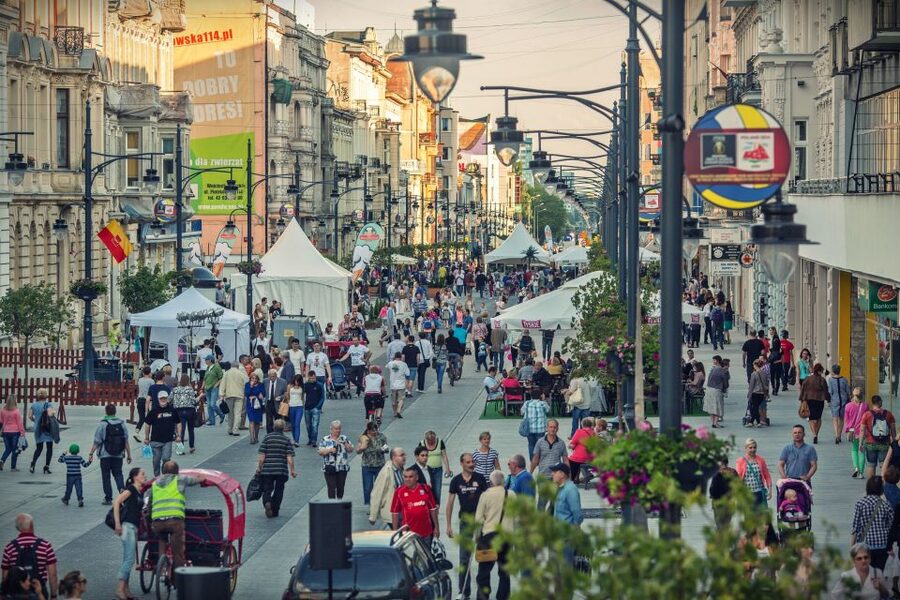
The final walk takes you along Piotrkowska Street, Poland’s longest promenade. It is lined with shops, pubs, restaurants, and sculptures honoring famous residents of Łódź.
This is a sensible ending. You finish with a street where you can continue exploring independently, rather than ending at a memorial and immediately returning to your hotel. Ask your guide which sections are worth revisiting and what to look for in the sculptures and buildings.
The street also gives you a chance to process the contrast running through the whole tour. Łódź is a city of factories, memorials, restored buildings, commercial spaces, and busy public life. A Jewish heritage tour cannot recreate the pre-war city, but it can help you recognize how much of today’s urban fabric is tied to communities that were nearly destroyed.
The guides and the private format

The quality of this experience depends heavily on the individual guide. Marek has been praised for adapting the route to personal interests and for explaining more than Jewish heritage alone. Krys has combined Jewish history with film, books, architecture, and wider city history while accommodating special requests. Krzysztof has been described as entertaining, flexible, and strong on both Jewish subjects and Łódź as a whole.
Those names should not be read as a guarantee that you will receive a particular person. The available guide languages are English, German, Russian, and Polish. When booking, ask which guide is assigned and explain what you want from the day.
The private format means you are not tied to a large group’s pace. You can ask for more detail at the cemetery, request a stop connected with your family history, or shift the balance toward architecture and industrial Łódź. The main tradeoff is that the tour’s depth may depend on the guide’s individual background and approach.
One guest also had trouble reaching the guide before the tour. I would not ignore that practical warning. Make sure you have the meeting details and a contact method in advance. Your guide waits in the hotel lobby with your name, so be ready on time.
What the $46 price includes
At $46 per person, the tour is reasonably priced for a four-hour private experience, especially because hotel pickup and drop-off, transportation, and a live guide are included. The value is strongest for two or more people who want a flexible route without joining a larger group.
The price does not include entrance fees. That matters most if you want to enter the Jewish cemetery or any site requiring admission. The details provided do not specify all current charges, so ask before booking if you are keeping to a strict budget.
Transportation also deserves a quick check. The experience includes transportation, but one guest expected the guide to drive a private car or bus and found that was not the arrangement. Confirm whether transport is by guide vehicle, taxi, or another method, and ask how much walking is involved.
You can cancel up to 24 hours ahead for a full refund, and you can reserve now and pay later. Those policies are useful if your Łódź plans are still changing, but they do not replace checking the day’s practical details.
Who should book this tour?
I would choose this tour if you have limited time in Łódź and want the major Jewish heritage sites connected by one guide. It suits people who prefer asking questions over following a fixed group script, and it is especially useful for families or small groups with specific interests.
It also works well as an introduction to the city. The route covers Jewish life, Holocaust history, industrial development, architecture, memorial culture, and today’s main promenade. Guides such as Marek, Krys, and Krzysztof have shown that the tour can go beyond a narrow list of Jewish sites.
I would be more cautious if you want a specialist academic tour focused entirely on Jewish religious life. The tour includes Jewish history but also gives considerable attention to the wider story of Łódź. I would also reconsider if you want long, unhurried visits at every stop. Four hours is enough for a strong overview, not an exhaustive examination of each site.
Should you book it?
Book this tour if you want a private, flexible introduction to Łódź’s Jewish past and need hotel pickup, transportation, and a guide in one package. The best parts are the scale of the Jewish cemetery, the personal memorial trees at Survivors’ Park, the seriousness of Radegast Station, and the link between Israel Poznański’s factory and modern Manufaktura.
Before you commit, confirm the guide’s approach to Jewish history, ask whether cemetery entry is possible, check which admissions cost extra, and clarify the transportation arrangement. Do those four things and the $46 price can buy a thoughtful, well-connected half day rather than a hurried list of addresses.
FAQ
How long does the Łódź Jewish Heritage Private Tour last?
The tour lasts four hours.
What languages are available?
The live guide can conduct the tour in English, German, Russian, or Polish.
Is this a private group tour?
Yes. The experience is arranged for a private group.
Does the tour include hotel pickup and drop-off?
Yes. Hotel pickup and drop-off are included, and the guide waits in the hotel lobby with your name.
Is transportation included?
Yes, transportation is included. Confirm the exact transport arrangement in advance, since the provided information does not specify the vehicle or method.
Are entrance fees included?
No. Entrance fees are not included in the tour price.
Can I visit the inside of the Jewish cemetery?
The route includes the Jewish cemetery, but the supplied details do not guarantee interior access. Ask your guide to enter rather than viewing it only from outside, and confirm current opening and admission information.
What major sites does the tour visit?
The tour includes Radegast Station, the Jewish cemetery, the Children’s Martyrdom Monument, Survivors’ Park, Reicher Synagogue, Manufaktura, and Piotrkowska Street.
Can I cancel the booking?
Yes. You can cancel up to 24 hours in advance for a full refund. You can also reserve now and pay later.
Just added in Poland
- A unique walking tour of Jewish Warsaw — past and present★ 5.0 · 8 reviews
- Panorama of Toruń – 30-minute cruise★ 4.9 · 80 reviews
- Szczecin: Old Town Highlights Private Walking Tour★ 4.7 · 76 reviews
- Szczecin: Medieval Old Town Private Walking Tour★ 4.7 · 17 reviews
- Highlights of Gdańsk, Gdynia and Sopot 1-day Private Tour★ 4.9 · 59 reviews
- Torun: Private Walking Tour of a Medieval Town★ 4.9 · 16 reviews
- Gdansk Sopot and Gdynia 3 Cities Private Full-Day Tour★ 5.0 · 56 reviews
- ZALIPIE – painted village, unique PRIVATE tour from Krakow★ 5.0 · 20 reviews
Jewish Quarter & Ghetto Tours, compared.

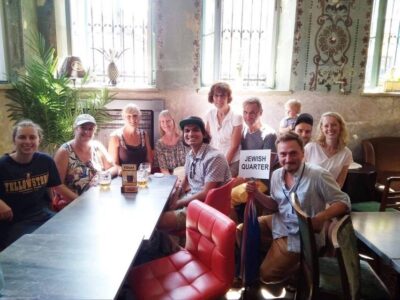
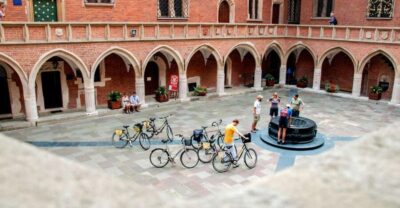
Bike Tour of Old Town, Jewish Quarter and the Ghetto
Read the review →
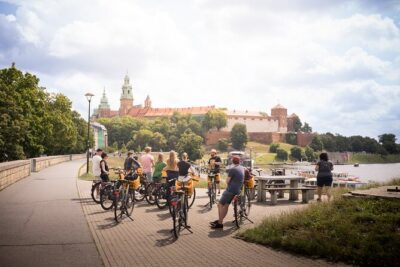
Full Bike Tour – the Old Town, Jewish Qtr & the Ghetto NEW BIKES
Read the review →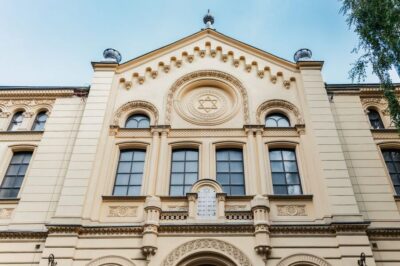
Warsaw Ghetto Private Walking Tour with Hotel Pickup
Read the review →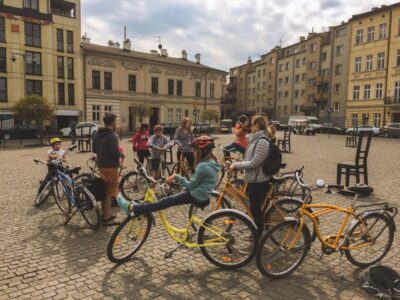
Bike Tour of the Old Town, Kazimierz, and the Ghetto
Read the review →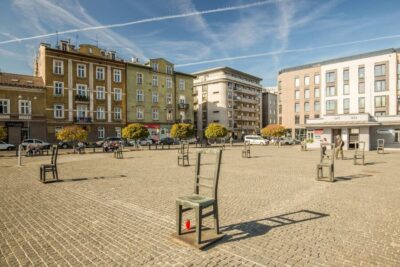
Browse the lists this tour appears in