
Reviewed · WWII MEMORIAL & CAMP TOURS
Gdansk: Museum of World War II – True Story of a Living Hell
The most powerful part of this tour is its scale. Gdansk’s Museum of World War II links the city’s uneasy post-World War I status with the wider rise of dictatorships, then follows the war through politics, battles, occupation, resistance, and ordinary family life. I like the clear route through 20 rooms and the way a Stalin pipe, Enigma machine, and Sherman tank share space with small household objects.
I also like the private format, since your licensed guide can explain Poland’s particular experience rather than giving only a broad military timeline. The main caution is time: three hours is a sensible minimum, not a promise that you will see every film, panel, and display without hurrying.
Key points to know before you book

- The museum takes about three hours: The main exhibition alone is scheduled for roughly two hours and 50 minutes.
- Poland’s story comes first: Gdansk’s status after the Treaty of Versailles helps explain why the city became such a charged place before the war.
- The displays mix world events with daily life: Expect military hardware and political history alongside reconstructed shops, streets, photographs, films, and personal objects.
- A private English-speaking guide is included: The tour is for your group only, with commentary tailored to your interests.
- An audio guide can add detail: It is available at the museum and works alongside the written displays and films.
- Plan for an underground route: The museum entrance is at street level, but the exhibition continues on lower levels, with lifts available.
Why Gdansk is the right place for this museum
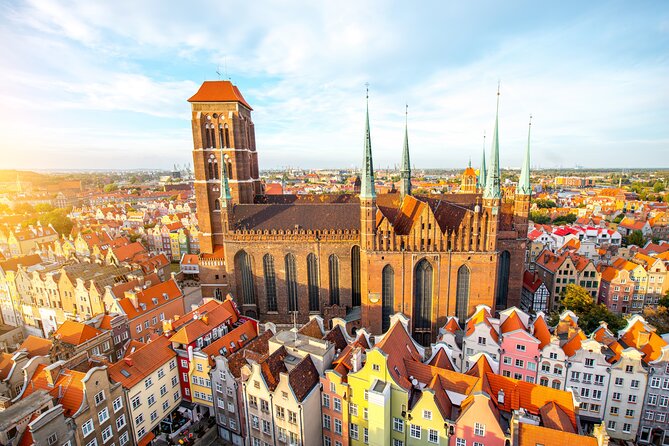
Gdansk was called Danzig during the interwar period, and its political status helps explain why the war began here with such force. After World War I and the Treaty of Versailles, the city was not simply part of a restored Poland, nor was it returned to Germany. It occupied a difficult middle ground, with strong links to both sides.
That background matters because the museum does not present World War II as a sudden event with no warning. You begin with the growth of totalitarian regimes across Europe. A semi-circular screen introduces that setting before the exhibition moves into the pressures, choices, and conflicts that shaped the war.
I find this opening useful because it gives you a framework before you face the violence and loss that follow. You are not just looking at weapons from a finished conflict. You are seeing how political ideas, borders, fear, and power helped create the conditions for catastrophe.
The museum also keeps Gdansk, Poland, Europe, and the wider world in the same frame. That balance is important. You get the local story, but you also see how events in Poland connected to the decisions of Germany, the Soviet Union, Britain, the United States, and other nations.
Other wartime memorials reachable from Gdańsk:
- Gdansk: Guided Round-Trip Cruise to Westerplatte
★ 4.3 · 865 reviews - Gdansk: Stutthof Concentration Camp Regular Tour
★ 4.7 · 361 reviews - Stutthof Concentration Camp English Tour with Gdansk Hotel pickup
★ 4.5 · 73 reviews
Meeting your guide at plac Władysława Bartoszewskiego
The tour begins in front of the Museum of the Second World War at plac Władysława Bartoszewskiego 1. The meeting portion is brief, about 10 minutes, so arrive ready to identify your guide and enter rather than treating this as a separate sightseeing stop.
The experience is private, meaning only your own party takes part. That makes the format more flexible than a large group visit. You can ask why a display matters, request more explanation of Poland’s wartime experience, or spend less time on subjects you already know.
The guide is a licensed five-star professional and speaks the selected language. English is offered. The tour includes expert commentary on World War II in Poland, but the museum itself also presents material in several languages. If you prefer to read at your own pace, you can combine the guide’s explanation with the displays.
Hotel pickup and return are not included. Transport can be arranged for an additional 20 euros, but the stated meeting and end point is the museum. Since the site is near public transportation, reaching it independently may be the simpler choice.
Entering the 20-room main exhibition
The main exhibition occupies 20 rooms arranged along a long central corridor. The corridor itself contains displays about everyday life during the war, while the rooms on either side carry the larger political and military story.
This arrangement gives the museum a useful rhythm. You move from major events and national decisions back to the things people handled, wore, ate, feared, and tried to protect. The war becomes more than a sequence of invasions and battles. It becomes a force that entered homes, schools, shops, workplaces, and family life.
The opening room uses a semi-circular screen to show the rise of totalitarian regimes across Europe. From there, the story develops through a large mix of objects, documents, photographs, video clips, and recreated settings.
Some objects are famous or immediately striking. The collection includes Stalin’s pipe, an Enigma machine, and a Sherman tank. Others are less dramatic but may stay with you longer because they show how people lived through shortages, danger, propaganda, separation, and occupation.
The museum’s greatest strength is the range of scale. One section may explain decisions made by governments and armies. The next may show how those decisions affected a single person or a whole neighborhood. I prefer this approach to a gallery made up only of uniforms, maps, and weapons, because it gives you a human measure of the conflict.
Following Poland, Europe, and the wider war
The exhibition covers the war in Poland, across Europe, and beyond. The guide’s role is especially useful here because the amount of information can become tiring. A private guide can help you identify the central points instead of treating every panel as equally important.
You will encounter geopolitical history, military developments, and personal accounts. The displays do not avoid the worst parts of the war, and the presentation includes photographs, films, and documentaries that show its human cost directly.
That honesty is part of the museum’s power, but it also affects the pace. This is not a light museum visit that you can rush through between lunch and another attraction. Some films run in loops, and the quantity of written material can feel heavy if you try to absorb everything.
I suggest deciding early how you want to use the three hours. You can follow the guide closely and let the expert select the essential sections. Or you can ask for time to read and watch material independently. The private format allows both approaches, but you should not expect to cover every detail in one short visit.
A few more things to do in Gdańsk worth a look
- Gdansk: Private Communism Tour with Solidarity Center Museum
★ 5.0 · 28 reviews - Museum of the Second World War Gdansk Private Tour & Tickets
★ 5.0 · 24 reviews - Gdansk Private WWII Tour with Museum of the Second World War
★ 4.9 · 22 reviews - Gdansk Private Communism Tour with Solidarity Center Museum
★ 5.0 · 14 reviews
Reconstructed streets and ordinary wartime life
The displays of daily life give the museum much of its emotional force. Recreated streets and shops help you picture the world beyond the battlefield. These settings show how normal places were altered by the war and how civilians tried to continue daily routines under abnormal conditions.
The original objects add weight to the reconstructions. A staged room can explain a period, but a real personal item connects you with someone who actually handled it. The museum places these smaller objects beside large political events, so the link between public decisions and private hardship remains visible.
You will also see many photographs and films. Some are documentary records, while others help explain a setting or event. The visual material is easy to follow, but it can slow you down. If you stop for every film, the planned three hours will pass quickly.
The route can feel long without pauses. There are repeated themes and a great deal of information, so I recommend taking a short break if you need one. The museum has a café and a staffed cloakroom, useful comforts during a serious and demanding visit.
Using the audio guide alongside a private guide
An audio headset is available at the museum and can be particularly helpful if you want more detail. It is designed to work as you move through the exhibition, and the device can detect the places you visit. Written displays and objects remain available, so using the audio guide does not mean giving up the visual part of the experience.
At first, a private guide and an audio guide may seem unnecessary together. They serve different purposes, though. Your guide can explain the Polish context, answer questions, and point out connections. The audio system can provide extra background when you want to spend more time with a particular display.
The museum offers material in several languages, and the audio guide is available in languages including Italian. English is available for the tour itself. If you have hearing, language, or reading preferences, ask what options are available when you arrive.
The audio guide may also help if the museum feels too dense. You can listen to selected sections rather than trying to read every panel. This is one place where your own pace matters more than completing the route as quickly as possible.
How much value do you get for $217.08?
At $217.08 per person, this is an expensive museum visit if you are comparing it with a standard admission ticket. The price needs to be judged as a private guided experience, not simply as entry to the building.
You are paying for admission, a licensed guide, commentary focused on World War II in Poland, and a tour tailored to your group. For two or more people who want context and questions answered, that can be worthwhile. It is also useful if you have limited time in Gdansk and want help sorting the essential material from the museum’s large volume of information.
The value is weaker if you prefer to read independently or are mainly looking for the lowest-cost way inside. The museum may have free admission on certain days, including Tuesday according to the practical information available for this experience. Admission discounts may also apply to visitors aged 60 and over. Check the current museum rules before relying on either option, since free days and concessions can change.
Group discounts are available for the tour, which may improve the per-person cost for a larger party. The private format also means you are not paying for an ordinary public group where the guide must follow a fixed pace.
My advice is simple: book the private tour if interpretation is your priority. Skip it and arrange your own museum visit if you already know the subject well, want to spend four or five hours inside, or need to control every minute yourself.
Timing, access, and physical comfort

The advertised duration is about three hours. The first meeting takes around 10 minutes, leaving roughly two hours and 50 minutes for the museum. That is enough for a strong overview, but not enough to study every panel, film, and object in detail.
The museum entrance is at street level, while much of the route continues on lower levels. Lifts are available, and most people can participate. The long route and large quantity of material are more likely to be tiring than the basic access arrangements.
Wear comfortable shoes and keep your schedule clear afterward. The museum asks for attention, and the subject matter can be emotionally draining. A pause at the café or cloakroom can help, especially if you are visiting with older family members or children who are not used to long historical exhibitions.
The tour ends back at the museum meeting point. There is no hotel transfer unless you arrange the optional transport for 20 euros.
Who should book this private museum tour?
I would choose this experience if you want to understand why World War II matters so deeply in Gdansk and Poland, rather than simply see a few wartime objects. It suits history-focused visitors, first-time museumgoers who want a clear route, and anyone who values the chance to ask questions privately.
It can also work well for families or mixed-interest groups. A guide can explain the displays at different levels, though the subject is serious and includes direct images and accounts of wartime suffering.
You may prefer a self-guided visit if you dislike fixed timing, want to return to favorite rooms, or plan to spend more than three hours. The museum is large enough to reward a slower visit, and the audio guide gives independent visitors a useful way to organize the experience.
Should you book it?
Book this tour if you want a focused explanation of Poland’s wartime experience and appreciate having a private English-speaking guide beside you. The museum’s combination of major objects, reconstructed daily life, film, and personal stories makes it one of the most substantial history visits in Gdansk.
Think twice if the $217.08 price is beyond your budget or if you prefer a quiet, self-directed museum day. Either way, allow at least three hours, and do not plan this as a quick stop between other sights. You can cancel for a full refund up to 24 hours before the start time, but changes or cancellations inside that window are not accepted.
FAQ
Where does the tour begin?
It begins in front of the Museum of the Second World War at plac Władysława Bartoszewskiego 1, 80-862 Gdańsk, Poland.
Where does the tour end?
The activity ends back at the museum meeting point.
How long does the experience last?
The tour lasts approximately three hours. About 10 minutes is set aside for meeting the guide, and the museum visit is scheduled for about two hours and 50 minutes.
Is the tour private?
Yes. Only your group participates in this private activity.
Is the tour offered in English?
Yes. English is one of the available languages.
Who leads the tour?
A licensed five-star guide leads the experience and provides commentary on World War II in Poland.
Are museum tickets included?
Yes. Tickets to the Museum of World War II are included in the tour.
Is hotel pickup included?
No. Hotel pickup and drop-off are not included, but transportation can be arranged for an additional 20 euros.
Is an audio guide available?
Yes. Audio headsets are available at the museum, with language options including Italian. The audio system can detect the areas you visit.
Can I cancel for a refund?
Yes. You can cancel at least 24 hours before the experience start time for a full refund. Cancellations or changes made less than 24 hours before the start time are not accepted.
Just added in Gdańsk
- Gdansk, Gdynia, and Sopot: 8-Hour Private Sightseeing Tour★ 4.9 · 13 reviews
- Undercover City Games: Gdynia★ 5.0 · 34 reviews
- Whisky Tasting in Gdańsk★ 5.0 · 3 reviews
- Private WW2 Tour of Westerplatte,Gdansk and Stutthof Including Lunch★ 5.0 · 12 reviews
- Gdansk EVERYDAY Vodka Tasting Tour★ 5.0 · 6 reviews
- Westerplatte private tour led by Expert-Guide (door to door)★ 5.0 · 5 reviews
- Torun – City of Copernicus Private Tour★ 4.5 · 5 reviews
- TriCity Tour (Gdansk, Gdynia, Sopot) – PRIVATE (8h)★ 5.0 · 4 reviews
WWII Memorial & Camp Tours, compared.
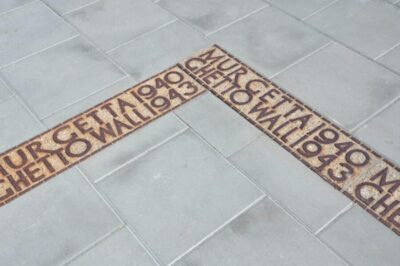
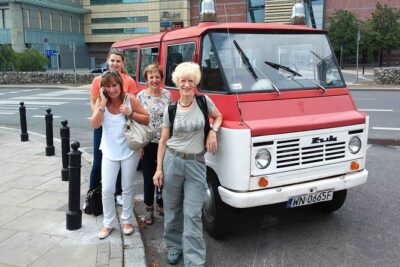
Warsaw for WWII Buffs – private tour with hotel pickup
Read the review →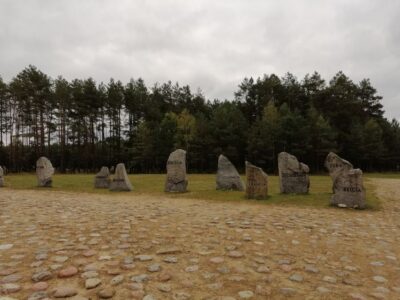
Treblinka Death Camp 6 Hour Private Tour from Warsaw
Read the review →
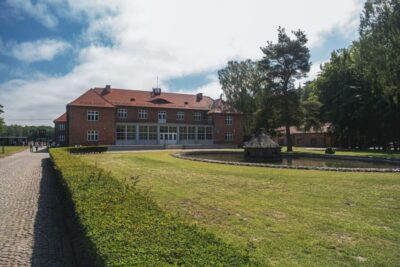
Stutthof Concentration Camp English Tour with Gdansk Hotel pickup
Read the review →
Majdanek Concentration Camp & Lublin Full Day Private Tour from Warsaw
Read the review →Browse the lists this tour appears in