
Reviewed · JEWISH QUARTER & GHETTO TOURS
Private tour: Jewish heritage in Warsaw
Warsaw’s Muranów district was built on the ruins of the former Jewish ghetto, so this private walking tour does more than point out memorials. It helps you read the modern streets as places shaped by wartime destruction, deportation, resistance, and postwar rebuilding. I like the stop at the Ghetto Heroes Monument and the visit to the hidden wall fragments, two places that can be easy to miss without a guide.
I also like the personal format. You can ask Anna, the guide praised in the tour feedback, to explain difficult events at your own pace, and one account notes that she was flexible enough to pause for a cool drink on a warm day. The main consideration is that this is a serious, compact history walk, not a light sightseeing outing, and the Nożyk Synagogue admission is not included.
Key points to know before booking
- Muranów is the setting: The district was built over the former Warsaw ghetto, making the streets themselves part of the story.
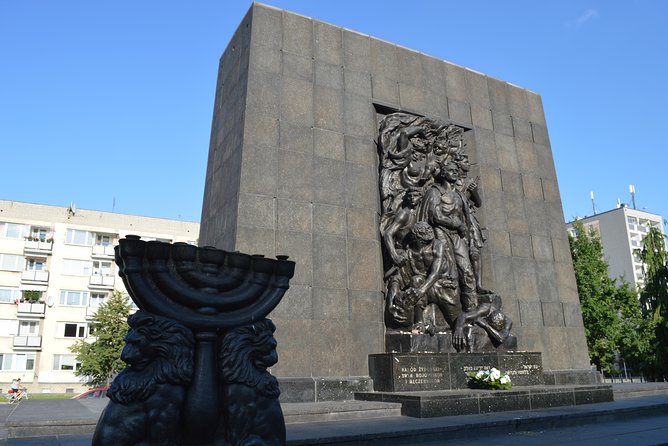
- The Ghetto Heroes Monument is a central stop: You’ll learn about the 1942 deportations to Treblinka and the 1943 uprising.
- Umschlagplatz brings the deportations into focus: This memorial marks the place from which thousands of people were sent to Treblinka.
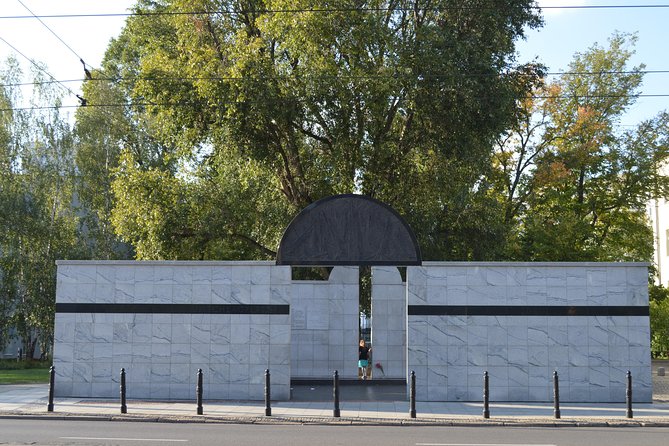
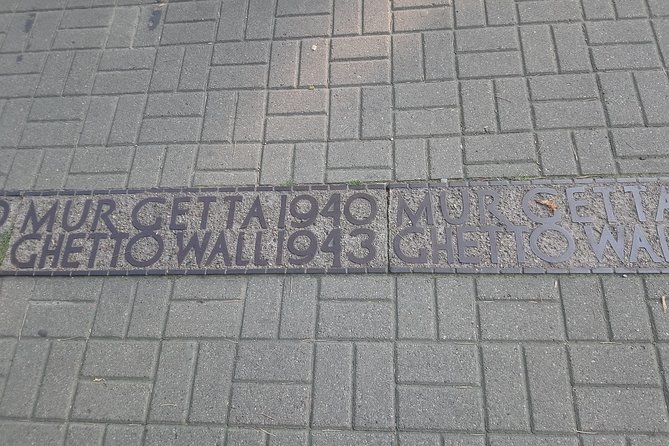
- Two wall fragments are tucked away: Their backyard location shows how easily important traces can disappear into ordinary city life.
- Street art adds a modern layer: The walk includes murals and other works recalling the Polish Jewish residents of the area.
- The private format has real value: Your group of up to 10 can ask questions and adjust the pace without sharing the guide with strangers.
Why Muranów is the right place to start
The tour begins at Kino Muranów, at General Władysława Andersa 5. This is not simply a convenient meeting point. Muranów gives you the physical setting for the entire visit: a present-day neighborhood built over the remains of the wartime ghetto.
That contrast matters. You will see ordinary streets, apartment buildings, public spaces, and street art, while learning that this ground once held a tightly confined Jewish district. The guide’s job is to connect what you see now with the people and events that came before. Without that explanation, much of the history would remain invisible.
The opening section lasts about 40 minutes. It includes street art dedicated to people who lived in the area, most of them Polish Jews. This is one of the tour’s more unusual features. The experience is not limited to famous monuments, so you get a sense of how memory appears in present-day Warsaw through artwork as well as formal memorials.
I would pay close attention during this first section. It sets up the rest of the walk and gives you a useful way to think about the city. The story is not kept in one museum or behind one set of doors. It appears in monuments, fragments, courtyards, and streets that might otherwise look unremarkable.
Other Jewish-heritage walks around Warsaw:
- Warsaw: Warsaw Ghetto Private Walking Tour with Hotel Pickup
★ 4.9 · 369 reviews - Warsaw: Jewish History Guided Walking Tour in English
★ 4.7 · 324 reviews - Private Tour: Warsaw’s Jewish Heritage by Retro Fiat
★ 5.0 · 208 reviews
The Ghetto Heroes Monument and the start of the uprising
The next stop is the Monument to the Ghetto Heroes, known in Polish as Pomnik Bohaterów Getta. You spend about 20 minutes here, with no separate admission charge.
This is the place associated with the start of the Warsaw Ghetto Uprising. The guide explains the events of 1942 and 1943, including the deportations to Treblinka and the armed resistance of Jewish insurgents against the Nazis.
The value of a guide is especially clear here. A monument can tell you who is being remembered, but it cannot by itself explain the sequence of events or the choices faced by people trapped in the ghetto. A private guide can slow down when you need more context, answer direct questions, and avoid rushing past details that matter to you.
Anna received particularly strong praise for her clear explanations and thoughtful treatment of Poland’s wartime and postwar history. One account also noted that her explanations went beyond the ghetto itself, touching on different periods of Polish history. That wider context can help you understand why the city’s memory of the war is so layered.
Expect a serious stop. The subject is painful, and the tour does not turn it into a quick photo opportunity. If you prefer sightseeing with a cheerful pace and little historical detail, this may feel heavy. If you want to understand what happened at the place where the uprising began, the stop earns its time.
Umschlagplatz and the scale of deportation
From the Ghetto Heroes Monument, the walk continues to Umschlagplatz. You spend another 20 minutes here, again without an admission fee.
Umschlagplatz was the departure point from which thousands of people were deported to Treblinka in 1942. Today, a memorial marks the site. The physical setting can be difficult to interpret on your own, which makes the guide’s account important. You need the history to understand why this particular place carries such weight.
I find this stop valuable because it shifts the focus from resistance to deportation. The uprising is often the best-known part of the Warsaw ghetto story, but Umschlagplatz reminds you of the mass removal and murder that came before and alongside the armed revolt.
The tour gives you enough time to hear the basic story without trying to turn the memorial into a long lecture. Since this is a private group, you can ask for clarification if dates, locations, or names become hard to follow. That is useful during a walk covering several connected sites in a short period.
Two ghetto-wall fragments in an ordinary backyard
One of the most distinctive stops is a pair of surviving ghetto-wall fragments hidden in a backyard. The visit lasts about 15 minutes.
The location is important. You are not approaching a grand monument in a major square. You are looking for physical remains tucked into an everyday part of the city. That setting shows how easily a historic trace can be overlooked, even when it marks a major chapter in Warsaw’s past.
I like this stop because it makes the city’s history feel less polished and more immediate. The wall fragments are not presented as a complete structure or a grand ruin. They are pieces, preserved amid the modern city. You see how much interpretation depends on someone showing you where to look and explaining what the fragments once represented.
There is also a practical point here. Wear comfortable shoes and expect a walking route through urban streets. The tour lasts around two and a half hours, and the listed stops involve movement between several parts of Muranów and central Warsaw. The experience is accessible to most people, and it is near public transportation, but it remains a walking tour rather than a seated museum visit.
A few more things to do in Warsaw worth a look
- Warsaw: POLIN Museum of the History of Polish Jews Ticket
★ 4.7 · 1,142 reviews - Warsaw: Chopin Concert at Historical Venue in Old Town
★ 4.7 · 445 reviews - Small-Group Historical Guided Tour of Warsaw with pick up/drop off. Public Tour.
★ 4.5 · 343 reviews - Warsaw: Warsaw Historical Group Tour with Pickup & Drop-Off
★ 4.6 · 233 reviews
Nożyk Synagogue, the final stop
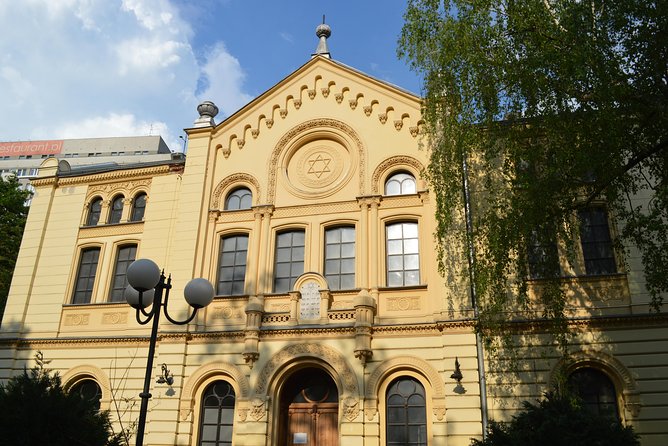
The walk ends at Nożyk Synagogue on Plac Grzybowski. It is described as the only synagogue in Warsaw to survive the Second World War.
This gives the tour a different tone after the memorials and wall fragments. You are seeing a functioning place of Jewish worship and a surviving building, not only sites connected with destruction. The synagogue helps make the subject broader than a story of loss. It points toward continuity and the Jewish presence that remains part of Warsaw today.
The stop lasts about 15 minutes. Admission is not included in the tour price, so check the arrangements when booking if entering the synagogue is important to you. The endpoint is Plac Grzybowski, which can be useful for continuing your own exploration of Warsaw after the guided walk.
Because the tour ends here, you may want to leave room in your schedule rather than booking another timed activity immediately afterward. The guide may raise questions about wartime Poland, communist-era Warsaw, or the city’s present-day Jewish heritage. Anna was praised for explaining these wider subjects clearly, so the final conversation may be as useful as the formal stop itself.
What the private format changes
The tour costs $161.95 per group of up to 10 people. That price is best judged as a group cost, not a per-person fee. If you have six to ten people, the cost can be reasonable for a 2.5-hour private history walk, especially since you are paying for individual attention rather than joining a large scheduled group.
For one or two people, the price is harder to justify on a simple sightseeing budget. You are paying for privacy, flexibility, and the chance to shape the discussion. That can still be worthwhile if Jewish Warsaw is a major reason for your visit or if you want a guide who can handle detailed questions.
The private setup is also useful for families or mixed-age groups. You can ask for a shorter explanation, pause to clarify a point, or request a brief break. One account specifically noted the guide’s willingness to stop for a cool drink in warm weather. That small detail says something practical about the style of the experience: the schedule is structured, but it is not necessarily rigid.
The tour is usually booked well ahead, with an average booking lead time of 63 days. If you want a particular date or time, I would arrange it early. Confirmation is provided at booking, and the activity accepts service animals. Most people can participate, though you should be prepared for a sustained urban walk.
How the guide shapes the experience
The strongest part of this tour is the guide’s role. The places themselves matter, but several are easy to misunderstand without explanation. A wall fragment can look like rubble. A memorial can seem abstract. A street-art piece may go unnoticed. The guide connects these details.
Anna is the guide named in the supplied feedback, though one account spells her name Ana. She is described as easygoing, clear, and willing to answer questions. The comments also point to strong historical understanding and a thoughtful approach to Poland’s wartime and communist periods.
That combination is useful. You do not need only dates and names. You need someone who can explain how the ghetto, the uprising, the deportations, the postwar city, and present-day Jewish memory relate to one another. The guide’s wider context can help prevent the tour from becoming a string of disconnected stops.
You should still ask questions. Private tours reward curiosity. If you want more detail about the uprising, Jewish life before the war, the postwar rebuilding of Muranów, or the symbolism of a particular memorial, this format gives you a natural chance to speak up.
Who will get the most from this walk
I recommend this experience if you want a focused introduction to Jewish Warsaw and prefer learning outdoors rather than spending the whole visit inside a museum. It suits anyone who values context, direct conversation, and lesser-known traces alongside major landmarks.
It is also a good choice if you have limited time. In roughly two and a half hours, you visit five meaningful locations, beginning in Muranów and ending at Plac Grzybowski. The route covers memorials, a synagogue, street art, and surviving wall fragments, so you get several different ways to approach the subject.
You may want a different activity if you are looking for a broad overview of all Warsaw sights. This tour stays tightly focused on Jewish heritage, the ghetto, wartime events, and related periods of Polish history. It is not designed as a general city tour.
The emotional weight deserves consideration, too. The subjects include deportation, the Treblinka death camp, Nazi persecution, and the struggle of Jewish insurgents. The guide treats these events seriously. I would schedule it when you have enough mental space to listen, rather than squeezing it between hurried attractions.
Practical details before you go
The meeting point is Kino Muranów, General W. Andersa 5, 00-147 Warsaw. The tour ends at Plac Grzybowski. Both the starting and ending points are in the city, and the activity is near public transportation.
The listed duration is approximately two hours and 30 minutes. The individual stop times add up to about 110 minutes, leaving the rest for walking between locations and transitions. Keep that in mind when planning your day.
Bring comfortable footwear and water, especially in warm weather. The guide has shown flexibility about stopping for a drink, but it is still wise to arrive prepared. No separate admission is charged for the outdoor memorials or wall fragments. Nożyk Synagogue admission is not included.
Free cancellation is available if you cancel at least 24 hours before the local start time. Cancellations or changes made within 24 hours are not accepted for a refund.
Should you book the Jewish heritage walk?
Book it if you want Warsaw’s Jewish history explained in the places where it happened, not reduced to a checklist of monuments. The private format, the hidden wall fragments, the street art, and the guide’s ability to answer questions give this walk more depth than a simple landmark tour.
I would be especially inclined to book if you have a small group of several people, since the $161.95 price is shared across up to 10 participants. Think twice if you want a light, general sightseeing stroll or if your schedule cannot spare a serious two-and-a-half-hour walk.
For the right audience, this is a thoughtful way to understand Muranów, the Warsaw Ghetto Uprising, the deportations to Treblinka, and the Jewish presence that continues in the city today.
FAQ
Where does the tour begin?
The tour begins at Kino Muranów, General W. Andersa 5, 00-147 Warsaw, Poland.
Where does the tour end?
The tour ends at Plac Grzybowski in Warsaw.
How long does the tour last?
The tour lasts approximately two hours and 30 minutes.
How many people can join the private tour?
The private tour is available for one group of up to 10 people. Only your group participates.
Is admission to Nożyk Synagogue included?
No. Admission to Nożyk Synagogue is not included in the tour price.
What sites are visited?
The route includes Kino Muranów and the Muranów district, the Ghetto Heroes Monument, Umschlagplatz, two fragments of the ghetto wall, and Nożyk Synagogue.
Can I cancel for a full refund?
Yes. You can cancel for a full refund if you cancel at least 24 hours before the experience start time. Cancellations within 24 hours are not refunded.
Just added in Warsaw
- Warsaw Zoo Skip-the-Line Entry Ticket with Private Transport★ 4.8 · 3 reviews
- Warsaw Private Wilanow Palace & Garden Tour★ 4.6 · 30 reviews
- Warsaw: Vodka Tour★ 4.4 · 18 reviews
- Warsaw Wolf’s Lair with St. Lipka and Mamerki Private Guided★ 4.2 · 3 reviews
- Warsaw Uprising and WWII Old Town Walking Tour with Museum★ 4.7 · 15 reviews
- Warsaw Old Town UNESCO HERITAGE walking tour in English★ 4.5 · 23 reviews
- Warsaw: Private Vodka Tasting Night with Snacks and Pickup★ 5.0 · 7 reviews
- Warsaw: Skip-the-Line Royal Castle Guided Tour★ 4.9 · 79 reviews
Jewish Quarter & Ghetto Tours, compared.

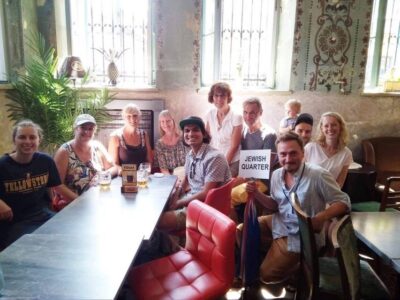
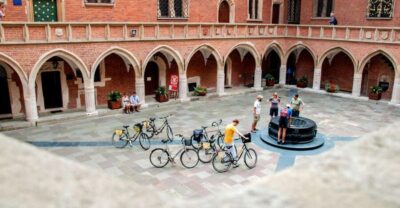
Bike Tour of Old Town, Jewish Quarter and the Ghetto
Read the review →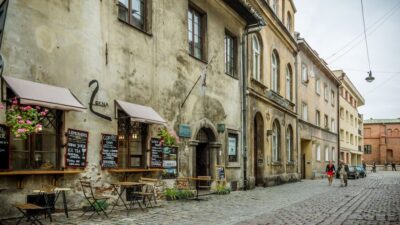
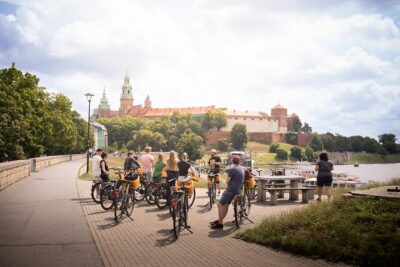
Full Bike Tour – the Old Town, Jewish Qtr & the Ghetto NEW BIKES
Read the review →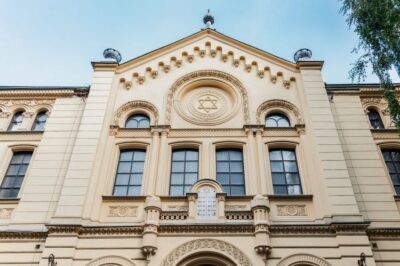
Warsaw Ghetto Private Walking Tour with Hotel Pickup
Read the review →
Bike Tour of the Old Town, Kazimierz, and the Ghetto
Read the review →
Browse the lists this tour appears in