
Reviewed · JEWISH QUARTER & GHETTO TOURS
Jewish Warsaw Walking Tour
Jewish Warsaw is best understood on foot, where a surviving synagogue, a former ghetto boundary, and a small footbridge monument make the past part of the modern city. This tour connects those places with clear storytelling from guides such as Olivia, Jacek, Andrew, and Tomas.
I like the route’s strong sense of place and its focus on what remains, rather than pretending the old Jewish district survived intact. I also like the guide-led explanations, which add detail and dry humor to difficult material. The main drawback is practical: you spend about two and a half hours outside, often standing, and you do not enter the Nozyk Synagogue or POLIN Museum as part of the tour.
Key points to know before you book
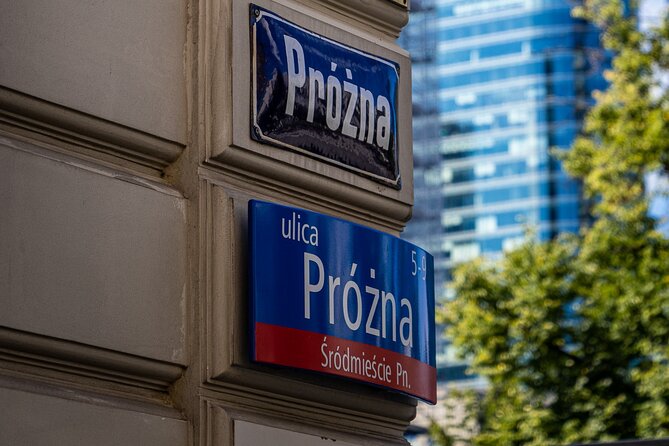
- The route begins at All Saints Church on Grzybowski Square and finishes at the POLIN Museum.
- Nozyk Synagogue is the only surviving pre-war Warsaw synagogue, but admission inside is not included.
- Chlodna Street marks a former ghetto footbridge, one of the route’s most striking reminders of the divided ghetto.
- The tour is mainly outdoors, so warm clothing, rain protection, and comfortable shoes matter.
- Groups can reach 40 people, although a smaller private tour can be arranged separately.
- The $26.59 price covers the booking and guide payment, despite the tour’s pay-what-you-wish format.
Why this walking tour matters in modern Warsaw
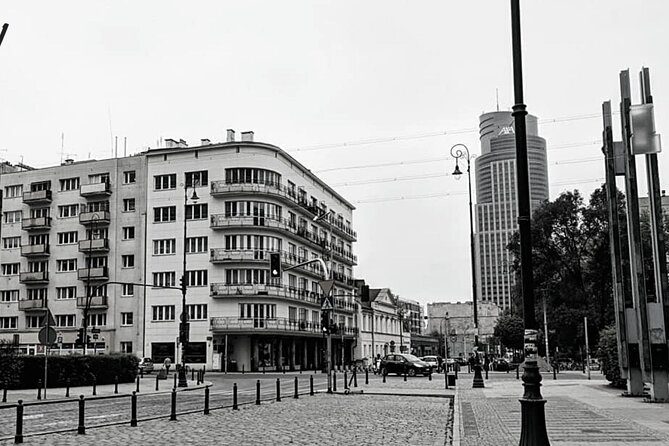
Warsaw can make its wartime past hard to read. Streets were rebuilt, buildings disappeared, and modern offices now occupy areas that once held the Jewish ghetto. You can walk several blocks without seeing an obvious clue.
That is why this route works. It does not rely on a preserved old quarter. Instead, it uses fragments, monuments, street corners, and the guide’s explanation to connect the modern city with the Jewish community that lived here before the Second World War.
The subject is painful. You will hear about the destruction of Jewish life in Warsaw, the ghetto, Nazi persecution, and the Warsaw Ghetto Uprising. The tone is serious, but the guides also use occasional dry humor and small questions to keep the group attentive.
The strongest part of the experience is the human storytelling. Jacek was praised for making the vanished city feel present through detailed descriptions. Olivia is known for answering questions and stressing factual accuracy. Andrew has been described as vivid and fluent in English, while Tomas brings strong knowledge of Polish Jewish history. Your guide will vary, but the tour depends heavily on the person leading it.
More walking tours in Warsaw:
- Warsaw: Old Town Highlights Walking Tour in English
★ 4.7 · 1,516 reviews - Warsaw: Old Town Guided Walking Tour
★ 4.9 · 599 reviews - Half-Day Polish Food Walking Tour with Guide and Dinner
★ 4.5 · 381 reviews
Starting at Grzybowski Square and All Saints Church
The tour begins at All Saints Church, at Grzybowski Square, at 10:00 in the morning. This is a useful starting point because Grzybowski Square is one of the few parts of Warsaw that survived the destruction of the ghetto.
Give yourself time to arrive before the start. You are meeting at a specific church address, not being collected from your hotel. The area is near public transportation, which makes the starting point practical if you are staying elsewhere in the city.
Your guide begins setting the scene here. The square helps you understand how Jewish Warsaw was not an isolated attraction, but part of a larger city. The first stop takes about 20 minutes, though the exact pace depends on the group and the guide’s explanation.
Do not expect a preserved historic square filled with original buildings. The value is in the contrast between what remains and what was lost. You may find this opening more meaningful if you have already walked around central Warsaw and noticed how thoroughly the city was rebuilt.
Nozyk Synagogue, the key surviving building
The next stop is Nozyk Synagogue, the only surviving pre-war synagogue in Warsaw. The tour allows about 30 minutes here, making it one of the more substantial stops on the route.
This is an important pause because most of Jewish Warsaw’s physical buildings are gone. Nozyk Synagogue gives the story a tangible focus. It is not simply a monument or a plaque. It is a surviving religious building linked to the city’s pre-war Jewish community.
There is one important limitation. The walking tour does not include admission inside the synagogue. One person specifically wished for even a brief interior visit, so if seeing the inside matters to you, check opening arrangements separately and plan another visit.
That limitation does not make the stop pointless. Your guide can explain the synagogue’s place in Warsaw’s Jewish life, and the building itself helps you picture the community that once filled this part of the city. Still, you should book this tour as an outdoor history walk, not as a synagogue tour.
Waliców and the former ghetto boundary
At Waliców, the guide points out what was once part of the ghetto border. This stop lasts around 30 minutes and is one of the places where the modern city can obscure the past.
A boundary sounds simple on paper. In person, it helps you grasp how Jewish residents were confined within a controlled area, cut off from normal city life, and subjected to increasingly harsh Nazi rule. The guide’s job here is to explain how the border worked and why particular streets mattered.
This is also where a good guide earns the price. Without explanation, you may see an ordinary Warsaw street. With context, the location becomes a marker of forced separation and lost homes. The tour repeatedly asks you to imagine a vanished city without pretending that imagination can replace the evidence.
Expect to stand while listening. There are no promises of regular indoor breaks, and the route keeps moving through public streets. Comfortable shoes help, but warm layers matter just as much in colder months.
Other Jewish-heritage walks around Warsaw:
- Warsaw: Warsaw Ghetto Private Walking Tour with Hotel Pickup
★ 4.9 · 369 reviews - Warsaw: Jewish History Guided Walking Tour in English
★ 4.7 · 324 reviews - Private Tour: Warsaw’s Jewish Heritage by Retro Fiat
★ 5.0 · 208 reviews - Warsaw: Ghetto, Jewish Cemetery & POLIN Museum Private Tour
★ 4.8 · 132 reviews
Chlodna Street and the footbridge that linked two parts
Chlodna Street is one of the clearest visual moments on the route. The stop marks the place of a footbridge that once connected two sections of the Warsaw ghetto. The bridge allowed movement over a major road, while people below continued with ordinary city traffic.
The physical bridge is gone. A monument now marks its location. This creates a powerful gap between what you see and what once stood there. You are not looking at a full reconstruction. You are looking at a reminder and using the guide’s description to understand the scene.
The stop lasts about 20 minutes. It may be one of the most useful places to bring questions, because the footbridge illustrates how the ghetto was divided even within its own boundaries.
The setting also shows why weather can affect the experience. The tour operates in all weather, and this stop is outdoors. On a cold or windy day, you may spend more energy staying warm than absorbing the details. Dress for the forecast, not for the calendar.
POLIN Museum and the Ghetto Heroes Monument
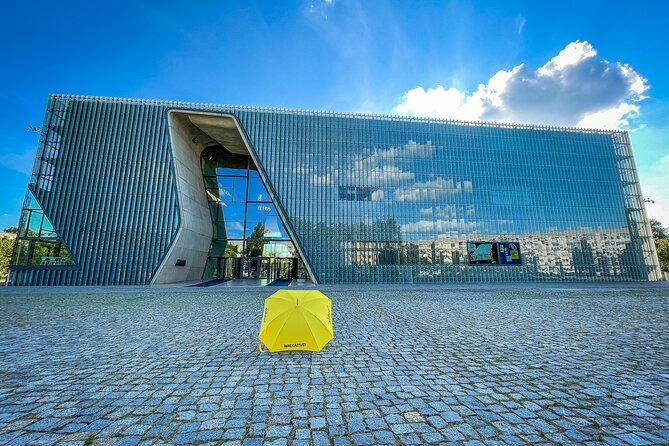
The route continues toward the POLIN Museum of the History of Polish Jews and the 1948 Monument to the Ghetto Heroes. The tour allows about 20 minutes at this part of the route.
POLIN is one of the most important places in Warsaw for understanding Jewish life in Poland, but this walking experience does not include museum admission. The guide uses the museum and nearby monument as part of the outdoor route, so you should not expect a full museum visit during the two and a half hours.
That is actually useful for planning. You can take the tour in the morning and visit POLIN afterward if you want a longer, indoor presentation. The walking route gives you a frame for the museum, while the museum can give you more time with documents, objects, and exhibitions. Admission and opening arrangements are separate from this activity.
The Monument to the Ghetto Heroes is a major point of focus. It commemorates the people who fought in the Warsaw Ghetto Uprising and provides a solemn ending to the route. The guide’s explanation gives the monument meaning beyond its imposing form.
Finishing at the Monument to the Heroes of Warsaw
The final listed stop is the Monument to the Heroes of Warsaw, described in the route as the Monument to the Ghetto Heroes, with about 30 minutes allowed. The naming can be confusing, so pay attention to your guide’s explanation of the monument and its connection to the uprising.
This ending works because the tour moves from community and daily life toward persecution, confinement, resistance, and remembrance. It does not offer a neat emotional resolution. Instead, it leaves you with a clearer understanding of why Warsaw’s memorials matter.
The tour ends at the POLIN Museum, on Mordechaja Anielewicza Street. That makes the finish convenient if you want to continue with the museum, sit down nearby, or take public transportation to another part of the city.
One practical note: the route involves a lot of standing. A person who expected constant walking may find the pace slower than anticipated. The guide may find places to sit during explanations, but you should have a moderate level of physical fitness and be comfortable outdoors for the full period.
The guides make or break the experience
The strongest praise is directed at the guides’ command of the subject and their ability to tell stories. Olivia is noted for her passion, accuracy, and willingness to answer questions. Jacek is praised for painting a vivid picture of Jewish Warsaw when few physical remains survive. Andrew is described as especially detailed and fluent in English.
The guide may also use questions, humor, or small rewards to keep the group engaged. One guide handed out chocolates for correct answers, which gives you an idea of the informal style this company can use.
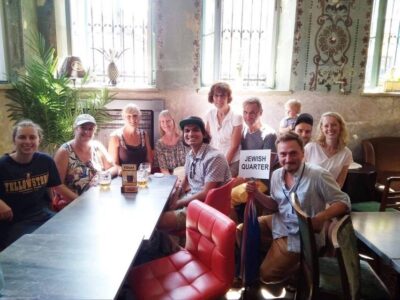
The tour is offered in English and may include up to 40 people. A group that size can be harder to hear, especially near busy roads, so stand close to the guide and arrive early. If you want a quieter pace or more personal discussion, a smaller private tour can be arranged by request.
There is also a clear pay-what-you-wish tradition behind the experience. The $26.59 booking price covers the reservation fee and the guide’s payment, but the guide may still explain the tipping custom and invite an additional reward. You should know this in advance so there is no awkward surprise at the beginning or end.
Is $26.59 good value?
For $26.59, you are paying for a guide-led route, not transport, museum entry, or synagogue entry. That distinction matters. If you only want to see monuments quickly, you can find several locations independently. The price becomes more worthwhile when you want the connections between those places explained clearly.
The route covers about two and a half hours and six main stops. You receive a focused introduction to Jewish Warsaw, the ghetto’s borders, the surviving synagogue, the footbridge site, and the main memorial area. The guide’s stories are the part you cannot get from a map alone.
I consider the value good for a first visit, especially if you have limited time in Warsaw. It is less suitable if you want a museum-heavy experience or a small private group by default. You will need to pay separately for any indoor visits and arrange your own transport to and from the route.
Who should book this walk?
You should book it if you want a serious introduction to Jewish Warsaw and prefer learning through places rather than reading a guidebook alone. It suits adults, families with children accompanied by an adult, and anyone willing to spend a morning outdoors with difficult subject matter.
It is especially useful early in your Warsaw visit. The route can help you recognize important areas before returning on your own, and it may give you better context for a later visit to POLIN.
Think twice if you dislike group tours, standing, or emotionally heavy subjects. A 40-person maximum is reasonable, but the experience will not have the intimacy of a private walk. You should also avoid booking it as a rainy-day indoor activity, since it operates outside in all weather.
Practical details that affect your morning
Meet at All Saints Church, Grzybowski Square 3/5, at 10:00 am. The tour ends at the POLIN Museum, Mordechaja Anielewicza 6. Hotel pickup and drop-off are not included, and transportation between attractions is not provided because this is a walking experience.
Confirmation arrives when you book. Service animals are allowed, and the meeting area is near public transportation. Children must be accompanied by an adult, and everyone should have a moderate level of physical fitness.
Wear shoes you can stand and walk in for two and a half hours. In cold weather, bring more protection than you think you need. A windy day can make the route feel much longer, especially when the guide is speaking at outdoor stops.
Free cancellation is available if you cancel at least 24 hours before the start time. Changes or cancellations made inside that period are not refunded, and the experience may be moved or refunded if the minimum number of bookings is not reached.
Should you book the Jewish Warsaw Walking Tour?
Book it if you want the stories behind the surviving places, not just a checklist of monuments. The route is thoughtful, affordable, and well suited to a first look at Jewish Warsaw, with guides who can make an almost vanished district understandable.
Do not book it expecting synagogue entry, POLIN admission, or a quiet private walk. Instead, arrive prepared for outdoor standing, difficult history, and a group that may be as large as 40 people. For most visitors who want a strong introduction before exploring POLIN on their own, this is a worthwhile use of a morning.
FAQ
Where does the Jewish Warsaw Walking Tour begin?
It begins at All Saints Church, Pl. Grzybowski 3/5, 00-115 Warszawa, Poland.
What time does the tour start?
The scheduled start time is 10:00 am.
Where does the tour end?
It ends at the POLIN Museum of the History of Polish Jews, Mordechaja Anielewicza 6, 00-157 Warszawa, Poland.
How long does the tour last?
The tour lasts approximately two hours and 30 minutes.
What language is the tour offered in?
It is offered in English.
Is admission to Nozyk Synagogue included?
No. The synagogue is visited as an outdoor stop on the route, but admission inside is not included.
Is admission to POLIN Museum included?
No. The tour ends at the POLIN Museum area, but museum admission is not included.
How large can the group be?
The activity has a maximum of 40 travelers.
What happens if I need to cancel?
You can cancel at least 24 hours before the start time for a full refund. Cancellations or changes made less than 24 hours before the start are not refunded.
Just added in Warsaw
- A unique walking tour of Jewish Warsaw — past and present★ 5.0 · 8 reviews
- Tour from Warsaw: Wolf’s Lair, Hitler’s HQ Zones I and II★ 5.0 · 32 reviews
- Wolf’s Lair Private Day Trip from Warsaw★ 5.0 · 50 reviews
- Wolf’s Lair & Treblinka Tour in 1 day from Warsaw★ 5.0 · 37 reviews
- Warsaw: The Original Pub Crawl★ 4.5 · 97 reviews
- Warsaw: Gun Shooting Experience with Transfers★ 4.8 · 97 reviews
- From Warsaw: Tour of the Wolf’s Lair, Hitler’s HQ by Car★ 4.7 · 116 reviews
- Warsaw Traditional Food Tour with Adrian★ 5.0 · 113 reviews
Jewish Quarter & Ghetto Tours, compared.

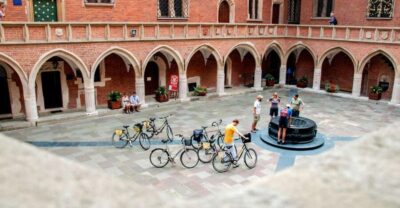
Bike Tour of Old Town, Jewish Quarter and the Ghetto
Read the review →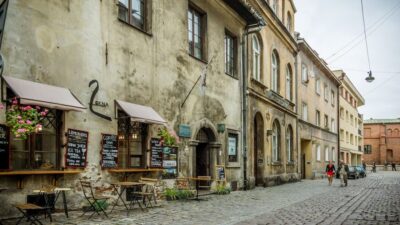
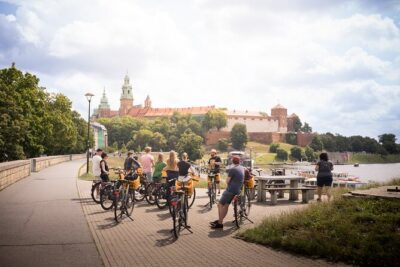
Full Bike Tour – the Old Town, Jewish Qtr & the Ghetto NEW BIKES
Read the review →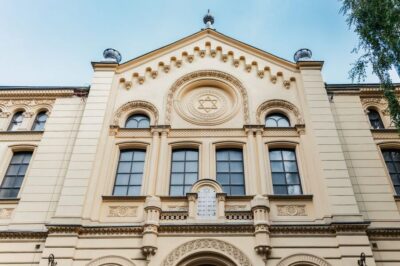
Warsaw Ghetto Private Walking Tour with Hotel Pickup
Read the review →
Bike Tour of the Old Town, Kazimierz, and the Ghetto
Read the review →
Browse the lists this tour appears in