
Reviewed · JEWISH QUARTER & GHETTO TOURS
Private Tour: Warsaw’s Jewish Heritage by Retro Fiat
Warsaw’s Jewish story is easiest to grasp when you move between the surviving places rather than view them as isolated monuments. This private tour links the Ghetto Wall, Nożyk Synagogue, Jewish Cemetery, and Muranów in one four-hour outing, with a guide who can explain what changed from one street to the next. I like the personal format and the vintage Fiat 125p, which turns ordinary city travel into part of the experience. I also like that guides such as Karol, Marcin, Martin, Conrad, and Alec have been praised for clear English and strong historical preparation.
The main drawback is timing. A late-afternoon departure may not allow entry to the synagogue or cemetery, especially since both close from Friday evening through Saturday for the Sabbath. The cemetery and synagogue also require separate admission, and the museum visit is not included, so check opening hours before booking if those stops matter most to you.
Key points before you book
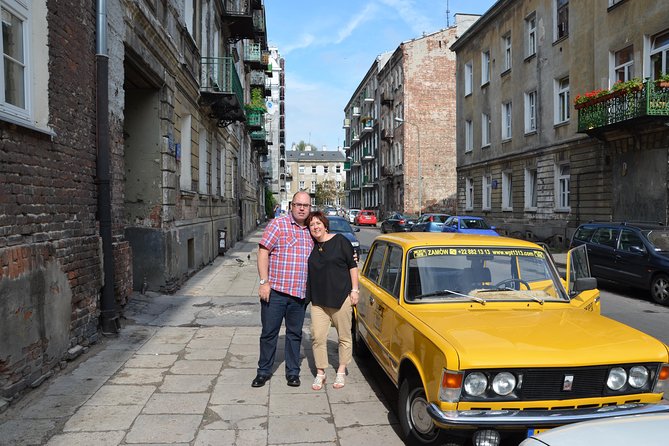
- A private Fiat 125p tour: You travel with only your own group and an English-speaking driver-guide.
- A serious historical focus: The route covers the former ghetto, the 1943 uprising, Jewish religious life, wartime suffering, and modern Warsaw.
- Hotel pickup in central Warsaw: The guide collects you from your hotel lobby or meets you outside.
- Three important indoor options: Nożyk Synagogue and the Jewish Cemetery require separate admission, while POLIN Museum entry is optional.
- Flexible conversation: You can ask about family history, The Pianist, particular memorials, or other Jewish sites.
- A useful schedule warning: Friday evening and Saturday closures can change what you are able to enter.
Seeing Warsaw’s Jewish past from a small Fiat
The tour begins at your chosen pickup point, usually your hotel in central Warsaw. If your hotel is outside the pickup area, the operator asks you to contact them so another meeting plan can be arranged. The listed central meeting point is the Palace of Culture and Science.
The vehicle is a private retro Fiat 125p, the boxy Polish car that gives the outing its visual character. It is not just transport in the usual sense. The car attracts attention as it moves through Warsaw, and it helps connect the city’s recent past with the older history you are about to study.
For groups of four or more, the vehicle changes to a vintage minivan. That may be more comfortable for a larger party, but you will not get quite the same small-car experience. Either way, only your own group participates, which makes it much easier to ask questions or adjust the conversation.
This is best understood as a driving and walking tour. The Fiat brings you between places that are not close together, while several stops give you time to get out and look around. The guide provides the thread linking today’s streets with wartime photographs, memorials, and surviving buildings.
Other Jewish-heritage walks around Warsaw:
- Warsaw: Warsaw Ghetto Private Walking Tour with Hotel Pickup
★ 4.9 · 369 reviews - Warsaw: Jewish History Guided Walking Tour in English
★ 4.7 · 324 reviews - Warsaw: Ghetto, Jewish Cemetery & POLIN Museum Private Tour
★ 4.8 · 132 reviews
The Ghetto Wall and the first hard facts
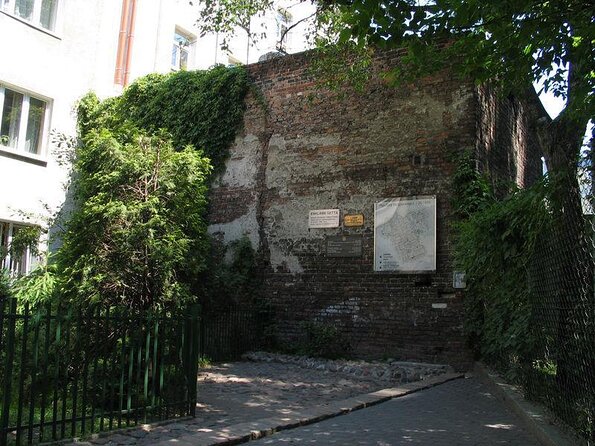
The opening stop is a surviving fragment of the wall built around the Jewish Ghetto in 1940. Commemorative plaques mark the site, and you have about 15 minutes here.
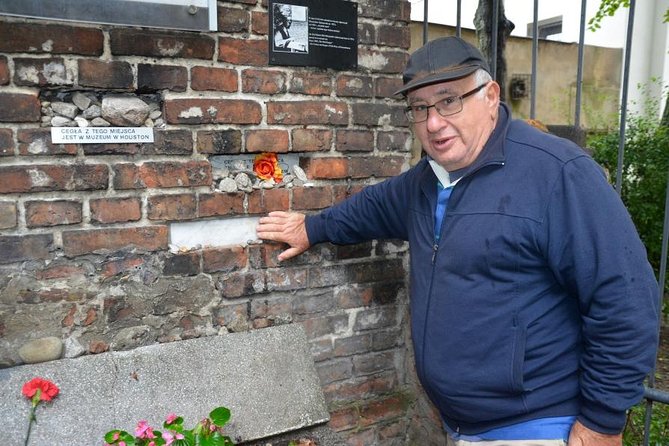
The physical remains are modest. Do not expect a large preserved fortification. Their value is in the contrast between the small section you can see and the scale of the place it represents. More than 400,000 Jews were imprisoned in the ghetto, and modern Warsaw now surrounds these fragments with ordinary buildings and traffic.
A guide is especially useful here because the wall is not self-explanatory. Without context, it can be easy to pass by, take a photograph, and miss what the location means. Expect the guide to explain the restrictions imposed on the Jewish population and the way the ghetto fitted into Nazi occupation policy.
The tour then moves to Chłodna Street, where you see the former site of a footbridge linking sections of the ghetto. The bridge is remembered as a Footbridge of Memory. You also see the building associated with Adam Czerniaków, head of the Jewish Community during the occupation. This short stop lasts about 10 minutes, but it adds an important human and administrative layer to the story.
Muranów and the city built over the former ghetto
The route continues through Muranów, the area once known as the Large Ghetto. Today, modern apartment blocks and street art occupy much of the district. That change is not a side note. It is one of the central facts of visiting Warsaw: the wartime city was largely destroyed, rebuilt, and folded into a new urban plan.
I find this part of the tour useful because it asks you to picture what is no longer visible. The guide may use historic photographs to show how the streets looked during the war and how little of that built environment remains. One street is noted for surviving from both sides of the former ghetto area, offering a rare sense of physical continuity.
The stops connected with Treblinka, a memorial to people who died by group suicide during the uprising, and other lesser-known points add detail beyond the main monuments. The supplied itinerary does not give each of these stops a fixed duration, so the exact time spent may depend on traffic, questions, and your guide’s route.
This flexibility is one of the strengths of a private outing. If you are researching relatives, you can say so at the start. If your main interest is the Warsaw Ghetto Uprising, the guide can give more attention to its memorials and locations. If you want to follow places seen in The Pianist, mention that before setting off.
The Ghetto Heroes Monument and POLIN
The Monument to the Ghetto Heroes is one of the tour’s main stops. It commemorates the Warsaw Ghetto Uprising of 1943 and gives you about 15 minutes to look at the monument and hear its story.
This is a place where a guide can help you read the monument rather than simply photograph it. The surrounding area is also closely tied to the POLIN Museum of the History of Polish Jews, a striking modern building that chronicles more than 1,000 years of Jewish life in Poland.
On the standard tour, you see POLIN from outside for about 15 minutes. Museum entry is not included, but the guide can leave you there after the tour if you choose to visit. That arrangement is practical, since the museum deserves far more time than this four-hour route can provide.
If you have only one day for Jewish Warsaw, you may prefer to book this tour first and return to POLIN separately. The driving route gives you a citywide framework. The museum then gives you the time and displays needed to explore the subject in greater detail.
Other sightseeing runs by little car around Warsaw:
- Private Tour: Warsaw City Sightseeing by Retro Fiat
★ 5.0 · 562 reviews - Discover the Dark Side of Warsaw in Praga District by Retro Bus
★ 5.0 · 327 reviews - Warsaw: 2.5-Hour Dark Side – Praga District by a Retro Bus
★ 4.5 · 248 reviews - Warsaw City Sightseeing in a Retro Bus
★ 5.0 · 196 reviews
Nożyk Synagogue and present-day Jewish life
Nożyk Synagogue is described as the only surviving prewar Jewish house of prayer in Warsaw. The planned visit lasts about 30 minutes, and entry is not included in the tour price.
This stop broadens the experience beyond wartime destruction. It shows that Jewish life in Warsaw is not only a subject of memorials and loss. Nożyk remains an active place of worship, so you should approach it with the same care you would bring to any functioning religious site.
The most important practical point is the schedule. The synagogue is closed from Friday evening through all of Saturday for the Sabbath. A 5 p.m. start can also be too late for entry even during the week, as one guest discovered after booking an evening departure. If seeing the interior matters to you, book a morning or earlier afternoon start and confirm the opening hours.
You may also be asked to cover your head at some Jewish sites. Bring something suitable, or be prepared to follow the site’s instructions.
The Jewish Cemetery and its quiet scale
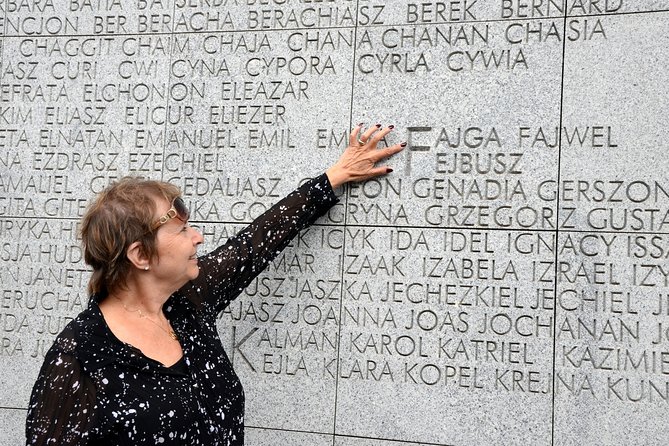
The Jewish Cemetery is another planned 30-minute stop. It contains graves connected with generations of Warsaw’s Jewish community, including religious and political leaders, cultural figures, and thousands of unnamed victims of the ghetto. The grounds also include the remains of graves belonging to more than 200,000 people.
This is likely to be one of the most affecting parts of the route, but it is not a quick scenic stop. Allow yourself time to read, look closely, and absorb the contrast between individual names and the vast number of people represented here.
The cemetery is closed from Friday evening through Saturday, so the same scheduling warning applies. Admission is not included. If your booking is late in the day, ask directly whether the cemetery can be entered, not simply whether it appears on the route.
The cemetery also illustrates why a private guide helps. A visitor on their own may see rows of stones and scattered monuments without knowing which people shaped Warsaw’s religious, political, or cultural life. The guide can point out significant graves and explain how the cemetery relates to the ghetto and the city’s prewar community.
What the guide adds to the four-hour format
The strongest part of this tour is the guide-led explanation between stops. Several named guides have received praise for their command of Warsaw’s past, friendly manner, careful driving, and ability to answer questions. Karol was described as a doctoral student in history, while Martin was praised for placing a complex 800-year timeline into a form that was easy to follow.
Those details matter because this subject can quickly become confusing. Warsaw’s Jewish story spans centuries, the Nazi occupation, the ghetto, the 1943 uprising, postwar reconstruction, and present-day religious life. A good guide helps you understand the order of events and why each location matters.
You should also use the private format actively. Ask for old photographs, family-history help, the former ghetto boundaries, or sites connected with The Pianist. One guide was especially flexible when a participant wanted to visit a small shop near a synagogue selling mezuzot made from molds of original doorposts from Jewish homes in Polish towns.
The experience is not limited to one narrow wartime subject. The route includes general Warsaw history and the city’s postwar changes. That makes it useful even if your interest began with World War II but extends to Poland’s Jewish life before and after the war.
Price, comfort, and practical value
At $108.28 per person, this is not the cheapest way to see Warsaw’s Jewish sites. The price includes a private four-hour vehicle, hotel pickup and drop-off in the city center, and a professional driver-guide. For one or two people, the cost buys privacy, direct conversation, and transport between scattered locations.
The value improves for a small group because everyone shares one private booking. Groups of four or more use a vintage minivan, so the experience becomes less about the Fiat itself and more about the route and guide.
You should budget extra for Nożyk Synagogue and the Jewish Cemetery, since admission is not included. POLIN Museum entry is also separate. If you plan to spend substantial time inside POLIN, treat this tour as a first look at the district rather than a substitute for the museum.
The tour is offered in English and has a mobile ticket. Confirmation is provided at booking. Most people can participate, and the route is near public transport, though the experience itself is built around private vehicle travel and walking at the stops.
Free cancellation is available if you cancel at least 24 hours before the start time. Changes or cancellations made within 24 hours are not accepted for a refund.
Who should book this tour?
I would choose this outing if you want more than a general city tour’s brief mention of the ghetto. It suits people with an interest in Jewish family history, World War II, the Warsaw Ghetto Uprising, Polish Jewish culture, or the places shown in The Pianist.
It is also a good choice if you are short on time. In four hours, you can reach several sites that would be awkward to connect by public transport, while keeping the day private and focused.
I would be more cautious if your priority is spending a long time inside POLIN. The museum is only viewed from outside during the standard route, and it needs a separate visit. I would also avoid a late start if you want the synagogue and cemetery interiors.
The 4.9 rating from 208 reviews and 98 percent recommendation rate fit the tour’s strongest qualities: excellent individual guides, a serious subject handled with care, and a route that combines major memorials with less obvious locations. The one weaker account described a poorly maintained car and a guide who did not match the participant’s interests, so tell the operator exactly what you want to study when booking.
Should you book Warsaw’s Jewish Heritage by Retro Fiat?
Book it if you want a private, guide-led introduction to Jewish Warsaw and value context as much as sightseeing. The Fiat is a fun extra, but the real reason to go is the chance to connect wall fragments, streets, memorials, religious sites, and the cemetery into one understandable story.
Choose an early start, confirm synagogue and cemetery hours, and allow another visit for POLIN if the museum is important to you. With those points handled, this is a thoughtful and efficient way to approach one of Warsaw’s most important chapters.
FAQ
How long does the tour last?
The tour lasts approximately four hours.
Is the tour private?
Yes. Only your own group participates.
What vehicle is used?
The tour uses a private retro Fiat 125p. Groups of four or more travel in a vintage minivan instead.
Is hotel pickup included?
Yes. Pickup and drop-off are included for hotels in the city center. The guide collects you from the lobby or meets you outside the building.
Is the tour offered in English?
Yes. The activity is offered in English.
Which main sites are included?
The route includes a fragment of the Ghetto Wall, Chłodna Street, the former Large Ghetto area in Muranów, the Ghetto Heroes Monument, Nożyk Synagogue, and the Jewish Cemetery. POLIN Museum is viewed from outside unless you choose to visit separately.
Is entry to POLIN Museum included?
No. Museum entry is optional and must be paid for separately.
Is admission to Nożyk Synagogue included?
No. Admission is not included.
When are the synagogue and cemetery closed?
Both Nożyk Synagogue and the Jewish Cemetery are closed from Friday evening through all of Saturday for the Sabbath.
Can I ask to see specific places?
Yes. Since the tour is private, you can tell the guide about particular interests, including family history and locations connected with The Pianist.
Just added in Warsaw
- A unique walking tour of Jewish Warsaw — past and present★ 5.0 · 8 reviews
- Tour from Warsaw: Wolf’s Lair, Hitler’s HQ Zones I and II★ 5.0 · 32 reviews
- Wolf’s Lair Private Day Trip from Warsaw★ 5.0 · 50 reviews
- Wolf’s Lair & Treblinka Tour in 1 day from Warsaw★ 5.0 · 37 reviews
- Jewish Warsaw Walking Tour★ 5.0 · 95 reviews
- Warsaw: The Original Pub Crawl★ 4.5 · 97 reviews
- Warsaw: Gun Shooting Experience with Transfers★ 4.8 · 97 reviews
- Segway Tour Warsaw: Full Tour – 3-Hours of Magic!★ 5.0 · 102 reviews
Jewish Quarter & Ghetto Tours, compared.

Bike Tour of Old Town, Jewish Quarter and the Ghetto
Read the review →
Full Bike Tour – the Old Town, Jewish Qtr & the Ghetto NEW BIKES
Read the review →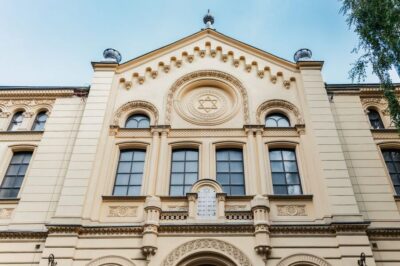
Warsaw Ghetto Private Walking Tour with Hotel Pickup
Read the review →
Bike Tour of the Old Town, Kazimierz, and the Ghetto
Read the review →
Browse the lists this tour appears in