
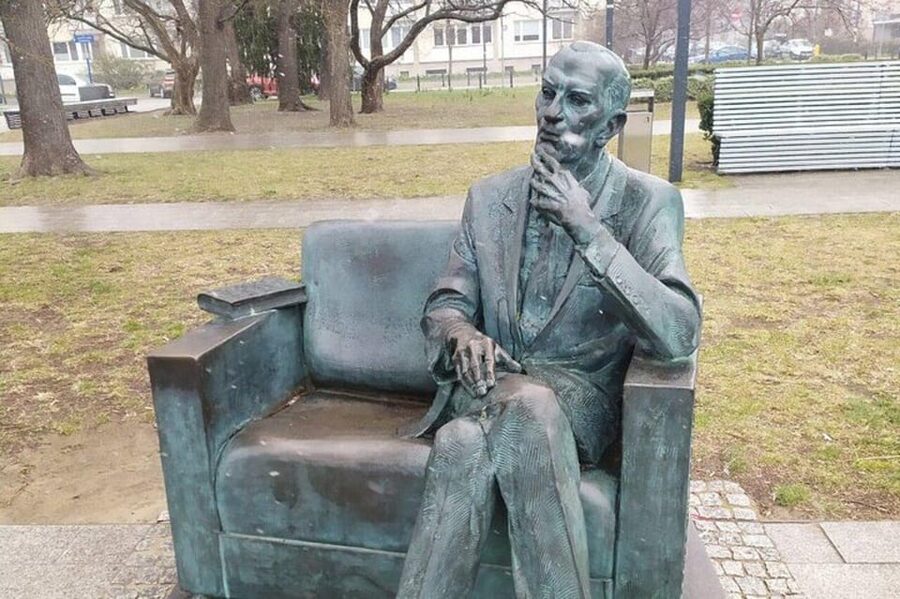
Reviewed · JEWISH QUARTER & GHETTO TOURS
A unique walking tour of Jewish Warsaw — past and present
Warsaw’s Jewish past is not confined to a museum. It is written into a synagogue, a scrap of brick wall, empty spaces in Muranów, and monuments that mark the final stand of people who knew they could not win. This three-hour walk connects those places in a way that makes the city’s history easier to follow.
I like the route’s mix of surviving sites and memorials, and I like that guide Oliwia brings strong storytelling, clear explanations, and even a touch of humor to difficult material. The main drawback is the distance: 4.5 to 5 kilometers on foot can feel demanding if long walks are a problem.
Key points
- See Warsaw’s only surviving prewar synagogue, Nożyk Synagogue, with a 15-minute guided visit.
- Walk through Muranów, the district built over the former Warsaw Ghetto.
- Visit the Umschlagplatz, where about 300,000 Jews were sent toward Treblinka.
- Understand the 1943 Jewish Uprising at Miła 18 and nearby monuments.
- Hear first-hand accounts that give a human scale to the ghetto’s suffering.
- Keep the group small, with no more than 10 participants and an English-speaking guide.
A three-hour walk through a vanished Jewish Warsaw
Before World War II, roughly one third of Warsaw’s residents identified as Jewish. The city was home to the largest Jewish population in Europe, with its own religious institutions, schools, businesses, political groups, writers, artists, and neighborhood life.
The war destroyed that world. The Nazi occupation forced Jewish residents into the Warsaw Ghetto, where starvation, disease, terror, and deportations took a terrible toll. The ghetto uprising of 1943 followed, not because its fighters expected victory, but because armed resistance offered a final choice in a situation designed to leave none.
This tour helps you connect that broad story to actual places. You move from the surviving Nożyk Synagogue through market streets and Muranów, then toward the memorials that mark resistance, deportation, and loss.
I find that structure more useful than a tour that stays in one museum. You see what survived, what was destroyed, and how modern Warsaw has chosen to remember.
More walking tours in Warsaw:
- Warsaw: Old Town Highlights Walking Tour in English
★ 4.7 · 1,516 reviews - Warsaw: Old Town Guided Walking Tour
★ 4.9 · 599 reviews - Half-Day Polish Food Walking Tour with Guide and Dinner
★ 4.5 · 381 reviews
Starting at Sienna 53 and finding the guide
The meeting point is in front of Baguette Mi restaurant at Sienna 53. Look for a guide carrying a white and green umbrella. That detail matters in a busy city, especially if several groups are gathering nearby.
The tour is conducted in English and limited to 10 people. A small group gives you a better chance to hear the guide clearly and ask questions, while also making it easier to stay together on city sidewalks.
Plan on being ready to walk soon after the start. The route covers about 4.5 to 5 kilometers, and the tour lasts around three hours. Wear comfortable shoes and allow enough time for a steady walk rather than treating this as a quick stop between other attractions.
The route is wheelchair accessible according to the activity details, but the walking distance still deserves attention. If you have trouble walking long distances, this may not be the right format for you.
Nożyk Synagogue, a rare surviving place of worship
Nożyk Synagogue is the only Warsaw synagogue that survived the war and remains in use today. That fact gives the first major stop unusual force. You are not looking at a reconstruction or a memorial alone. You are seeing a place connected to Warsaw’s Jewish life before, during, and after the war.
The guided visit lasts about 15 minutes. That is long enough for an introduction without turning the walking tour into a full synagogue visit. An entry fee is not included, so check the current cost when booking or arriving.
This stop helps set up an important theme: Jewish Warsaw did not begin with the ghetto and did not end with 1945. The tour looks at the long Jewish presence in Poland, the reasons communities settled there, their growth in Warsaw, and the quieter return of Jewish life in the present day.
I especially like beginning here. It gives you a living point of reference before the route moves into places shaped mainly by destruction and remembrance.
Hala Mirowska and traces of ordinary life
The next stop is Hala Mirowska, where the guide spends about 10 minutes. The market hall offers a useful change of focus. Instead of seeing Jewish history only through monuments, you get a sense of the everyday city in which Jewish and non-Jewish residents worked, traded, ate, and moved through the same streets.
The stop is brief, but that is sensible. The power of this tour comes from placing many locations into one connected story. You do not linger at every point as you would on a museum visit. Instead, the guide uses each place to explain another part of Warsaw’s past.
This is also where visual aids can help. The tour includes them, along with background information supplied before the visit. Old images and maps are particularly useful in Warsaw, where wartime destruction and postwar rebuilding changed the appearance of entire districts.
Other Jewish-heritage walks around Warsaw:
- Warsaw: Warsaw Ghetto Private Walking Tour with Hotel Pickup
★ 4.9 · 369 reviews - Warsaw: Jewish History Guided Walking Tour in English
★ 4.7 · 324 reviews - Private Tour: Warsaw’s Jewish Heritage by Retro Fiat
★ 5.0 · 208 reviews - Warsaw: Ghetto, Jewish Cemetery & POLIN Museum Private Tour
★ 4.8 · 132 reviews
Muranów and the city built over the ghetto
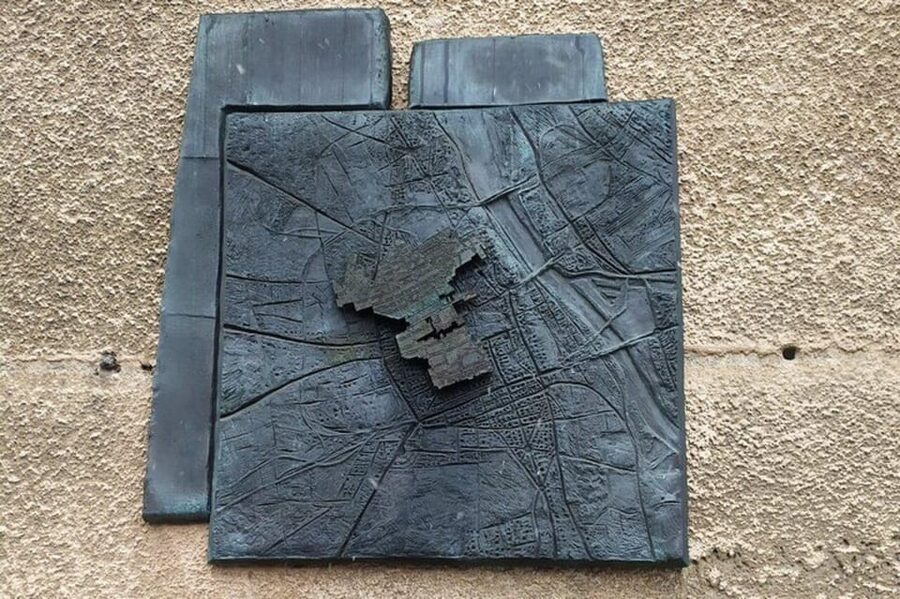
Muranów is the core of the walk. You spend about 30 minutes here, the longest scheduled stop, and with good reason. This district occupies the area of the former Warsaw Ghetto, but much of what you see today dates from the postwar city.
That can make the history difficult to picture. Streets may look ordinary, while the ground beneath them carries the memory of imprisonment, deportation, and revolt. The guide’s job here is to help you understand the gap between the current neighborhood and the wartime city that once occupied it.
You will learn about the ghetto’s creation, the conditions inside it, and the choices forced upon its residents. The tour also includes first-hand accounts from Jews who survived life in the ghetto. Those accounts bring personal detail to events that can otherwise become a string of dates and statistics.
Oliwia has received particularly strong praise for explaining the ghetto’s history clearly and for making each detail easy to follow. That is important here. Muranów asks you to imagine a vanished city, so good narration matters as much as the physical sights.
The Ringelblum Archive memorial and the work of memory
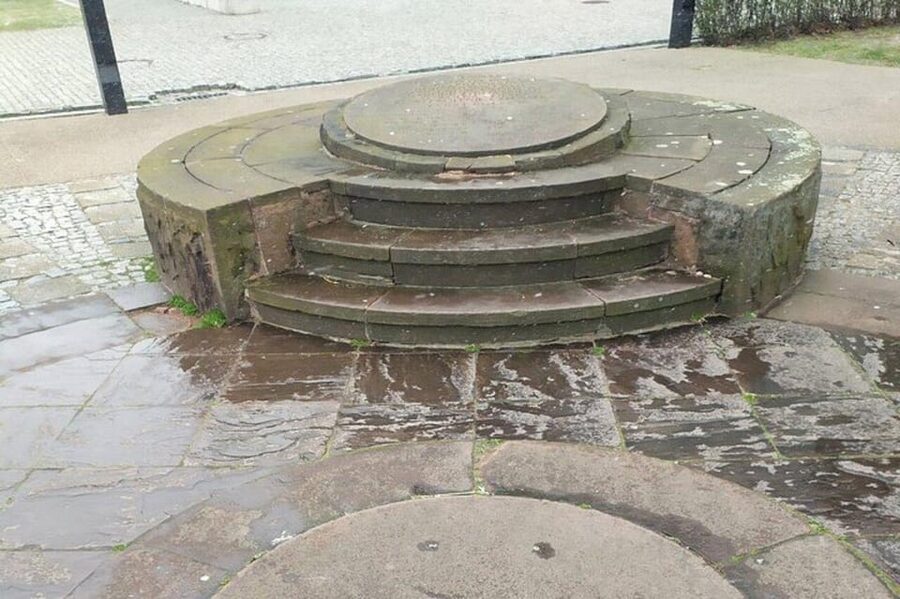
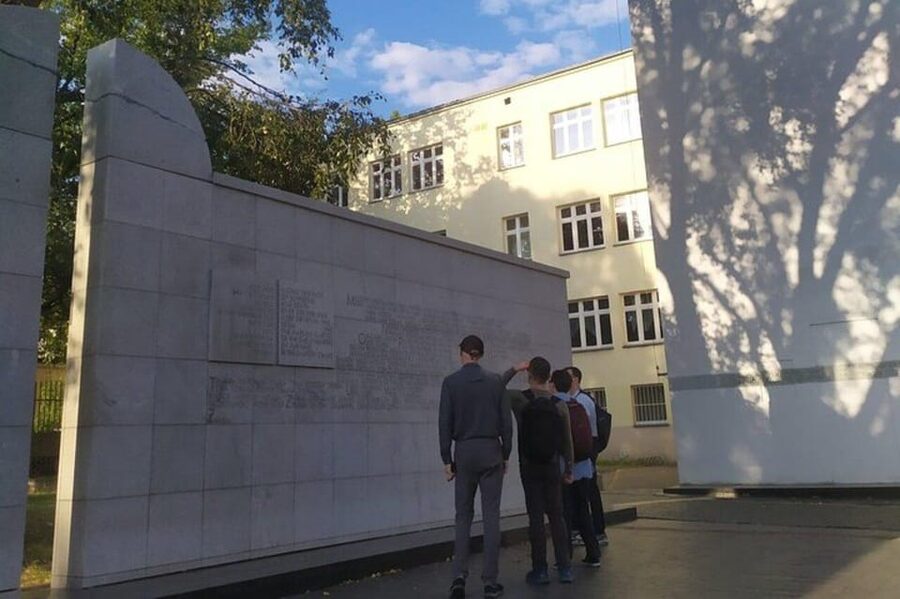
The stop connected with the Ringelblum Archive takes about 10 minutes. The archive preserved documents, writings, and records created in secret during the ghetto. It is a reminder that people under extreme conditions still worked to record what was happening around them.
This stop adds another layer to the tour. You are not only learning what happened to Warsaw’s Jews. You are also considering how they tried to preserve evidence, names, observations, and testimony for a future they might never see.
For me, this is one of the most valuable parts of the route because it shifts attention from the victims as passive figures to people making deliberate choices. They documented daily life, suffering, and the actions of the occupying authorities. That record helps prevent the ghetto story from being reduced to a few famous monuments.
The pace remains steady, with short explanations at each place. If you prefer long, quiet museum visits, you may want to return to these subjects afterward with more time. The walking tour gives you a strong framework first.
POLIN Museum and the longer story of Polish Jews
The route reaches the POLIN Museum of the History of Polish Jews for a 10-minute guided stop. The museum is one of Warsaw’s major institutions devoted to Jewish history, and its location in Muranów makes it an important part of this route.
You do not receive a full museum visit during the tour. An entrance fee is not included, and the scheduled stop is brief. Think of this as an introduction that can help you decide if you want to return for a longer visit later.
That distinction is useful. POLIN covers close to 1,000 years of Jewish history in Poland, while the walking tour focuses more strongly on Warsaw, the ghetto, the uprising, and the Jewish community today. The museum can give you more room to study the earlier centuries and the many forms of Jewish life that existed before the war.
The guide also discusses the present Jewish community in Warsaw. That keeps the tour from ending in 1945. You see how remembrance and renewed Jewish life exist side by side in the modern city.
Miła 18 and the decision to resist
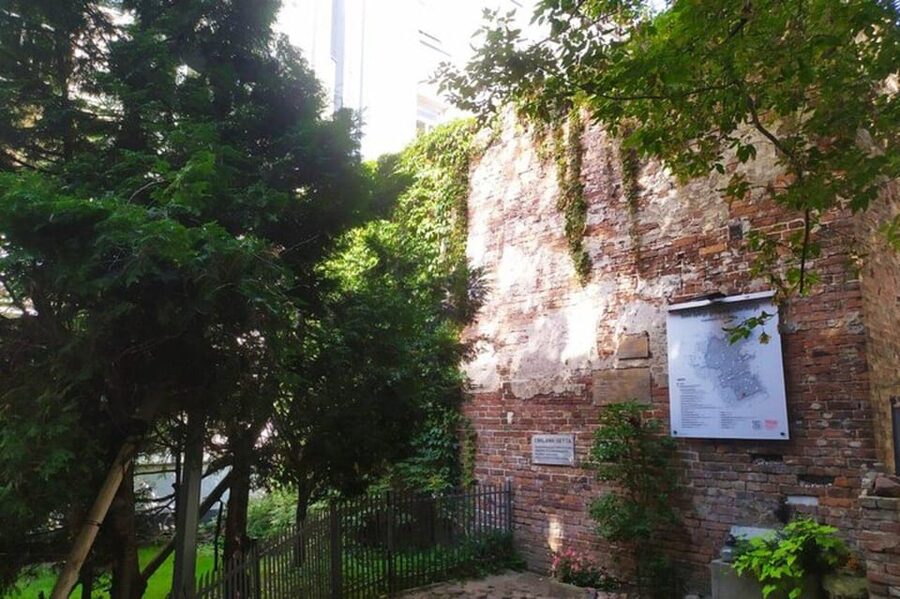
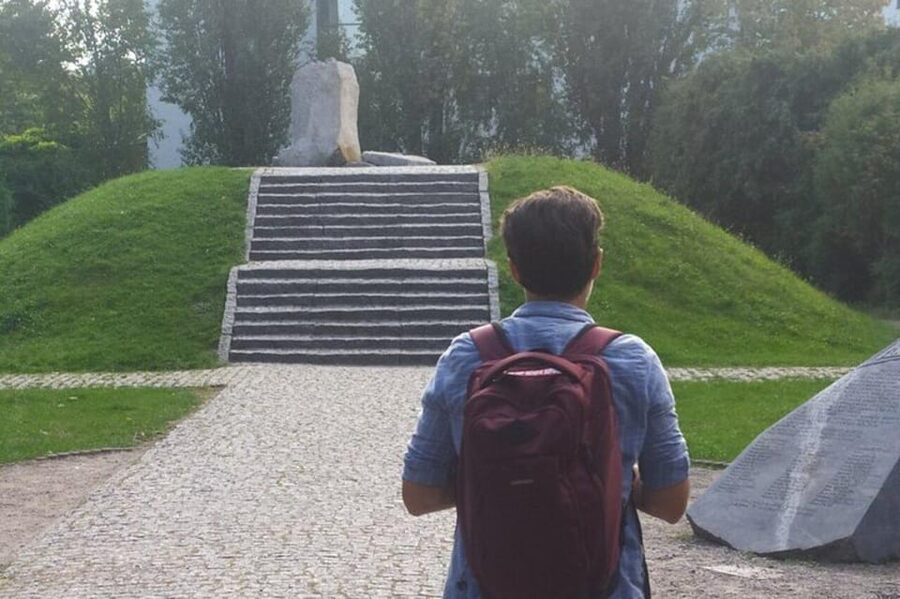
Miła 18 is linked with the Jewish Uprising of 1943. The stop lasts about 10 minutes and is one of the most emotionally important points on the walk.
The uprising was not a campaign planned with a realistic chance of military victory. The fighters understood that their position was desperate. The decision to resist was about dignity, solidarity, and refusing to accept complete control over the terms of their deaths.
A good guide must explain that choice without turning it into a simple heroic tale. The people in the ghetto faced hunger, fear, exhaustion, and the knowledge that the surrounding forces had far greater weapons and resources. Their resistance was still meaningful, but it came at a devastating cost.
Oliwia’s explanations have been praised for clarity, detail, and strong delivery. That combination is useful at Miła 18, where the emotional weight can otherwise make it hard to absorb the historical facts.
Finishing at Umschlagplatz
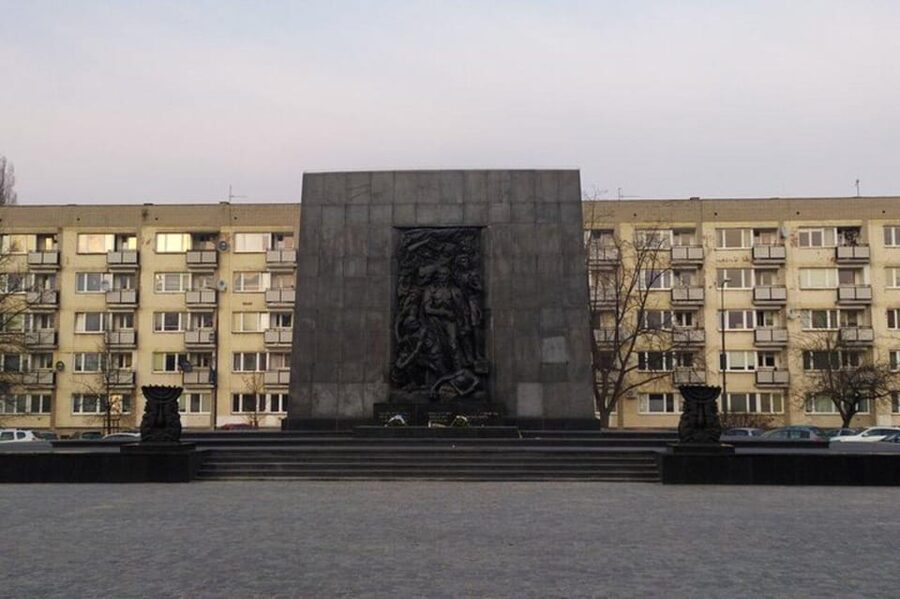
The walk ends at the Umschlagplatz monument. This was the place from which about 300,000 Jews were deported toward Treblinka. Ending here gives the tour a stark final point.
The monument marks the machinery of deportation, but the stop also brings together the themes introduced earlier: the destruction of a large community, the loss of ordinary life, the evidence preserved by the Ringelblum Archive, and the resistance that followed.
You should expect this final stop to be serious. It is not a photo opportunity in the usual sightseeing sense. The guide’s role is to explain what happened and to help you understand the scale of the deportations without losing sight of the individuals involved.
Since the tour ends here rather than returning to the starting point, think about what you want to do afterward. The included recommendations cover more places to visit, as well as suggestions for eating and drinking in Warsaw.
What the $32 price includes
At $32 per person, this is a fair price for a three-hour small-group walking tour, especially if you want a guided introduction before exploring museums on your own. You are paying for the guide’s time, route planning, visual aids, background material, and the ability to ask questions during the walk.
The small group limit of 10 improves the value. A crowded group can make serious historical discussion feel rushed or impersonal. Here, the format should allow you to hear the explanations and stay involved.
The price does not cover entry to Nożyk Synagogue or POLIN Museum. That keeps the basic tour cost lower, but budget extra if you want to enter both. The POLIN stop is only a short introduction, so many people may choose to return separately for a longer museum visit.
You also receive an information pack before the tour, with frequently asked questions and useful links. Recommendations for additional places, food, and drinks are included as well. Those extras are helpful if Warsaw is new to you and you want to continue exploring the subject after the walk.
Free cancellation is available up to 24 hours before the start, and you can reserve now and pay later. Those terms give you some flexibility when planning a city break.
The guide makes or breaks this subject
A Jewish Warsaw tour needs more than a list of addresses. It requires careful explanation, a sense of proportion, and the ability to speak about suffering without flattening people into symbols.
Oliwia is the named guide most often associated with this experience. She has been praised for her command of the ghetto’s history, clear delivery, engaging intonation, and a light touch of humor when appropriate. Her strength appears to be making complex events understandable while keeping the human side in view.
That matters because the tour covers nearly 1,000 years of history in only three hours. You will not receive every detail, but you should leave with a clear timeline and a better grasp of why the surviving sites and memorials matter.
The subject is heavy, and the tone is not casual sightseeing. Still, the guide’s warmth and direct manner can help keep the walk accessible rather than bleak from beginning to end.
Who should book this walk
I would choose this tour if you want a focused introduction to Jewish Warsaw and prefer to learn through places rather than spend your whole visit indoors. It suits first-time visitors who want historical context before visiting POLIN Museum on their own.
It is also a good choice for anyone interested in World War II, memorial culture, Jewish history, or the Warsaw Ghetto Uprising. The route gives you a broad view while still stopping at specific sites connected to major events.
You should think twice if you dislike walking, want a slow museum tour, or prefer a lighter sightseeing experience. The route covers 4.5 to 5 kilometers, and the subject matter includes deportation, starvation, resistance, and mass death.
For the best experience, wear comfortable shoes, arrive early enough to find the white and green umbrella, and leave time afterward for POLIN or another recommended site.
Should you book the Jewish Warsaw walking tour?
Book it if you want a thoughtful, place-based introduction to Jewish Warsaw, especially with a small group and a guide who can explain the ghetto’s history in clear human terms. The route is well chosen, moving from the surviving Nożyk Synagogue to the memorials of Muranów and Umschlagplatz.
Skip it if long walks are difficult or if you want a full visit to POLIN Museum included in the price. For most visitors interested in Warsaw’s past, though, $32 buys a useful three-hour framework, strong storytelling, and a better understanding of what the city lost and what it continues to remember.
FAQ
How long does the Jewish Warsaw walking tour last?
The tour lasts approximately three hours.
How far does the tour walk?
The route covers approximately 4.5 to 5 kilometers.
What language is the tour conducted in?
The tour is conducted in English.
How large is the group?
The group is limited to 10 participants.
Where does the tour start?
The meeting point is in front of Baguette Mi restaurant at Sienna 53.
How do I find the guide?
Look for a guide carrying a white and green umbrella at the meeting point.
Does the tour enter Nożyk Synagogue?
There is a guided visit at Nożyk Synagogue lasting about 15 minutes, but the synagogue entry fee is not included.
Is the POLIN Museum admission included?
No. The POLIN Museum entry fee is not included. The scheduled guided stop at the museum lasts about 10 minutes.
Is the tour wheelchair accessible?
Yes, the activity is listed as wheelchair accessible. However, it is not recommended for people who have problems walking long distances.
Just added in Warsaw
- Tour from Warsaw: Wolf’s Lair, Hitler’s HQ Zones I and II★ 5.0 · 32 reviews
- Wolf’s Lair Private Day Trip from Warsaw★ 5.0 · 50 reviews
- Wolf’s Lair & Treblinka Tour in 1 day from Warsaw★ 5.0 · 37 reviews
- Warsaw: The Original Pub Crawl★ 4.5 · 97 reviews
- Warsaw: Gun Shooting Experience with Transfers★ 4.8 · 97 reviews
- Jewish Warsaw Walking Tour★ 5.0 · 95 reviews
- Warsaw Traditional Food Tour with Adrian★ 5.0 · 113 reviews
- Warsaw: 3-Hour Guided City Highlights Tour by Segway★ 4.9 · 102 reviews
Jewish Quarter & Ghetto Tours, compared.

Bike Tour of Old Town, Jewish Quarter and the Ghetto
Read the review →
Full Bike Tour – the Old Town, Jewish Qtr & the Ghetto NEW BIKES
Read the review →
Warsaw Ghetto Private Walking Tour with Hotel Pickup
Read the review →
Bike Tour of the Old Town, Kazimierz, and the Ghetto
Read the review →
Browse the lists this tour appears in