
Reviewed · JEWISH QUARTER & GHETTO TOURS
Historical Walking Tour of Jewish Warsaw
The most striking thing about this tour is that much of the former Warsaw Ghetto is gone. You do not walk through a preserved historic quarter. You walk through modern Warsaw, where a wall fragment, a street line, a memorial, or a quiet patch of ground may be the only visible clue to what stood there. A skilled guide helps you read those clues.
I like the small group limit of 10, which gives guides such as Aga, Agnieszka, and Oliwia room to answer questions and use maps and old photographs. I also like the route’s range: Nożyk Synagogue, the ghetto wall, Miła 18, the Heroes of the Jewish Ghetto Memorial, and Umschlagplatz form a clear three-hour story. The drawback is simple: this is a long walk, with cobblestones and relatively few surviving buildings, so sturdy shoes and realistic expectations matter.
Key points to know before you go
- The route covers the former ghetto on foot: Expect about three hours, ending at Umschlagplatz rather than returning to the starting point.
- Nożyk Synagogue still functions today: It is the only Warsaw synagogue from before the war that survived and remains in use, with a 20 PLN entry fee not included.
- Most of the evidence is memorial-based: Wall fragments, monuments, street patterns, photographs, and visual aids do much of the storytelling.
- The group is capped at 10 people: That is useful for a serious subject where questions and quiet discussion matter.
- The tour reaches important sites other walks may skip: These include Ringelblum’s archive location, St. Augustine’s Church, the courthouse, Miła 18, and Umschlagplatz.
- Plan for weather and distance: Bring an umbrella, wear strong walking shoes, and avoid pairing this with too many other museum visits if your feet tire easily.
Why this tour matters in a city rebuilt after war
Warsaw makes you work a little to find its Jewish past. The former Jewish Ghetto was almost completely destroyed during the Second World War, and postwar rebuilding changed the streets beyond recognition. That can make a walking tour here feel less visually rewarding than a stroll through Kraków’s preserved Jewish quarter.
It can also make the experience more revealing. You see how memory is marked in a city that no longer has the buildings to tell its own story. The guide points out what survived, what disappeared, and where the old ghetto sat within today’s Warsaw.
The route covers Jewish life before the war, the creation and operation of the ghetto, resistance, deportation, and the destruction of the Jewish community. The subject is painful, and the best guides handle it with calm facts and human feeling rather than theatrical delivery.
Aga, Agnieszka, and Oliwia are named as guides associated with the tour. The strongest descriptions of their guiding style point to clear explanations, personal warmth, excellent English, and the use of maps and photographs. One useful quality is their ability to connect a bare site with the people and events that once filled it.
More walking tours in Warsaw:
- Warsaw: Old Town Highlights Walking Tour in English
★ 4.7 · 1,516 reviews - Warsaw: Old Town Guided Walking Tour
★ 4.9 · 599 reviews - Half-Day Polish Food Walking Tour with Guide and Dinner
★ 4.5 · 381 reviews
Starting at Sienna 53 and finding your bearings
The tour begins at Sienna 53, on the corner with Jana Pawła II Avenue, near the Baguette Mi banh mi bistro. The opening introduction is brief, about five minutes, so you quickly move into the subject rather than spending a long time on general orientation.
This is a practical meeting point near public transportation. Check the exact location carefully before setting out. One person arrived late after being misled by a map app and had to catch up with the group, so do not rely blindly on Apple Maps or a last-minute search.
From the start, expect the guide to establish the basic geography of prewar Jewish Warsaw and the wartime ghetto. That foundation matters because present-day streets do not always make the old boundaries obvious.
Nożyk Synagogue and the Jewish Warsaw that survived
Nożyk Synagogue is one of the route’s most important physical survivors. It is the only Warsaw synagogue from before the war that survived and remains today.
The stop lasts about 10 minutes. Admission is not included, and the stated entry fee is 20 PLN. Since the visit is short, you should treat it as a focused stop rather than a full synagogue tour.
I value this part of the route because it gives you an actual prewar building to stand inside or beside. Much of the rest of the walk depends on monuments and visual material. Here, you have a direct connection to Jewish religious life in Warsaw.
The synagogue also helps keep the story from becoming only a story of wartime destruction. Jewish Warsaw existed for centuries before 1939, with religious, cultural, commercial, and family life that cannot be reduced to the ghetto years. The tour’s broader context helps place the war within that longer story.
The ghetto wall fragment and the problem of absence
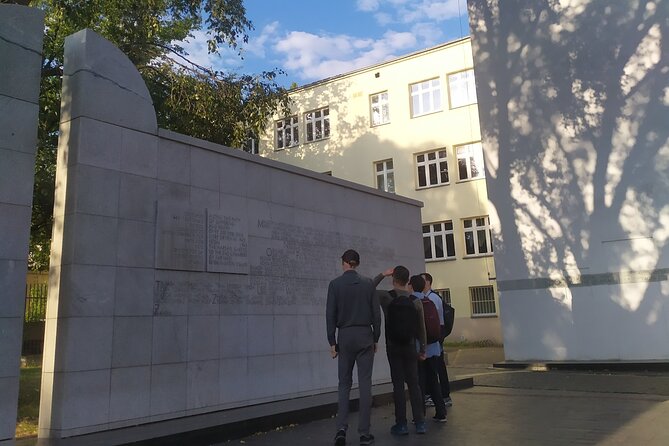
The remaining ghetto wall fragment is a short but powerful stop. About 15 minutes are set aside to see one of the few surviving sections.
Do not expect a large fortified ruin. The value lies in its small scale and in the contrast between the fragment and the modern city around it. A guide can show you how such a modest piece fits into the former ghetto’s boundaries and why fragments like this matter.
This is also where your expectations should be clear. If you want long stretches of original walls, intact streets, or a preserved district, this tour may disappoint you. The evidence is scattered, and some of the most important work is visual and explanatory.
Maps and historical photographs are particularly useful here. They allow you to compare the street in front of you with the street that existed during the war. Without that support, you might walk past the wall fragment without understanding its place in the larger story.
Other Jewish-heritage walks around Warsaw:
- Warsaw: Warsaw Ghetto Private Walking Tour with Hotel Pickup
★ 4.9 · 369 reviews - Warsaw: Jewish History Guided Walking Tour in English
★ 4.7 · 324 reviews - Private Tour: Warsaw’s Jewish Heritage by Retro Fiat
★ 5.0 · 208 reviews - Warsaw: Ghetto, Jewish Cemetery & POLIN Museum Private Tour
★ 4.8 · 132 reviews
Two hours through the former Warsaw Ghetto
The longest section takes about two hours and five minutes. It covers a broad area of the former ghetto and includes several sites that are easy to miss if you explore alone.
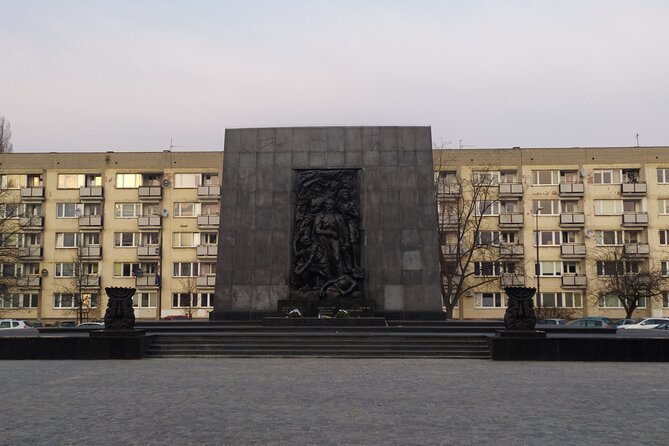
You see the Jewish Ghetto Memorial and the nearby Heroes of the Jewish Ghetto Memorial, two essential places for understanding both remembrance and resistance. The route also includes Miła 18, the site of Anielewicz’s Bunker, associated with the Warsaw Ghetto Uprising.
Miła 18 is not a preserved bunker that you enter. It is a memorial site, and the surrounding setting requires the guide’s explanation to make its importance clear. This is a good example of how the tour works: you often see a place, not a complete building, and then use stories, photos, and maps to understand what happened there.
The route also reaches Muranów, the residential district built in the area of the former ghetto. Modern apartment blocks now occupy much of the old site. That contrast can feel jarring, but it shows how completely Warsaw was altered by war and reconstruction.
Other stops include the courthouse on Solidarności Street, the Church of St. Augustine, and the location connected with the discovery of Ringelblum’s archive. These are not random additions. Together, they widen the story beyond the famous uprising memorials.
Ringelblum’s archive is especially important because it preserved firsthand records of life under Nazi occupation. The tour does not replace reading the archive or visiting a museum, but the location gives the documents a physical setting.
St. Augustine’s Church adds another layer to the route. The church and its surroundings help explain the complicated urban setting of the ghetto and the way surviving structures became reference points during the war.
The long middle section is where the guide’s skill matters most. A list of monuments alone would feel thin. A well-presented route connects the sites into a sequence: daily life, confinement, hunger, terror, organized resistance, deportation, and memory.
Karski’s bench and the monuments along the way
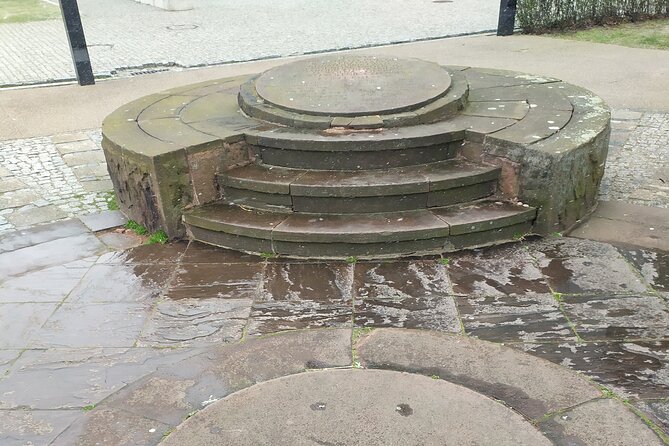
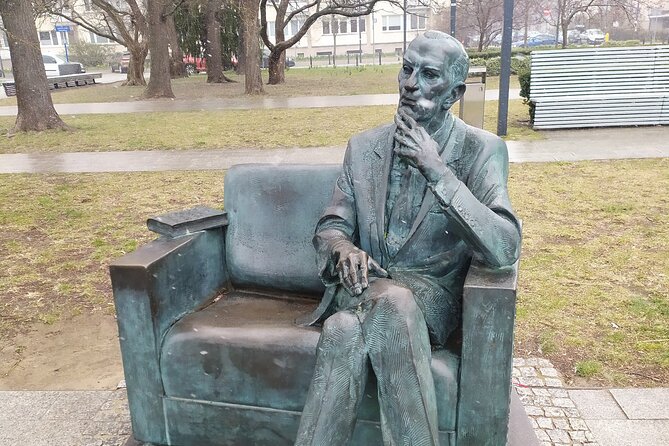
The stop at Ławeczka Jana Karskiego takes about 15 minutes. This bench monument to Jan Karski is part of a wider set of memorials connected with Jewish Warsaw and the wartime struggle.
The tour uses this section to point out several monuments and explain their different purposes. Some commemorate individuals. Others mark collective resistance, lost communities, or the places where people were forced to make impossible choices.
I like this part because it breaks up the route’s most demanding stretch. Several people who enjoyed the walk also appreciated the pauses, including stops where the guide could explain the setting while the group rested.
The guide’s tone is important here. This is not a subject that benefits from forced excitement. A serious, measured presentation is more fitting than a performance. One criticism described a guide as insufficiently emotional, but the provider’s response makes a fair point: respect for the Holocaust does not require dramatic delivery. You should expect a factual and serious experience, not an entertainment-style tour.
Umschlagplatz and the end of the route
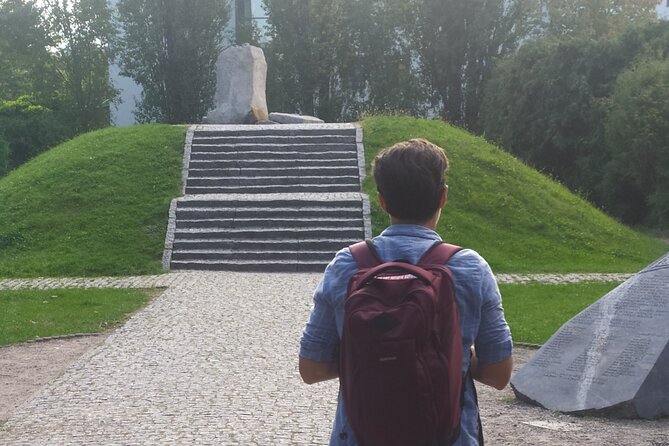
The tour ends at the Umschlagplatz Monument on Stawki 10. The final stop lasts about 10 minutes and marks the place from which roughly 300,000 Jews were transported to Treblinka.
This is not merely a convenient endpoint. It gives the route a clear and painful conclusion. You begin with the structures and places of Jewish life, pass through the ghetto’s boundaries and resistance sites, and finish at the departure point for mass deportations.
Because the tour ends here, plan your next movement in advance. You are not returned to Sienna 53. The end point is in front of the monument, so you can continue independently from that part of Warsaw, but the tour provider does not state that transportation onward is included.
Take a quiet moment at the end. The route covers a lot of ground and information, but Umschlagplatz is a place where the scale of the destruction becomes hardest to avoid.
What the $28.87 price gives you
At $28.87 per person, this is a reasonable price for a three-hour guided walk with a maximum of 10 participants. The value is not in admission-heavy sightseeing. Most stops are free, and the only stated extra is the 20 PLN entrance fee for Nożyk Synagogue.
You are paying mainly for the guide’s preparation, route design, historical explanation, visual aids, and ability to identify sites that are easy to overlook. That matters in Warsaw, where the physical record is fragmented.
The experience also includes an information pack before the tour, with frequently asked questions, useful links, and additional suggestions for places to visit, eat, and drink. The recommendations can be helpful if you want to continue exploring after the walk.
If you are comparing this with the POLIN Museum, think of them as different experiences. The museum offers an indoor exhibition and a large historical presentation. This walk takes you onto the actual streets and memorial sites of the former ghetto. I would not use one as a substitute for the other if you have enough time.
The tour is often booked about 46 days ahead. That suggests you should reserve early for a particular date, especially because the group size is small.
Walking demands, weather, and pacing
Three hours on foot is the main practical issue. The route is described as a long walk, and several sections use cobblestones. You should wear sturdy, comfortable shoes rather than stylish but thin-soled footwear.
Bring an umbrella. Warsaw weather can change, and the tour takes place outdoors for most of its duration. There are breaks, and guides have been praised for keeping a steady pace so the group can stop for photographs or take an extra minute, but this is still not a low-mobility activity.
The tour is not recommended for people who have trouble walking long distances. Most people can participate, and service animals are allowed, but you need to be comfortable standing and walking for much of the afternoon or morning.
I would avoid scheduling this immediately after another long walking tour. Pairing it with a museum on the same day may leave you tired, especially if you want time to think about what you have seen.
Who will get the most from this experience?
I would choose this tour if you want a guided explanation of Jewish Warsaw and the former ghetto, especially if you know little about the city’s wartime geography. It is also a strong choice if you have read books or seen films about the Warsaw Ghetto but want to understand where the events took place.
The small group format suits you if you prefer asking questions and hearing a guide use visual aids. The route also works well for visitors who want more than the most famous memorials. It reaches the ghetto wall fragment, Nożyk Synagogue, Muranów, Ringelblum’s archive location, St. Augustine’s Church, Miła 18, Karski’s bench, and Umschlagplatz.
I would hesitate if your main goal is to see preserved Jewish architecture. There is not much left, and some people find the modern surroundings frustrating. The guide can explain the absence, but cannot change it.
This is also not the best pick if you want a light sightseeing walk. The subject is serious, and the route deals directly with persecution, mass murder, deportation, and resistance. You should come prepared to listen.
Should you book the Jewish Warsaw walking tour?
Book it if you want the former ghetto explained as a real part of Warsaw rather than treated as a single memorial stop. The route is long, serious, and sometimes visually sparse, but that is precisely why a guide is useful.
I especially recommend it for first-time visitors who plan to visit POLIN, history-minded travelers, and anyone who wants to understand why Warsaw’s Jewish past can be easy to miss. Choose a guide such as Aga, Agnieszka, or Oliwia if available, wear good shoes, and leave enough time afterward to process the experience.
Skip it only if three hours of walking is too demanding or if you expect an intact historic district. For everyone else, the $28.87 price buys context that you would struggle to assemble on your own.
FAQ
How long does the Jewish Warsaw walking tour last?
The tour lasts approximately three hours.
Where does the tour begin?
It begins at Sienna 53, 00-820 Warszawa, on the corner with Jana Pawła II Avenue, near the Baguette Mi banh mi bistro.
Where does the tour end?
The tour ends in front of the Umschlagplatz Monument at Stawki 10, 00-178 Warszawa.
Is the Nożyk Synagogue admission included?
No. Entry to Nożyk Synagogue costs 20 PLN and is not included in the tour price.
What are the main sites on the route?
The route includes Nożyk Synagogue, a fragment of the ghetto wall, the former Warsaw Ghetto area, the Jewish Ghetto Memorial, the Heroes of the Jewish Ghetto Memorial, Miła 18, Jan Karski’s bench, and Umschlagplatz.
How many people can join the tour?
The group has a maximum of 10 participants.
Is the tour offered in English?
Yes. The tour is offered in English.
Is the tour suitable for people who cannot walk long distances?
The tour is not recommended for people with problems walking long distances. It lasts about three hours and includes outdoor walking and cobblestones.
Can I cancel for a full refund?
Yes. You can cancel at least 24 hours before the local start time for a full refund. Cancellations or changes made less than 24 hours before the start are not accepted for a refund.
Just added in Warsaw
- Warsaw Zoo Skip-the-Line Entry Ticket with Private Transport★ 4.8 · 3 reviews
- Warsaw Private Wilanow Palace & Garden Tour★ 4.6 · 30 reviews
- Warsaw: Vodka Tour★ 4.4 · 18 reviews
- Warsaw Wolf’s Lair with St. Lipka and Mamerki Private Guided★ 4.2 · 3 reviews
- Warsaw Uprising and WWII Old Town Walking Tour with Museum★ 4.7 · 15 reviews
- Warsaw Old Town UNESCO HERITAGE walking tour in English★ 4.5 · 23 reviews
- Warsaw: Private Vodka Tasting Night with Snacks and Pickup★ 5.0 · 7 reviews
- Warsaw: Skip-the-Line Royal Castle Guided Tour★ 4.9 · 79 reviews
Jewish Quarter & Ghetto Tours, compared.

Bike Tour of Old Town, Jewish Quarter and the Ghetto
Read the review →
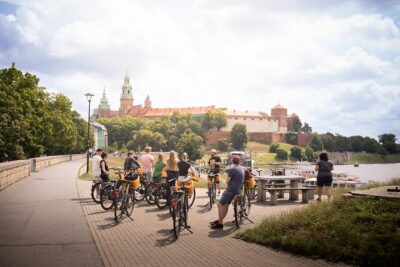
Full Bike Tour – the Old Town, Jewish Qtr & the Ghetto NEW BIKES
Read the review →
Warsaw Ghetto Private Walking Tour with Hotel Pickup
Read the review →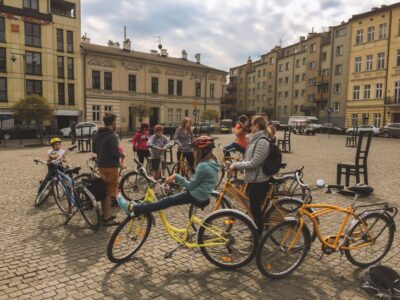
Bike Tour of the Old Town, Kazimierz, and the Ghetto
Read the review →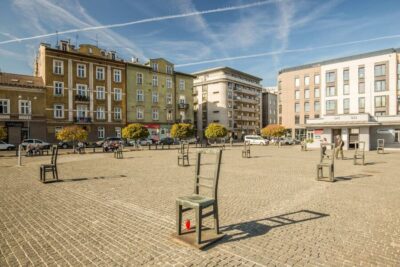
Browse the lists this tour appears in