
Reviewed · JEWISH QUARTER & GHETTO TOURS
Warsaw: Jewish Heritage & Holocaust Walking Tour
Warsaw’s Jewish past is not laid out in one tidy museum. It is scattered through streets reshaped by war, memorials, empty spaces, and a few surviving traces. This 150-minute walking tour helps you connect those fragments, beginning with six centuries of Jewish life and spending more than half its time on the Holocaust and Warsaw Ghetto Uprising.
I like the use of old photographs and maps, which let you compare the pre-war Jewish District with what you see today. I also like the human scale of the tour: guides such as Magda, Gawel, Albert, Martin, and Goska are praised for explaining painful events clearly, with warmth and care. The main drawback is practical rather than historical: a group can reach about 30 people, and the final part can feel cold in winter.
Key points at a glance
- Six centuries in 150 minutes: The tour moves from medieval Jewish settlement to the Holocaust and its aftermath.
- Old Warsaw beside present-day Warsaw: Pre-war photographs help you see streets and buildings that no longer exist.
- More than half the walk covers the Holocaust: Expect careful attention to the ghetto, deportations, and daily life behind the wall.
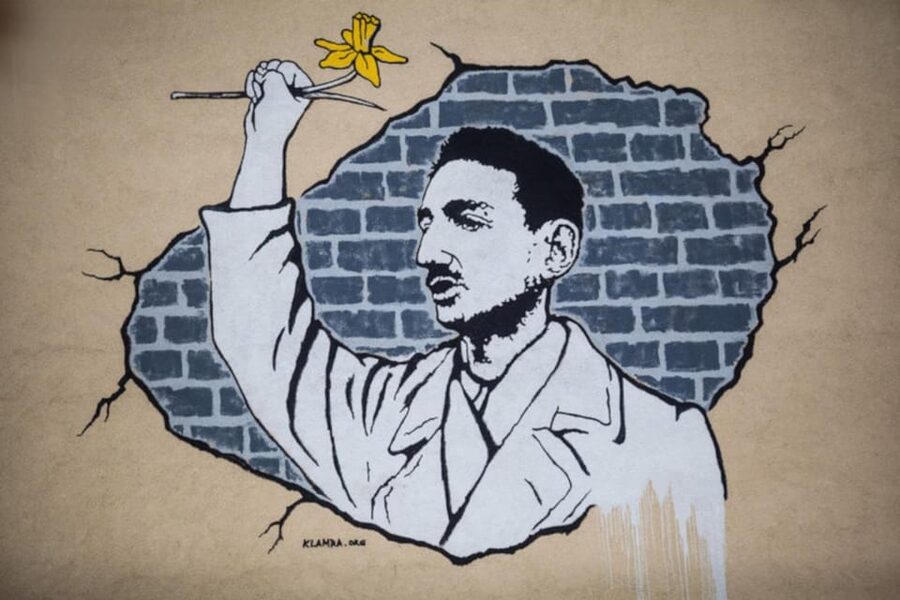
- The Ghetto Uprising becomes a place, not just a date: You visit major locations connected with the fighting.
- Guides shape the experience: Magda, Gawel, Albert, Martin, Goska, and others have been praised for clear English and humane storytelling.
- Good value at $20: You get a professional guide and a focused walking tour, with no entrance fees included.
Starting at Castle Square and crossing into another Warsaw

You meet by Sigismund’s Column in Castle Square, an easy landmark in central Warsaw. Look for the guide holding an orange umbrella with a British flag. That detail matters in a busy square, especially if several walking tours are gathering nearby.
The meeting point is not itself part of the Jewish District, so the opening of the tour provides useful city context before the focus shifts toward Jewish Warsaw. You begin with the broad story of Polish Jews: their arrival and settlement, the growth of Jewish communities, and the first expulsions. This gives the later sections a human framework. The Holocaust did not happen in an empty space. It destroyed a community that had lived, worked, worshiped, argued, traded, and raised families in Warsaw for centuries.
That long opening also keeps the tour from becoming a simple memorial circuit. You learn about Jewish life before the Nazi occupation, including the medieval Jewish quarter and Jewish settlements in the 18th-century jurydyki. These were areas under the control of Warsaw’s magnates rather than the city authorities, and they helped shape where Jewish residents could live and work.
The material is serious from the start, but it is not presented as a list of dates. Guides are expected to answer questions, and the strongest reports describe a lively, direct style. Albert, for example, was praised for explaining how events connect to wider history and ordinary human judgment. That approach suits this subject well.
More walking tours in Warsaw:
- Warsaw: Old Town Highlights Walking Tour in English
★ 4.7 · 1,516 reviews - Warsaw: Old Town Guided Walking Tour
★ 4.9 · 599 reviews - Half-Day Polish Food Walking Tour with Guide and Dinner
★ 4.5 · 381 reviews
From medieval settlement to the Jewish Enlightenment
The first historical section reaches beyond the familiar images of the ghetto. You hear about the origins of Polish Jewish communities, life in the medieval quarter, and the restrictions that shaped Jewish settlement. The tour then moves into the 18th century and the Jewish Enlightenment, known as the Haskalah.
For you, this section is valuable because it shows change over time. Jewish Warsaw was not frozen in an old-world picture of religious tradition. Ideas, education, work, politics, and relations with the wider city changed from one generation to the next.
The discussion of Haskalah also helps explain the variety within the community. Warsaw’s Jewish population included people with different levels of religious observance, different political ideas, and different hopes for the future. A short walking tour cannot cover every group or argument, but this subject signals that the community was varied and active.
Ask questions here if you want more detail. Guides including Gawel, Magda, and Albert have been praised for making complex subjects understandable in English. The quality of the experience depends heavily on the person leading it, and the available guide names change from departure to departure. You should expect a live guide, not a fixed audio script.
Seeing pre-war Jewish Warsaw through photographs
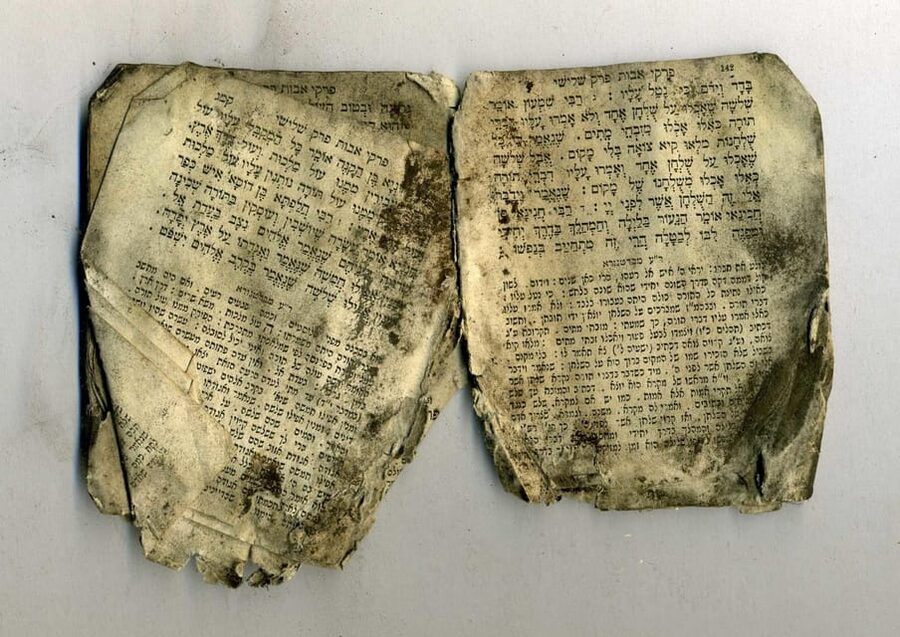
One of the best tools on this walk is the collection of pre-war photographs used by the guide. Warsaw was rebuilt and reshaped so extensively after the war that it can be hard to picture the city that once stood here. A photograph held against a modern street can make that loss immediate.
The images show 19th-century life and the pre-war Jewish District. They add faces, shopfronts, street scenes, and crowded urban life to the story. Without them, you might walk past an ordinary-looking road and hear only that something once stood there. With them, you can compare the old city with the present one.
This is also where the tour earns its low price. For $20, you are not paying for access to a major museum or a large attraction. You are paying for interpretation, and the photographs are part of that interpretation. A guidebook can provide dates and images, but a guide can point to the exact setting and explain why the change matters.
There is a limit. The tour does not include entrance fees to attractions, and the information supplied does not promise entry into a museum or synagogue. If you want indoor exhibits, you will need to arrange those separately. Think of this experience as a street-based history lesson, not a museum visit.
The Warsaw Ghetto: life behind the wall
More than half of the tour is devoted to the Holocaust of Warsaw’s Jews. The focus is the creation of the Warsaw Ghetto, the conditions inside it, and the deportations to Treblinka.
This part is difficult, and the outdoor setting can make it feel stark. You are not being moved from one indoor gallery to another. You are standing in the city while the guide explains how a wall divided neighborhoods and confined people under brutal conditions.
The value here lies in the sequence. First, you learn how the ghetto was created. Then you consider what life behind the wall meant. Finally, the guide explains the deportations to the Treblinka death camp. That order helps you understand the machinery of persecution without reducing it to a single tragic endpoint.
The strongest guides handle this section with restraint. Magda has been praised for a clear, compassionate presentation. Martin was described as especially human in his delivery, while Goska was praised for combining kindness with direct discussion of painful facts. Those qualities matter. A subject this heavy needs accuracy, but it also needs a guide who understands that people in the group may respond in different ways.
You should allow yourself time to listen rather than trying to photograph everything. The old images and guide’s explanations are the main tools. The tour is educational, but it is also an act of remembrance.
Other Jewish-heritage walks around Warsaw:
- Warsaw: Warsaw Ghetto Private Walking Tour with Hotel Pickup
★ 4.9 · 369 reviews - Warsaw: Jewish History Guided Walking Tour in English
★ 4.7 · 324 reviews - Private Tour: Warsaw’s Jewish Heritage by Retro Fiat
★ 5.0 · 208 reviews - Warsaw: Ghetto, Jewish Cemetery & POLIN Museum Private Tour
★ 4.8 · 132 reviews
Following the Ghetto Uprising
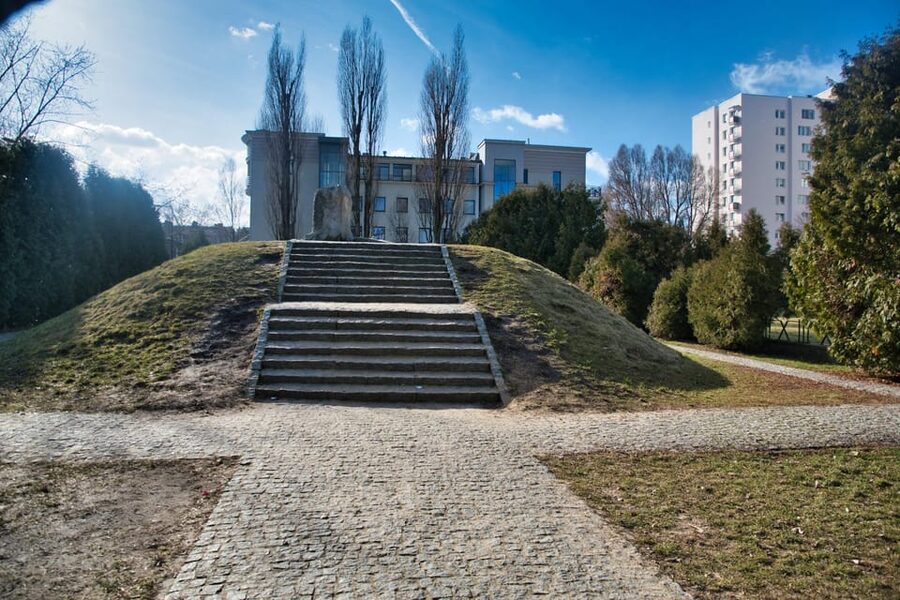
The final section visits the Big Ghetto, the area connected with the Warsaw Ghetto Uprising. You see the major places related to the fighting and learn how the uprising unfolded in the streets you are walking through.
This is more powerful than hearing about the uprising as an isolated event in 1943. The earlier discussion of the ghetto’s creation, the wall, daily conditions, and deportations explains why resistance developed and what the fighters faced. By this point, the locations have meaning because you understand the community that was being destroyed.
The walk also shows how little of the original urban setting remains. Some places have been rebuilt, some are marked by memorials, and some are easier to understand only when the guide holds up a pre-war image. That contrast is central to the experience. You are not simply looking at ruins. You are seeing a city rebuilt over the physical remains of a murdered community.
The final part may be emotionally and physically demanding. In December, one person found the later portion very cold and wished the start time had been earlier, before darkness and lower temperatures. Check the forecast, wear warm layers in winter, and bring comfortable shoes and water. A head covering or kippah is also listed among the things to bring.
What the guides add to the walk
The repeated praise for this experience centers on the guides rather than on any one monument. That is sensible. The sites are important, but the guide determines whether they become understandable.
Magda is described as enthusiastic, clear, charming, and attentive to detail. On one cold February walk, she even allowed time for a coffee stop, a small but practical kindness. Gawel is praised for making the subject interesting and for explaining difficult material well. Albert is noted for preparation, organization, careful sourcing, and his willingness to answer questions.
Martin received especially warm praise for a compassionate, human delivery. Goska is described as making a serious subject approachable without losing its weight. Peter Hardy was praised not only for his history but also for helping with transportation trouble at the end of the walk.
These names are useful when you read the available departure details, but no guide can be guaranteed from the information provided. The consistent pattern is a strong command of the subject, clear English, and a willingness to talk with the group.
Group size can vary. One report describes a small group, while another found a group of up to 30 too large for comfort. A small group makes it easier to ask questions and see the photographs. A larger group may mean standing farther from the guide, so stay close and listen carefully.
Price, pace, and practical value
At $20 per person, this is a good buy if you want a serious introduction to Jewish Warsaw and the Holocaust. The tour lasts 150 minutes, which is long enough to build a timeline but short enough to fit into a day of sightseeing.
You receive a professional English-speaking guide and the walking tour. Attractions and entrance fees are not included, so do not treat the price as a package covering museums. Its value comes from the guide’s research, visual material, and ability to connect scattered locations.
The pace should suit most people who are comfortable walking for two and a half hours. Comfortable shoes are essential. Bring water, and dress for the season. Smoking is not allowed during the activity.
The tour is listed as wheelchair accessible, which is important to confirm if you have specific mobility needs. The route is outdoors and covers a substantial period on foot, so ask the operator for current route details if surface conditions or walking distance are a concern.
The booking terms are flexible: you can cancel up to 24 hours before the start for a full refund, and you can reserve now and pay later. The provider also notes that a large share of the payment goes to commissions, agency costs, and taxes, and suggests tipping if you especially enjoyed the tour. A tip is optional, but you may want small cash if the guide’s work earns it.
Who should take this tour?
I would choose this walk if you want the historical structure that a casual visit often lacks. It is especially useful early in a Warsaw stay, before visiting related museums or memorials, because it gives you a map of the subject and shows why particular sites matter.
It suits adults and children aged 10 and over who can handle Holocaust history. It is not designed as a light family activity. The tone becomes especially serious once the tour reaches the ghetto and deportations.
You should also take it if you value photographs, maps, and spoken explanation more than indoor displays. It may not suit you if you want long museum visits, extensive time at one memorial, or a short sightseeing loop.
Should you book the Warsaw Jewish Heritage and Holocaust Walking Tour?
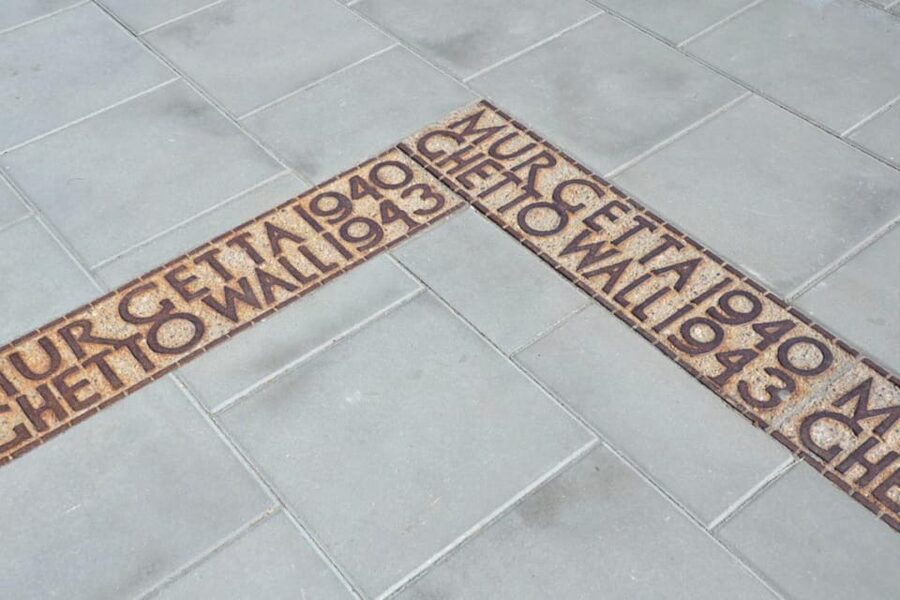
Book it if you want to understand Warsaw’s Jewish community before, during, and after the Holocaust, rather than seeing only a few memorials. The combination of medieval history, Haskalah, pre-war photographs, ghetto life, deportations, and the Uprising gives the walk a clear shape.
I would be cautious only about weather, group size, and the emotional weight of the subject. Choose warm clothing in winter, arrive ready to listen, and stay near the guide if the group is large. At $20, the tour offers strong value for a focused, guide-led introduction to one of Warsaw’s most important stories.
FAQ
Where does the tour meet?
The meeting point is in Castle Square beside Sigismund’s Column, the 20-meter column topped by a statue. Look for an orange umbrella with a British flag.
How long does the tour last?
The walking tour lasts 150 minutes, or two and a half hours.
What language is the tour in?
The tour is conducted in English with a live guide.
What parts of Jewish history does the tour cover?
It covers roughly 600 years, including medieval Jewish settlement, the first expulsions, 18th-century jurydyki, the Haskalah, 19th-century life, and the pre-war Jewish District.
How much of the tour focuses on the Holocaust?
More than half of the tour is dedicated to the Holocaust of Warsaw’s Jews, including the ghetto, conditions behind the wall, deportations to Treblinka, and the Warsaw Ghetto Uprising.
Are entrance fees included?
No. The price includes the professional guide and walking tour, but entrance fees to attractions are not included.
Is the tour suitable for children?
It is not suitable for children under 10. The subject becomes very serious, especially during the sections on the Holocaust, deportations, and the Ghetto Uprising.
Just added in Warsaw
- A unique walking tour of Jewish Warsaw — past and present★ 5.0 · 8 reviews
- Tour from Warsaw: Wolf’s Lair, Hitler’s HQ Zones I and II★ 5.0 · 32 reviews
- Wolf’s Lair Private Day Trip from Warsaw★ 5.0 · 50 reviews
- Wolf’s Lair & Treblinka Tour in 1 day from Warsaw★ 5.0 · 37 reviews
- Jewish Warsaw Walking Tour★ 5.0 · 95 reviews
- Warsaw: The Original Pub Crawl★ 4.5 · 97 reviews
- Warsaw: Gun Shooting Experience with Transfers★ 4.8 · 97 reviews
- Warsaw: Vistula Cruise★ 4.3 · 110 reviews
Jewish Quarter & Ghetto Tours, compared.

Bike Tour of Old Town, Jewish Quarter and the Ghetto
Read the review →
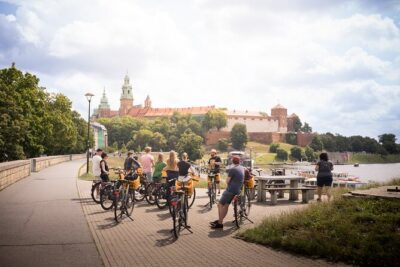
Full Bike Tour – the Old Town, Jewish Qtr & the Ghetto NEW BIKES
Read the review →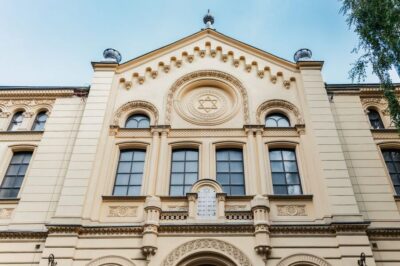
Warsaw Ghetto Private Walking Tour with Hotel Pickup
Read the review →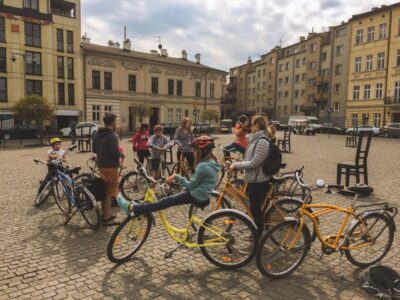
Bike Tour of the Old Town, Kazimierz, and the Ghetto
Read the review →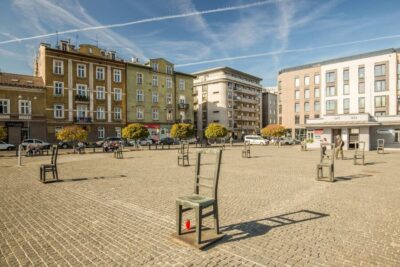
Browse the lists this tour appears in