
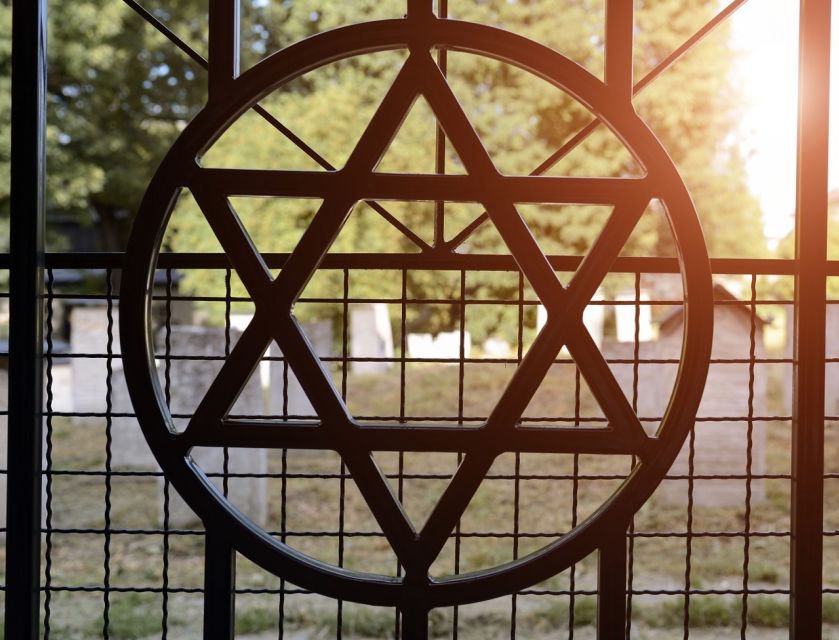
Reviewed · JEWISH QUARTER & GHETTO TOURS
Warsaw Daily Jewish Ghetto Guided Tour with Jewish Cemetery
Warsaw’s former Jewish Ghetto is not a museum behind glass. It is woven into the modern city, with fragments of wall, old buildings, memorials, and streets that carry the weight of what happened here. This three-hour walk gives you a guide to connect those scattered pieces.
I like the small group limit of 15, which gives the guide room to answer questions. I also like the Jewish Cemetery, where the story moves beyond wartime suffering to include Polish-Jewish religious leaders, writers, activists, and ordinary people. The main caution is simple: the Jewish Cemetery is closed on Saturdays, so that stop is replaced by All Saints Church.
Key points to know
- The tour centers on Muranów, the former site of Warsaw’s largest Jewish Ghetto.
- You see surviving ghetto wall fragments and Nożyk Synagogue, Warsaw’s only surviving prewar synagogue.
- A licensed English-speaking guide explains the Holocaust and 1943 uprising in historical context.
- The Jewish Cemetery adds a broader view of Jewish life, not only the destruction of the war years.
- Groups are limited to 15 people, with past guides including Anna and Ewa.
- Saturday departures visit All Saints Church instead of the cemetery, because the cemetery is closed.
Why Muranów makes this history feel close
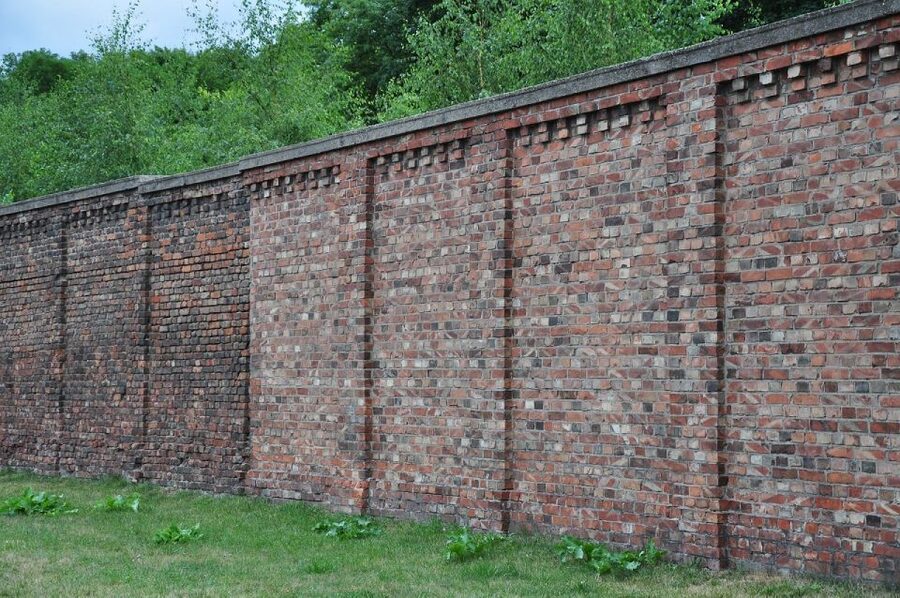
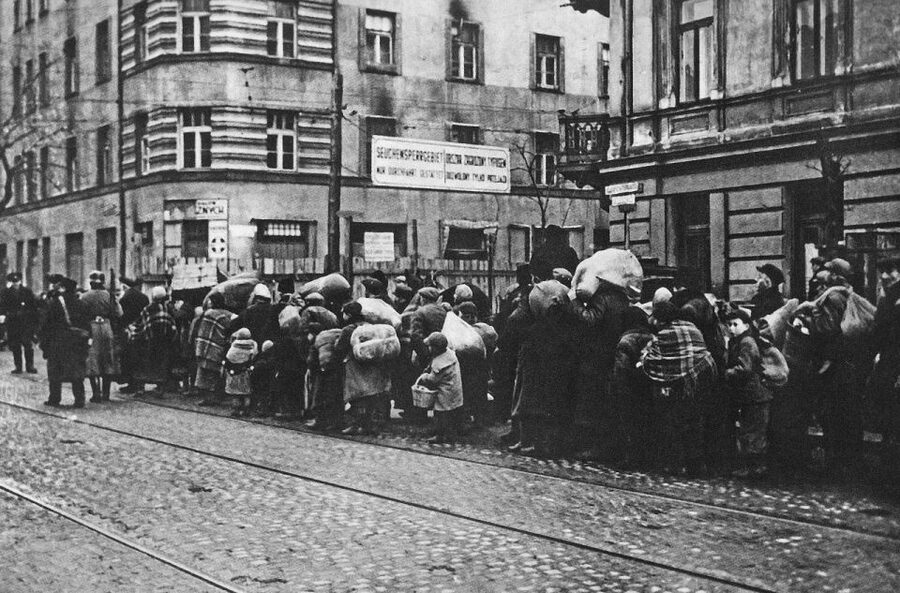
The tour takes place in Muranów, the Warsaw district built over and around the former Jewish Ghetto. During the German occupation, more than 400,000 Jews were forced into an enclosed area of about four square kilometers. Around 100,000 died inside the ghetto from hunger, exhaustion, and disease. More than 300,000 were later killed at Treblinka.
Those numbers are hard to grasp from a page. Walking through the district helps put them into physical terms. Modern Warsaw surrounds you, yet pieces of the old ghetto remain. The guide’s job is to show you where to look and explain how the streets fit into the larger story.
This is not a light sightseeing stroll. The subject includes forced confinement, starvation, deportation, mass murder, and the Nazi Final Solution. You should come prepared for a serious morning or afternoon. The reward is a clearer understanding of how the ghetto was created, how daily life was controlled, and why the Warsaw Ghetto Uprising became such an important act of resistance.
I like that the tour does not treat the uprising as an isolated heroic episode. You first learn about the persecution and the ghetto system, then see how resistance developed under impossible conditions. That sequence gives the 1943 uprising its proper setting.
Other Jewish-heritage walks around Warsaw:
- Warsaw: Warsaw Ghetto Private Walking Tour with Hotel Pickup
★ 4.9 · 369 reviews - Warsaw: Jewish History Guided Walking Tour in English
★ 4.7 · 324 reviews - Private Tour: Warsaw’s Jewish Heritage by Retro Fiat
★ 5.0 · 208 reviews
Starting at the InterContinental Hotel
The meeting point is in front of the InterContinental Hotel at Emilii Plater 49. Do not go inside the hotel. It is only a recognizable street meeting point.
You need to arrive on time. The tour operator warns that arriving late may mean you cannot join the group, which matters on a guided walk with a fixed schedule. Check your email the day before for the latest meeting information.
The central location is useful if you are staying near Warsaw’s modern center. It also gives you a clear starting place before the tour moves into Muranów. The walk lasts three hours, so wear comfortable shoes and plan your day around a focused block of time rather than trying to squeeze it between several major attractions.
The tour is listed as wheelchair accessible. Still, the experience includes outdoor walking through an urban district and a cemetery, so you may want to confirm any specific mobility needs when booking.
Seeing the ghetto walls and old houses
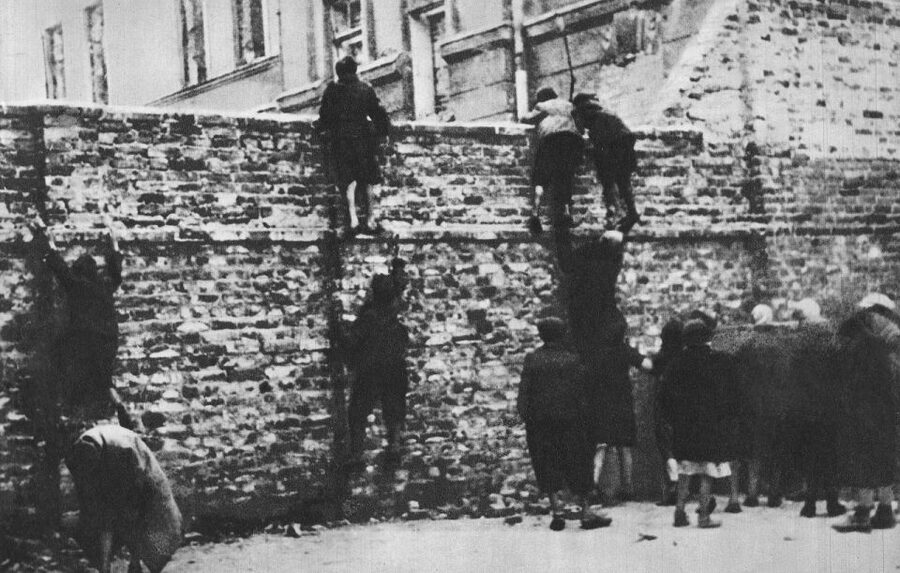
One of the most valuable parts of the walk is seeing the remaining fragments of the ghetto walls. These are not grand ruins. They are small, physical traces, and that is precisely why a guide helps.
Without explanation, a piece of wall can look like an ordinary remnant in a changing city. With the historical setting, it becomes evidence of the barrier that confined hundreds of thousands of people. You learn how the closed area worked and how Nazi policy turned an urban neighborhood into a place of hunger, disease, and fear.
The old houses also matter. The tour points out buildings connected with the former ghetto, helping you picture a district packed far beyond normal capacity. The point is not to pretend the current streets look exactly as they did. Warsaw was heavily damaged during the war, and the city changed greatly afterward. Instead, the guide helps you read what survives and understand what has disappeared.
I find this approach more useful than simply passing a memorial and hearing a list of dates. You are shown how geography shaped daily life. A four-square-kilometer enclosure becomes something you can begin to picture.
Nożyk Synagogue and the Jewish life that survived
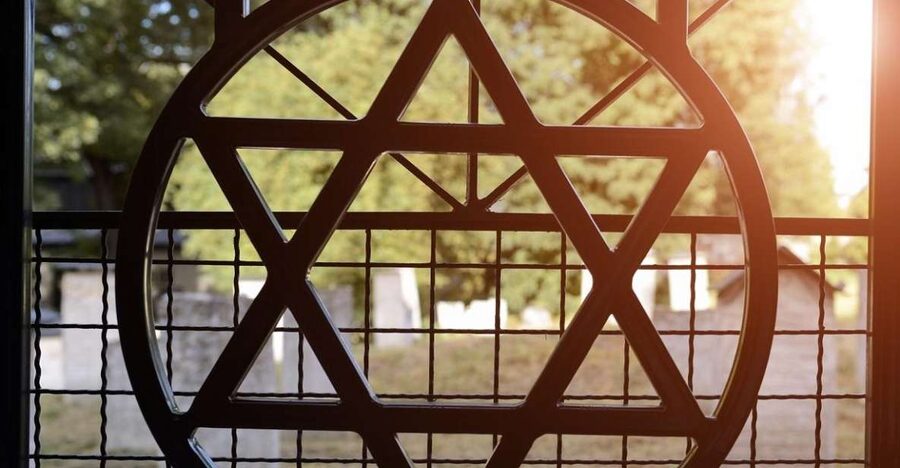
Nożyk Synagogue is described as the only surviving prewar synagogue in Warsaw. It gives the tour a much-needed connection to Jewish life before the Holocaust.
A visit here is not only about wartime destruction. The synagogue points to the city’s earlier Jewish community, its religious institutions, and the everyday cultural life that existed before German occupation. That wider view helps prevent the ghetto from becoming the only lens through which Warsaw’s Jewish population is remembered.
The tour information does not promise a full interior visit, so you should think of Nożyk Synagogue primarily as a key stop in the walking route rather than assume a long indoor program. Your guide explains why the building matters and how it fits into the story of Warsaw’s prewar Jewish community.
This is also where the guide’s personal communication style can make a real difference. Anna and Ewa were specifically praised for being informative and personable, and Anna was noted for adding stories about particular events. That kind of storytelling is useful here because the subject involves both large historical forces and individual lives.
A few more things to do in Warsaw worth a look
- 3-Hour Guided Cycling Tour of Warsaw
★ 4.9 · 624 reviews - Warsaw: Old Town Guided Walking Tour
★ 4.9 · 599 reviews - Half-Day Polish Food Walking Tour with Guide and Dinner
★ 4.5 · 381 reviews - From Warsaw: Guided Tour to Auschwitz-Birkenau and Krakow
★ 4.4 · 363 reviews
Understanding the Warsaw Ghetto Uprising
The Warsaw Ghetto Uprising of 1943 is one of the central subjects of the tour. Your guide explains who resisted, what they were facing, and why the uprising occurred after years of persecution and confinement.
The word uprising can sound too neat when separated from its setting. By the time of the revolt, the people inside the ghetto had endured hunger, disease, forced labor, deportations, and mass killing. The tour places the resistance within that reality rather than presenting it as a conventional military battle.
You will hear about the heroes of the uprising and the broader Nazi plan to destroy Europe’s Jewish population. The guide also explains how German-occupied Poland became part of the Final Solution. For many people, this context is the strongest reason to take the tour instead of walking through Muranów alone.
The subject is emotionally heavy, but the route gives the information a clear structure. You move from the creation of the ghetto to life inside it, then to deportation, resistance, and the destruction of the community. I prefer that order because it keeps the story understandable without softening its horror.
The Jewish Cemetery adds people and personalities
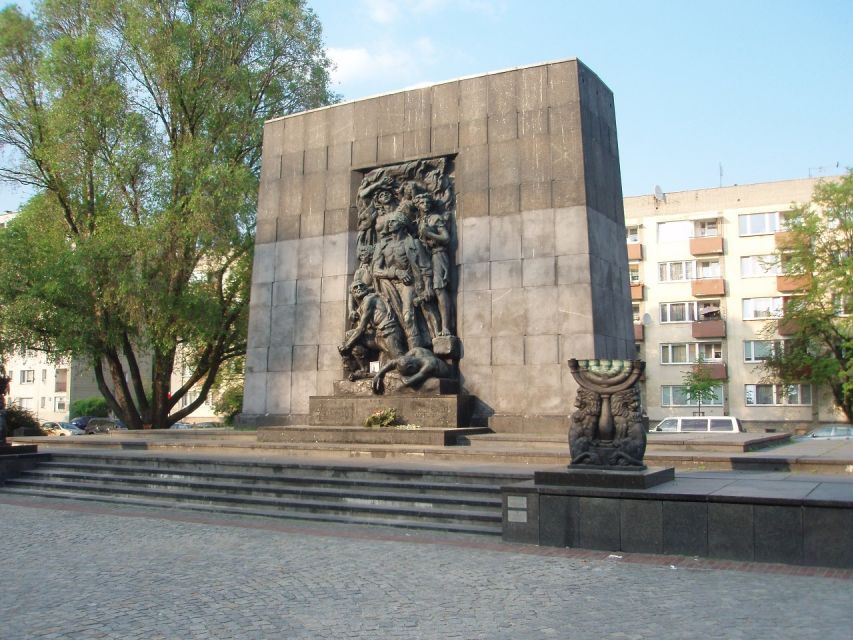
The Jewish Cemetery is scheduled as the final stop. Entrance is included in the price, so you do not need to arrange a separate ticket.
This stop broadens the experience. Inside the cemetery, the guide discusses Polish-Jewish spiritual leaders, political activists, important figures in Jewish culture, and thousands of unnamed victims of the ghetto. That range matters. A cemetery visit can show you the community as a living society, not only as a population destroyed during the war.
You may find this part quieter and more reflective than the streets of Muranów. The cemetery does not replace the earlier history, but it gives names, professions, beliefs, and cultural roles to people who can otherwise be reduced to statistics.
The cemetery is closed on Saturdays. If you book a Saturday tour, the route visits All Saints Church instead. The church is closely tied to Jewish history, and the guide explains that connection while pointing out its architecture. This is a meaningful alternative, but it is not the same experience. If entering the Jewish Cemetery is important to you, choose a day other than Saturday.
One earlier booking did not include the cemetery, so it is sensible to confirm the planned route in the day-before email. The published schedule makes the cemetery the final stop, but the Saturday closure and occasional itinerary changes are worth keeping in mind.
What the small group changes
The group limit is 15 people. That is a useful middle ground. You get the cost of a shared tour without the scale of a large coach group.
A smaller group makes it easier to hear on city streets and easier to ask questions without interrupting the whole experience. It also gives the guide more room to adjust the explanation. If only a few people book, the atmosphere can be especially relaxed. One past tour had only two participants, and the guide was able to make the walk feel personal.
Do not book this expecting a private tour. A group of 15 can still feel busy at narrow locations or memorial sites. But compared with a 30-person group, the difference should be noticeable, especially when the guide is explaining a small wall fragment or speaking in a quieter cemetery setting.
The English-language guide is licensed and described as a five-star history expert. The individual quality can vary by departure, but Anna and Ewa are two names associated with especially strong guiding. Both were praised for clear explanations and a friendly manner, while Anna was also noted for bringing in stories beyond basic facts.
Is $131 a fair price?
At $131 per person, this is not the cheapest way to walk around Muranów. You can see some memorials and street sites without paying for a tour. The price needs to be judged by what the guide adds.
You are paying for three hours with a licensed English-speaking guide, a small group capped at 15, and admission to the Jewish Cemetery. The practical value is the interpretation. The ghetto’s remains are scattered, and many important places are easy to miss or misunderstand without someone explaining their purpose.
The price makes the most sense for first-time visitors who want a structured account of the ghetto, Holocaust, and uprising. It is less compelling if you already have detailed knowledge of Warsaw’s Jewish history or prefer to read at your own pace.
The guide’s role is especially important because the tour covers a difficult subject in a short time. A good guide keeps the facts accurate, explains the sequence of events, and gives you space to absorb what you are seeing. The strongest feedback about this experience centers on exactly that: Anna and Ewa were praised for their information, warmth, and ability to add personal stories.
You can also reserve now and pay later, and cancellation is free up to 24 hours before the tour. Those terms help if your Warsaw schedule is still changing, but the main value question remains the guide and the included cemetery entrance.
Who should book this walk?
I would recommend it to a first-time Warsaw visitor who wants more than a quick memorial stop. It suits anyone interested in World War II, Jewish history, Polish history, or the way cities preserve painful memories.
It is also a good fit if you prefer learning through place. You will be walking through a real district, seeing wall fragments and surviving buildings, then moving to a historic cemetery or All Saints Church. The experience is more grounded than a general city tour.
Families with older children and teenagers may find the clear structure helpful, though the subject is serious and some details are disturbing. People with limited time in Warsaw may also get good value from this focused three-hour route.
I would hesitate only if you want a casual outing, dislike emotionally difficult subjects, or already know the ghetto’s history in detail. This is not a cheerful neighborhood walk with a few historical notes. It asks for attention.
Practical details before you book
The tour lasts three hours and is offered in English. Check the available starting times for your date, then plan enough time to reach the meeting point in front of the InterContinental Hotel.
Read the email sent the day before. It contains important information, and it may clarify the meeting arrangements or route. Arrive early rather than trying to meet the group at the last second.
Wear shoes suited to city walking. The tour is wheelchair accessible, but if you have particular access requirements, confirm them before booking. Remember that the Jewish Cemetery is closed Saturdays, with All Saints Church used instead.
Should you book the Warsaw Jewish Ghetto tour?
Book it if you want a serious, well-organized introduction to Warsaw’s Jewish Ghetto, with a guide who can connect small surviving fragments to the larger story. The combination of Muranów, Nożyk Synagogue, ghetto wall remains, and the Jewish Cemetery gives the tour more range than a simple memorial walk.
The strongest reason to choose it is the guide-led interpretation in a group of no more than 15. The main thing to check is your date: Saturday means no cemetery visit. At $131, it is a considered purchase, but the price is defensible for the guide, structure, small group, and included entrance. For most first-time visitors seeking context and a respectful route, I would book it.
FAQ
Where does the Warsaw Jewish Ghetto tour meet?
Meet your guide in front of the InterContinental Hotel at Emilii Plater 49, 00-125 Warsaw. Do not enter the hotel, since it is only the meeting point.
How long does the tour last?
The tour lasts three hours.
What language is the tour offered in?
The tour is conducted in English by a licensed live guide.
How large is the group?
The group can include up to 15 participants.
Is entrance to the Jewish Cemetery included?
Yes. Entrance to the Jewish Cemetery is included when that stop is available.
Is the Jewish Cemetery open during Saturday tours?
No. The cemetery is closed on Saturdays. The tour visits All Saints Church instead, where the guide explains its connection to Jewish history.
What places does the tour visit?
The route covers the former Jewish Ghetto in Muranów, surviving ghetto wall fragments, Nożyk Synagogue, and the Jewish Cemetery. On Saturdays, All Saints Church replaces the cemetery.
Is the tour wheelchair accessible?
The activity is listed as wheelchair accessible.
Can I cancel the tour for a refund?
Yes. You can cancel up to 24 hours in advance for a full refund. You can also reserve now and pay later.
Just added in Warsaw
- Warsaw Zoo Skip-the-Line Entry Ticket with Private Transport★ 4.8 · 3 reviews
- Warsaw Private Wilanow Palace & Garden Tour★ 4.6 · 30 reviews
- Warsaw: Vodka Tour★ 4.4 · 18 reviews
- Warsaw Wolf’s Lair with St. Lipka and Mamerki Private Guided★ 4.2 · 3 reviews
- Warsaw Uprising and WWII Old Town Walking Tour with Museum★ 4.7 · 15 reviews
- Warsaw Old Town UNESCO HERITAGE walking tour in English★ 4.5 · 23 reviews
- Warsaw: Private Vodka Tasting Night with Snacks and Pickup★ 5.0 · 7 reviews
- Warsaw: Skip-the-Line Royal Castle Guided Tour★ 4.9 · 79 reviews
Jewish Quarter & Ghetto Tours, compared.

Bike Tour of Old Town, Jewish Quarter and the Ghetto
Read the review →
Full Bike Tour – the Old Town, Jewish Qtr & the Ghetto NEW BIKES
Read the review →
Warsaw Ghetto Private Walking Tour with Hotel Pickup
Read the review →
Bike Tour of the Old Town, Kazimierz, and the Ghetto
Read the review →
Browse the lists this tour appears in